
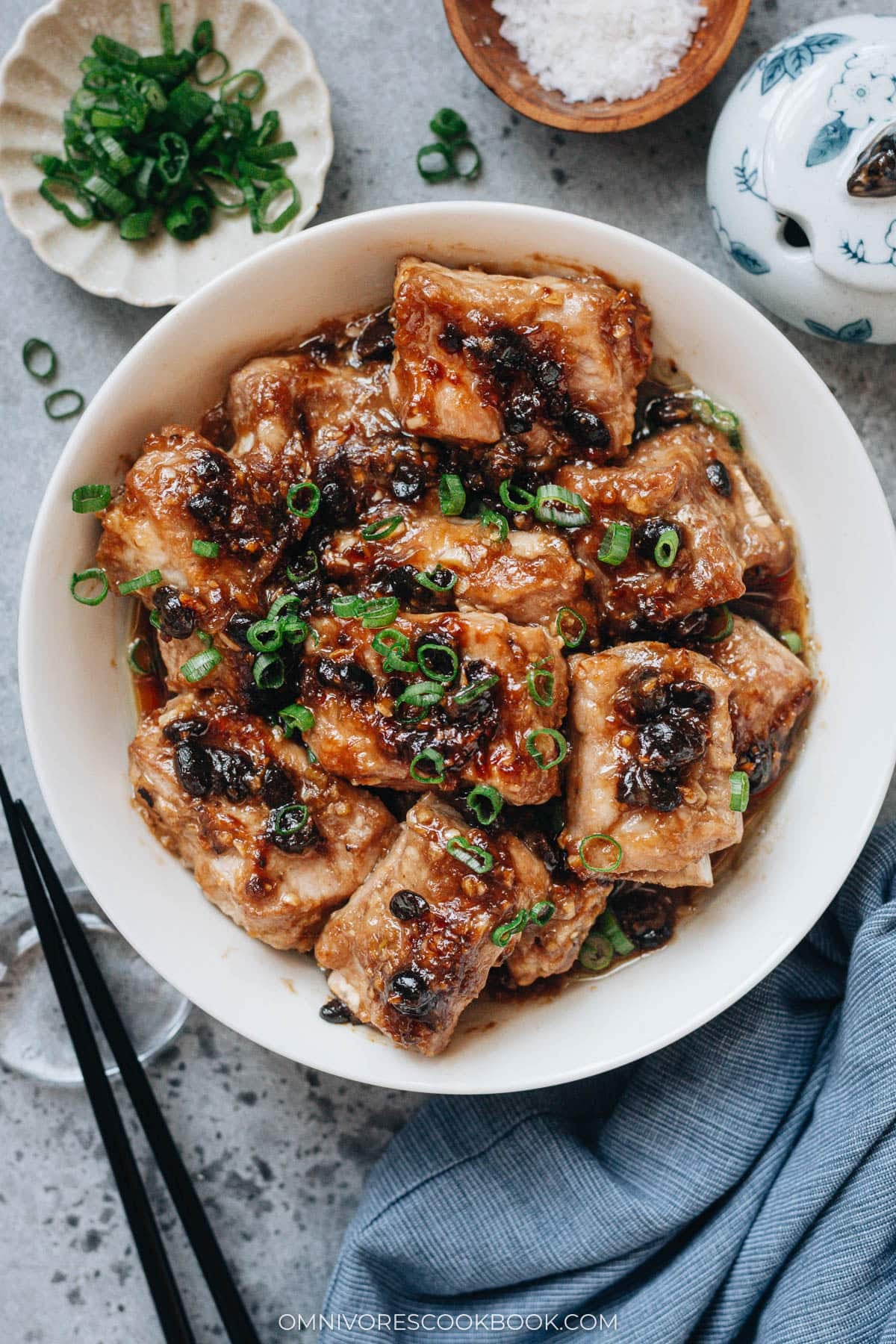
Chǐ zhī zhēng pái gǔ (steamed ribs with black bean sauce) is one of the most popular dishes you will find on any dim sum cart. Bite sized pork ribs are tossed in a rich marinade built on fermented black beans, garlic, and ginger, then steamed until just cooked through so they stay juicy and tender. It is a Cantonese classic that shows up at nearly every dim sum spread alongside shu mai, char siu bao, and egg rolls.
I grew up eating steamed ribs at dim sum restaurants in Beijing, where the little bamboo steamer would barely hit the table before every piece was gone. I never got more than 2 or 3 ribs when eating with family because everyone would grab them the second the lid came off. That is exactly why I started making them at home in big batches so my family could actually eat their fill.
My version keeps it simple. I soak the ribs first to clean them, toss them in a quick marinade with homemade black bean sauce, then steam everything on a single plate. The fermented black beans, garlic, and ginger do all the heavy lifting for flavor. I make this regularly for weeknight dinners because the steamer does the work while I prep a vegetable side and cook rice. I highly recommend it!
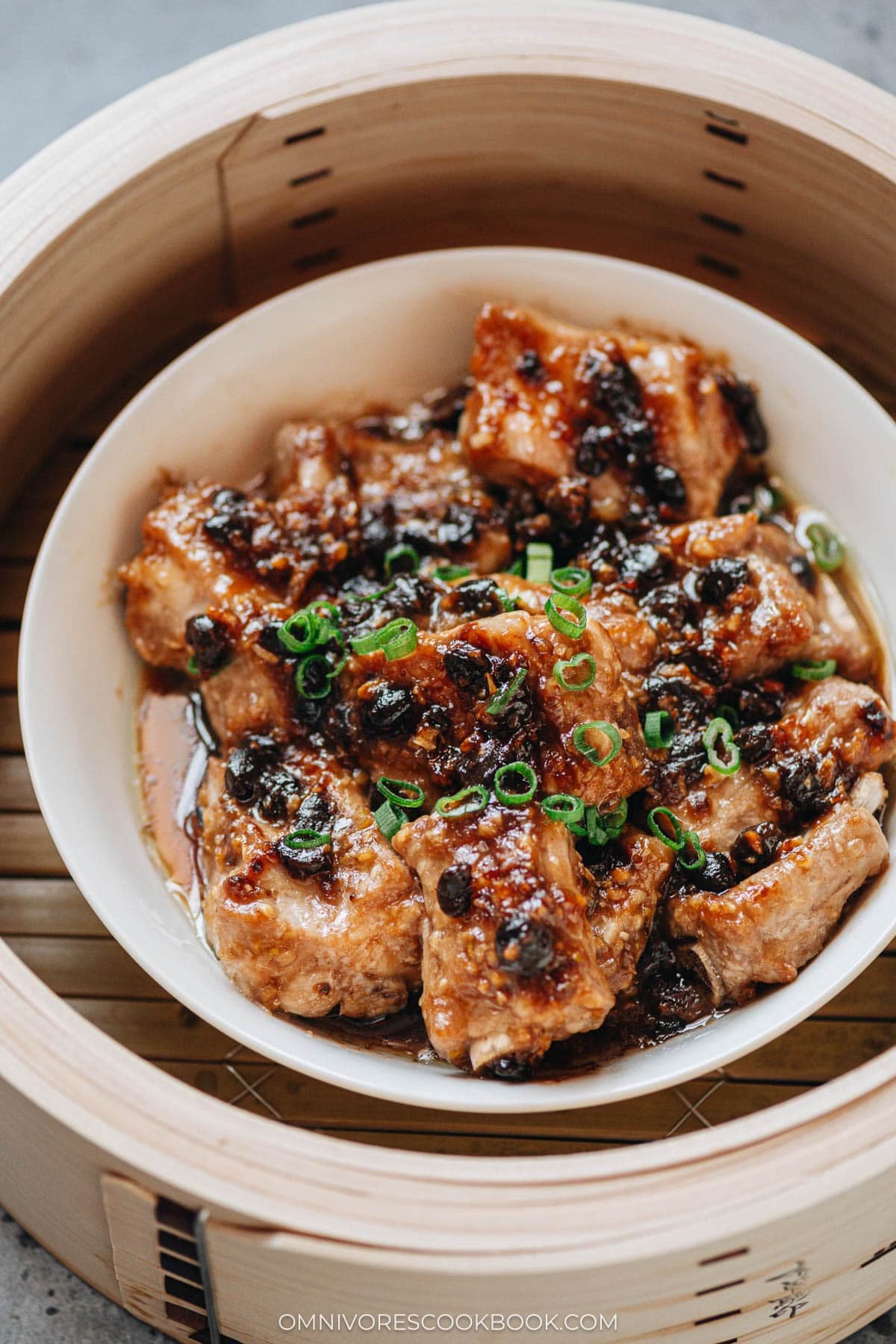
Ingredients
I keep my ingredient list simple. The ribs get a quick soak, the fermented black beans and aromatics build the savory base, a few pantry sauces round out the marinade, and sliced green onions finish the dish.
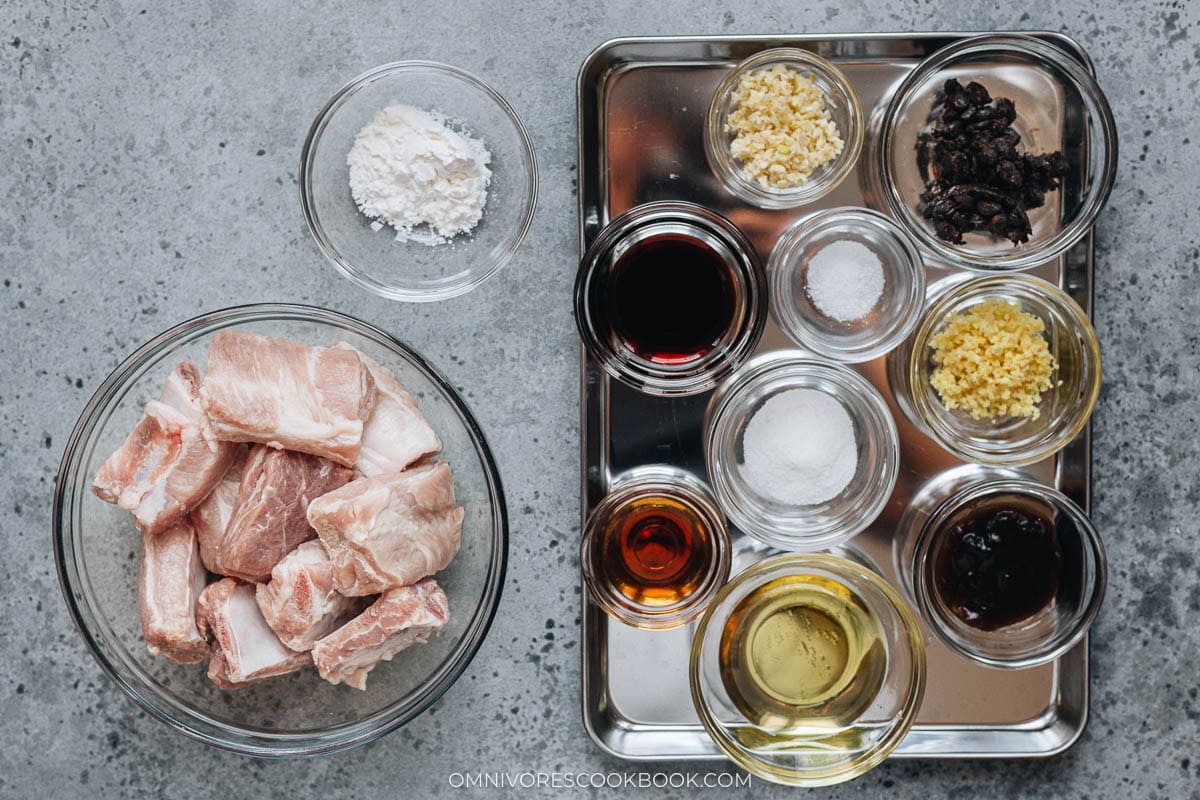
Pork spare ribs: I use baby back ribs cut crosswise into 2 inch pieces, then separated into individual riblets. I ask the butcher to cut them for me, or I buy pre cut ribs at a Chinese grocery store.
Fermented black beans and aromatics: Fermented black beans are the backbone of this dish. I combine them with minced garlic and ginger, then pour hot oil over everything to bloom the flavors instantly.
Sauce and seasoning: I use Shaoxing wine, oyster sauce, light soy sauce, sugar, and salt. The cornstarch does double duty: it tenderizes the ribs and creates a thin coating that protects the meat from direct steam.
Garnish: Sliced green onions go on right after steaming.
How to make
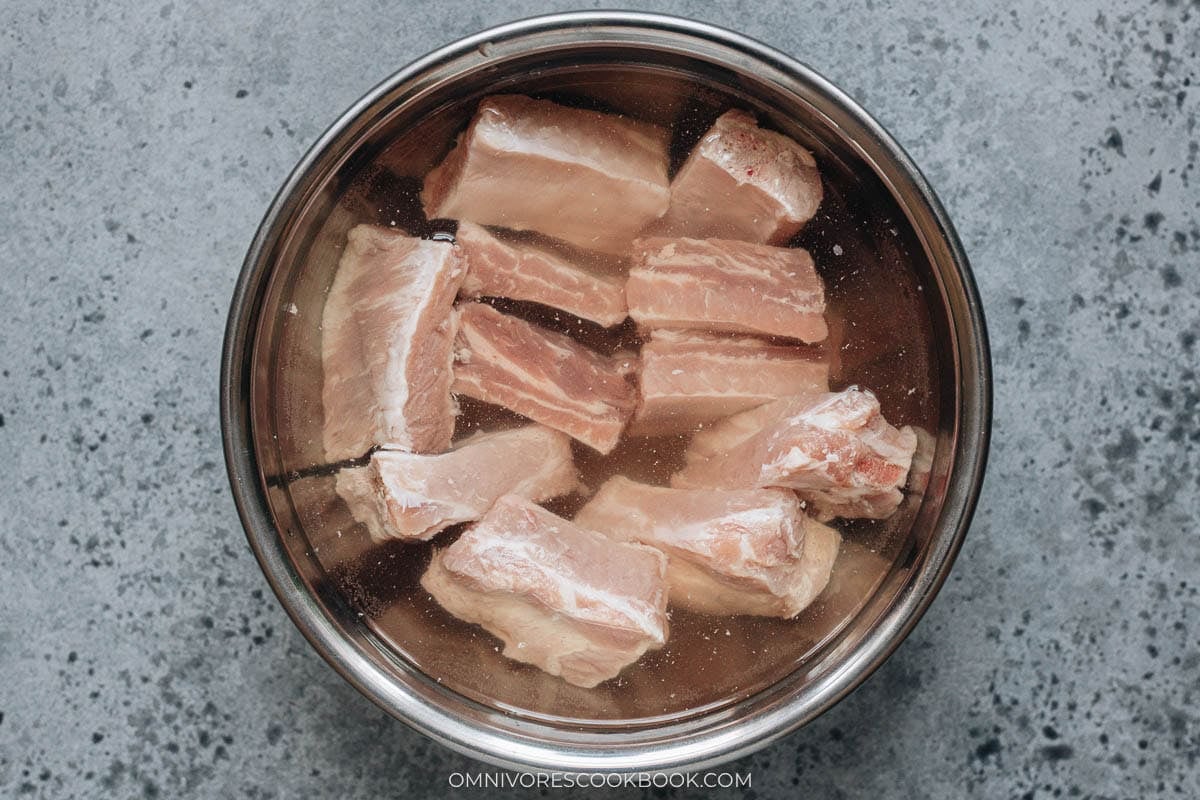
1. Soak the ribs: Place the ribs in a big bowl and cover with cold tap water. Soak for 1 hour to draw out impurities. Drain, rinse thoroughly under cold running water, and pat dry. Transfer to a big bowl.
2. Make the black bean sauce: Combine the fermented black beans, ginger, and garlic in a heatproof bowl. Heat oil in a small skillet over medium heat until it shimmers, then pour the hot oil directly over the black beans and aromatics. Stir to mix well. Add the Shaoxing wine, oyster sauce, soy sauce, sugar, and salt. Stir to combine.
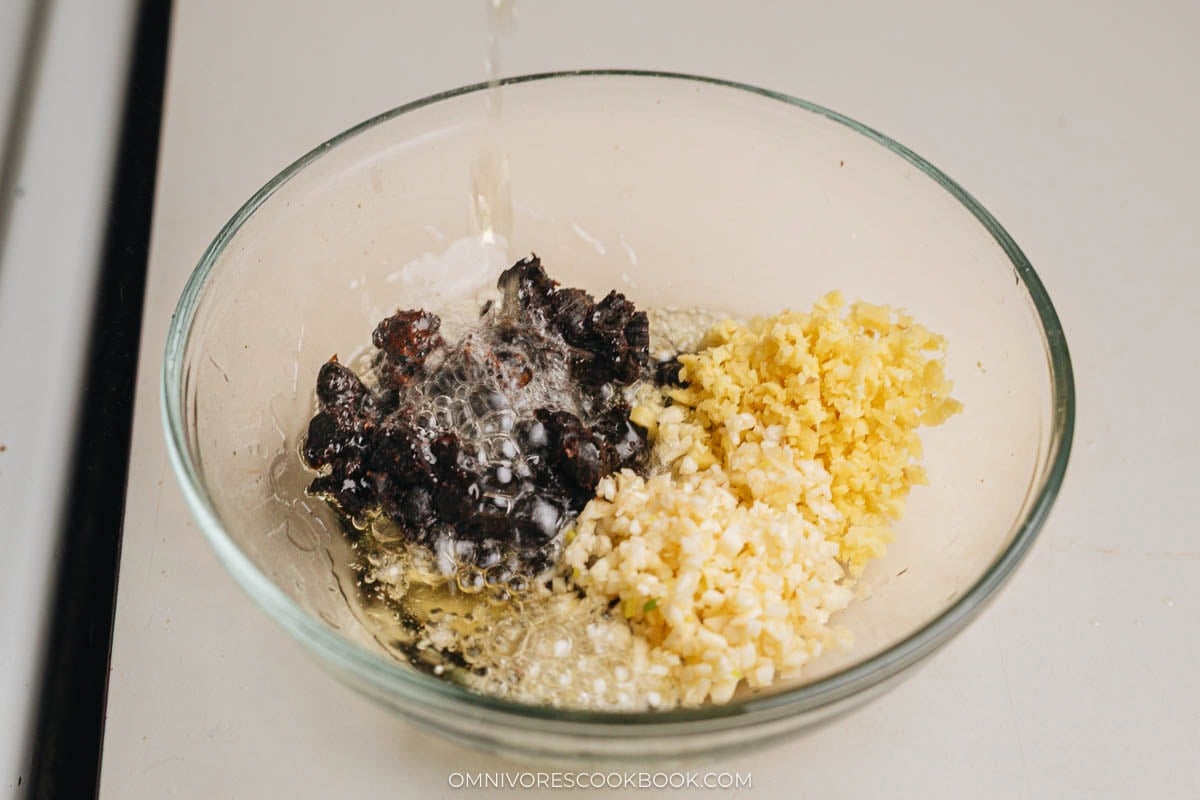
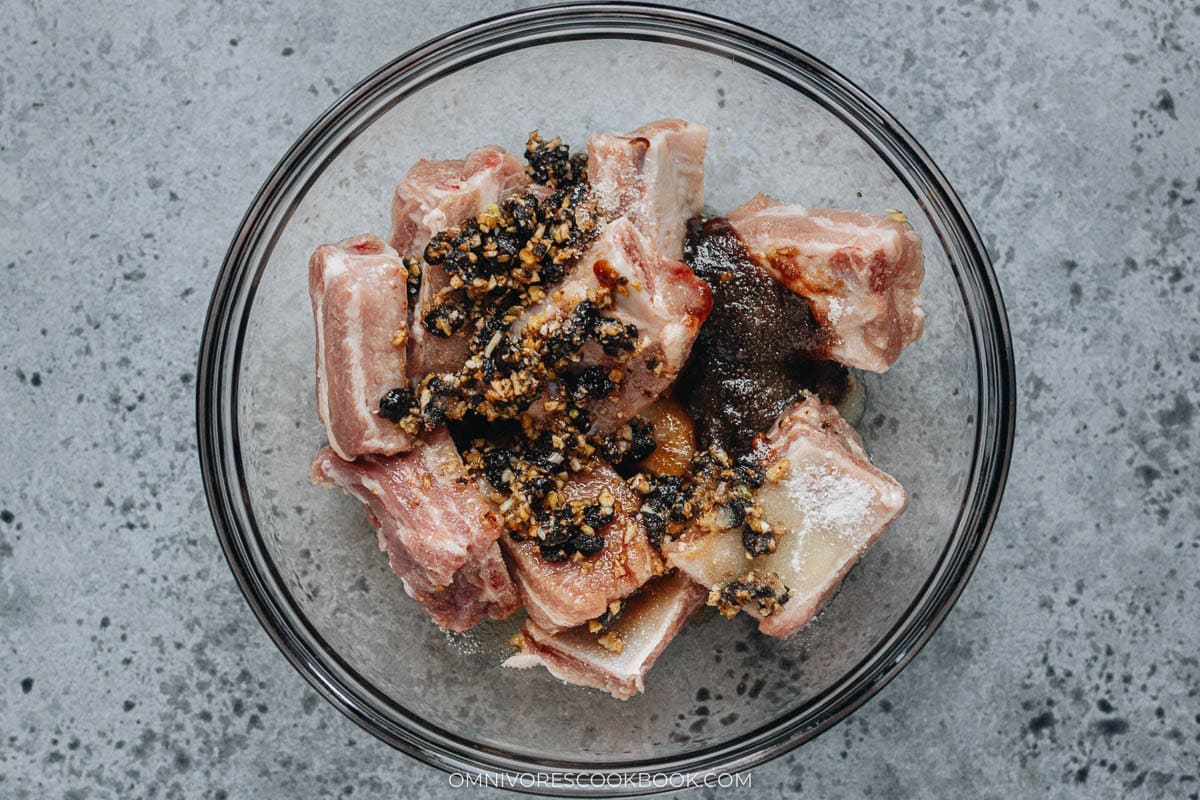
3. Marinate the ribs: Pour the sauce over the ribs and add the cornstarch. Mix again until everything is evenly coated. Marinate at room temperature for a minimum of 30 minutes, or cover and refrigerate up to overnight.
4. Set up the steamer: Use a large plate with some depth to hold the sauce that fits inside your steamer. Place a wok or skillet underneath to hold the steamer. If using a skillet, you may need a rack to elevate the steamer so the water underneath does not touch the bottom.
5. Plate the ribs: Spread the marinated ribs onto the plate with minimal overlap, along with the marinade. Place the plate into the steamer.
6. Add water: Fill the wok or skillet with plenty of water, but not so deep that it touches the bottom of the steamer. Bring to a boil over high heat.
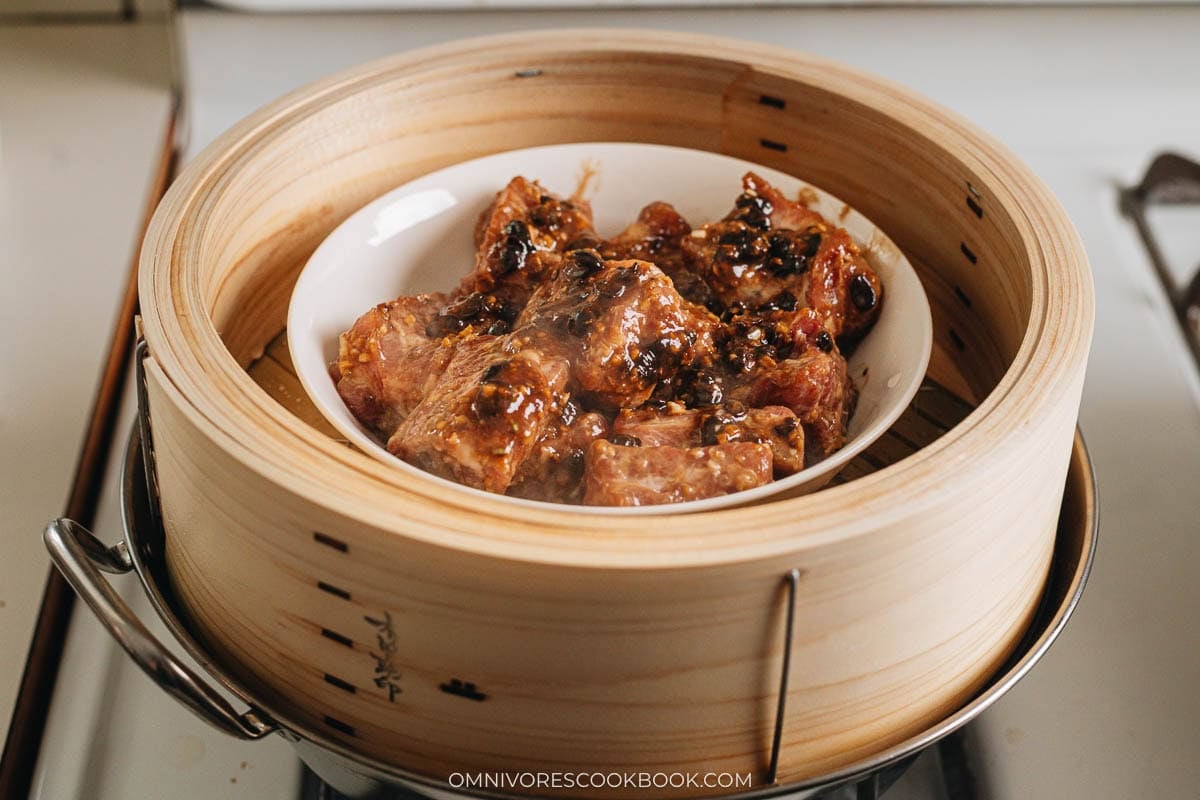
7. Steam the ribs: Place the steaming rack, covered, onto the wok. You should see steam rising from the top. Cook over medium high heat until the ribs are just cooked through, about 20 minutes. Test by cutting through one rib. The juices should run clear. Check at 5 minute increments if you are unsure.
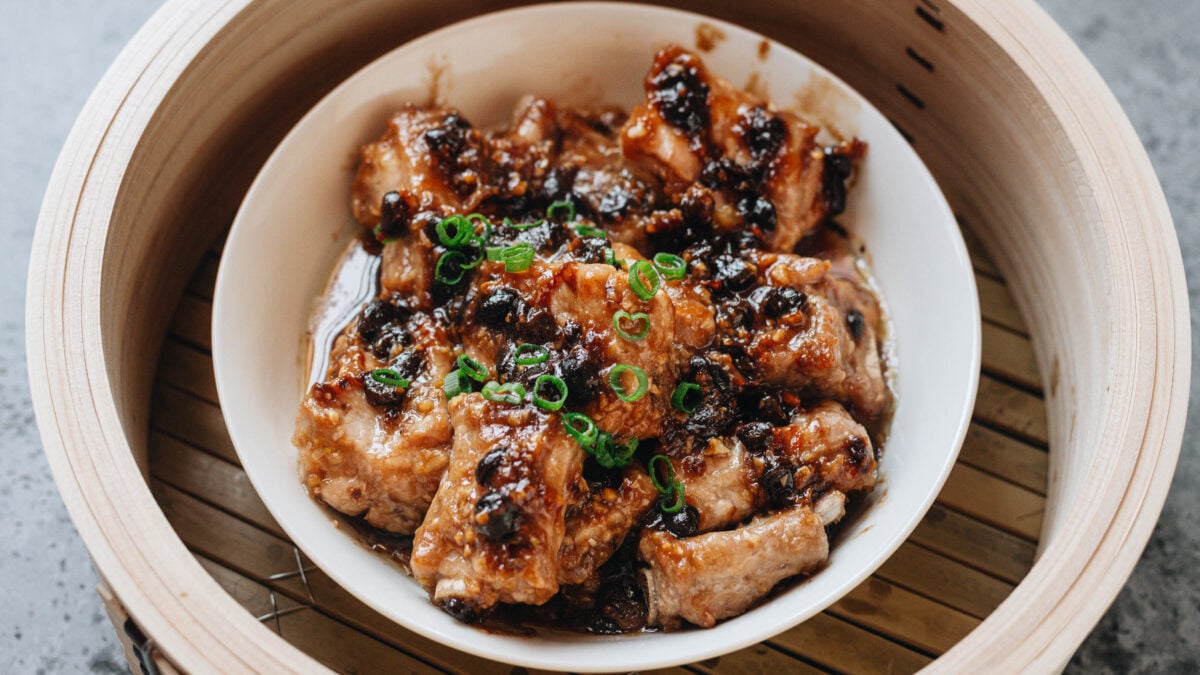
8. Garnish and serve: Top with sliced green onions and serve hot.
My Cooking Tips
Choose well marbled ribs: Ribs with a good amount of fat between the meat and bone steam up more tender and flavorful. Lean ribs tend to turn tough no matter how long you cook them.
Do not skip the hot oil step: Pouring hot oil over the black beans and garlic blooms their flavor instantly. This is the difference between ribs that taste homemade and ribs that taste restaurant quality.
Watch your steam time: Overcooked ribs turn hard and chewy. I start checking at 15 minutes by cutting into the thickest piece. The juices should run clear when the ribs are done.
Bring refrigerated ribs to room temperature: If you marinate overnight, pull the ribs out of the fridge 20 to 30 minutes before steaming. Cold ribs will not cook evenly and you will end up with tough spots.
Keep the steaming liquid: The juices that collect on the plate during steaming are packed with flavor. Pour them over your rice. Do not waste a single drop.
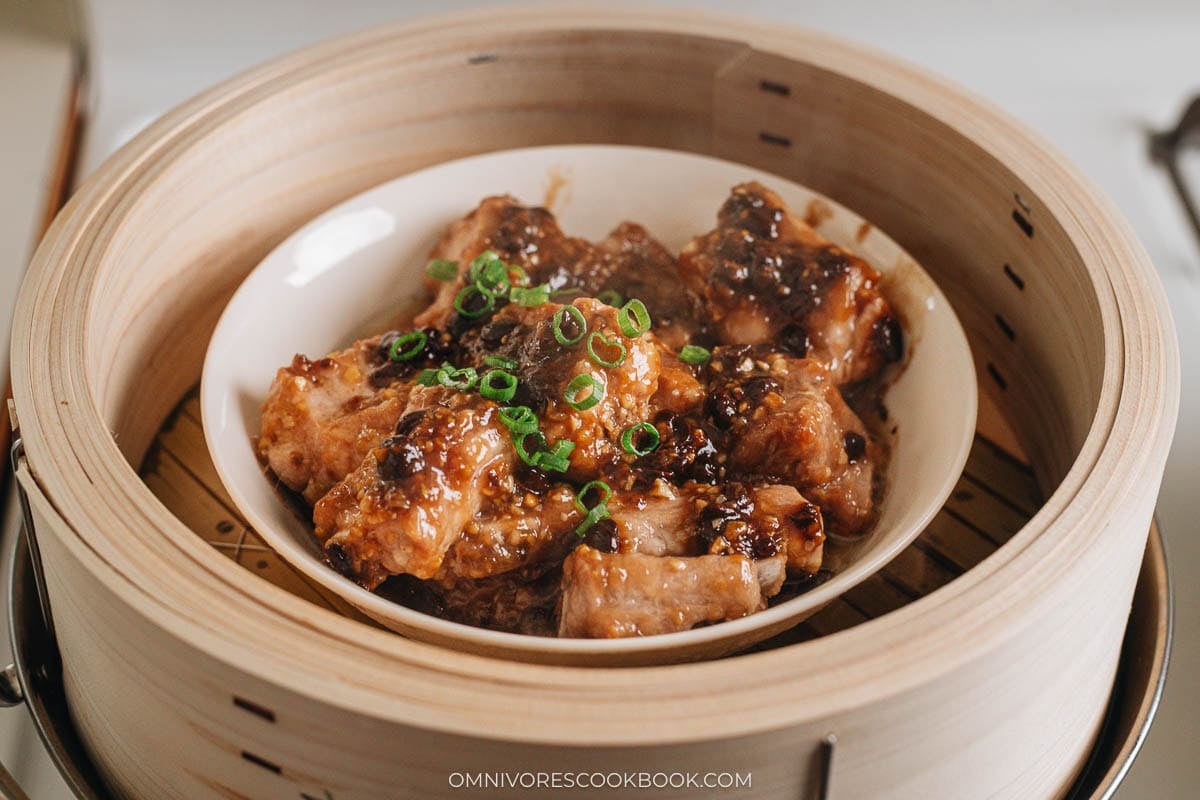
Serving Suggestions
This is a regular weeknight dinner at my house. I put the whole steaming plate right on the table next to a bowl of rice and a simple vegetable like bok choy with oyster sauce. My son goes straight for the ribs and my husband pours the leftover sauce over his rice. It is a meal that takes care of itself while I stir fry a quick green on the side.
When I make this for friends, I double the batch and serve it alongside other dishes like my Chinese BBQ char siu or turnip cake for a dim sum spread at home. I set everything out family style and let people grab what they want. If you are cooking for a crowd, you can marinate the ribs the night before and just steam them right before everyone sits down.
Frequently Asked Questions
What is the best way to get tender steamed ribs?
The key is choosing well marbled ribs and not overcooking them. I steam just until the juices run clear, usually 15 to 20 minutes depending on the thickness. The cornstarch coating also helps by forming a thin barrier that keeps the meat from drying out in direct steam.
Can I steam these ribs without a bamboo steamer?
Absolutely. I use a regular pot or wok with a metal steamer rack inside. Place the plate of ribs on the rack, making sure the boiling water does not touch the bottom of the plate. Any setup that holds the plate above boiling water and traps steam will work perfectly.
What cut of ribs should I use?
I use baby back ribs or spare ribs cut crosswise into 2 inch pieces. Most Chinese grocery stores sell them pre cut, or you can ask your butcher to cut them for you. I avoid ribs that are too thick or too lean because they do not steam as tender.
Want to Save This Recipe?
Enter your email below & we’ll send it to your inbox. Plus get great new recipes from us every week!
Watch video
Steamed Ribs in Black Bean Sauce (豉汁蒸排骨)
Ingredients
- 1 lb pork baby back ribs , divided crosswise into 2” long ribs (*Footnote 1), then sliced into single riblet
- 1 green onion , sliced
Marinade
- 1 heaping tablespoon fermented black beans
- 1 tablespoon minced ginger
- 3 cloves garlic , minced
- 2 tablespoons vegetable oil
- 2 teaspoons Shaoxing wine
- 1 tablespoon oyster sauce
- 2 teaspoon light soy sauce
- 2 teaspoons sugar
- 1/4 teaspoon salt
- 1 tablespoon cornstarch
Instructions
- Add the pork ribs into a big bowl and add cold tap water to cover. Soak for 1 hour before cooking, to get rid of any impurities. Once done, rinse the ribs with cold running tap water, drain and pat dry. Transfer to a big bowl. (*Footnote 2)
- Combine the fermented black beans, ginger and garlic in a medium-sized heat proof bowl. Heat oil over medium heat in a small skillet until it shimmers. Immediately pour onto the black beans and aromatics. Stir to mix well. Add the Shaoxing wine, oyster sauce, soy sauce, sugar, and salt. Stir to combine.
- Combine ribs with the sauce. Add the cornstarch and mix again to coat well. Marinate at room temperature for a minimum of 30 minutes, or in the fridge, up to overnight.
- To set up the steamer, use a large plate that has some depth (to hold the sauce) that can fit in your steamer. You will also need to use a wok or a skillet to hold the steamer. In the case of a skillet, you might need a rack to elevate the steamer, so the water underneath doesn’t touch the bottom of the steamer.
- Spread the ribs onto the plate with minimum overlap, along with the marinade, and place the plate into the steamer.
- Add plenty of water to the wok (or skillet) but not so deep it touches the bottom of the steamer. Bring to a boil over high heat.
- Place the steaming rack, covered, onto the wok. You should see steam rising from the top of the steamer. Cook over medium-high heat until the ribs are just cooked through, 20 minutes or so. Test the ribs by cutting through one. The juice should run clear. Cook, covered, checking at 5 minute increments to see if the ribs are done.
- Garnish with green onion. Serve hot.
Notes
- The easiest way to do this is to purchase the ribs at the butcher counter. Ask the butcher to cut the ribs in half crosswise, so they’ll fit better into the steamer. Try to select well-marbled meat that is not too thick, which will generate super tender and flavorful meat. You can also purchase pre-cut ribs at a Chinese grocery store.
- Soaking the ribs get rid of blood and some gamey taste. If you’re short on time, you can also skip this step.
Nutrition

Did you make this recipe?
I’d love to hear how it turned out for you! Please take a moment to leave a 5-star rating ⭐️ and share your thoughts in the comments further down the page. It really helps others discover the recipe too.
Julie pixton
Can I use black bean with garlic sauce for these steamed rib.
Maggie Zhu
You totally can. I would reduce the fresh garlic to 1 clove only, since your sauce already has some garlic flavor.
Mare
Hi Maggie- looks awesome! eyeing the freezer: do you I cld pull this off with country style boneless ribs? Thanks!
Maggie Zhu
I think you totally can, but need to adjust the recipe accordingly. I would either use half amount of the ribs (1/2 lb) or double the sauce. Because the recipe is for bone-in ribs and the bone weighs a lot. You might also need to steam the ribs a little longer. I would check at 20 minutes mark and add 5 minutes steaming at a time if needed.
Mare
Thank you! They rocked!
JayZecky
Thank you for another great recipe. I used 1.5 lbs of St Louis Ribs. Very delicious! Even before the steaming, the house was full of the marinating fragrance. I added a little dark soy at the end to give it a little more color. As usual, super easy to make.
Diana Evans
So good! I used a bit too much of this jarred black bean and garlic sauce, so next time I will use the recommended amount! But my ribs were amazing. Super happy!
Maggie Zhu
So happy to hear you tried this one out and enjoyed it! Thanks for leaving a positive review 🙂
Sara
Hi Maggie! Thank you for this recipe, and so many others!
We made some homemade black bean sauce, but I’m a little confused figuring out what to add to it to make it a marinade for this dish. What parts of the marinade are additional to the 1/4 cup of homemade black bean sauce?
Thank you!!
Maggie
Hi Sara, sorry about the confusion! The recipe format got messed up after a website update and I just fixed it.
If you have the homemade marinade, you can use it to replace all the ingredients under “Marinade”.
Matt
When the ribs are transferred to the plate, does the marinade go with them? I always have them in a sauce, so I assume the answer is yes, but want to confirm.
Maggie
Yes, the marinade goes into the steamer with the rib.
Happy cooking!
Lizzie Lee
Hello Maggie, I enjoyed reading your recipe for the steamed ribs in black bean sauce. I’d like to sous vide the ribs so that they are tender. Do you suggest I marinade the ribs and put it in the pouch to sous vide? Or should I just sous vide the ribs au natural and add the black bean marinade after?
Thank you in advance.
Lizzie
Maggie
Hi Lizzie, have you tried sous vide the ribs with the sauce? I think you can skip the marinating if you cook the ribs with the sauce.
Adrian
Has anyone tried this sousvide style and what’s the temperature and duration?
hermsoven
Very good, Maggie. I doubled the recipe. This was the first time I encountered a steamed ribs recipe that asked for marination. The inclusion of hot pepper and cornstarch in the marinade worked well for me. The resulting sauce was the right consistency to drizzle on the rice. My wife, who is from Guangzhou, was also impressed. Thank you! I can’t wait to try many of your other recipes.
Victor Lee
Nice, thanks for an old favourite!
Katherine
Will this recipe work with beef short ribs instead of pork?
Maggie
Hi Katherine, I’ve never tried steam beef short ribs. I think it’s possible, but you might need to cook them longer because beef ribs are tougher.
Sharon
Hi! May I know how I should adapt this recipe if I use store-bought Lee Kum Kee black bean sauce? Thank you in advance!
Xian
Hi! May I know how I should adapt this recipe if I use store-bought Lee Kum Kee black bean sauce? Thank you in advance!
Maggie
Hi Xian, you can directly use the store-bought black bean sauce to replace the fermented black beans. Happy cooking!
ron
For some spice, add a very thinly sliced jalapeño or Serrano to the marinade and/or serve with chili oil.
Jinx Alison
Loved your recipe! Thank for sharing!
Chit
Hi Maggie! I cooked this tonight so good! Exactly like those dim sum Chinese resto. And guess what…I used your homemade garlic black bean sauce! Oh so yummy! And so happy I stumbled upon your recipes! So really good! May you be more inspired!
Maggie
Hey Chit, I’m glad to hear your dish turned out well! It’s quite simple to make, isn’t it?
You just reminded me that I need to make another batch of the black bean sauce. It’s a great ingredient in the pantry to speed up the cooking 🙂
Thanks so much for your kind words and have an awesome week ahead!
Jesse Rabinowitz
Maggie, I cannot tell you how happy I was to make this at home! It’s one of my favorite dim sum dishes, but actually making it at home felt like magic (and so easy!!) Ditto your recipes for lamb and pork dumplings!!! Between you and the Mala Project, our house is constantly well-stocked with amazing food! Thanks so much!
Maggie
Hi Jesse, I’m so glad to hear you’re such an avid cook and truly love Chinese food! And thanks so much for trying out my recipes and taking time to leave a comment. These ribs are so easy to cook once you tried it, isn’t it 😉 I felt the same way the first time I cooked them.
I love The Mala Project recipes too and I cook from her site all the time 🙂
Alice K
This looks amazing! I have a question about the fermented black beans. They come in a fairly large bag. How do I store the unused portion? Are they okay to eat uncooked? I have been mixing some in with some hot rice, but I am not sure it’s safe to eat that way.
Maggie
Hi Alice, for the uncooked fermented black beans I always put them in a airtight jar (or container) and store them in the fridge. They last for months.
They are safe to eat uncooked, but to me they have a pungent raw taste that I don’t like. So what I usually do is to mix it with some oil and herbs (chopped green onions and garlic) and heat it in the microwave to make a quick sauce.
Hope this is helpful and let me know if you have more questions 🙂