
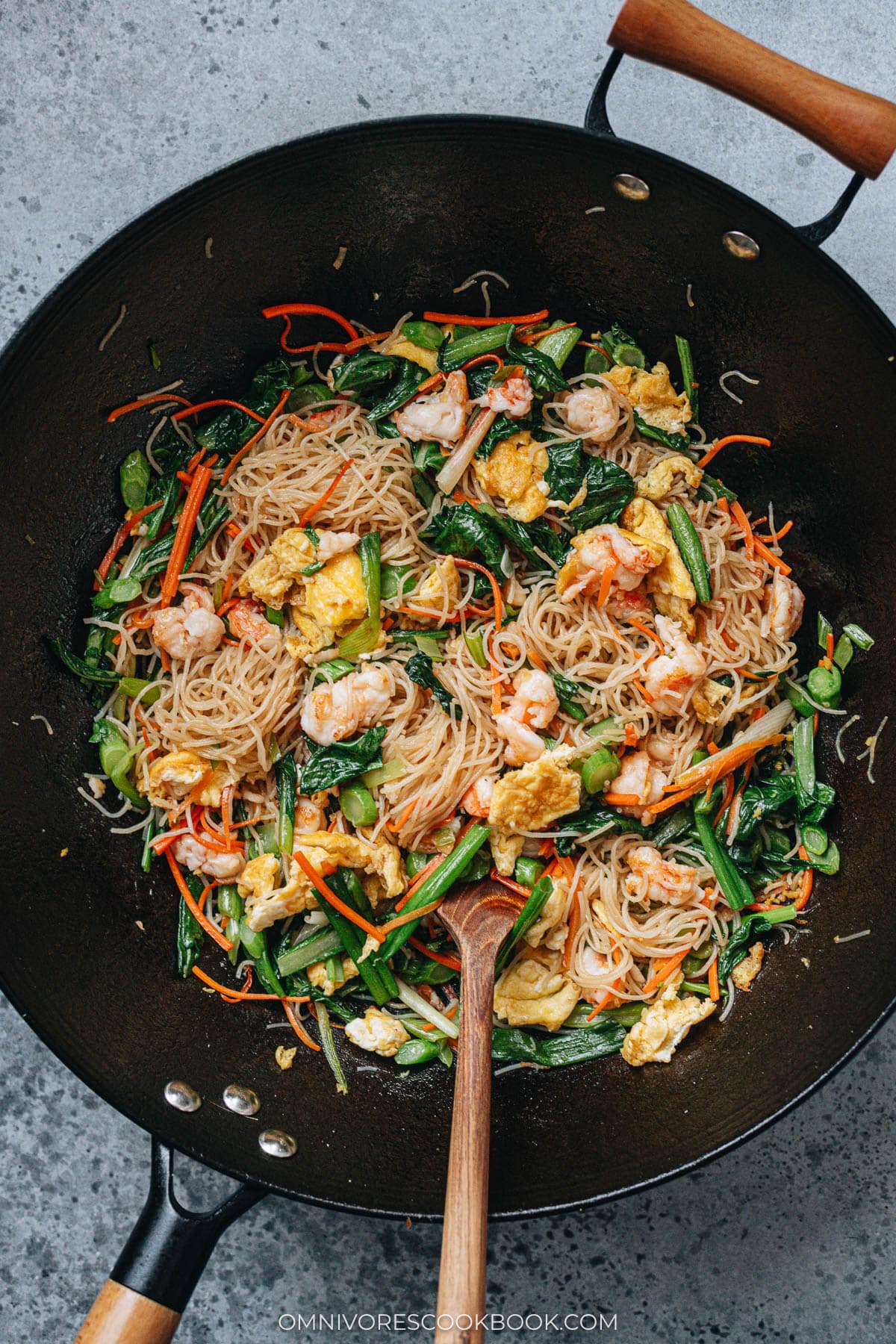
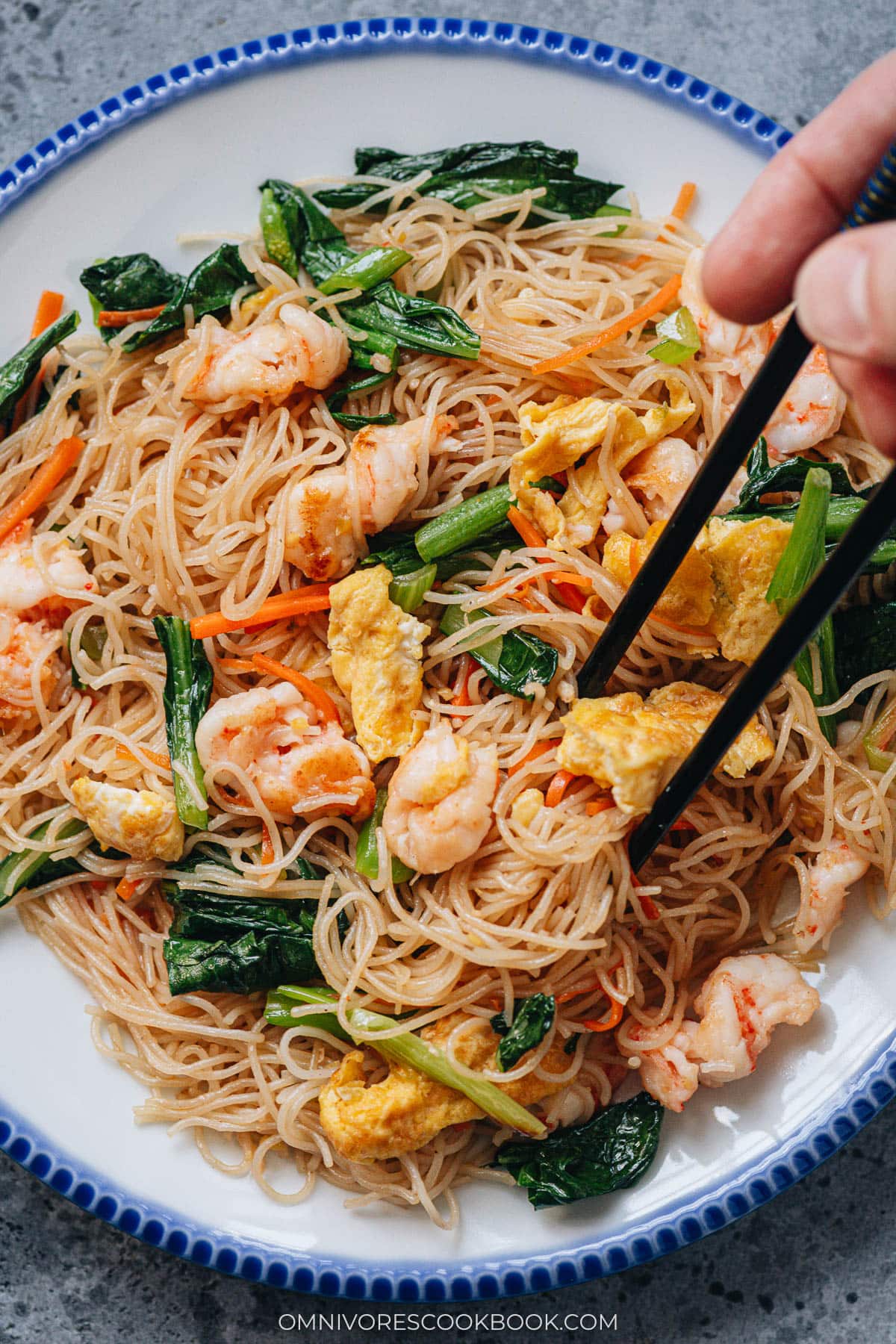
Living in New York next to Chinatown, I’m blessed with quick and tasty takeout and countless authentic Chinese restaurants. However, I still prefer the homemade version when it comes to Chinese noodles, especially for dishes like shrimp mei fun. Here is why – I can load up the noodles with a LOT of shrimp and vegetables, use less salt and oil, and customize the dish the way I want. Not only does it make the dish deeply satisfying, it also makes it more balanced and nourishing as a one-pan dinner.
Shrimp mei fun is similar to, yet different from, Singapore Noodles, which is also a shrimp and rice vermicelli noodle dish but the latter also contains char siu pork and uses a curry-based sauce. This dish has a clean flavor and it is lighter. The shrimp are sliced thinly so they cook fast and stay super tender, while the aromatic base of ginger, scallion and oyster sauce ties everything together beautifully.
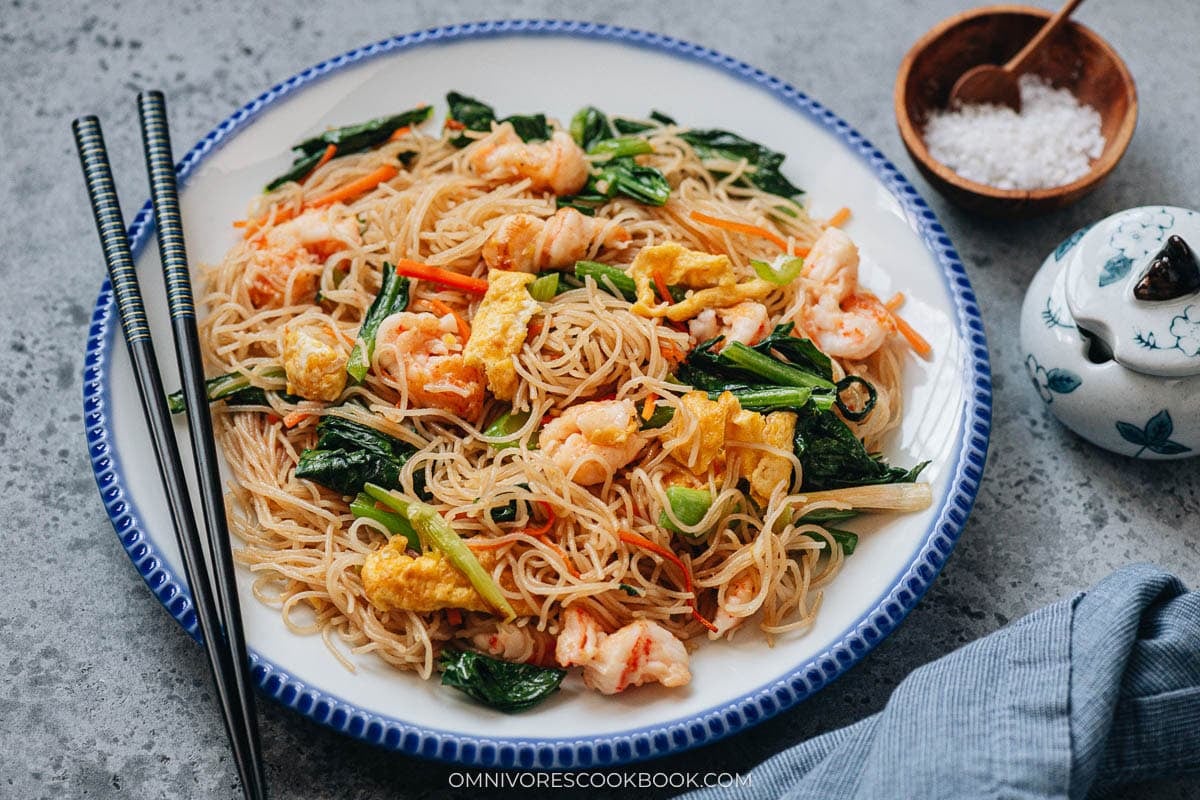
Ingredients
There are many ways to put together shrimp mei fun, with the choice of your vegetables, with or without eggs, and different types of sauces. Below is the version that I love the most.
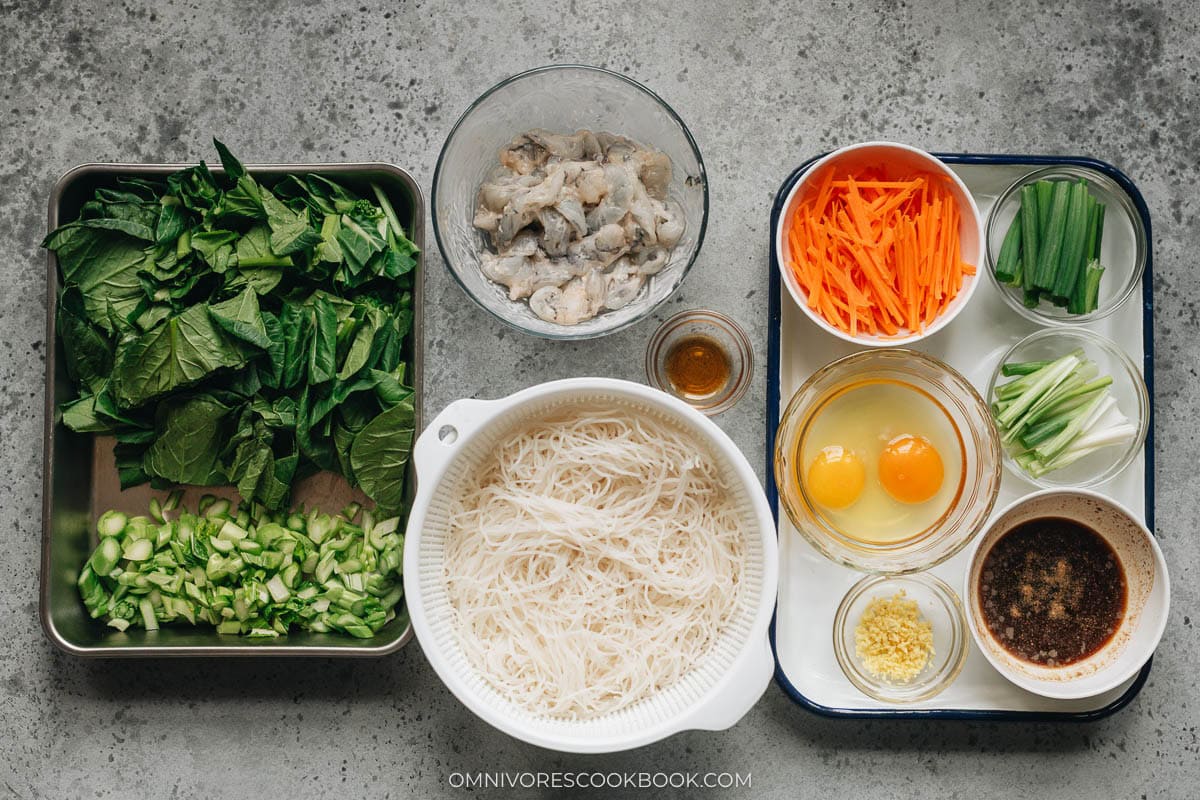
What type of rice vermicelli to use
Rice vermicelli comes in different shapes and sizes. When it comes to stir fried mei fun, my favorite brand is “Jiang Men Rice Sticks”. They are quite thin in dried form, but will become thicker once hydrated. The best thing about these rice noodles is, they hold their shape and stay a little chewy even after they’re cooked at high heat. You can often find this brand in Chinese markets and large Asian markets.
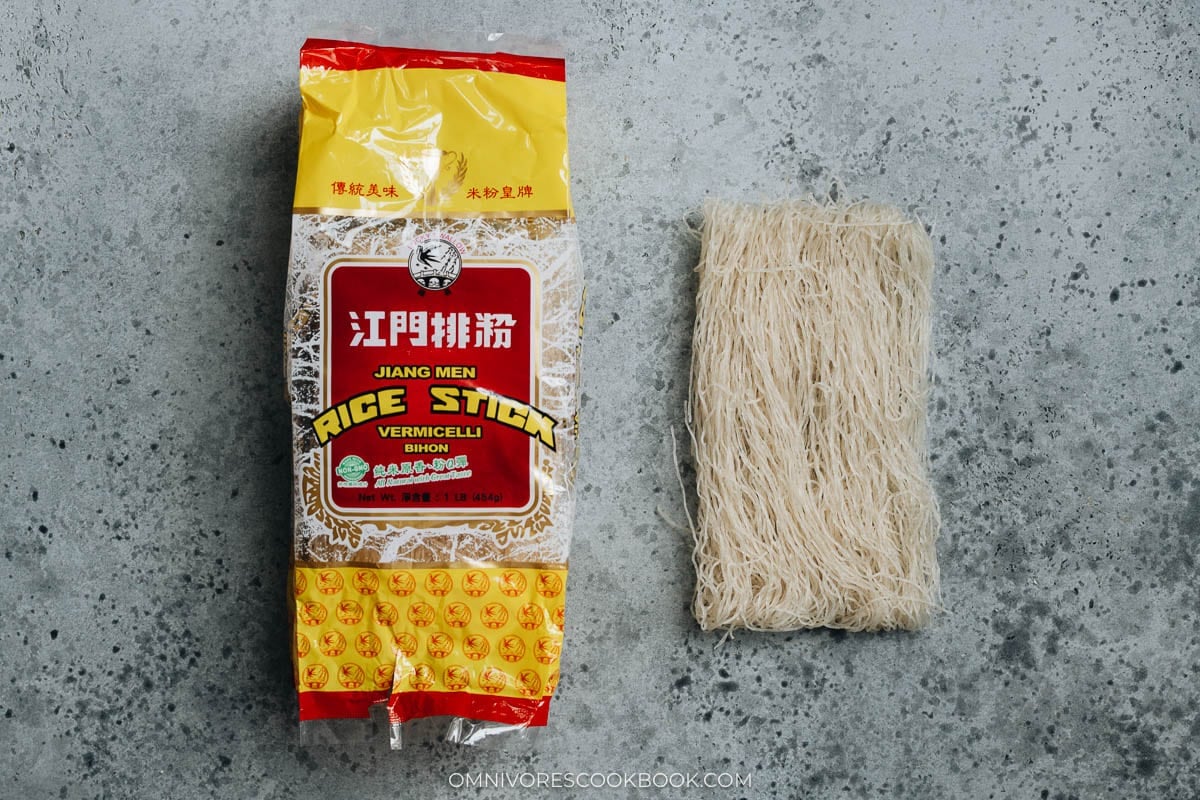
When not available, you can also use Vietnamese thin rice vermicelli. These rice noodles tend to come out a little softer, but the result will be great nonetheless.
Tips on soaking vermicelli
Different types of rice vermicelli usually call for very different preparation methods – some ask you to soak them in warm water, some require boiling. You can always follow the instructions on the package if there are any. For most types of rice vermicelli, I found the best way is to soak them in hot water – not boiling water, but hot enough to touch. Soak the noodles and check on them frequently, until they’ve turned soft but still have some structure, and they should be easy to separate by hand. This way, the noodles won’t stick together during stir frying, and won’t be overcooked easily.
My favorite way to prep shrimp
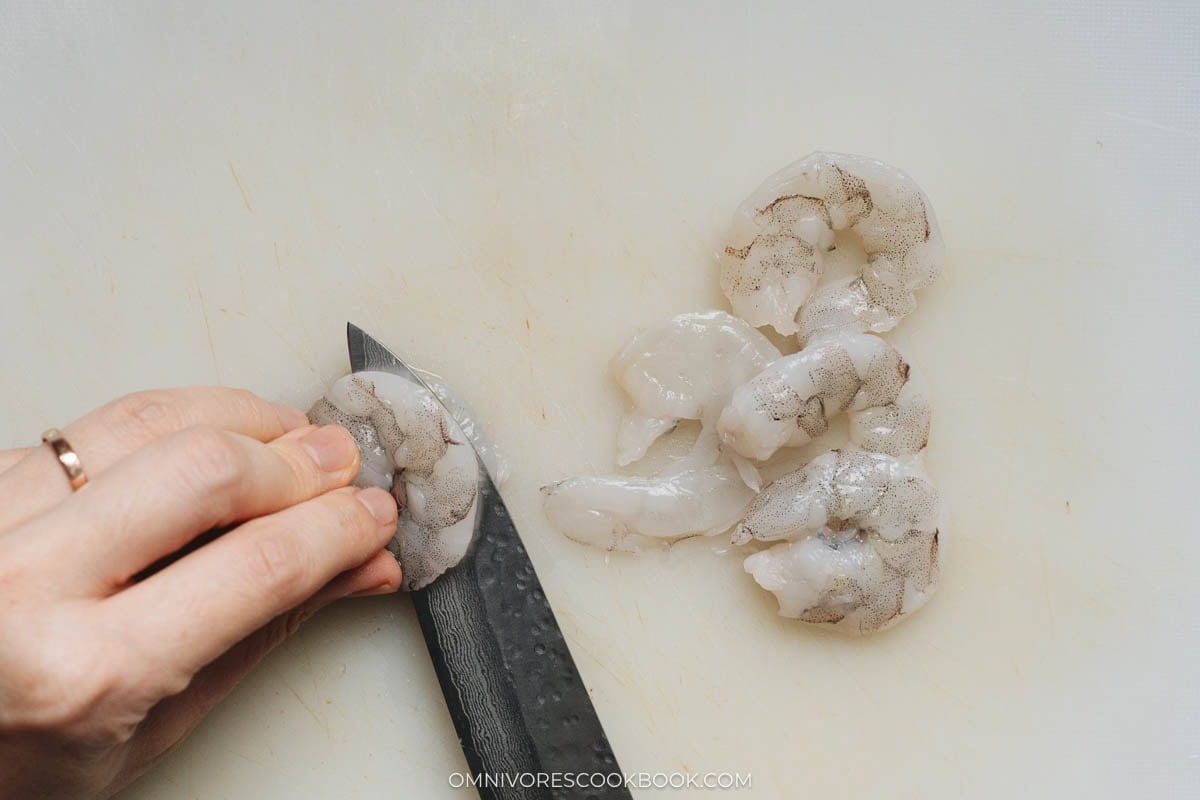
For noodle dishes like shrimp mei fun, I like to slice the shrimp down the vein to divide it into two thin pieces. This is a cutting method that many Chinese restaurants like to use, to help the shrimp distribute more evenly into the dish and create a better texture. However, if you’re short on time or prefer bigger shrimp pieces, you can skip this step as well.
Sauce ingredients
The sauce uses chicken stock, oyster sauce, light soy sauce and white pepper for a clean yet savory taste that works very well with seafood. A touch of sugar helps bring out the flavor of the ingredients. I added toasted sesame oil at the end for nuttiness.
Vegetable and aromatics
I chose to use scallion and ginger as the aromatics, as both pair well with seafood to bring out the subtle sweetness and umami.
For vegetables, I chose carrot and choy sum – both have contrast in color, taste and texture. And of course, you can choose different types of vegetables as you prefer. I recommend:
- Onion or red onion: to replace scallion
- Bok choy, napa cabbage, or Chinese broccoli (sliced thin): to replace choy sum
- Bean sprout or sweet pepper (julienned): to replace carrot
Add some eggs
Eggs are a common ingredient in mei fun dishes, because the tender texture works very well with the silky rice vermicelli. I especially like to use eggs in shrimp mei fun, because they pair perfectly with the light sauce, creating a satisfying texture.
My favorite way to cut choy sum for mei fun
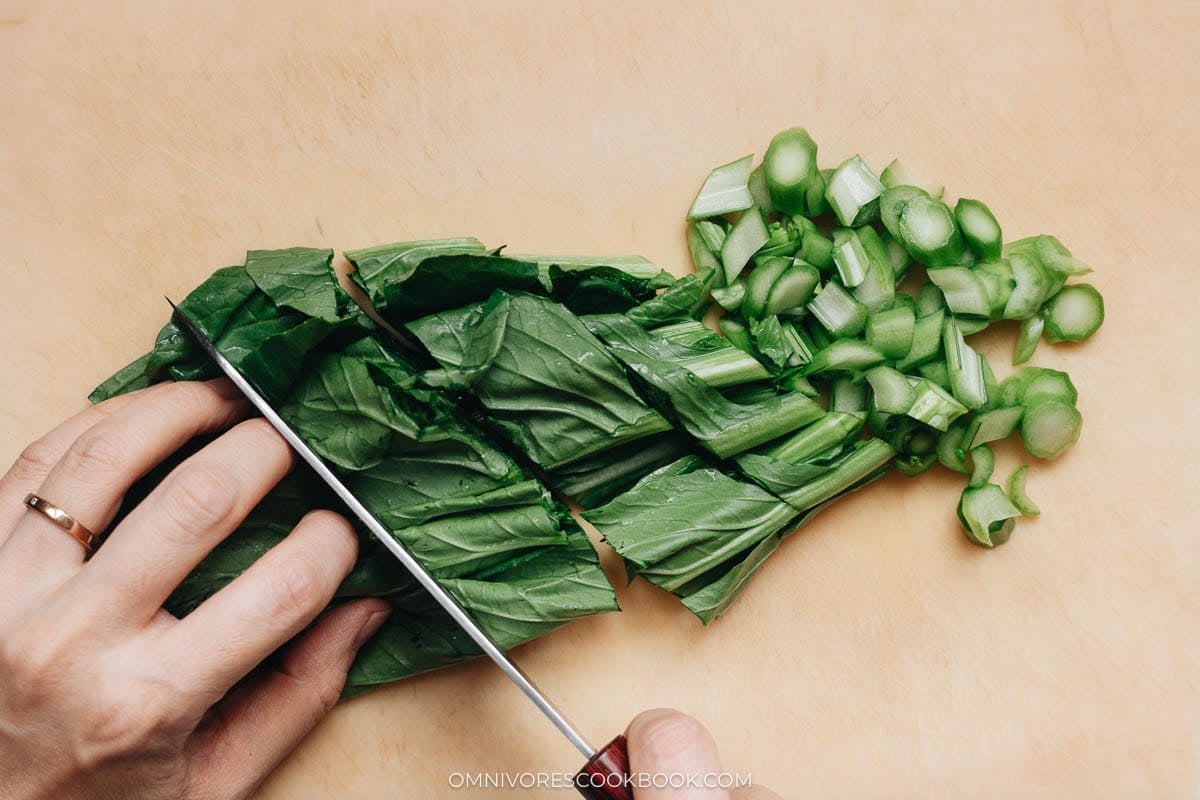
To make sure even cooking, I like to slice the choy sum stems on a bias into thin pieces, about 1/4” (6-mm) thick. Then I slice the green part into 1” (2.5-cm) thick pieces and separate the whites and greens. This way, the stems will be cooked through and stay crisp, while the greens get tender without being overcooked. If you use vegetables such as gai lan or bok choy, you can also use the same cutting method to achieve a good result.
How to make
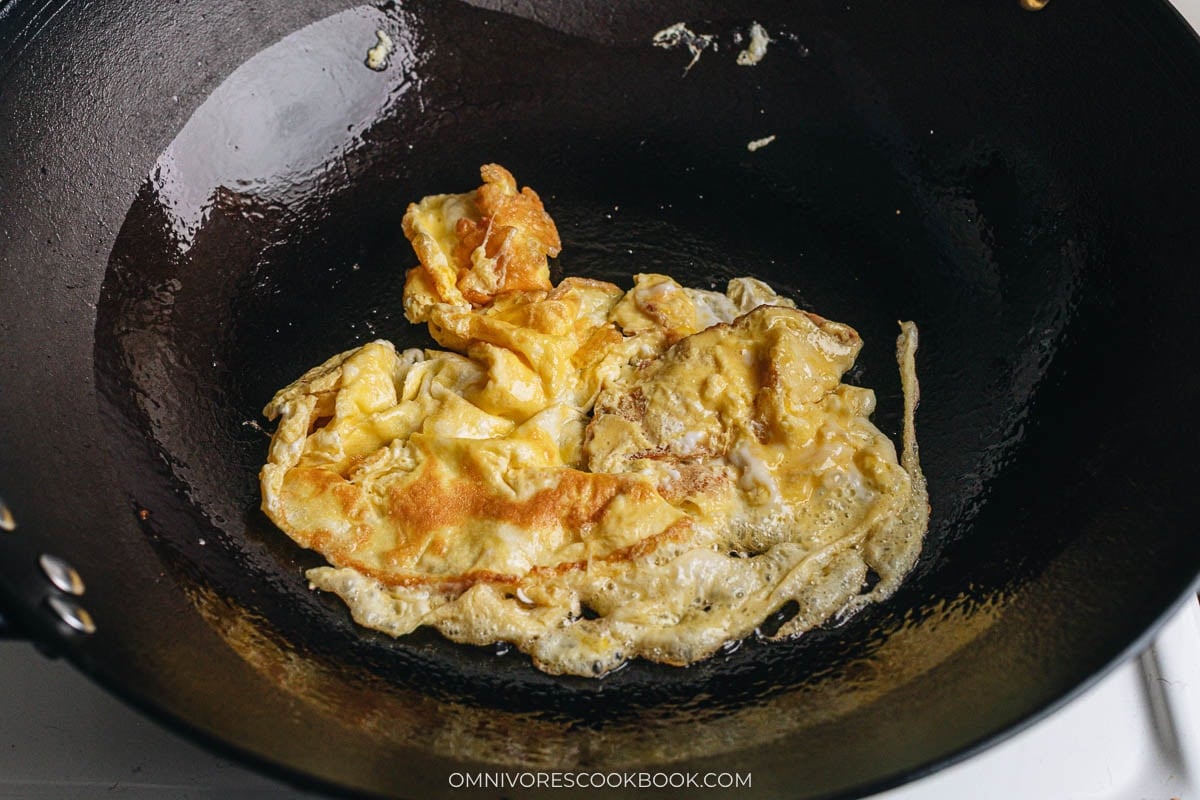
1. Scramble the eggs. I like to heat up a generous amount of oil really hot, so the eggs immediately fluff up once they hit the pan. I wait until the bottom browns a bit, then lightly scramble it so the inside is still tender before removing the eggs from the pan. The oil fries up the edges of the eggs, creating a fluffy and crispy texture and making them taste great.
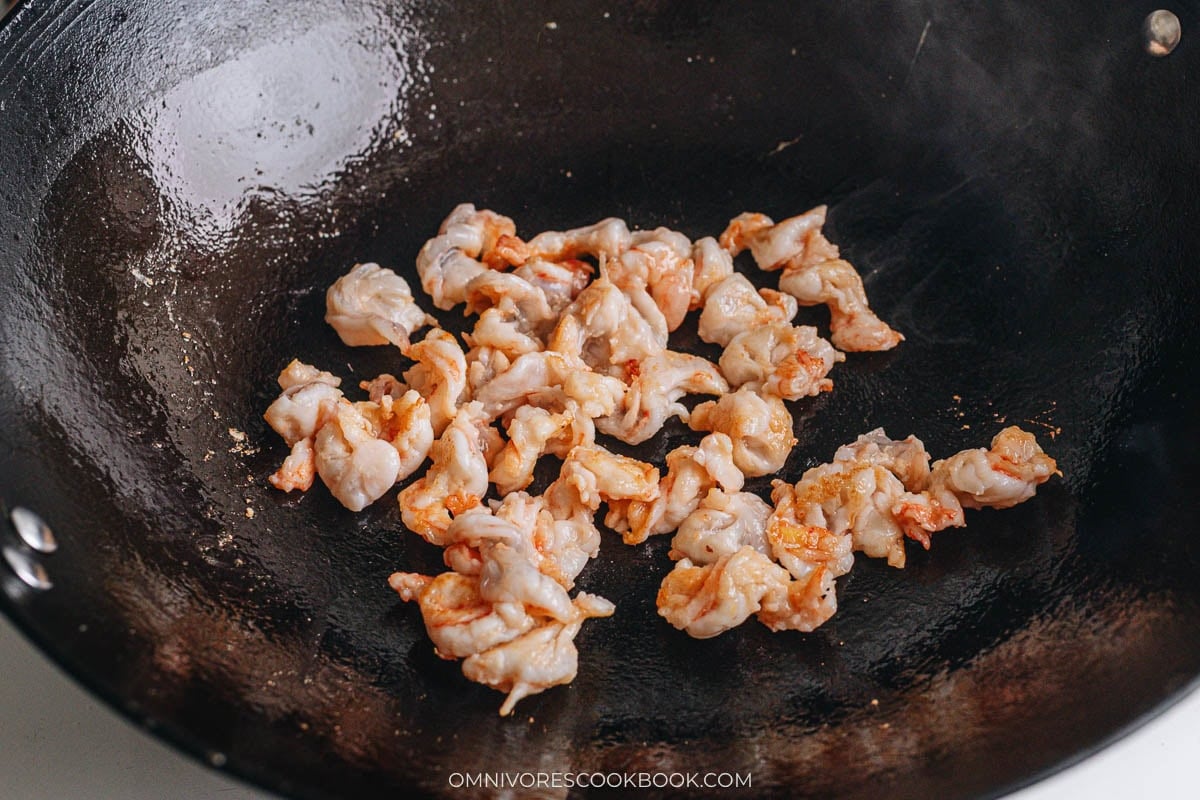
2. Cook the shrimp. Spread out the shrimp without overlapping, let cook them to sear the bottom, then gently stir until just cooked through. Since the shrimp are sliced thinly, they cook fast and stay very tender.
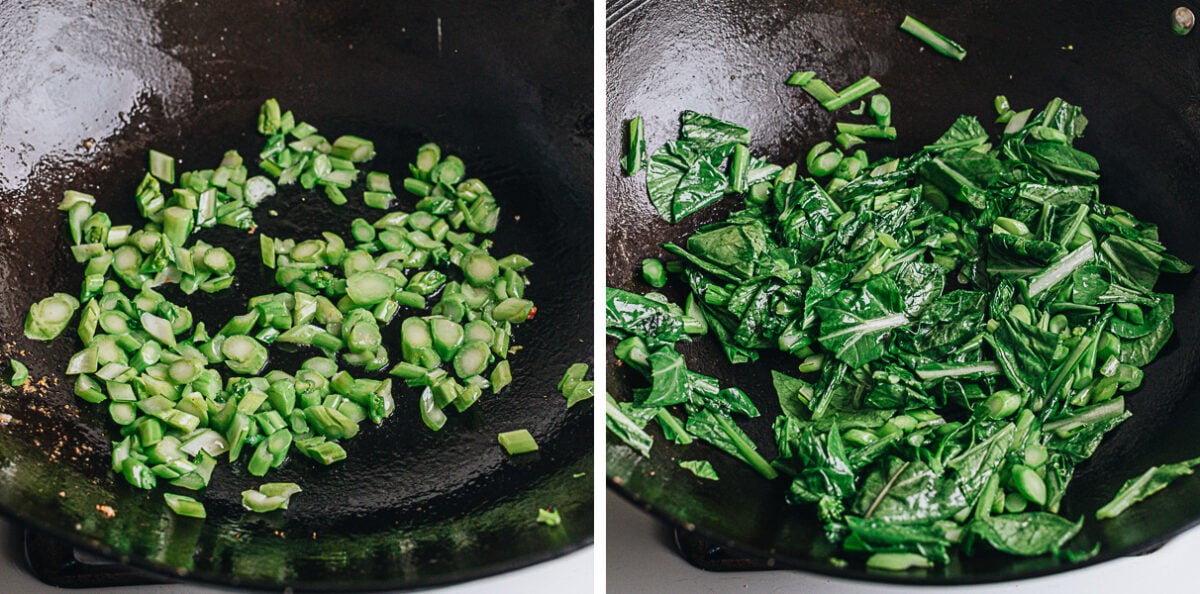
3. Cook the choy sum. I used a lot of choy sum in my shrimp mei fun, so I prefer to cook it separately to sear it properly and keep the wok hot. I like to cook the stem first, because it takes a little longer to cook. Then I add the leaves and season with a bit of salt. Try to undercook the choy sum just by a little, so it will be perfect once you mix everything together.
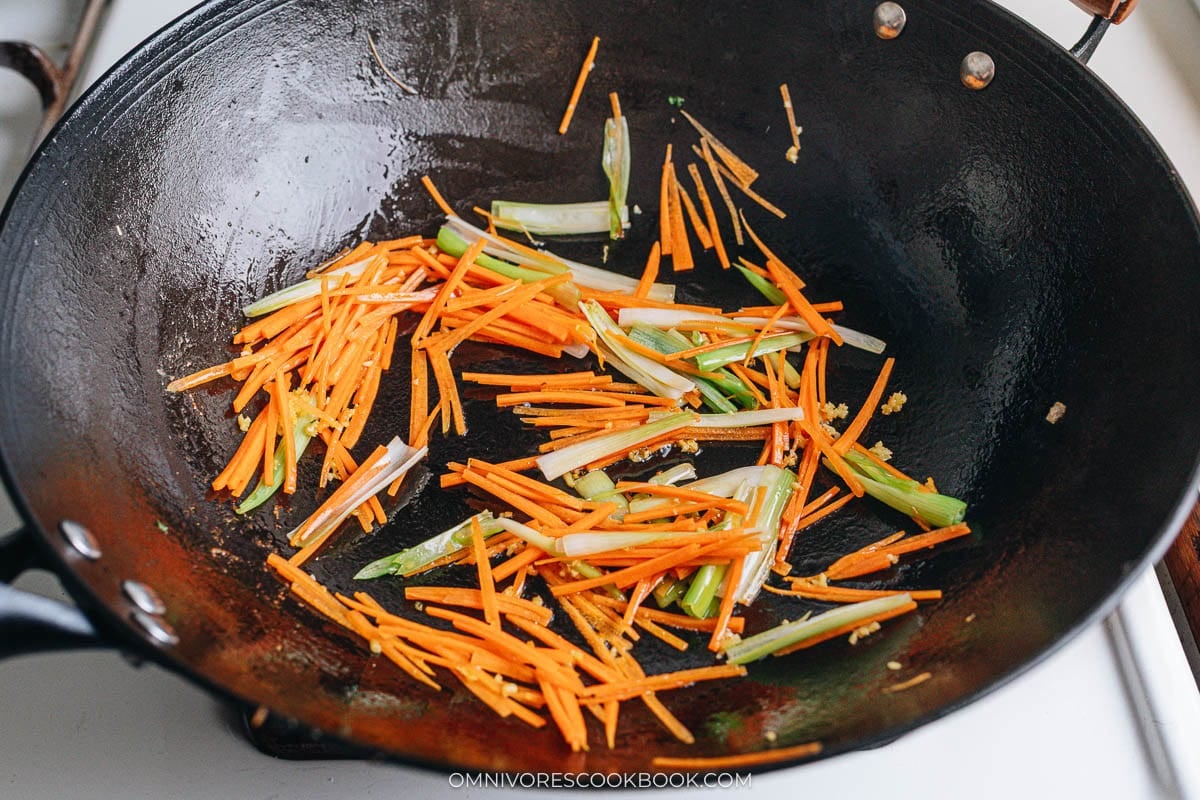
4. Infuse the oil and add carrot. Lightly cook the ginger and scallion white to make the oil fragrant, then slightly cook the carrots.
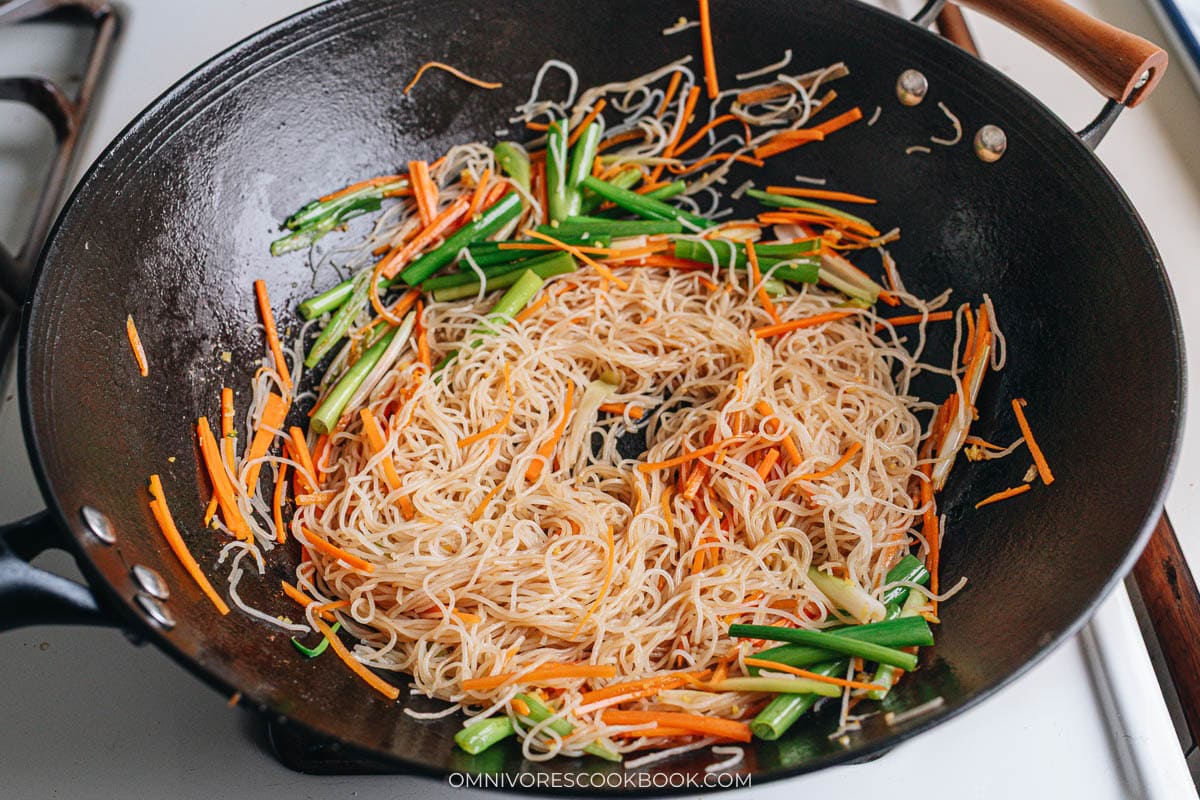
5. Toss the noodles with sauce. This step requires a little experience with the type of noodles you use and your soaking method. If your noodles are quite tough and undercooked, you might need to toss them a little longer. If only the noodles are tender at this point, toss them very briefly to mix with the sauce to avoid overcooking.
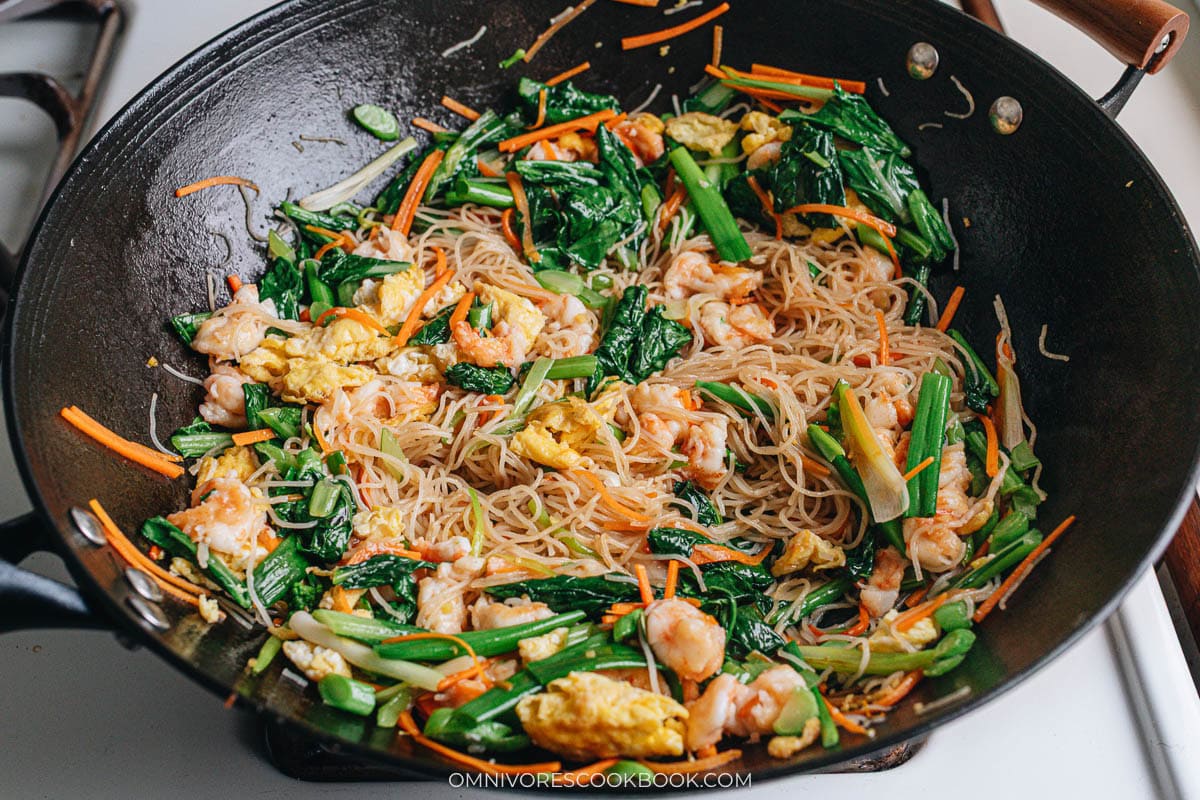
6. Put everything together. Add back the cooked eggs, shrimp and vegetables and give it a final toss. Note, there will be some liquid from the shrimp and vegetable plates, which add flavor to the dish and further cook the noodles more. So keep this step brief also to avoid overcooking the noodles. Once done, turn off the heat and swirl in the sesame oil.
If you want to serve this as a side dish
My recipe uses a large amount of toppings, because I like to have enough protein and veggies with every bite of noodles. But if you prefer to serve this one as a side dish, you can simply double the amount of noodles and sauce without changing anything else. If you use a large wok and have a powerful stove, it’s possible to make a double batch in one go (only if you double the noodles and sauce only, keep the protein and veggies the same). If you want to double everything, I highly recommend cooking it in two batches to avoid overcrowding the pan.
How to serve
I usually serve shrimp mei fun as a one-pan meal, but you can also add a few different dishes to make a dinner spread.
Here are some dishes that pair well with it: Pickled Daikon with Carrot, Pork and Corn Soup, and Air Fryer Char Siu Pork.
Frequently asked questions
How do I keep the noodles from clumping together?
Soak the noodles until they still have some structure, and the noodles will be less prone to sticking. You can always toss the noodles with a bit of oil if you have soaked the noodles but need time to prepare other ingredients. During the stir fry, always use high heat and toss quickly, so the noodles don’t overcook and turn mushy.
My noodles turned mushy. What went wrong?
Rice vermicelli only needs a short soak or brief cooking. Undersoaking the noodles is much better than oversoaking them, because you can always cook the noodles more in the wok. Oversoaking is the most common issue.
Can I use a regular skillet instead of wok?
Yes! A large skillet (at least 12”) with tall walls works the best. When tossing the noodles, use a pair of tongs instead of a spatula to prevent spilling.
Chinese Cooking Made Easy
Are you new to this website? This free email series is a great place to start. I’ll walk you through a few of my most popular recipes and show you how and why they work. You’ll quickly start to cook better Chinese food in your own kitchen.
Shrimp Mei Fun
Ingredients
- 8 oz peeled and deveined shrimp , halved lengthwise across the center of the back (*Footnote 1)
- 5 oz dried thin rice vermicelli noodles (yields 1 lb / 450 g after soaking)
- 1/2 lb choy sum (or baby bok choy)
Marinade
- 1 teaspoon Shaoxing wine
- 1/4 teaspoon grated ginger
- 1/4 teaspoon salt
- 2 teaspoons cornstarch
Sauce
- 2 tablespoons chicken stock (or water)
- 1 tablespoons oyster sauce
- 1 tablespoon light soy sauce
- 1/4 teaspoon salt
- 1/4 teaspoon white pepper
- 1/4 teaspoon sugar
Stir fry
- 3 tablespoons peanut oil (or vegetable)
- 2 eggs , beaten with a pinch of salt
- 2 teaspoons ginger , minced
- 1 small carrot , julienned
- 4 scallions , sliced to 2” pieces, white halved lengthwise, white and greens separated
- 1 teaspoon toasted sesame oil
Instructions
- Combine the shrimp and the marinade in a medium-sized bowl. Mix well with your hand until the shrimp are covered evenly, set aside.
- Cook or soak vermicelli noodles in hot water according to package instructions until al dente. I like to cook the noodles 1 minute less than the package calls for. (*Footnote 2) Once done, drain and set aside. Use a pair of scissors to cut the vermicelli into short strands so it’s easier to stir fry with.
- To prepare the choy sum, slice the stems on a 45 degree bias into 1/4” (6-mm) thick slices, and slice the leaves into 1” (2.5-cm) thick slices. If using baby bok choy, slice the whites into 1/2” (1-cm) pieces and the leaves into 1” (2.5-cm) pieces. Separate the stems and greens.
- Mix all the sauce ingredients in a small bowl and set aside.
- Add 1/2 tablespoon of oil into a wok and heat over high heat until smoking. Add the beaten eggs into the same pan. Lightly scramble the eggs until just cooked. Transfer to a plate.
- Pour in 1/2 tablespoon of oil and add the shrimp by spreading out with minimal overlap. Sear until the bottom is cooked, 1 minute or so. Stir and cook until the shrimp are just cooked through, another minute or so. Transfer to the plate with the eggs.
- Add 1/2 tablespoon of oil and the choy sum stems. Stir to coat with oil and cook for 30 seconds. Add the choy sum greens, stir and cook until the choy sum is slightly wilted. Sprinkle with a pinch of salt. Cook and stir until just cooked through but still crisp. Transfer to a plate.
- Add the remaining 1 1/2 tablespoons of oil, scallion whites, and ginger. Stir and cook for 1 minute to release fragrance. Add the carrot. Cook and stir for 1 minute, until the carrot just starts to turn soft.
- Add the noodles and scallion greens and pour in the sauce. Toss until the sauce is fully absorbed. Add back the cooked shrimp, eggs, and choy sum. Toss to mix everything well until the noodles are tender. Transfer everything to serving plates and serve hot as a main.
Notes
- Slicing the shrimp into thin pieces helps with the texture. The shrimp will cook faster and more evenly, generating a very tender result. The pieces also distribute more evenly in the noodles, creating a better mouthfeel when eaten with the noodles. However, if you prefer bigger shrimp pieces, you can keep the shrimp whole without cutting them.
- If you use the brand of rice noodles I recommend above, soak the noodles in very hot water (but not boiling water) for a few minutes until the noodles have turned soft, but still have some structure to them. You can further adjust the noodle texture during the stir fry.
- To make the dish gluten-free, use a gluten-free soy sauce and a gluten-free oyster sauce.
Nutrition

Did you make this recipe?
I’d love to hear how it turned out for you! Please take a moment to leave a 5-star rating ⭐️ and share your thoughts in the comments further down the page. It really helps others discover the recipe too.
Jim
Might be the best Chinese recipe I’ve ever made. Delicious..
Toni McAloon
Delicious and quick to make once all the chopping is done. I would increase the sauce next time I made it.
Barbara Roesch
I totally love the way you cook and your passion for food! 😋 Thank you for sharing your day to day cooking in your life