
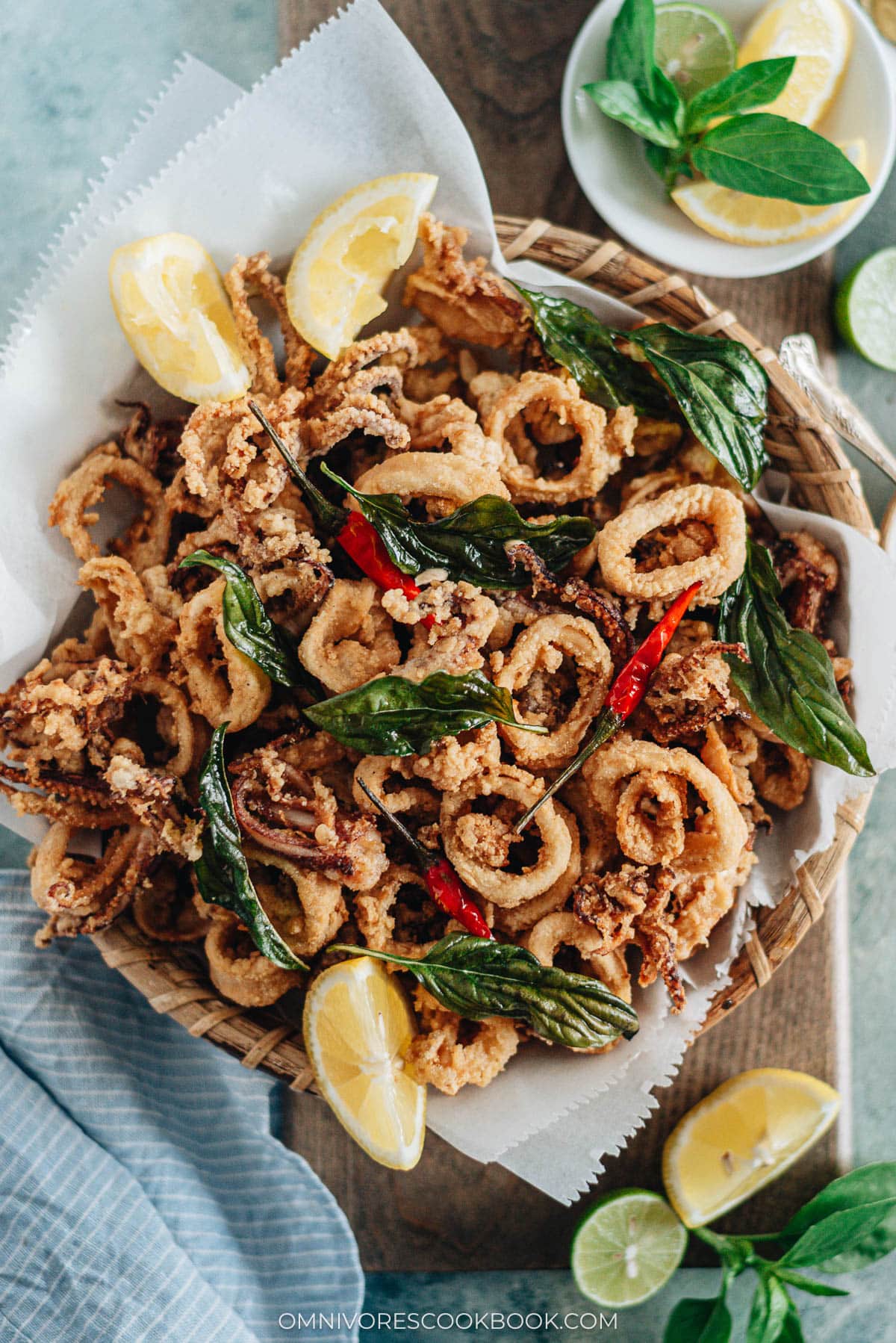
Salt and Pepper Squid is an authentic Cantonese Chinese dish that is commonly served as a banquet appetizer or restaurant favorite. It features lightly coated squid fried until crisp, then seasoned simply to highlight texture rather than heavy sauce.
Growing up, my parents played very different roles in the kitchen, with my mom handling everyday healthy meals and my dad stepping in on weekends with special recipes passed down from my grandma. Salt and Pepper Squid was one of those weekend dishes he made, and it became the treat I looked forward to most, always tied to family time.
My dad would marinate the squid rings with Shaoxing wine and plenty of ginger, then coat them in a simple seasoned batter before frying them until golden. I still follow almost the same steps today with my own recipe because the process is simple, and I recommend following it closely to achieve the best results. The squid stays so tender and the coating is hard to stop eating, so you may want to make a double batch. That said, I really hope you give this recipe a try.
Ingredients
I list all the ingredients I use to make this easy salt and pepper squid recipe, so you can easily make it at home for your family.
Main ingredients
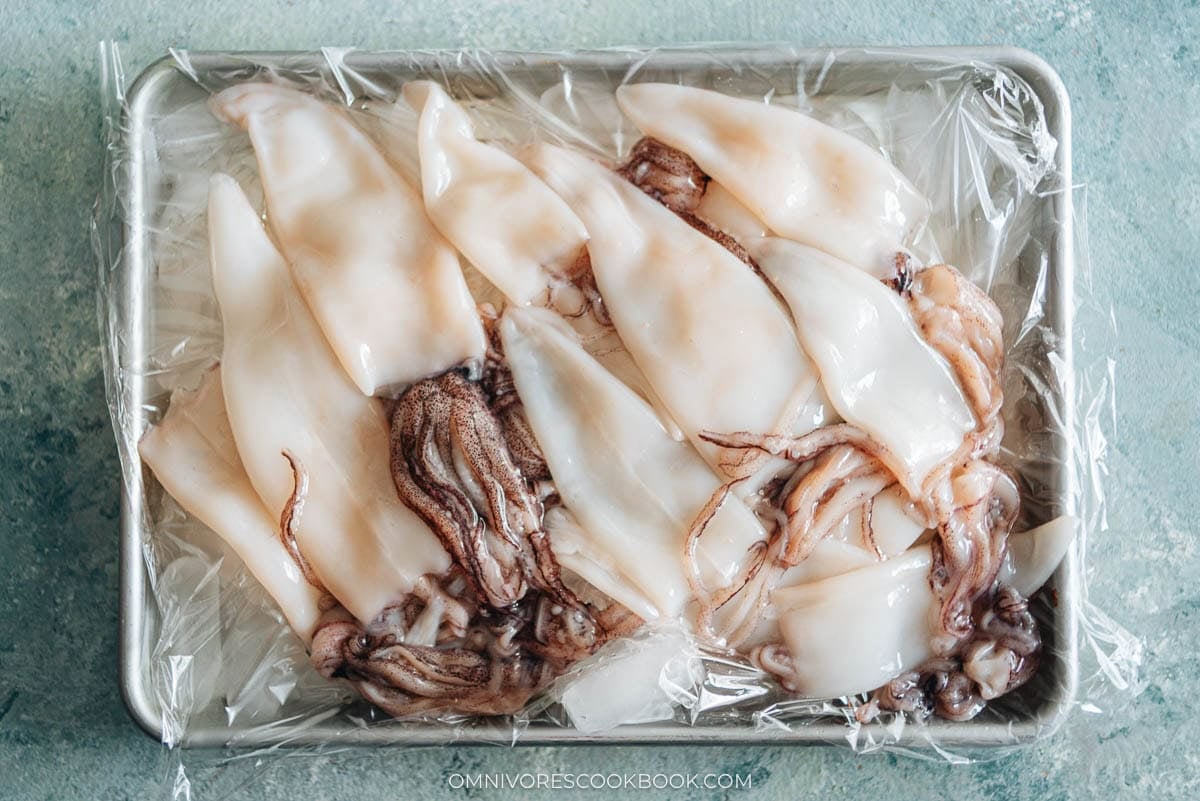
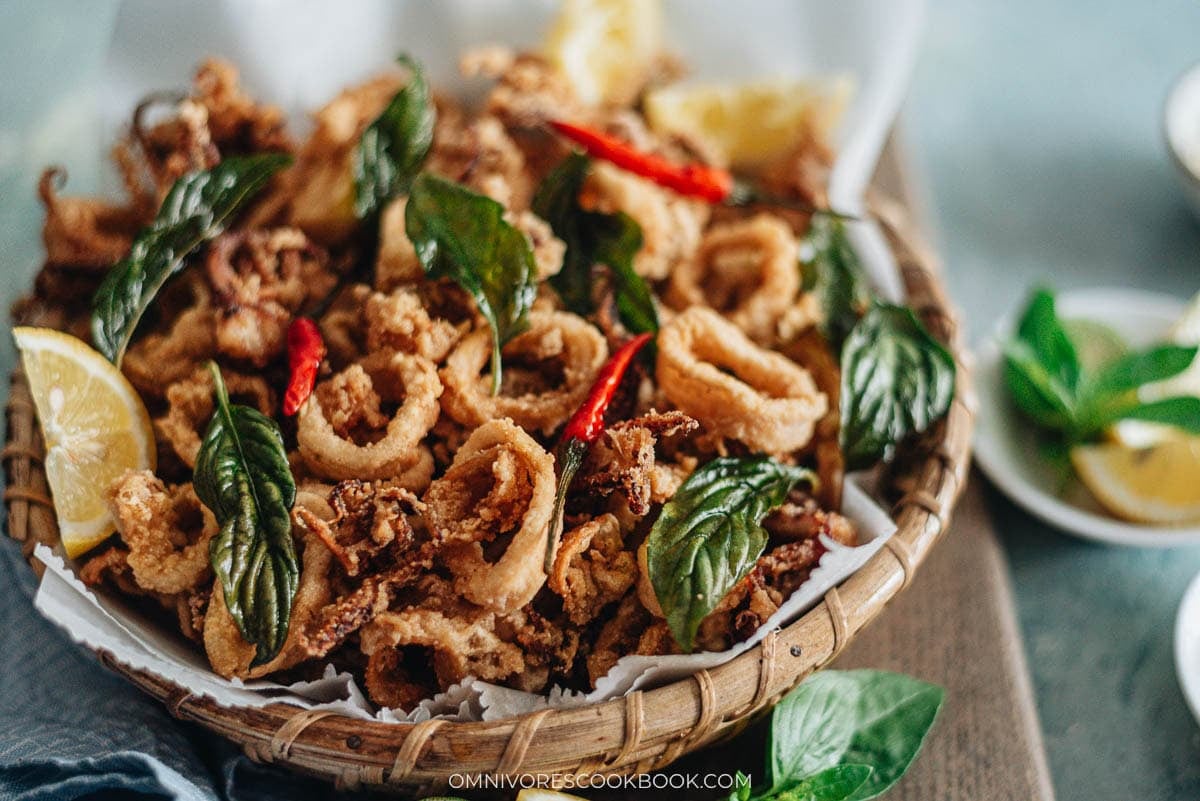
I use fresh baby squid as the star of the dish, along with vegetable oil for frying, and sometimes add basil and Thai chili peppers for garnish and an ultimate restaurant looking plate.
Marinade
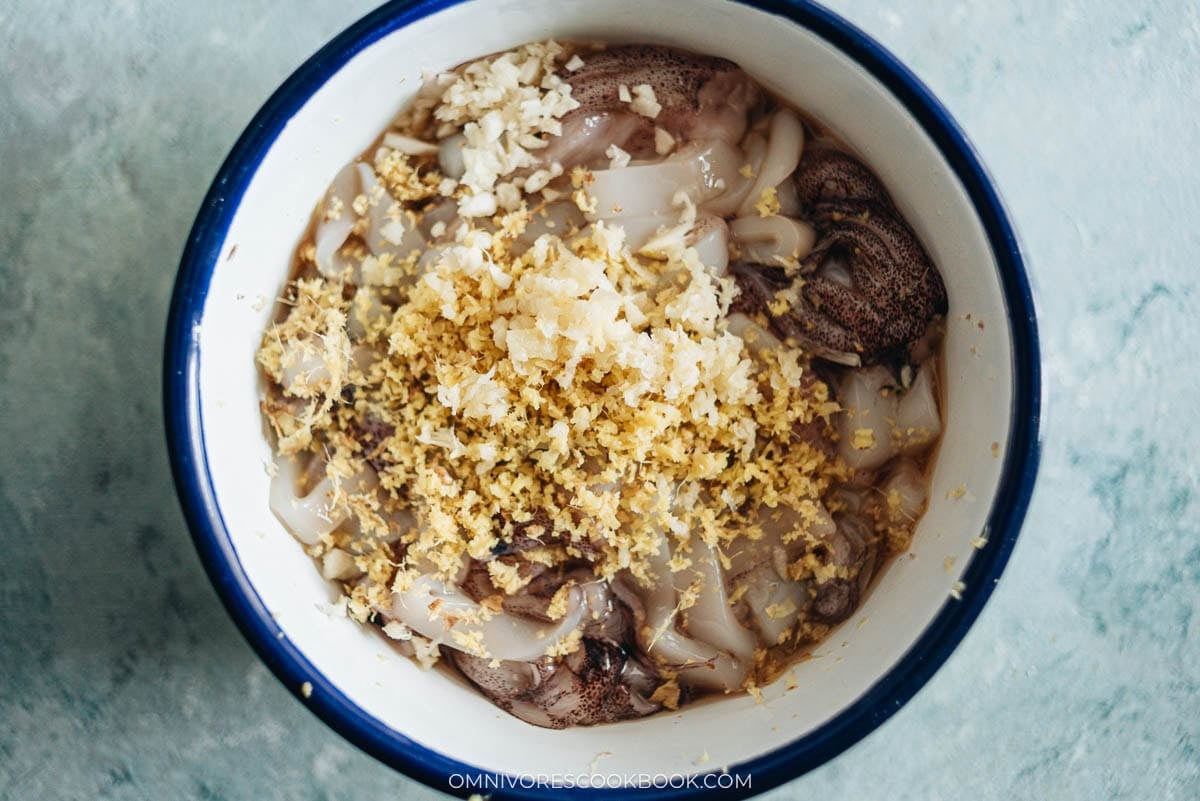
I keep it simple with Shaoxing wine, salt, ginger, and garlic. I mix them together with the squid so the flavor sinks in quickly.
Coating
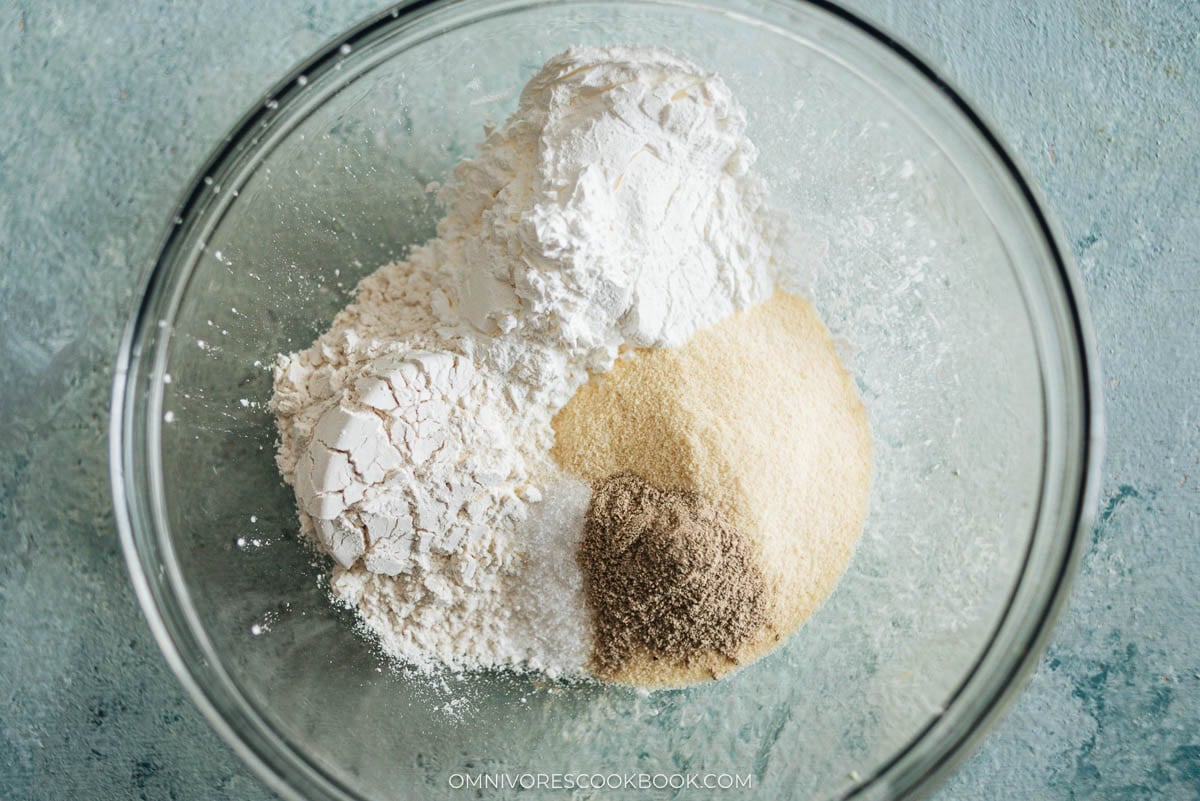
I combine all purpose flour, cornstarch, cornmeal, salt, and white pepper to create a crisp layer that fries up light and satisfying.
How to Make
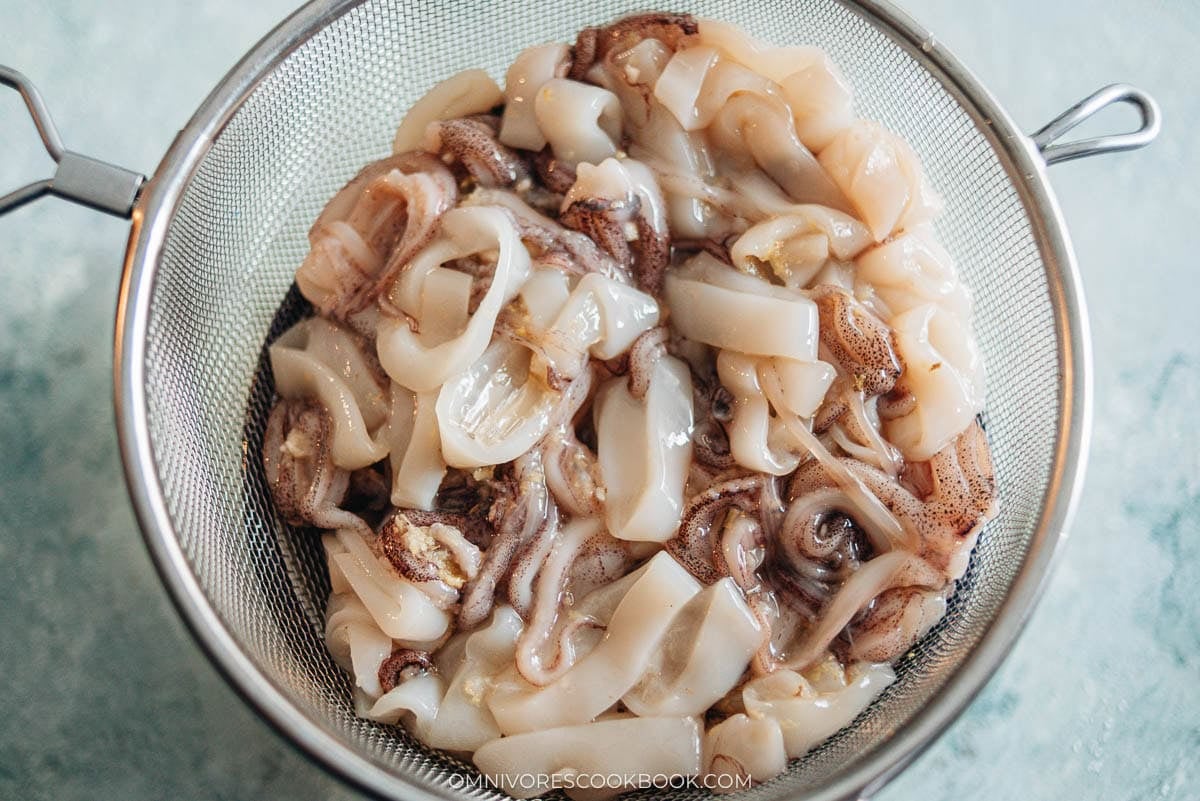
1. Prepare the squid: Rinse the squid under running water and drain well. Slice the bodies into about 1/3 inch rings, keep the tentacles whole, and cut larger tentacles into bite size pieces if needed.
2. Marinate: Transfer the squid to a large bowl and add the marinade ingredients. Mix well by hand, then marinate in the fridge for at least 15 minutes and up to 1 hour.
3. Prepare the coating: While the squid marinates, mix all the dry coating ingredients together in a large bowl.
4. Heat the oil: Add 2 to 3 inches of oil to a medium deep pot and heat over medium high heat to 375 to 400 degrees F. If not using a thermometer, place a bamboo chopstick in the oil and watch for steady bubbles, then lower the heat to medium. Set up a draining station with a wire rack over a tray or plates.
5. Drain the squid: Drain the squid and discard the liquid.
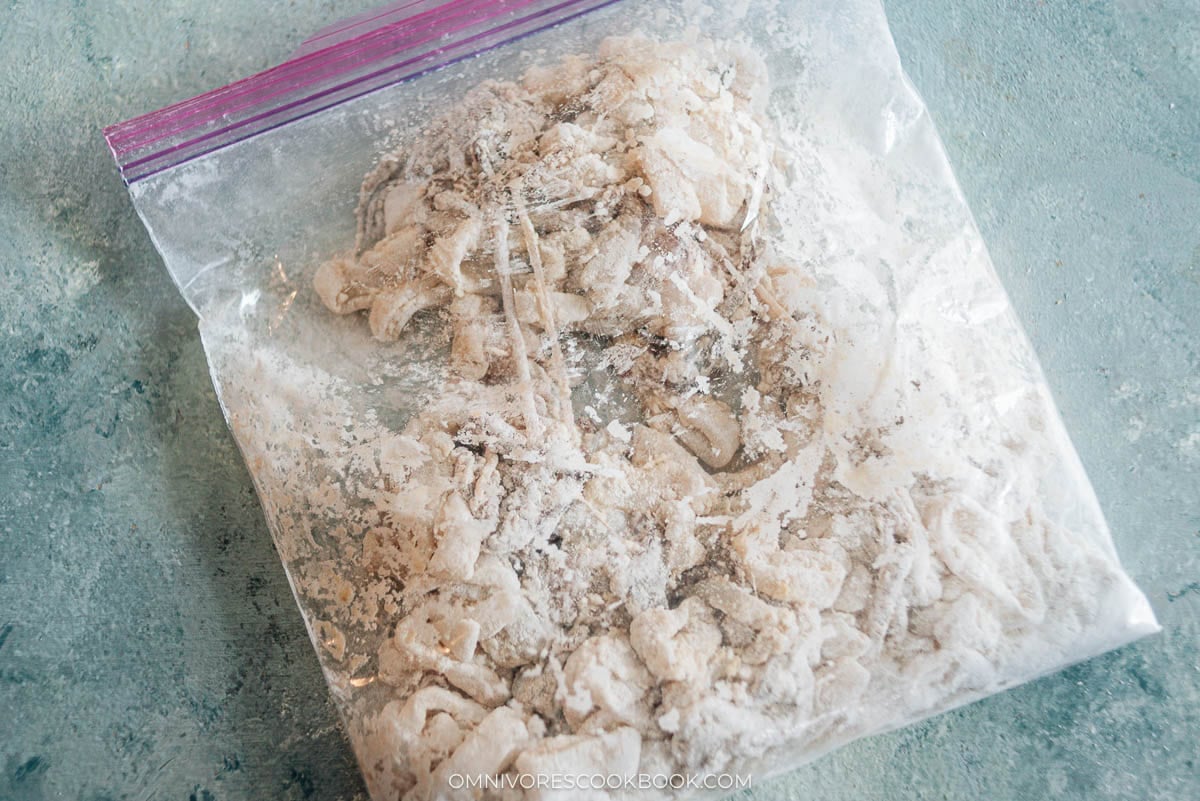
6. Coat: Add half of the squid and half of the coating to a large ziplock bag and shake to coat well. Transfer to a bowl and repeat with the remaining squid.
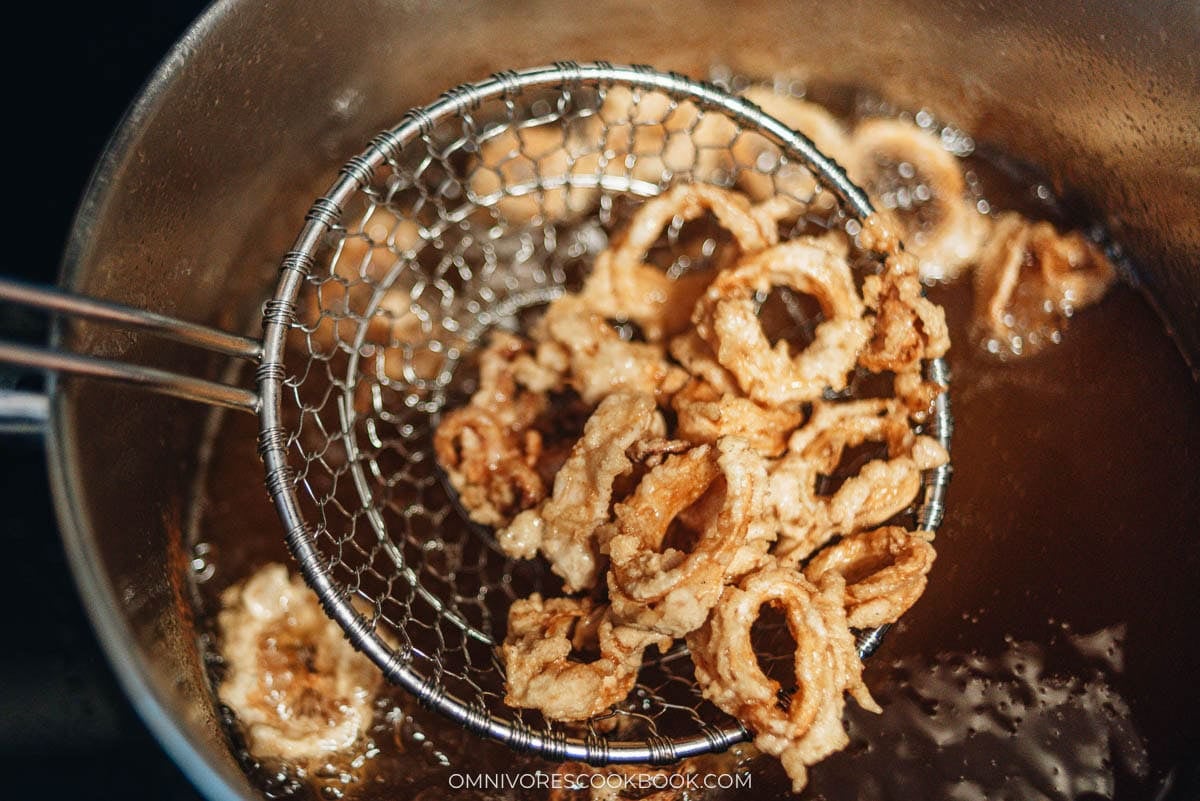
7. Fry: Separate the squid pieces and lower them into the hot oil in small batches using a slotted spoon or spider. Fry until golden brown, about 2 to 3 minutes, then transfer to the prepared rack and repeat with the remaining batches.
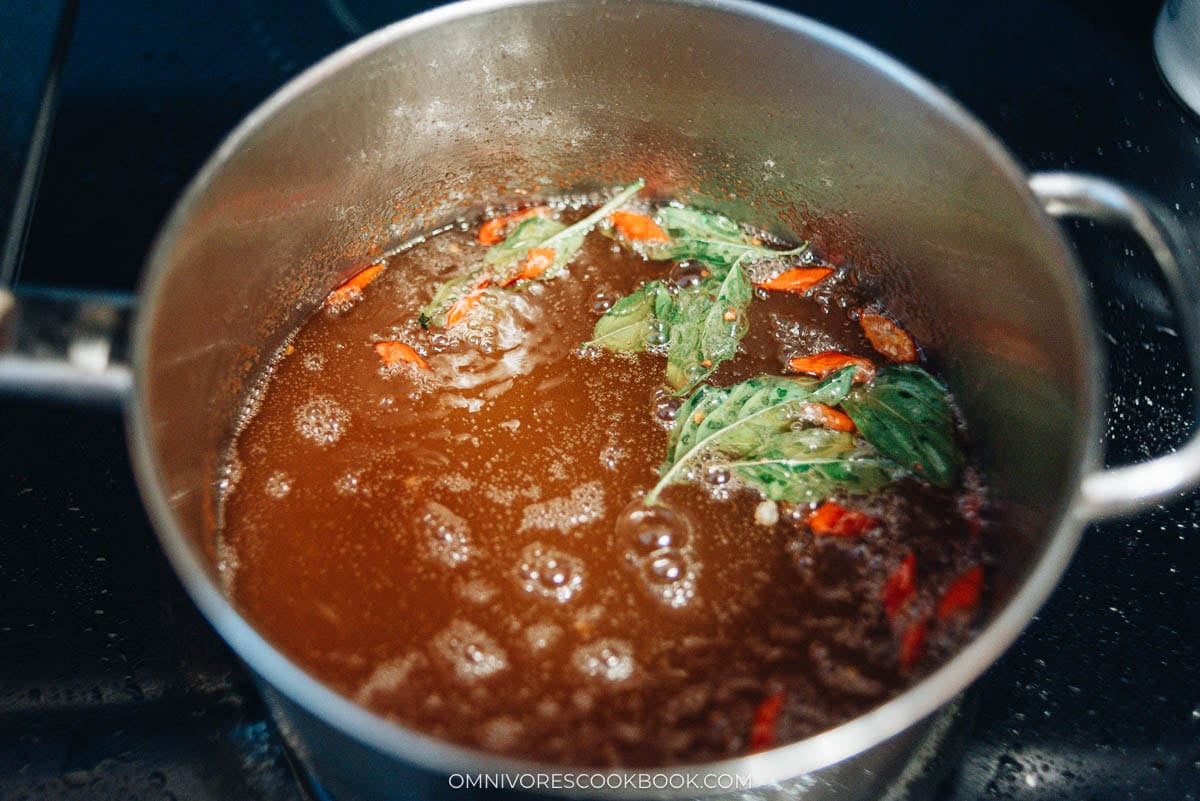
8. Garnish the squid: For a restaurant style presentation, fry dried basil leaves and chili peppers briefly until crisp, then transfer them to a plate to cool.
9. Serve: Serve the squid hot with lemon wedges and dipping sauces, if desired. Enjoy right away while still crisp.
Main tips to consider
Marinating matters
I always marinate the squid with Shaoxing wine and ginger because it solves two problems at once. The wine helps remove any fishy taste, while the ginger naturally softens the squid so it stays tender after frying, which is something I learned early on from watching how my family handled seafood at home.
Best formula for creating a crunchy, crispy, airy texture
When I want that light and crunchy texture, I focus on two things, cornstarch and hot oil at 375 to 400 degrees F. I fry the squid quickly so the coating crisps right away without overcooking the meat, and I mix cornstarch with all purpose flour and a bit of cornmeal to add extra crunch and chew, the same texture I grew up enjoying at restaurants.
Gluten free option
If you want a gluten-free dish, you can even replace the all-purpose flour with cornstarch. Your finished squid rings will have a lighter color, but they will remain crunchy crisp.
How to serve
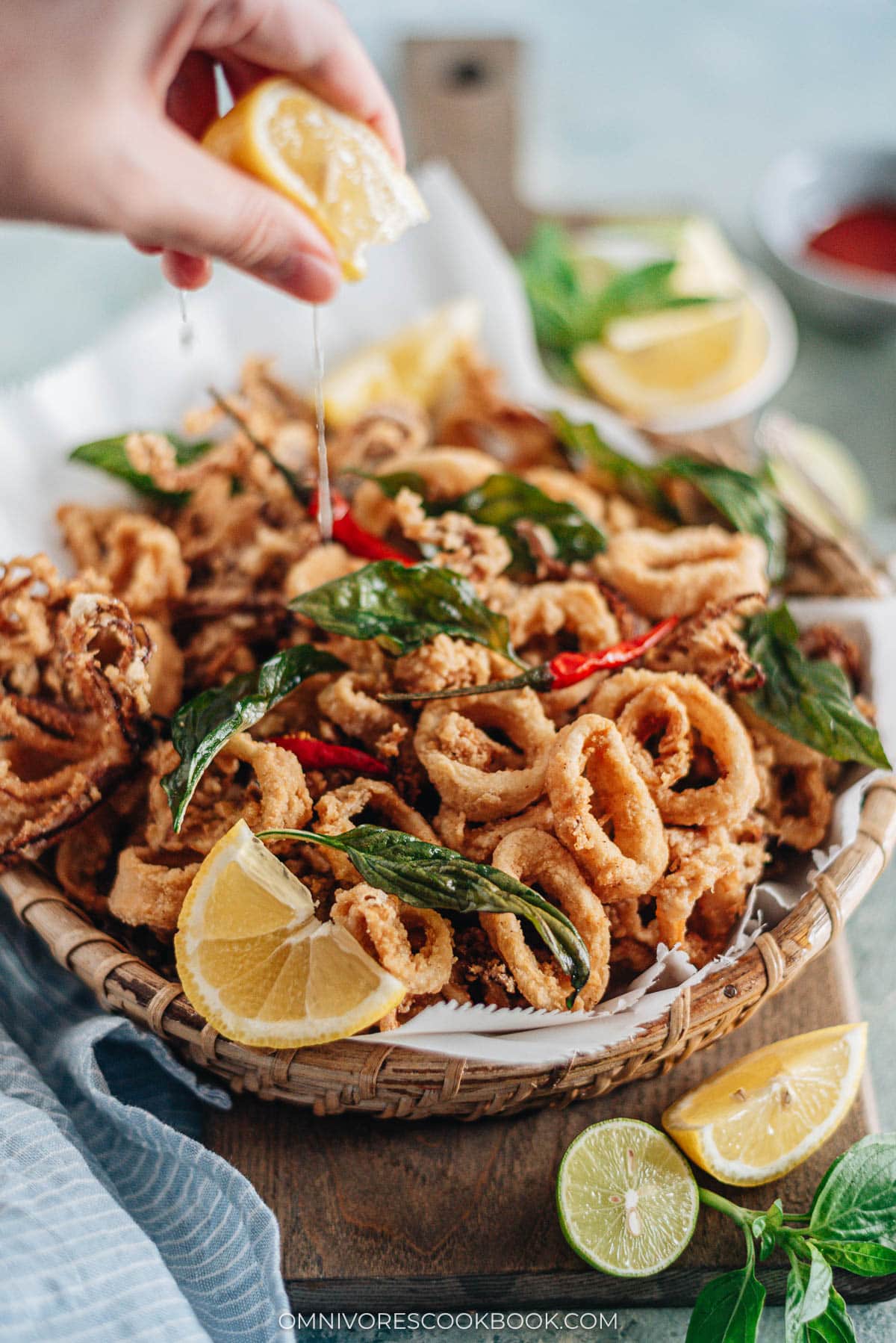
At home, I serve salt and pepper squid the traditional way, hot and straight from the fryer with nothing more than fresh lemon juice on the side, just like my dad used to. But when I have friends over for dinner I usually serve it with steamed white rice and my spicy cucumber salad, and most of the time the squid disappears before anyone even thinks about reaching for a homemade chili garlic sauce. It is that good!
Frequently asked questions
What type of squid to choose?
Baby squid has very tender meat and gives the best results. You can also use larger squid if you slice it into thinner rings, which still cooks up with a good texture. I avoid very large squid that weighs around a pound, since the meat tends to be quite tough.
How to store squid properly before cooking?
I like to ask for extra ice at the fish market and take care of the squid as soon as I get home. I unseal the bag right away, spread the ice in a tray, cover it with plastic wrap, place the squid on top, and store it in the fridge, loosely covered if needed, where it stays fresh for one day. If I plan to cook it a few days later, I freeze the squid right away, which is the best way to keep seafood fresh.
How do I keep the coating crisp?
I fry the squid in small batches and avoid overcrowding the pot. This keeps the oil temperature steady and the coating light.
Want to Save This Recipe?
Enter your email below & we’ll send it to your inbox. Plus get great new recipes from us every week!

Salt and Pepper Squid
Ingredients
- 1 1/2 lbs baby squid
- 6 cups vegetable oil , for frying
- 1 batch basil , for garnish (Optional)
- 4 to 5 Thai chili peppers , for garnish (Optional)
Marinade
- 2 tablespoons Shaoxing wine
- 1/4 teaspoon salt
- 2 tablespoons minced ginger
- 2 cloves garlic , minced
Coating
- 1/3 cup all-purpose flour (*footnote 1)
- 1/3 cup cornstarch
- 1/4 cup cornmeal
- 1/2 teaspoon salt
- 1/2 teaspoon white pepper
Serving options
- Lemon wedges
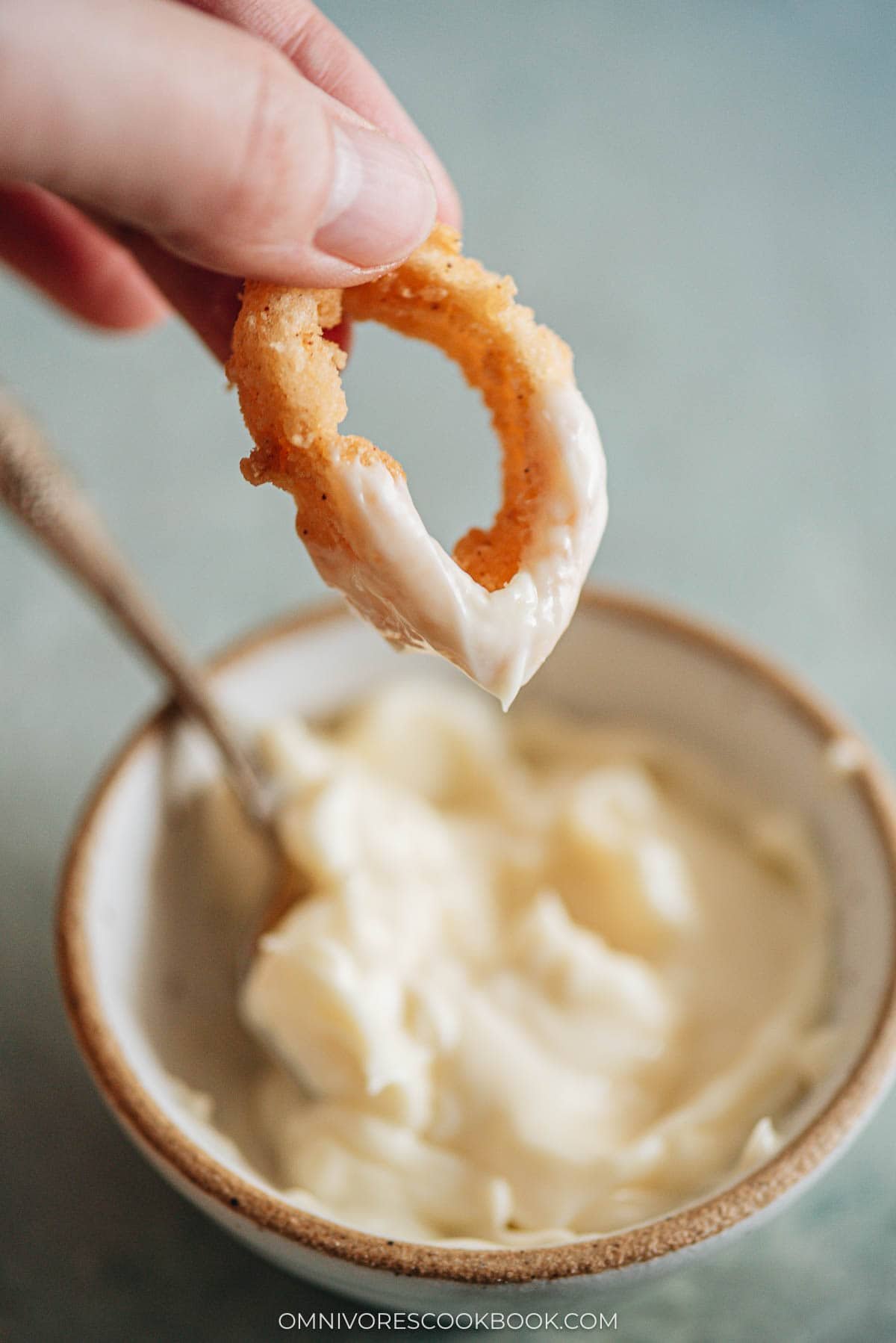
- Mayonnaise , ketchup, Sriracha hot sauce, wasabi mayo, or mustard as dipping sauce
Instructions
- Rinse squid with running water and drain. Slice the cap into 1/3-inch (1 cm) rings and leave the tentacles in one piece. If you use larger squid, you can slice the tentacles into 2-inch (4 cm) bite size pieces.
- Transfer everything into a big bowl and add marinate ingredients. Mix thoroughly by hand. Mariante in the fridge for at least 15 minutes to up to 1 hour.
- Meanwhile mix all the ingredients for the dry coating in a big bowl.
- When you’re ready to cook, add 2 to 3 inches (5 to 7 cm) oil in a medium-size deep pot. Heat over medium-high heat until the oil reaches 375 to 400 degrees F (190 to 200°C). If you do not have a thermometer, place a clean bamboo chopstick into the oil. You should see small bubbles rapidly form around the chopstick. Turn to medium heat.
- While heating up the oil, set up the deep fry station by placing a large wire rack on a big tray. Or you can use a few plates instead. (*Footnote 2)
- Drain the squid and discard the liquid. Transfer half of the coating and a half of the squid into a large ziplock bag. Shake and the bag to coat the squid well. Then transfer everything into a big bowl.
- Separate the squid pieces and place them on a large spider sieve or slotted spoon. Lower into the hot oil. Add in small batches at a time so your pot won’t become crowded. Fry until the squid turns golden brown, 2 to 3 minutes. Transfer to the prepared wire rack. Continue to cook the remaining batches using the same method.
- (Optional) If you want to present the dish like in a restaurant, fry basil leaves and chili peppers for garnish. Dry them thoroughly and lower them into the oil using a sieve. This step might cause splatter since the basil contains a lot of liquid. Fry for 30 seconds, or until the basil leaves turn dark and crispy. Transfer to a plate to cool.
- Serve the squid hot with lemon wedges on the side. You can also serve sauces such as mayonnaise, ketchup, Sriracha, and/or mustard if you prefer. Be prepared for the wows from your family when they see you can cook salt and pepper squid like a professional chef!
Notes
- Replace all-purpose flour with cornstarch for a gluten-free dish. The squid coating will have a lighter color but it doesn’t affect taste.
- Resting the squid on a cooling rack is the best way to drain oil while keeping the rings crispy. Avoid using layered paper towels on a plate; it’ll absorb oil but the paper traps hot air and moisture that will “steam” the squid and make it soggy.
Nutrition

Did you make this recipe?
I’d love to hear how it turned out for you! Please take a moment to leave a 5-star rating ⭐️ and share your thoughts in the comments further down the page. It really helps others discover the recipe too.
Bee Lin
Is the marinated squid supposed to be damp/wet when coated with the flour?
The taste was good, the covering was not as beautiful as yours.
Maggie Zhu
I drain the marinating liquid off, but yeah, the squid is damp on the surface and I don’t pat dry them. I think the little moisture helps to make the flour stick. Some coating might fall off during frying, but I find most would stick.
Thanks for leaving a positive review! I’m glad to hear you liked the taste 🙂
Lisa
What can I replace the shaoxing wine with? As I need to cook a halal version
Maggie Zhu
You can use some chicken broth to replace the Shaoxing wine.
Fritz
This is the best salt and pepper squid recipe! I am saving this and gonna be using this recipe for the rest of my life! Super easy and yummy! Thank you for sharing this to the world!
Dave Miller
Oops, I forgot the pepper, but it was still delicious with the heavy fried garlic/ginger flavor. So Yummy! Thank You!!! So much better than the local China restaurants!
Adaptations. I used tiny whole squid like the restaurants use in the cold salads. Two parts Hushpuppy mix combined with one part cornstarch. Peanut oil.
Hal
Ju yim yau yu.
Mare
Hi Maggie-
Would frozen squid (defrosted) be ok to use instead of fresh for this?
–Mare
Maggie
Yes Mare, you could use the defrosted squid for this recipe. Happy cooking and hope your dish turns out great 🙂
Rebeca
I absolutely LOVE salt & pepper squid! I have no objection to fried foods either, but never deep fry at home because I don’t like how it stinks up the apartment (hood filter is useless) and I also don’t like to hold on to large amounts of “frying” oil. So I cringe to ask, but do you know of a way to make something similar by oven “frying”?
Milena | Craft Beering
I bet the Shaoxing wine makes the squid meat taste sweet-ish in addition to tenderizing it. This is too good to pass! You are so lucky on the dad front:)