
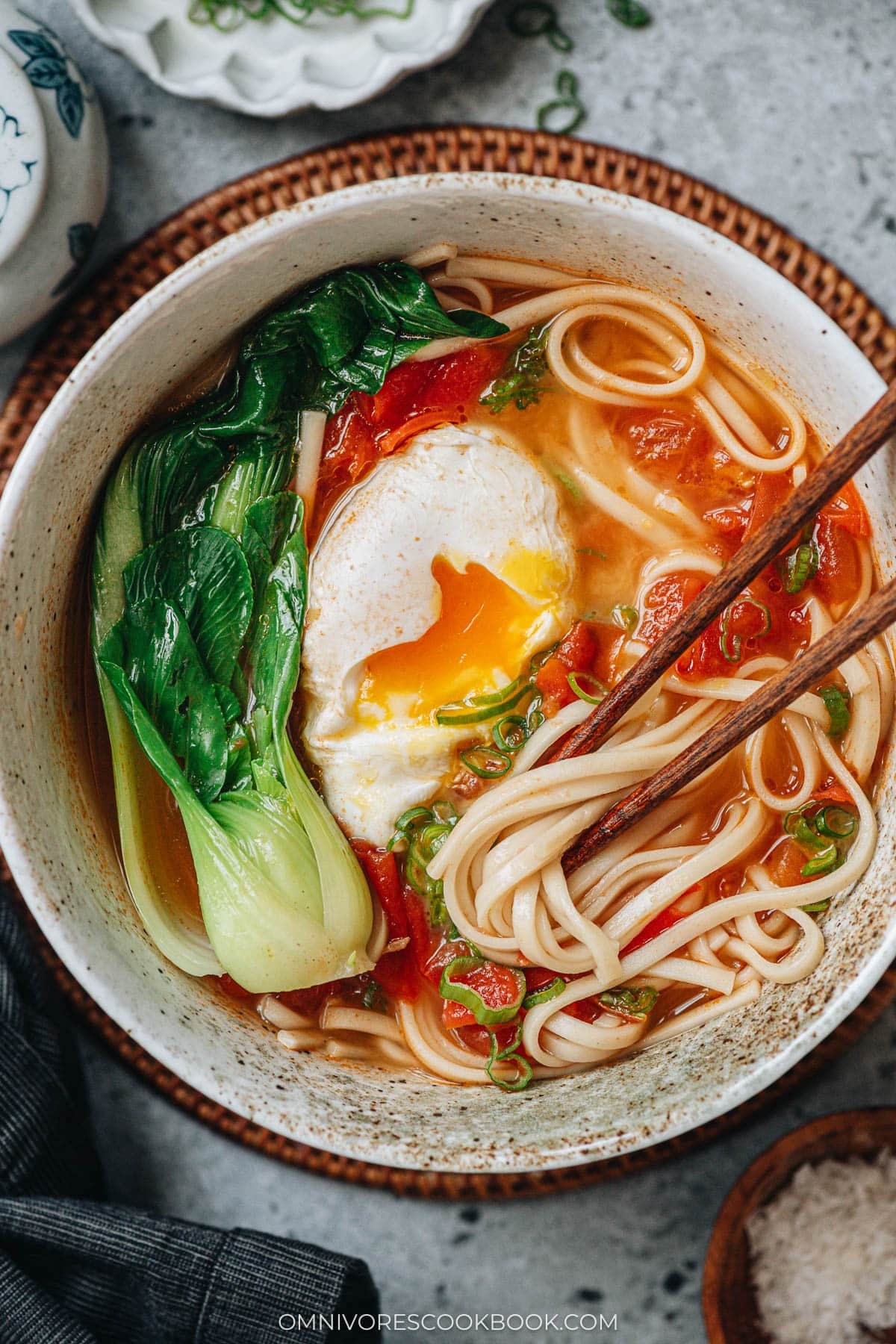
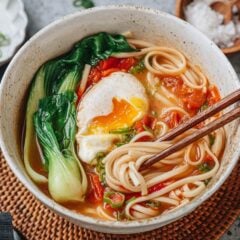
This is a simplified version of the tomato noodle soup I have cooked for years, where I dropped the braised meat topping the original was built around so the bowl can stand on its own. The broth is mild and refreshing, with the eggs doing real work for both texture and the savory depth that pulls the dish together. It sits comfortably alongside chicken udon soup on the rotation when I want a Chinese noodle soup with very little fuss.
Tomato noodle soup is the dish that carried me through every winter growing up in Beijing, and the one I still ladle out the moment a cold starts working its way through our house. The broth is soothing, salty enough to comfort, and acidic enough to wake up a tired appetite. It is the bowl my husband asks for when a sore throat shows up, and the bowl my son asks for with an extra egg on top.
To make it, I saute scallion whites and ginger in oil, melt diced fresh tomatoes and a spoon of tomato paste into the aromatics, then pour in chicken stock with light soy sauce, oyster sauce, and a touch of sugar. While the broth simmers, the same big pot of water cooks the udon noodles, blanches the bok choy, and poaches the eggs in turn. I assemble the bowls with a drizzle of toasted sesame oil and the scallion greens on top, and the whole thing is on the table in 30 minutes. I highly recommend it!
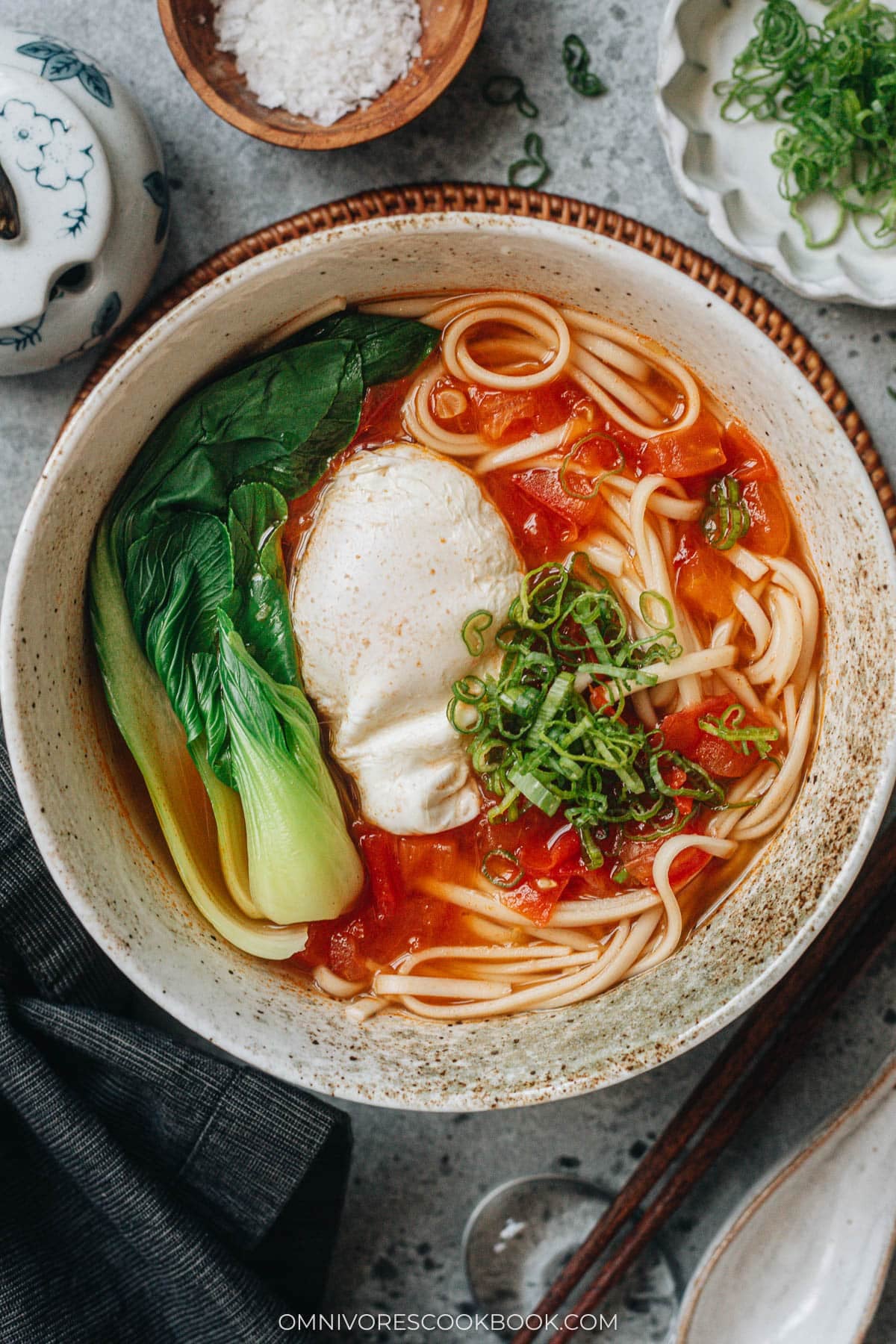
Ingredients
This tomato noodle soup keeps the ingredient list short and pantry-friendly, with everything sourced from a regular grocery store and one trip to the Asian aisle for the seasonings.
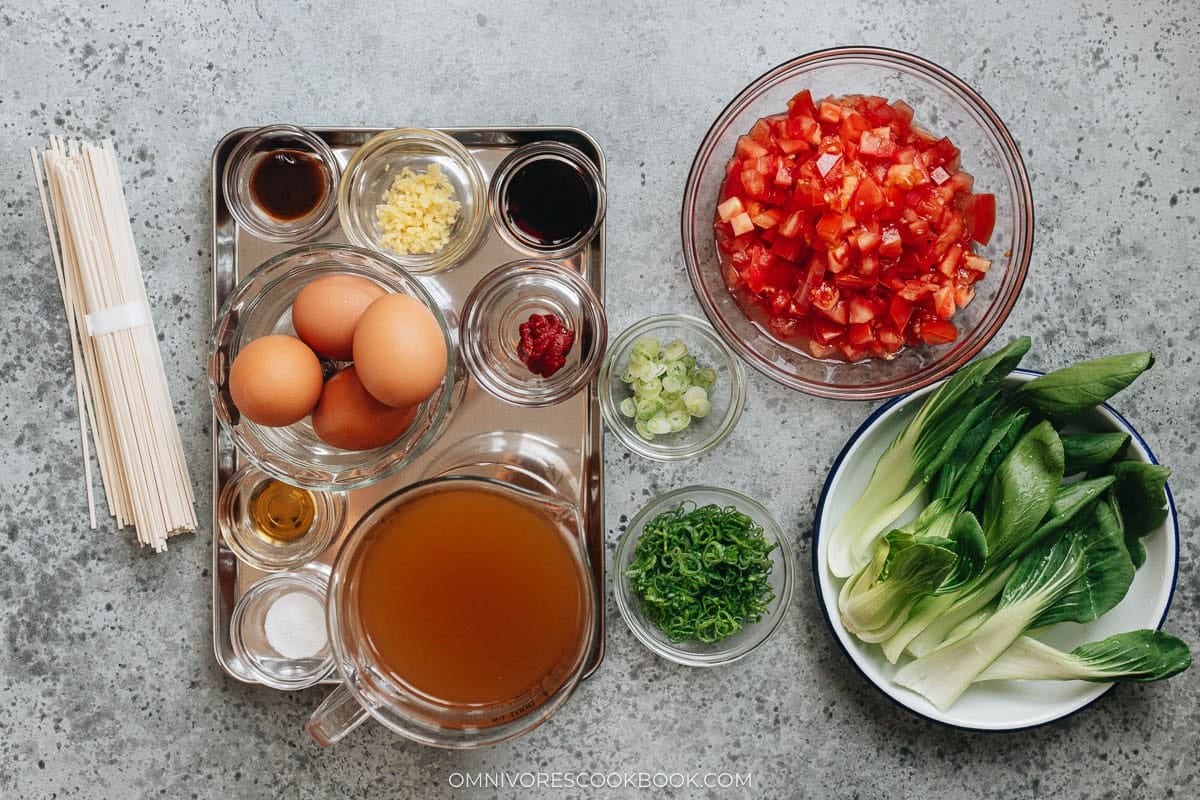
The aromatics: Vegetable oil, sliced scallions with the white and green parts kept separate for layering, and minced ginger build the base of the broth in 30 seconds at the start. The white parts go in early to bloom in the oil, and the greens come back at the end as a fresh garnish.
The broth: Diced fresh tomatoes and a spoon of tomato paste cook down for the body of the soup, with chicken stock, light soy sauce, oyster sauce, sugar, and salt to balance. I use 4 ripe tomatoes when they are in season, and lean a little harder on the tomato paste in winter when the fresh ones are pale.
The noodles and greens: Dried udon noodles cook quickly and hold their shape in the broth, though any thin or medium wheat noodle works in their place. Baby bok choy halved or quartered into bite-sized pieces blanches in the same pot of water in less than a minute.
The egg and finish: A poached egg on each bowl is the part of this recipe I refuse to skip, since it adds creamy texture and the savory depth the simple broth needs to read as a complete meal. A drizzle of toasted sesame oil and the reserved scallion greens close out the bowl.
How to Make Chinese Tomato Noodle Soup
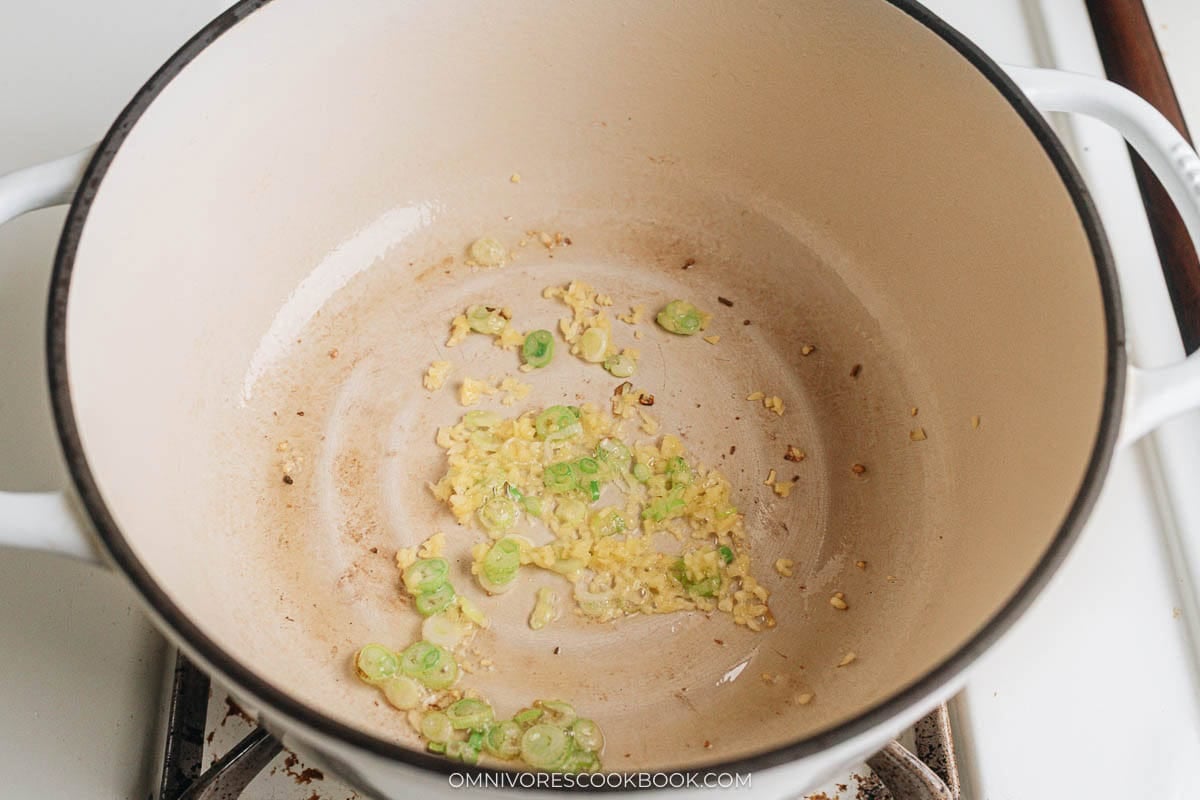
1. Bloom the aromatics: Heat the vegetable oil in a medium dutch oven or pot over medium heat until it shimmers. Add the scallion whites and minced ginger and stir until fragrant, about 30 seconds.
2. Cook down the tomatoes: Add the diced tomatoes and turn the heat to medium-high. Cook and stir until the tomatoes start to break down, about 5 minutes, then stir in the tomato paste and keep cooking for 1 minute more.
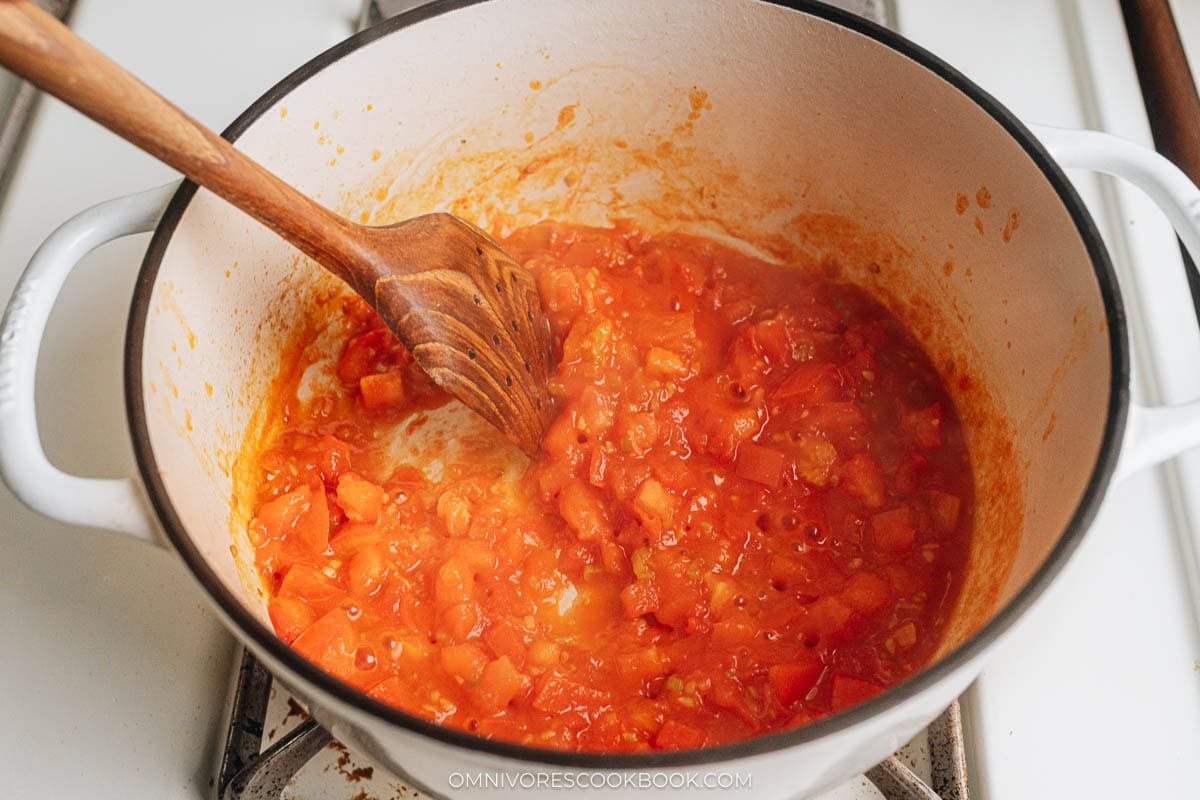
3. Build the broth: Pour in the chicken stock, light soy sauce, oyster sauce, and sugar. Bring the soup to a boil, turn the heat to low, taste, and add salt as needed, then cover the pot to keep it hot.
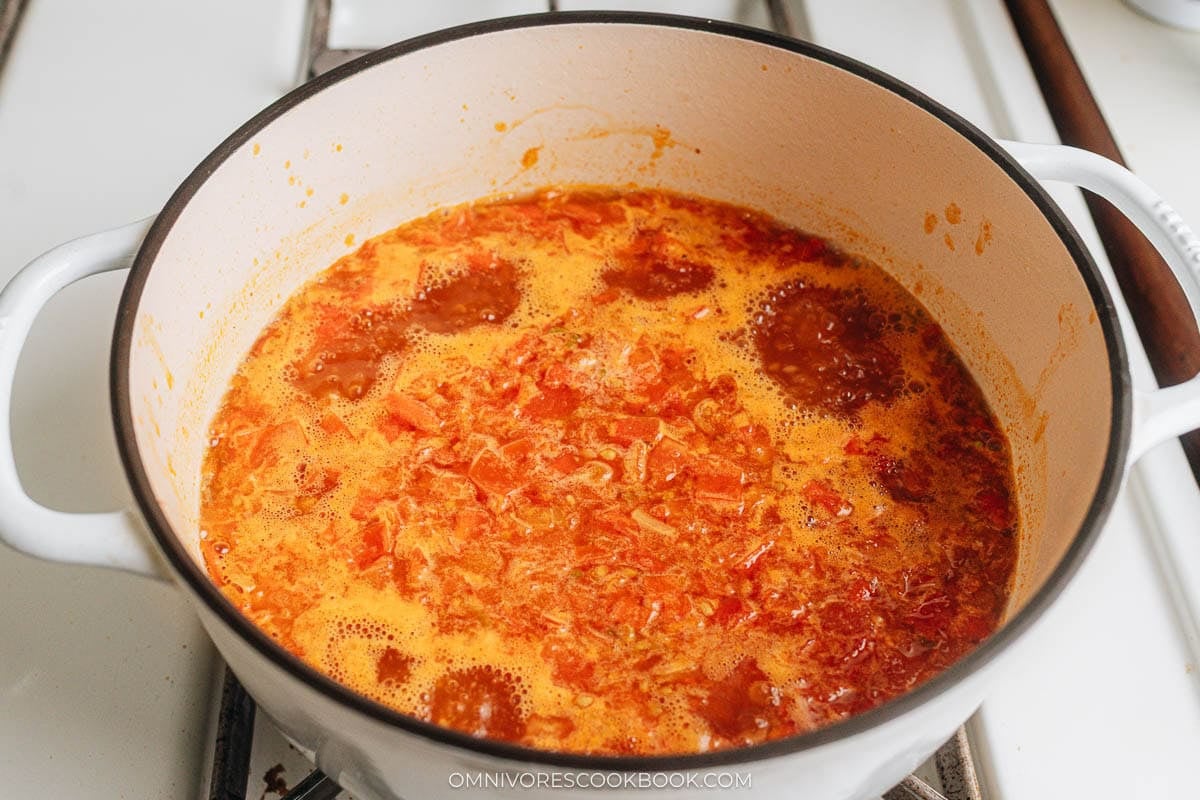
4. Cook the noodles: Bring a large pot of water to a boil and cook the udon noodles according to the package directions. Drain, rinse with cold tap water to stop the cooking, and divide the noodles among the serving bowls.
5. Blanch the bok choy: Drop the baby bok choy pieces into the same pot of boiling water and blanch until tender but still crisp, then transfer them to the serving bowls.
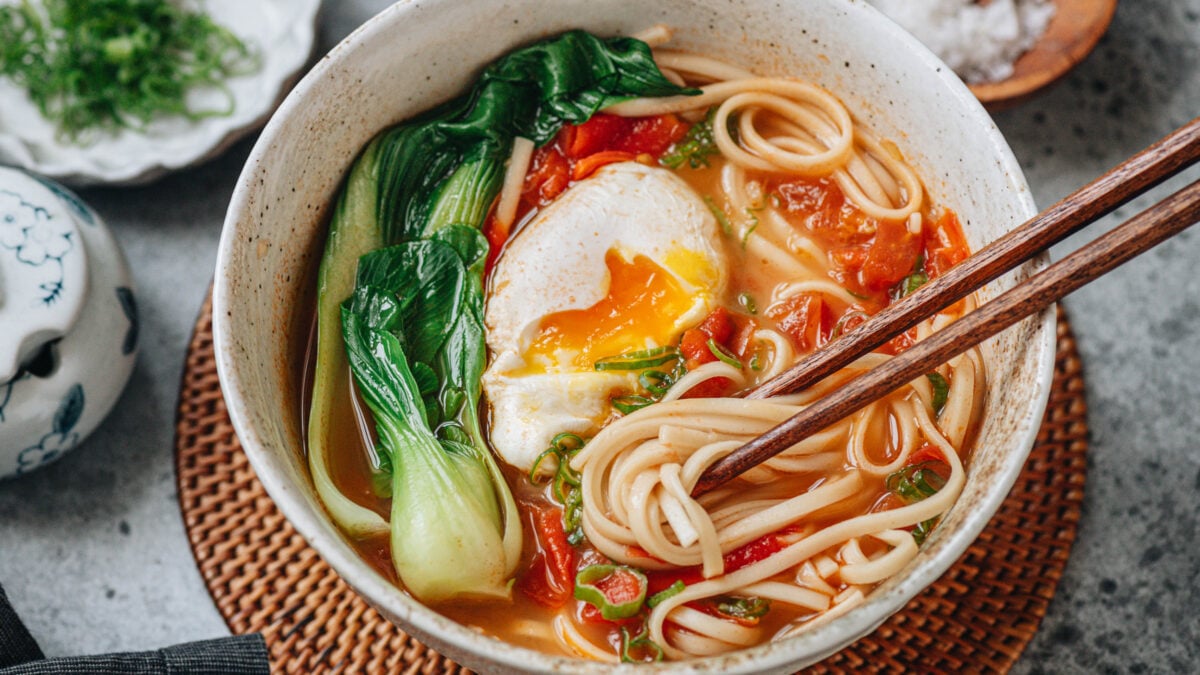
6. Poach the eggs and assemble: Poach the eggs in the same pot to your preferred doneness. Ladle the hot tomato broth into each bowl, top with a poached egg, and garnish with the reserved scallion greens and a drizzle of toasted sesame oil. Serve hot.
Tips and Tricks
Keep the white and green scallion separate: I slice the scallions once and divide the white and green parts at the start. The whites bloom in oil to build the savory base of the broth, and the greens go on top at the end for a fresh top note that the cooked broth cannot give you.
Cook the tomatoes down hard before the stock goes in: I let the diced tomatoes break down completely in the oil before pouring in the chicken stock, since the cooking step is what releases their natural sweetness and pulls them into the soup. Skipping it leaves the broth thin and the tomato chunks watery.
Order the toppings before pouring the soup: I pull the noodles and bok choy into the bowls, poach the eggs last, and only ladle the broth over after the eggs are in place, since the broth temperature drops a little once it stops simmering. Pouring the hot broth in last keeps every bowl steaming when it reaches the table.
Do not skip the egg: The recipe reads simple on the page, and the poached egg is what carries the texture and the umami depth in the bowl. I always cook 1 egg per serving and pierce the yolk at the table so it pulls into the broth.
Add a protein for a heartier dinner: The broth and noodles are plenty for a light lunch or a sick-day meal, but I often top each bowl with leftover braised meat or shredded chicken when I want this to be a full dinner. Any cooked protein in the fridge slides into the bowl without changing the cooking flow.
How to Serve
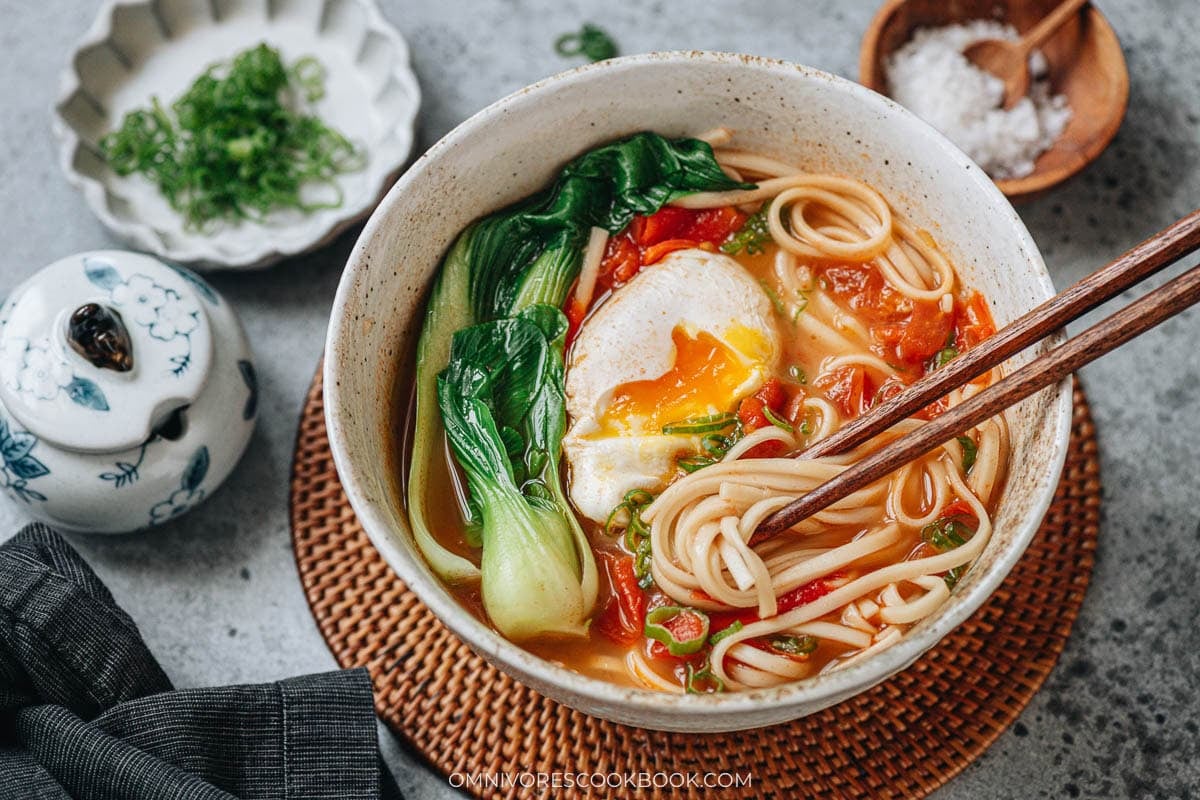
At home this is a low-stakes weeknight dinner or a sick-day lunch, and I keep the rest of the table simple to match. A small dish of pickled radish or cucumber on the side gives a sharp counter to the mild tomato broth, and a pot of warm jasmine tea finishes the meal.
For a heartier table, I crown each bowl with a spoonful of Chinese-style instant pot shredded chicken when the fridge is bare, my mom’s braised pork ribs when I have a Sunday batch on hand, or a few pieces from a pot of Chinese beef stew on a colder evening. The simple broth holds up well under richer toppings, which is why this soup also makes the best landing spot for leftover hong shao rou when I have a cup or two in the fridge from the night before.
Frequently Ask Questions
What noodle works best if I cannot find udon?
Any thin to medium wheat noodle works here, since the broth is the star and the noodles are the carrier. I have used dried somen, thin Shanghai noodles, and even angel hair pasta in a true pinch, and all three slide into the bowl without changing the flavor of the broth.
How long does the broth keep in the fridge?
The broth keeps in an airtight container in the fridge for up to 3 days, and I store it separately from the noodles and bok choy so the noodles do not turn mushy overnight. The broth also freezes well for up to 2 months, which makes a double batch worth the same 30 minutes of cooking.
Can I make this without the egg?
Technically yes, but I will say honestly that the egg is the part of the recipe I would not skip. The poached egg is what gives the simple broth its texture and the depth that pulls the bowl into a complete meal, so I always include it even when I am skipping the protein topping.
Want to Save This Recipe?
Enter your email below & we’ll send it to your inbox. Plus get great new recipes from us every week!
Chinese Tomato Noodle Soup
Ingredients
Noodle soup
- 1 tablespoon vegetable oil
- 2 scallions , sliced, white and green parts divided
- 1 tablespoon minced ginger
- 4 tomatoes , diced
- 1 tablespoon tomato paste
- 4 cups chicken stock
- 1 1/2 tablespoons light soy sauce
- 1 tablespoon oyster sauce
- 1 teaspoon sugar
- Salt to taste
- 8 oz dried udon noodles (or other wheat noodles)
- 2 heads baby bok choy , sliced into bite-sized pieces
- 2 to 4 eggs
- 1 teaspoon toasted sesame oil
Protein options (Optional, footnote 1)
Instructions
- Heat oil in a medium dutch oven (or pot) over medium heat until it shimmers. Add scallion whites and ginger. Stir and cook to release fragrance, 30 seconds or so.
- Add the tomato and turn to medium-high heat. Cook and stir until the tomato starts to break down, 5 minutes or so. Add tomato paste. Keep cooking and stirring for 1 minute.
- Pour in chicken stock, soy sauce, oyster sauce and sugar. Bring to a boil and turn to low heat. Taste the tomato soup and adjust seasonings by adding more salt, if needed. Cover to keep hot.
- Meanwhile, boil a big pot of water and cook the noodles according to package directions. Once done, transfer the noodles to a colander, rinse with cold tap water to stop cooking, drain and portion into two serving bowls.
- Blanch the baby bok choy in the same pot of water until turning tender but still a little crisp. Transfer to each serving bowl.
- Poach the eggs in the same pot until desired doneness. Add the tomato soup to each bowl and top with the poached egg. Garnish with scallion greens and add a drizzle of sesame oil to finish. Top with your preferred protein, if desired. Serve hot.
Notes
- You can keep the noodle soup bowl simple and serve it as a side dish or staple without any other meat. For a more filling one-bowl meal, you can use almost any type of leftover meat such as rotisserie chicken, roast beef or pulled pork. I like to use my Instant Pot chicken for a healthy meal. My mom’s favorite way to make the soup is to use leftover stew meat. She also adds some stew broth into the soup (and uses less soy sauce), making it even richer.
- The recipe yields 4 servings as a light side dish, and you can increase the egg number from 2 to 4 for each bowl. You can also make it a main dish by adding a meat topping. In this case, the recipe yield 2 big servings.
Nutrition

Did you make this recipe?
I’d love to hear how it turned out for you! Please take a moment to leave a 5-star rating ⭐️ and share your thoughts in the comments further down the page. It really helps others discover the recipe too.
Luke
Great recipe! A part of your recipe that shouldn’t be overlooked is throwing in braised meat into the pot. The first time I made this soup, I just put in chopped, raw chicken breast, so the soup was a bit bland. I made the soup again recently, but this time I threw in some fried chicken thigh that I had marinated in soy sauce, making sure to scrape some of the leftover oil into the pot. It flavored the soup really well!
Thanks for the recipe, Maggie!