
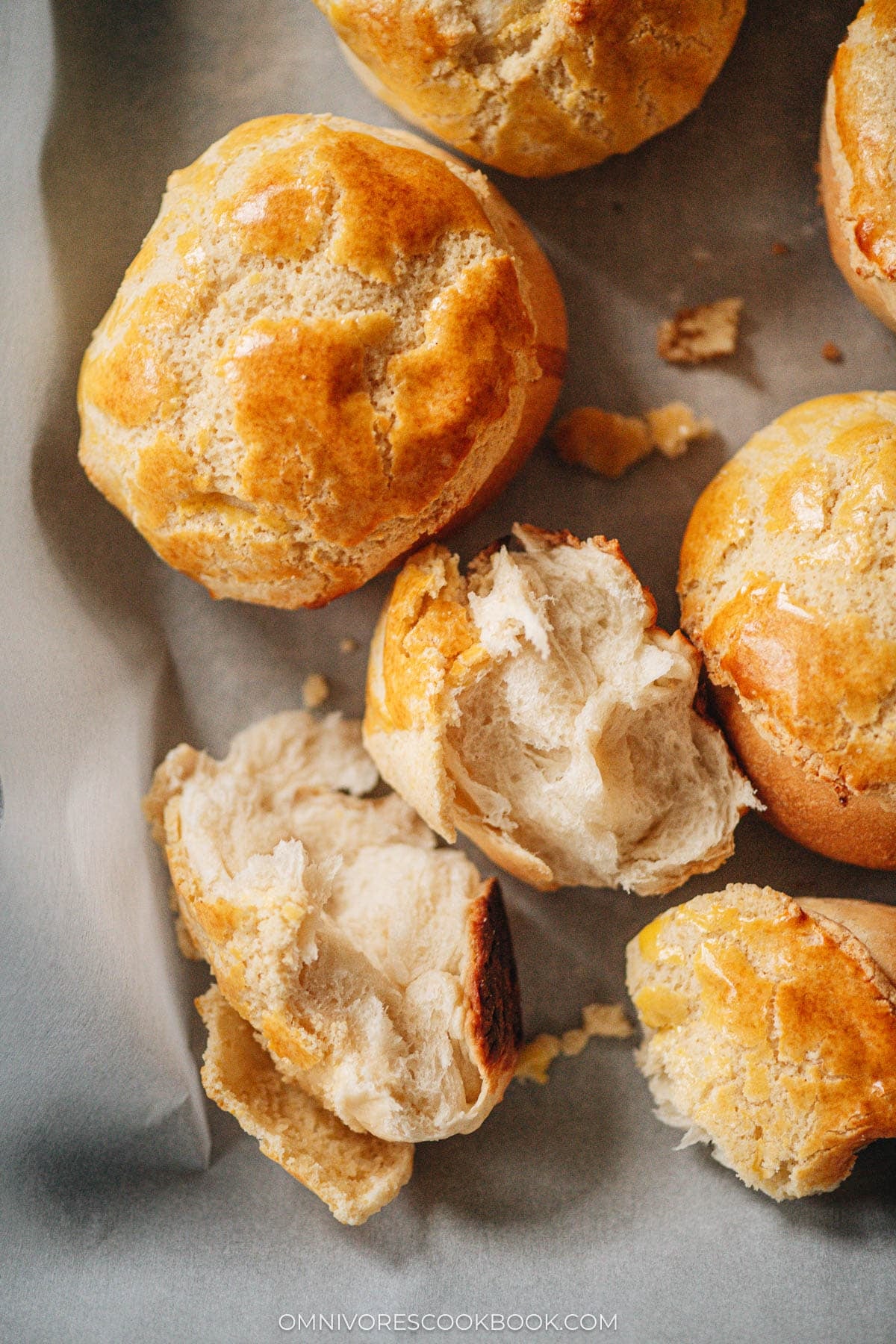
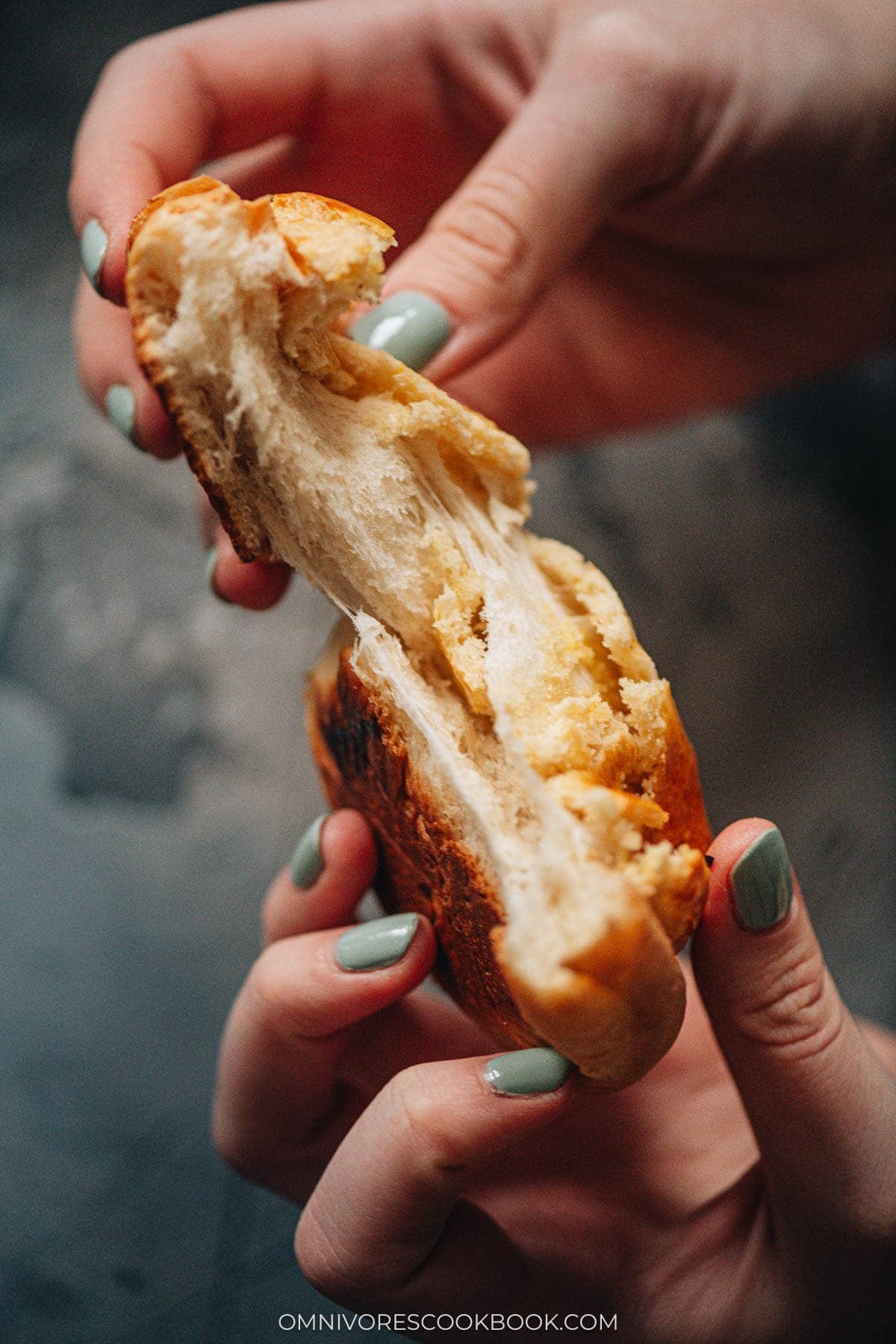
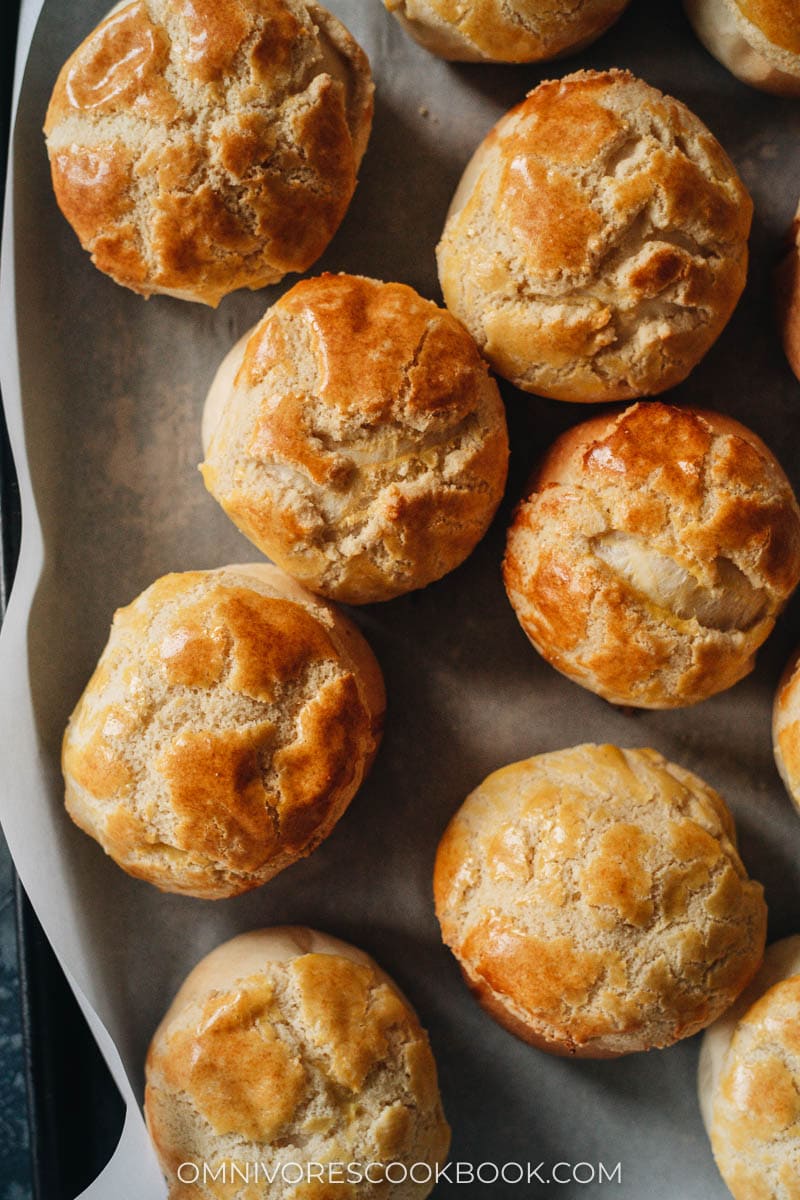
Pineapple buns, or 菠萝包, are one of the most iconic treats from Hong Kong bakeries. Despite the name, there is no actual pineapple in them. The name comes from the cookie layer on top, which bakes into a pattern that looks like the surface of a pineapple. Inside, the bread is incredibly fluffy and tender, and the topping is buttery and slightly sweet. So good!
I first tried these at a bakery in Hong Kong years ago, still warm from the oven with a thick slab of cold butter stuffed inside. The contrast between the hot bread and the melting butter was unforgettable, and I knew I had to figure out how to make them at home. After a lot of testing I landed on a version that captures that same bakery quality using a stand mixer and simple ingredients. Yes, that’s right!
My recipe has 2 parts: a cookie dough topping and a milk bread base. I make the topping first so it can chill in the fridge while the bread dough rises. Once the dough is shaped and rested, I place the topping disks on, brush with egg wash twice for that rich golden color, and bake until perfectly fractured on top.
Trust me, this is a weekend baking project, but the results are absolutely worth the effort. The buns freeze well, so I always make a full batch so my family and I can enjoy them whenever we want. I encourage you to give it a try by following my step-by-step recipe below.
Ingredients
I split the ingredients into 3 groups: the cookie topping that gives the buns their amazing crust, the enriched bread dough underneath, and a quick egg wash for the glossy finish.
Topping: I use melted butter, sugar, egg yolk, and vanilla mixed with flour, baking powder, and baking soda. This creates a crumbly dough that bakes up crunchy and fractures naturally.
Bread: I build the dough with warm milk, sugar, yeast, heavy cream, egg, bread flour, all purpose flour, salt, and softened butter. The combination of heavy cream and butter makes the bread extra tender and rich.
Egg wash: I whisk together egg yolks, milk, and a pinch of sugar. Brushing it on twice builds the thick shiny layer I love.
How to Make
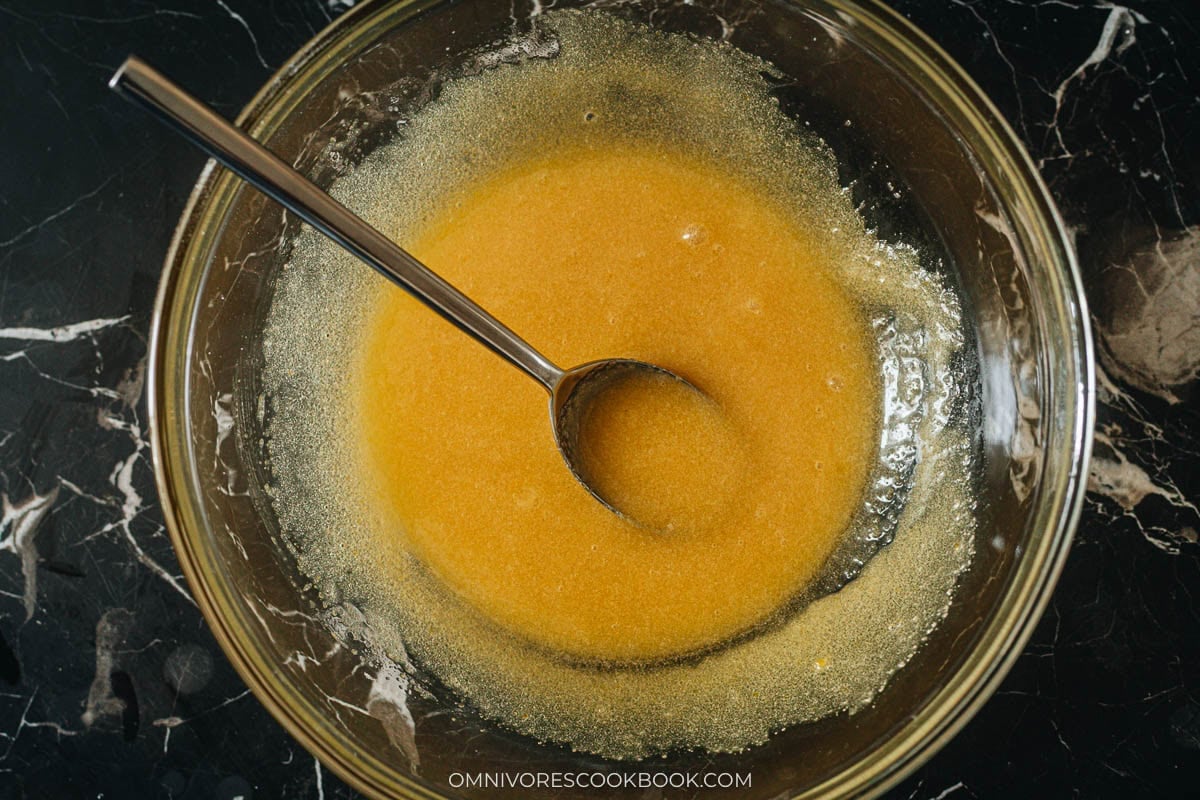
1. Make the topping dough: Melt the butter and mix it with milk, egg yolk, vanilla, and sugar until smooth.
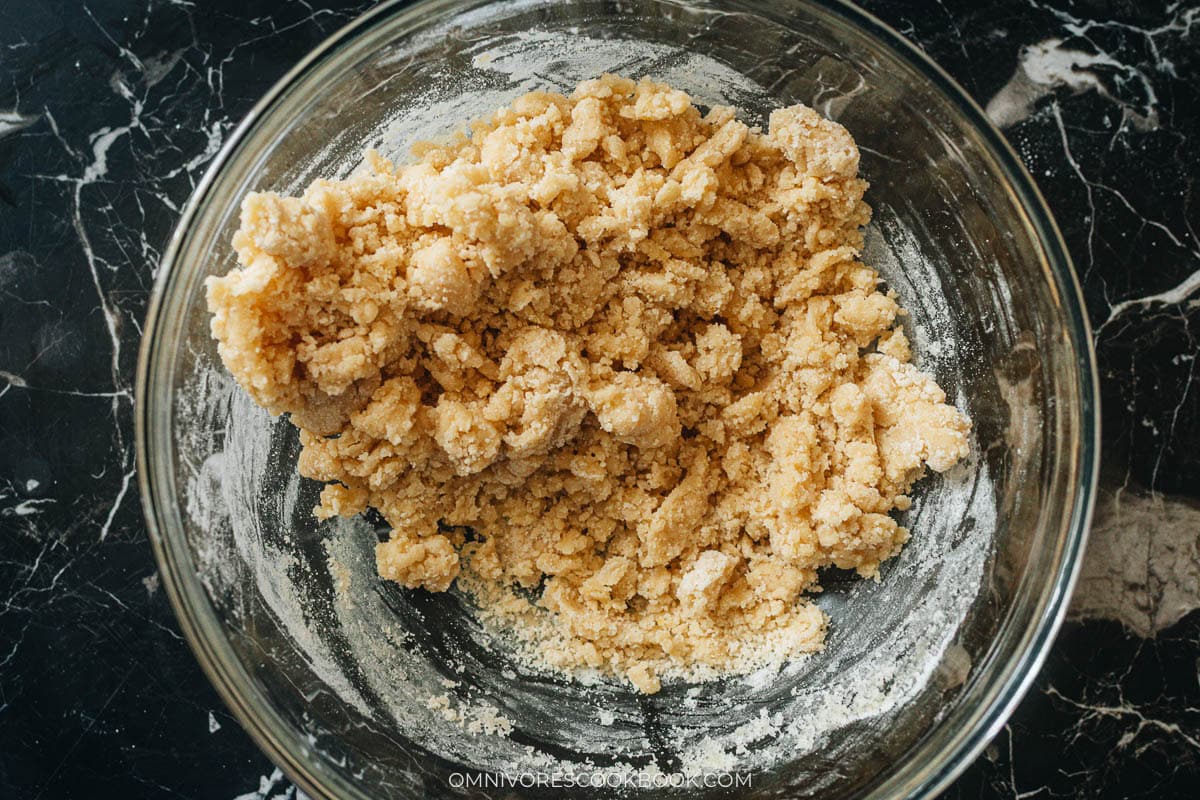
2. Mix: Combine the flour, baking powder, and baking soda in a separate bowl, then add to the wet ingredients and stir until a crumbly dough forms.
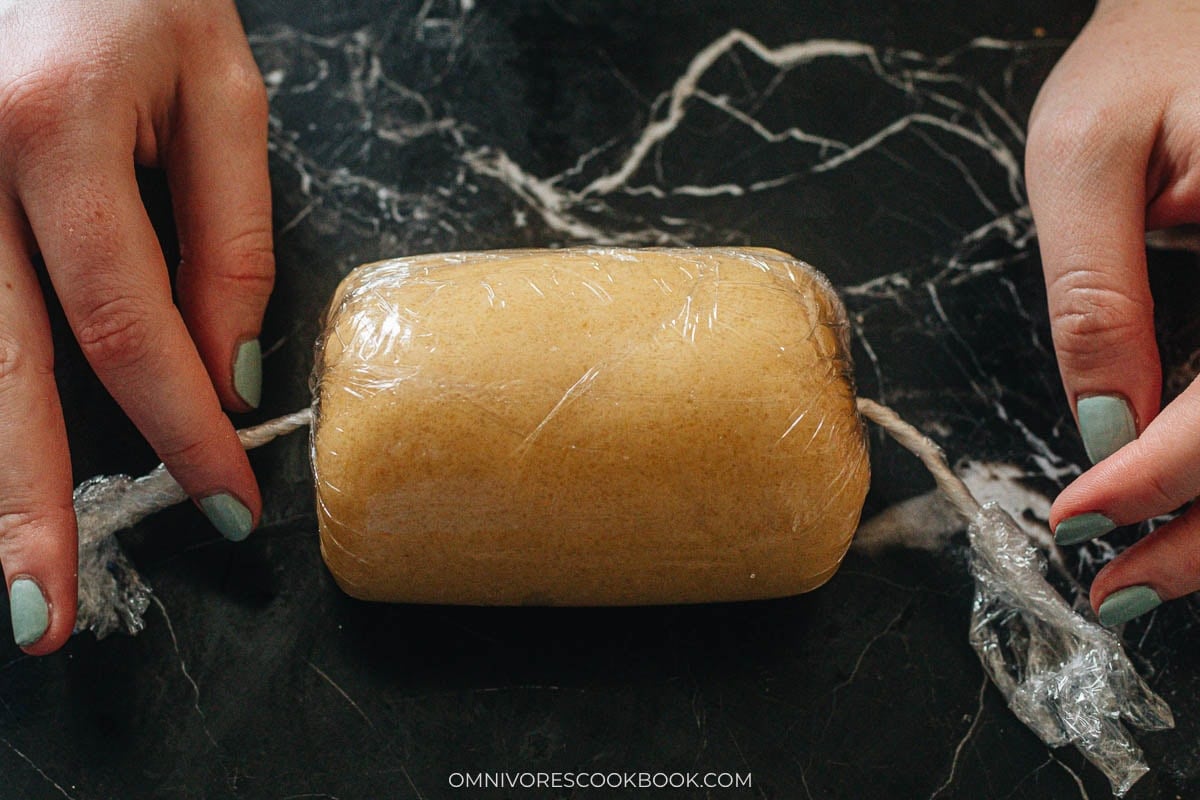
3. Form Dough: Press the crumbs together into a log, wrap in plastic, and chill in the fridge.
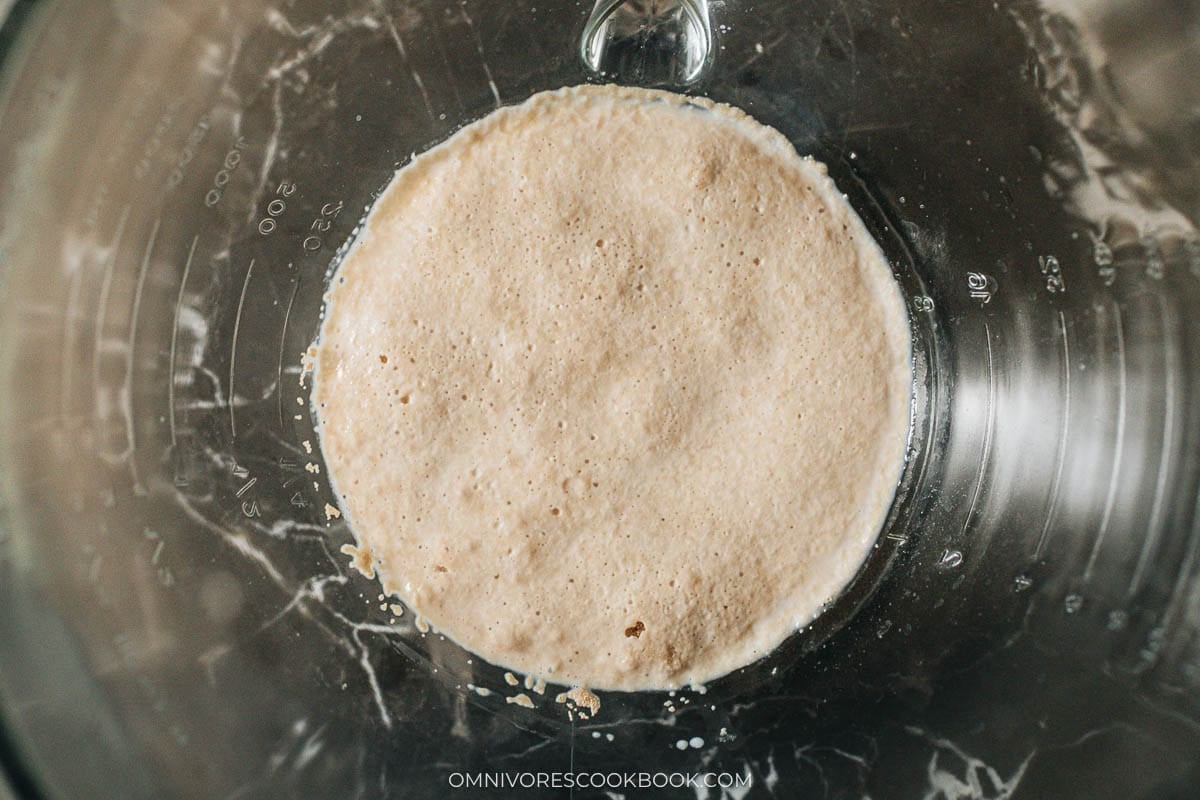
4. Activate the yeast: Warm the milk to about 100 to 110°F (38°C) and pour it into the mixer bowl. Add the sugar and yeast, stir, and let it sit for 5 minutes until bubbly and fragrant.
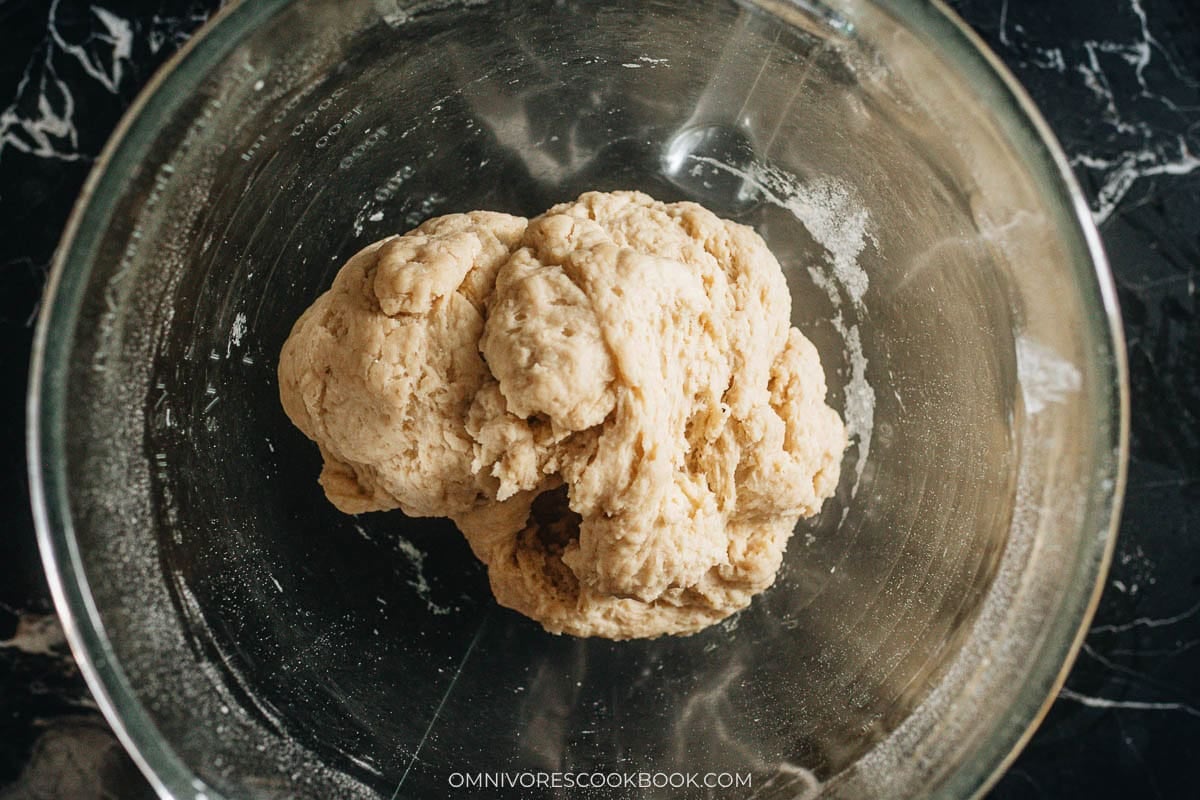
5. Knead the bread dough: Add the heavy cream, egg, both flours, and salt to the yeast mixture. Mix with the dough hook on low until a dough forms, about 2 minutes. Add the softened butter, increase to medium speed, and knead for 14 minutes until the dough is smooth and stretchy. Pull a small piece with both hands to check. It should stretch into a thin, translucent sheet.
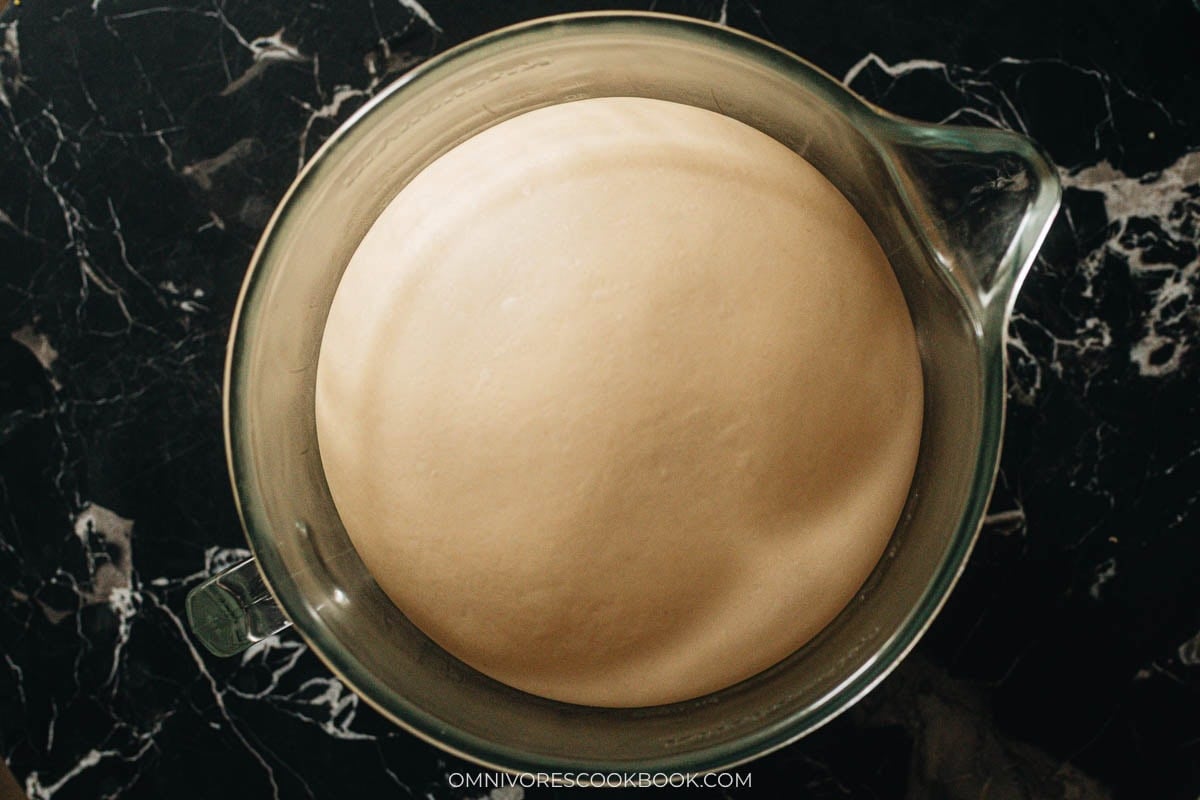
6. Let the dough rise: Shape the dough into a tight ball, place it back in the bowl, and cover loosely with plastic wrap. Let it rise in a warm spot until doubled in size, about 1 hour.
7. Shape the buns: Punch the dough down to release the air. Divide it into 16 even pieces (about 62 to 63 g each) and roll each into a smooth ball. Place them on a lined baking sheet with 2 inches of space between each one.
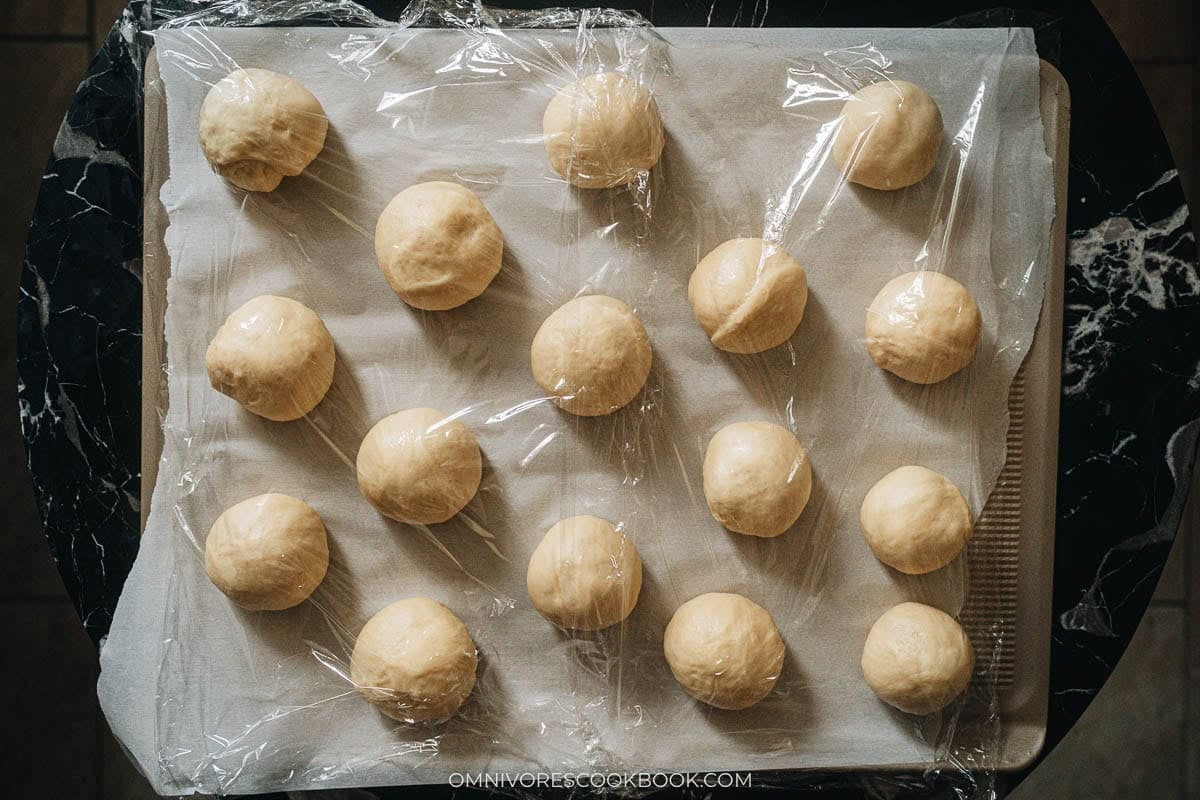
8. Let the buns rise: Cover loosely and let them rise for another 30 to 45 minutes until doubled.
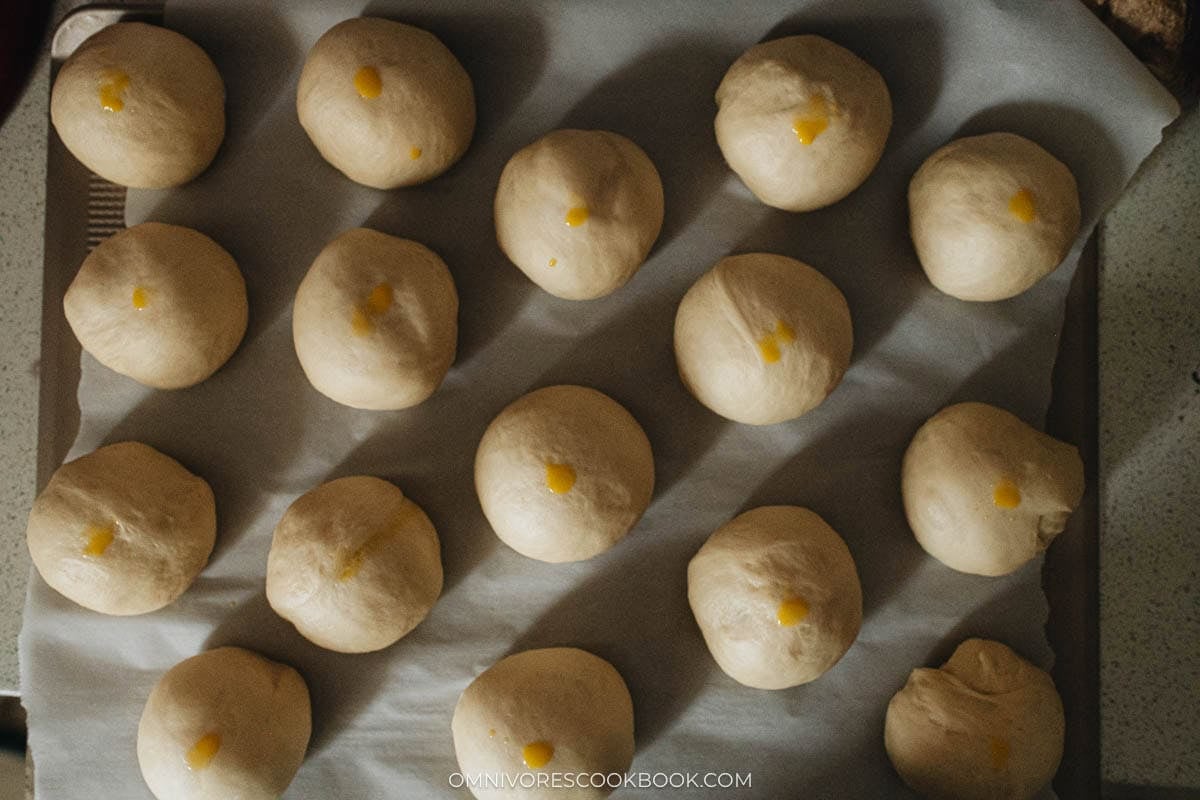
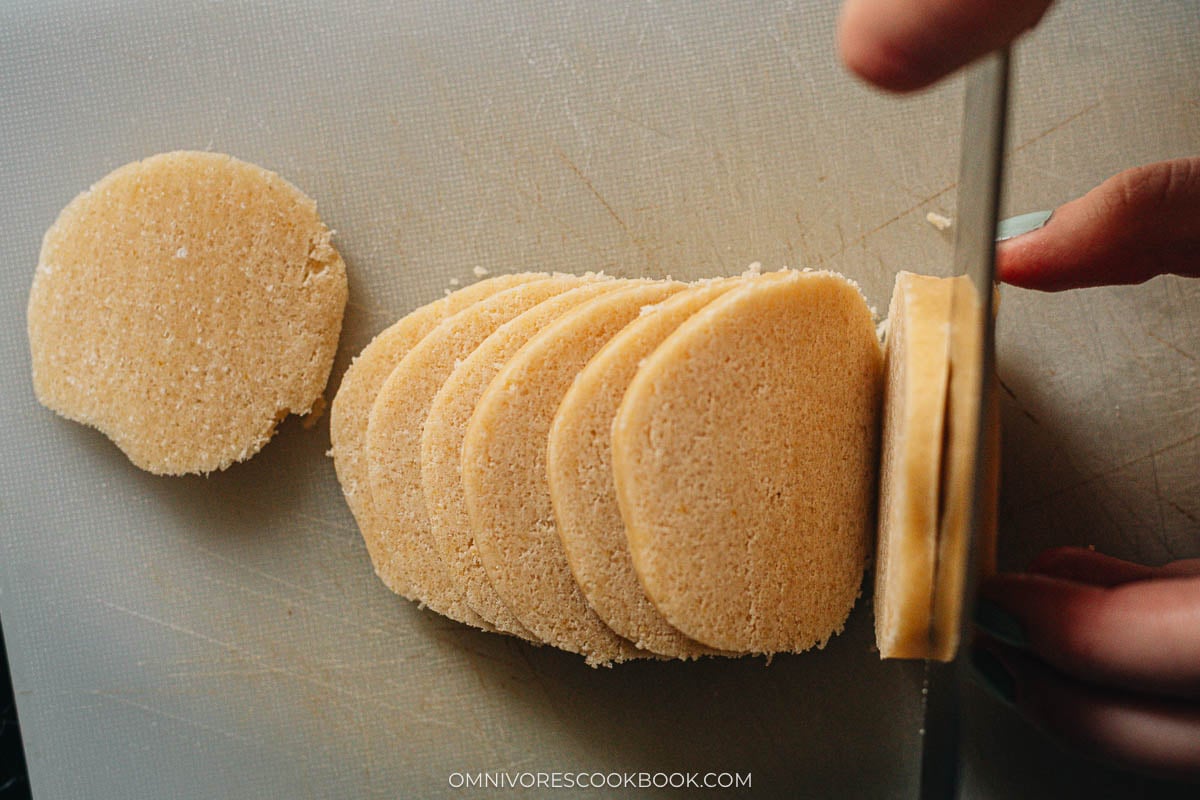
9. Prepare the topping: While the buns rise, slice the chilled topping log into 16 even pieces.
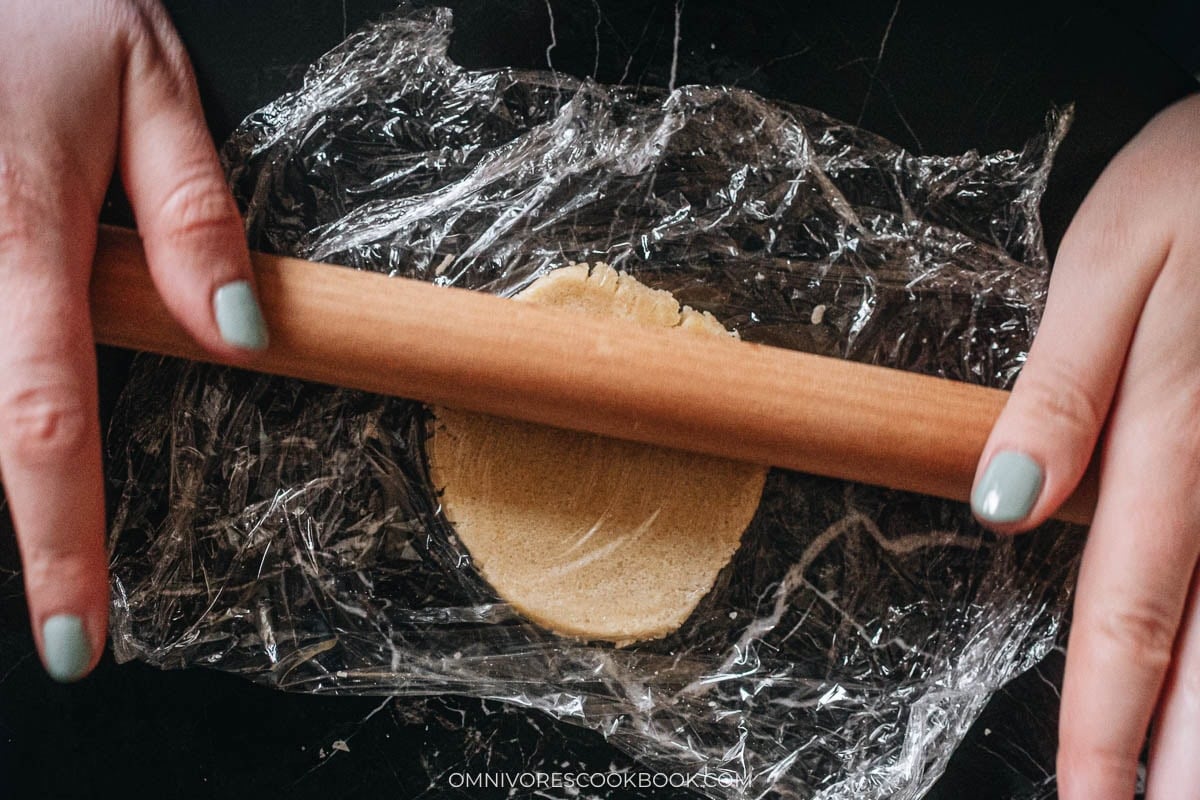
10. Rolling: I roll each piece between 2 sheets of plastic wrap into a thin disk, about 2.5 inches wide.
11. Egg wash: Make the egg wash by whisking the yolks, milk, and sugar together, then chill it in the fridge.
12. Assemble and bake: Preheat the oven to 350°F (176°C). Place a topping disk on each risen bun. Brush with egg wash, let it dry slightly, then brush again for a second coat.
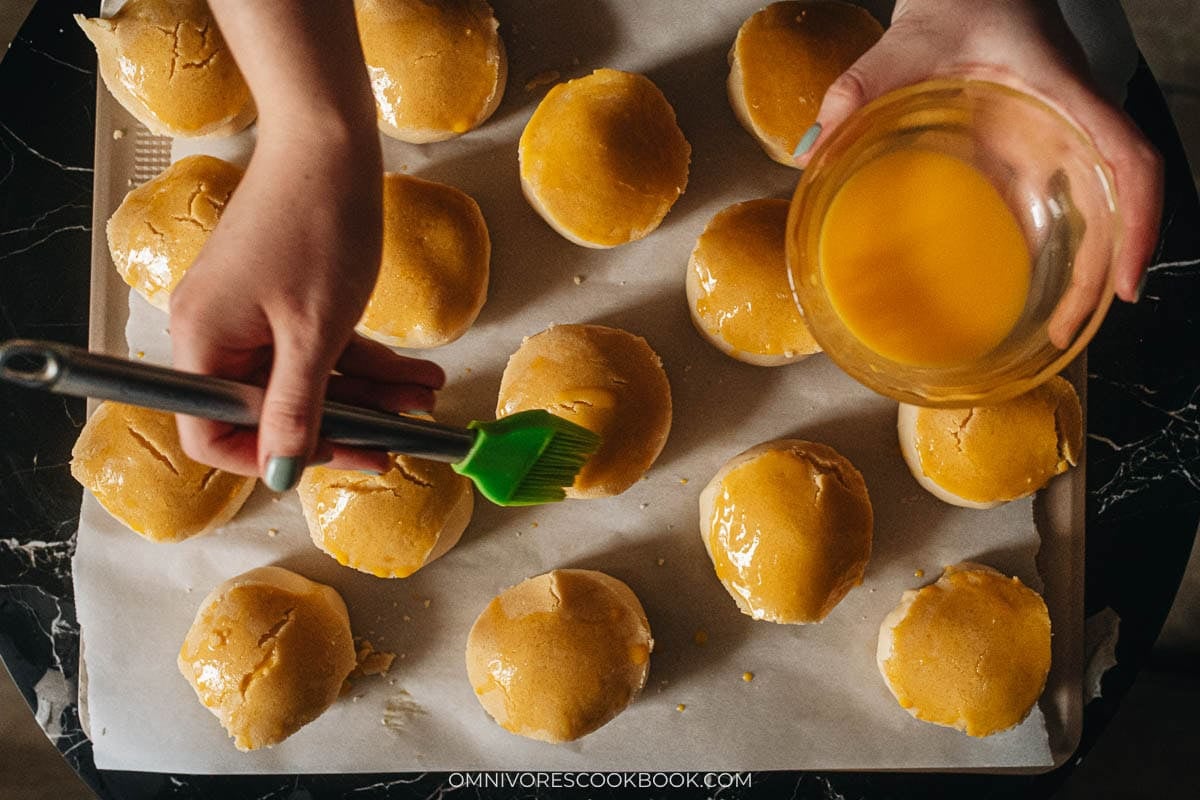
13. Cook: Bake for 15 to 17 minutes until the tops are deep golden and the bottoms are lightly browned.
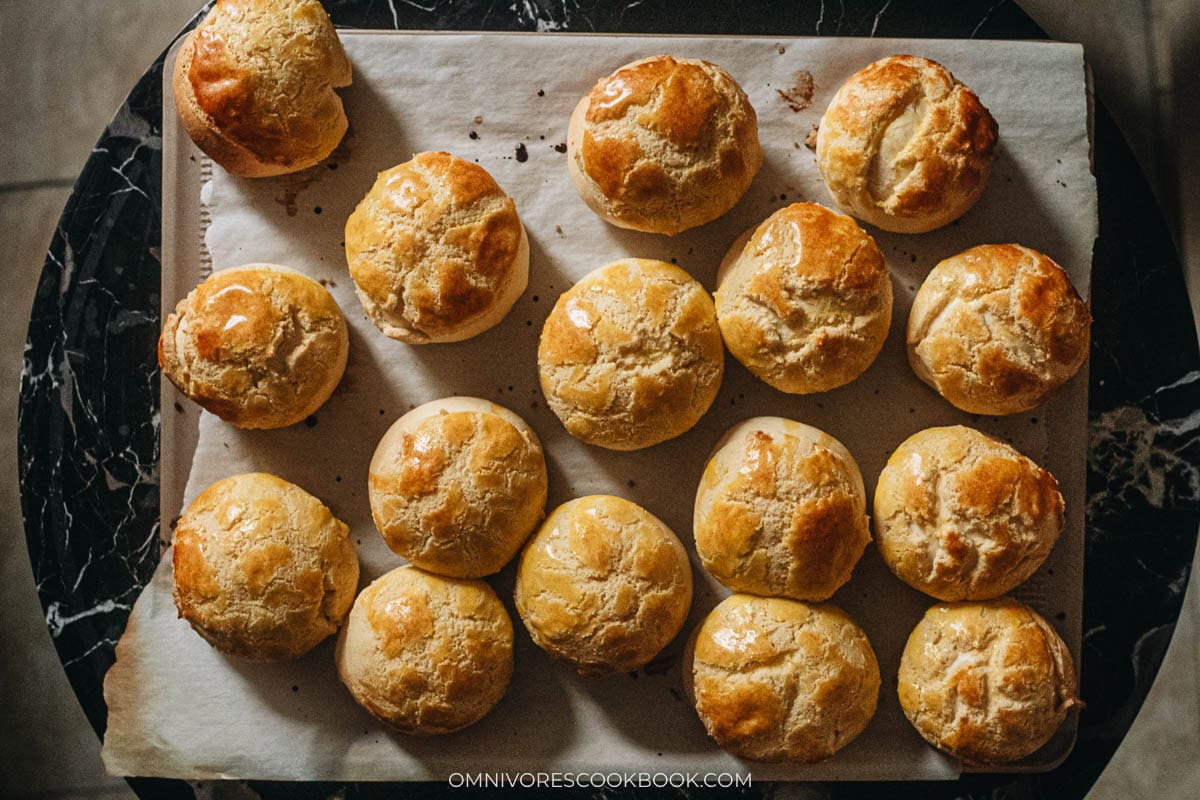
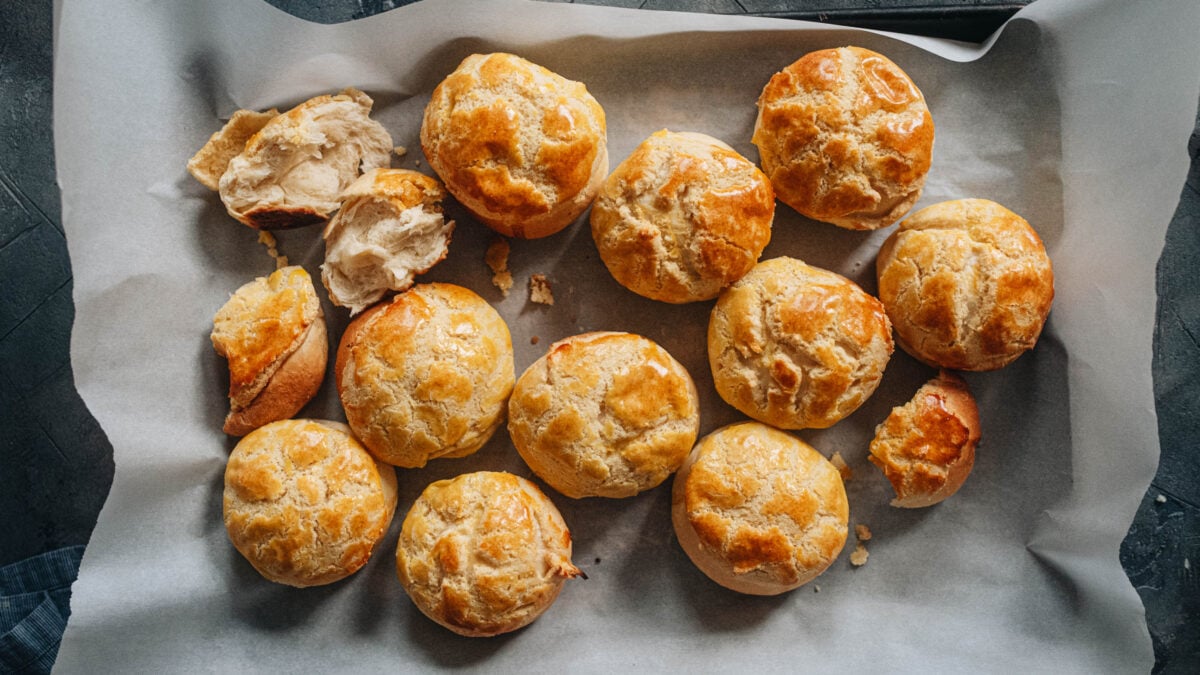
14. Serve: Let the buns rest in the pan for 5 minutes, then transfer to a cooling rack.
Tips I Recommend to Follow
Measure in grams: Although I’ve listed cups measurement, I highly recommend using grams if possible, which is much more precise and garantee a better result.
Use a stand mixer for the bread dough: Kneading by hand takes much longer and it is harder to develop the gluten properly. A stand mixer with a dough hook makes the 14 minute knead effortless especially when you have a toddler and a busy schedule like me.
Check the dough with the windowpane test: After kneading, pull a small piece of dough with both hands. If it stretches into a thin sheet you can almost see through without tearing, the gluten is fully developed and the dough is ready.
Chill the topping in the fridge, not the freezer: The fridge keeps the dough firm enough to slice but still pliable enough to roll flat. If it gets too hard, let it sit on the counter for 10 to 15 minutes before cutting.
Brush the egg wash twice: One coat gives a pale finish. Two coats with a short dry time in between create a bakery style sheen.
Serving Suggestions
I love eating these straight out of the oven by themselves because they honestly do not need a thing. But the classic Hong Kong way is to split the bun open while it is still hot and slide a cold slab of butter inside. The butter melts into the warm bread and it is incredible. On weekends I prepare a few with jam for my son, and he tears through them. Sometimes I stuff them with leftover char siu for a savory twist that tastes just like the ones I had in Hong Kong.
When I make these for friends, I bake the full batch and place them on a board with butter, jam, and some char siu bao on the side for a dim sum brunch. If you like this recipe, you might also like my steamed custard buns and milk bread rolls too. I always tell people to eat them while they are warm, that is when the topping is at its best.
Frequently Ask Questions
What is the best way to roll the topping without it falling apart?
I roll each piece between 2 sheets of plastic wrap, which keeps it from sticking and gives me more control. The dough is naturally crumbly, so some splitting at the edges is normal and actually helps create the unique look. If it breaks too much, I just press it flat with my fingers instead.
Can I make the topping dough the night before?
Yes, and I actually recommend it. The topping rolls out more cleanly when it has been well chilled overnight. Just keep it wrapped tightly in the fridge. I do not recommend making the bread dough ahead because overnight rising can lead to over proofing and change the texture.
How do I store leftover pineapple buns?
I keep them at room temperature in an airtight container for up to 2 days. For longer storage, I put them in a ziplock bag, press out the excess air, and freeze for up to a month. I never refrigerate bread because it dries it out. To reheat from frozen, I bake them at 350°F (176°C) without thawing for about 10 minutes.
Want to Save This Recipe?
Enter your email below & we’ll send it to your inbox. Plus get great new recipes from us every week!
Watch video

Pineapple Buns (Bolo Bao)
Ingredients
Topping
- 60 g butter
- 2 teaspoons whole milk
- 1 egg yolk
- 1/2 teaspoon vanilla extract
- 140 g sugar
- 150 g all-purpose flour
- 1/2 teaspoon baking powder
- 1/2 teaspoon baking soda
- Pinch of salt
Bread
- 180 g whole milk
- 70 g sugar
- 7 g active dry yeast
- 160 g heavy cream
- 1 large egg
- 300 g bread flour
- 225 g all-purpose flour
- 5 g salt
- 50 g butter , softened
Egg wash
- 2 egg yolks
- 2 teaspoons whole milk
- 1/2 teaspoon sugar
Instructions
Make the bread topping dough
- Heat the butter in the microwave until it melts completely. Once the melted butter is slightly cooled, add the milk, egg yolk, vanila, and sugar. Mix with a spatula until smooth.
- Combine the flour, baking powder, and baking soda in another medium-sized bowl. Stir to mix a few times, then transfer it to the bowl with the wet ingredients.
- Mix with a spoon or fork until a dough forms. The dough should be very crumbly. Use your hand to press the crumbs together until a thick dough log is formed (see picture in the blog post).
- Transfer the dough onto a large piece of plastic wrap and wrap the dough. Continue shaping the dough once wrapped, so it forms a thick cylindrical log, about 2” (5 cm) in diameter.
- Transfer the dough to the fridge until ready to use.
Make the bread dough
- Add the milk into a small bowl and warm it to approximately 100-110°F (38°C), about 30 seconds in the microwave. The milk should be warm, just a bit above body temperature. Pour it into the KitchenAid mixing bowl. Add the sugar and yeast. Stir it slightly and let it sit for 5 minutes to activate the yeast. You can tell the yeast has activated when there are bubbles forming in the liquid and a strong yeasty smell.
- Add the heavy cream, egg, bread flour, all-purpose flour, and salt into the bowl (add the salt at the end to prevent it from directly touching the yeast).
- Install the dough hook on your KitchenAid. Mix at setting 2, until a dough forms, about 2 minutes.
- Turn off the mixer. Add the butter to the dough. Use a spatula to smear the butter into the dough to prevent it from splashing. Turn the mixer to setting 6. Knead for another 14 minutes, until the dough is smooth and stretchable. During mixing, turn off the mixer and scrape the sides as needed to make sure all the butter is incorporated. Test the dough by pulling a piece of it using both of your hands. It should stretch into a very thin and translucent sheet.
- Form the dough into a tight ball by pulling its sides to the bottom, then place back in the mixing bowl. Cover the top of the bowl loosely with plastic wrap and place it in a warm and humid part of your home. Allow to rise until it double in size, about 1 hour.
Shape the bread dough
- Line a large baking sheet with parchment paper.
- Once the dough is rested, punch the dough softly to push the air out. Place the dough onto an unfloured working surface and knead it a few times. Use a bench scraper or a knife to cut the dough in half, then halve it again into four pieces, and cut each piece into four even pieces, so you get 16 pieces in total. For a more accurate result, you can weigh the dough so each piece is 62 to 63 g (2.1 to 2.2 oz).
- Loosely cover all the dough pieces with plastic wrap and work on the dough pieces one at a time.
- Pinch the ends of a dough ball into its bottom and place the pinched side down. Place your hand over the ball, forming a cage with your fingers and working the ball in a circular motion, applying light pressure with all of your fingers, until the ball is well rounded.
- Place the dough ball onto the lined baking sheet. Repeat with the rest of the dough balls. Make sure there is 2” (5 cm) of space between each ball. Cover the dough balls with plastic wrap while you form the rest, to prevent the dough from drying out.
- Once done, make sure the whole tray is loosely covered with plastic wrap. Place it in a warm and humid place. Let it rise for another 30 to 45 minutes, until the size doubles again.
Egg wash
- Make the egg wash by combining the yolk, milk, and sugar in a small bowl. Whisk together until everything is combined.
- Cover with plastic and place in the fridge. Chilling the egg wash will make it slightly thicker so it will stick better when brushed on the dough.
Shape the topping
- Once the topping is chilled, unwrap it. Use a knife to slice off the uneven ends and discard them. Carve marks on the dough so you can slice the log into 16 even pieces (see the blog post for instructional pictures). Then slice the dough accordingly. If the dough is too hard to slice, rest it on the kitchen counter for 10 to 15 minutes to let it soften before cutting.
- Place each piece between two pieces of plastic wrap. Use a rolling pin to flatten the dough without cracking it, until it forms a round disk that is about 2.5” (6 cm) in diameter and 1/4” (5 mm) thick. The dough will be very crumbly and the ends might crack a bit (it’s totally OK!). If you find the dough too difficult to roll out without cracking, you can use your hand to lightly flatten it instead of rolling it. (*Footnote 1)
- Place the rolled/pressed topping disks onto a large sheet of plastic wrap using a thin spatula (you can also stack them together by placing plastic wrap or parchment paper between each piece of dough). Cover with plastic wrap until you’re ready to assemble the buns. (*Footnote 2)
Assemble and bake
- Preheat the oven to 350° F (176° C).
- Once the bread dough has risen again, remove the plastic wrap. Gently place the topping dough disks onto the bread dough rolls.
- Brush all the buns with egg wash. Allow the egg to dry slightly. Then brush them again for a second time to get the beautiful yellow color.
- Bake for 15 to 17 minutes, until the top is golden yellow and the bottom is slightly browned.
- Let the buns rest in the pan for 5 minutes, then transfer them onto a cooling rack.
- Serve warm or at room temperature.
Notes
- The topping dough will be very crumbly. We’ve tried both rolling the dough and pressing the dough, and found that the rolling method generates a slightly better result. The topping will cover the bread better and the buns will look better. On the other hand, pressing the dough is much easier and the result is just as tasty. Although, the topping will be slightly small and won’t cover the bread fully in that case.
- If your bread has risen while you were working on the toppings, you can place the topping directly onto the bread rolls.
Nutrition

Did you make this recipe?
I’d love to hear how it turned out for you! Please take a moment to leave a 5-star rating ⭐️ and share your thoughts in the comments further down the page. It really helps others discover the recipe too.
Lilja Walter is a part of the Omnivore’s Cookbook team and worked closely with Maggie to develop and test this recipe.
Susan
I made this tonight, but the top was so crumbly that I could not put it on the bread. I did use monk fruit sugar rather than regular cane sugar. Any suggestions?
Maggie Zhu
Hi Susan, I think using monk fruit sugar can be tricky for the topping since it behaves different from cane sugar and does not provide the structure the dough needed. Monk fruit sugar has lower moisture retention and does not bind the dough. To help with binding, you might need to:
– Add more fat (increase the butter, start with 1 to 2 teaspoons extra softened butter)
– Add a small amount of liquid (1 to 2 teaspoons milk)
– If you used granulated monk fruit sugar, replace it with powdered monk fruit sugar
Another suggestion is to use half monk fruit sugar and half cane sugar, which helps to improve the texture.
Before shaping, the dough should be soft and pliable, like a soft cookie dough, and not crumbly and sandy. The dough will tough up and becomes drier once refrigerated.
Charles A Vittitow
I’ve baked lots of breads that have delighted my family. Their reaction to these rolls, however, was at a totally different level! Thank you!
CH
Would I be able to make a mini version by using maybe half the dough per bun? Should I change the cook time/temp if so?
Maggie Zhu
You definitely can. And yes, you will need a shorter baking time. I would start checking at 10 to 12 minutes. The topping should be lightly golden and cracked. The bottom of the bun sounds hollow when tapped. The exact time will depend on how small the buns are.
Charles A Vittitow
So Delicious! Now I have to make them for every family gathering!
Haz
Hi!! I’m interested in making this recipe during class at school but a period only has 75min so.. I was wondering if I could leave the dough out to rise overnight. Has anyone ever tried this? Would cold-proofing work? Or could someone give me some tips on how I should manage my time to make this work? Thanks sooo much!
Grace
Can I fill them with red bean filling? Will it change the cooking time?
Maggie Zhu
Yes! You can definitely fill it with red bean filling. The cooking time doesn’t change.
Tina Dong Pavao
Hi Maggie! I hope try this soon. Any guidance on adding a coconut filling?
Thanks, in advance 😀
Maggie Zhu
Working on a recipe now and will post it in the next couple of weeks 🙂
Tina Dong Pavao
Thanks, Maggie! Looking forward to it!
Betty S.
I don’t usually rate recipes but this is so delicious. Pineapple buns (bolo baos) are my favourite. It does require time to make, but well worth it. I’ve made this recipe 2 times already and it never disappoints. Tastes even better than some pineapple buns I buy from bakeries. I freeze many of the buns, thaw it out overnight on counter and heat up in morning for breakfast/schools snack. I love this recipe. Thanks for sharing!
EeLaine Yeoh
Thank you for sharing this recipe- it is DELICIOUS! And dare I say, even better than the Chinese Bakery ones (maybe because I put in my own effort)! I’ve made this twice- the first time, exactly as per directions (except with hand- kneading, as I don’t own a stand mixer), and the second time, with brown sugar rather than white. Both are amazing! My only tip for fellow bakers would be to be careful how thinly the topping is rolled- too thin and it will spread down the sides of the bun onto the baking tray, which ruins their aesthetic a bit (but not the taste)!
Vikki
Took forever for me to make but turned out perfect. The topping part was very crumbly when I tried to flatten it out, got me all frustrated during the process but still turned out well.
Moniblu
I love these buns so much! I make them on the weekend and then heat them up in the toaster oven for a snack throughout the week, they keep wonderfully. I actually combine this recipe with your nai wong bao recipe.to make custard filled bolo bao and it is the BEST thing EVER. In a sucker for custard. Highly recommend both of these recipes. Thank you for sharing them! Curious if anyone has done amy other fillings that worked well?
Maggie Zhu
Glad to hear you like this one! Some other readers made the buns with char siu pork filling and they turned out great 🙂
jane
hi, I’m just starting this recipe and halved it using your scaling tool. I’m just letting you know that the gram units change but NOT the amount of cups that you have listed in parenthesis. It’s a mistake I caught early on but others might not have success with halving this recipe if they didn’t have a scale to weigh the ingredients. Thank you so much for posting an easier version of this bread.
HM
Can’t wait to try this! Any suggestions for a lactose free substitute for heavy cream?
Elaine
Hi
Thank you for your recipe. I would like place the buns in the freezer so I can take them out and bake when craving. Can you tell me how I should store the buns? Should I bake the entire batch and then freeze the buns? OR should I place the uncooked dough in the freezer and then bake them as need. Pls advise .
Thank you
EY
Maggie Zhu
I highly recommend to bake the entire batch and freeze the baked buns. I’ve done the test and these buns freeze really well.
When you plan to serve them, you can thaw them in the fridge and slightly warm them up in the oven. The texture will be really nice just like freshly baked.
Mei
I kneaded the dough by hand and my arms were sore the day after. But they turned out amazing and so yummy. Thank you for the recipe 🙂
Shirley
Made my first batch today. The dough didn’t rise as I thought it should have. In the oven it rised. Kids and hubbie approved.
Shelly
A great recipe! Thank you!! They turned out just as delicious as the ones from my favorite bakery.
Re: storage, I found that storing them for more than a day at room temp makes the top more moist and less crunchy. Freezing has worked way better for me! I just take a bun out and let it come to room temp before eating.
Maggie
I like the freezing method as well. Next time you can also try warming it up slightly in the microwave or in the oven. I really love the warm buns 🙂
Tiffany
I love the detail of your recipe. It is great to have step by step as well as video.
My first try to make Bolo Bao and it turned out quite well. The only thing is I followed the instruction on how to activate the yeast and had 2 attempts, both failed. I finally followed another recipe which used a lot less sugar and it worked, as well, I added Tangzhong (湯種) to make the bread softer but other than that, followed you step by step.
Will definitely look into your other recipes to try other things.
Thanks so much