
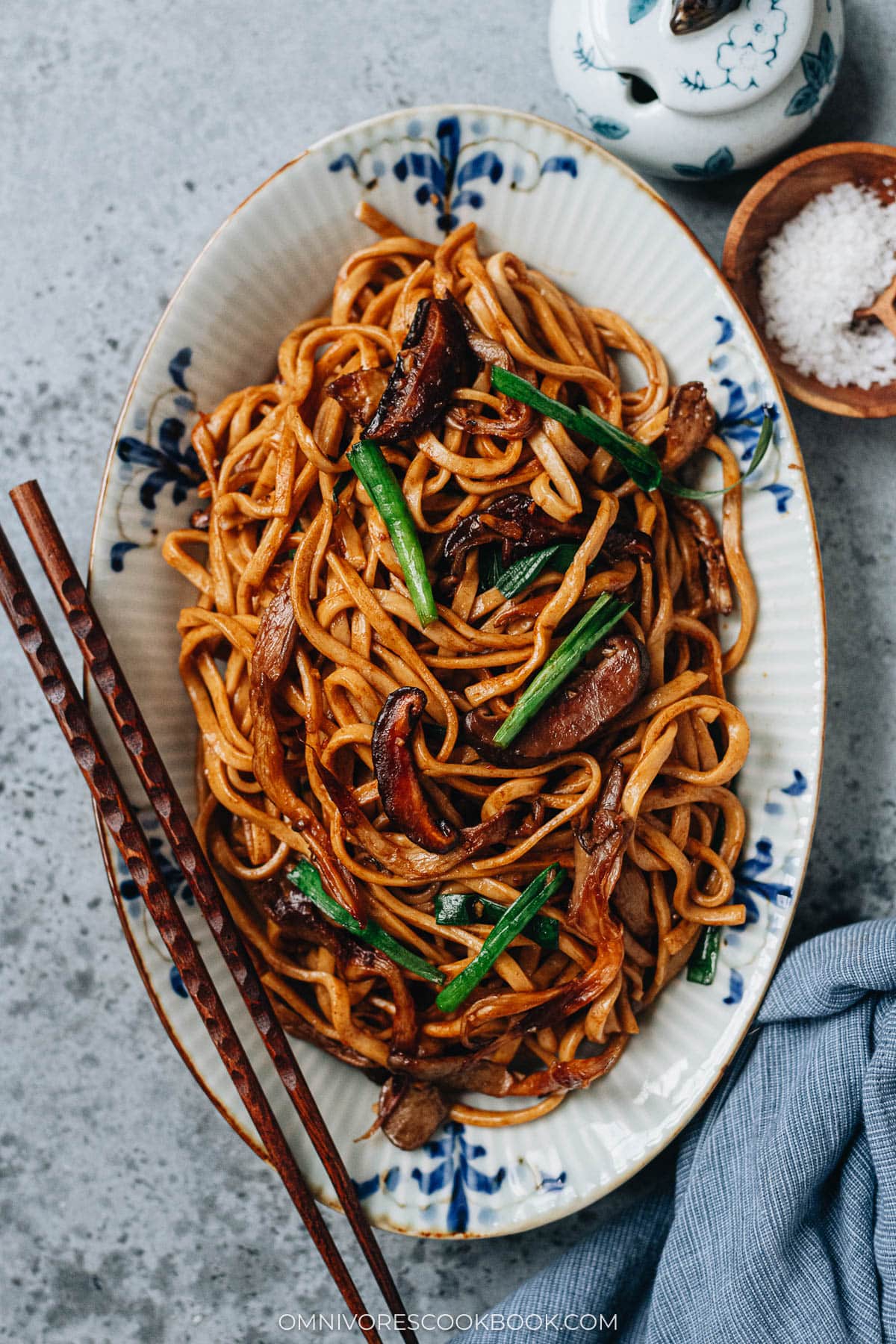
In Chinese culture, noodles are more than just a staple food, they carry a special symbolic meaning, especially during celebrations. Since I was a child, longevity noodles made with Yi Mein (伊面) have always been part of my mom’s menu, and she made them many times for my birthday, alongside other classics like hand pulled noodles. Those long, unbroken strands were her way of wishing health, prosperity, and a long life for everyone at the table.
The tradition behind longevity noodles
Yi Mein, also known as E-Fu noodles (伊府面), is the star ingredient of longevity noodles. These wheat based noodles are lightly fried before drying, which gives them their golden color and spongy texture that absorbs sauce especially well, making them perfect for celebratory dishes.
Longevity noodles are traditionally served for:
- Birthdays: Symbolizing health and long life.
- Weddings: Representing a long and happy union.
- Chinese New Year: Wishing prosperity in the coming year.
I was always taught never to cut the noodles while cooking or serving, because the longer the noodles, the greater the blessings. For my recipe, I cook the noodles, stir fry the mushrooms, and bring everything together with a savory sauce in about 30 minutes.
After cooking Chinese food at home and professionally for over a decade, I made sure this longevity noodles recipe stays authentic to Chinese tradition while remaining practical for modern kitchens. This is how my family enjoys longevity noodles, and I hope you make it at home and share it with the people you love too.
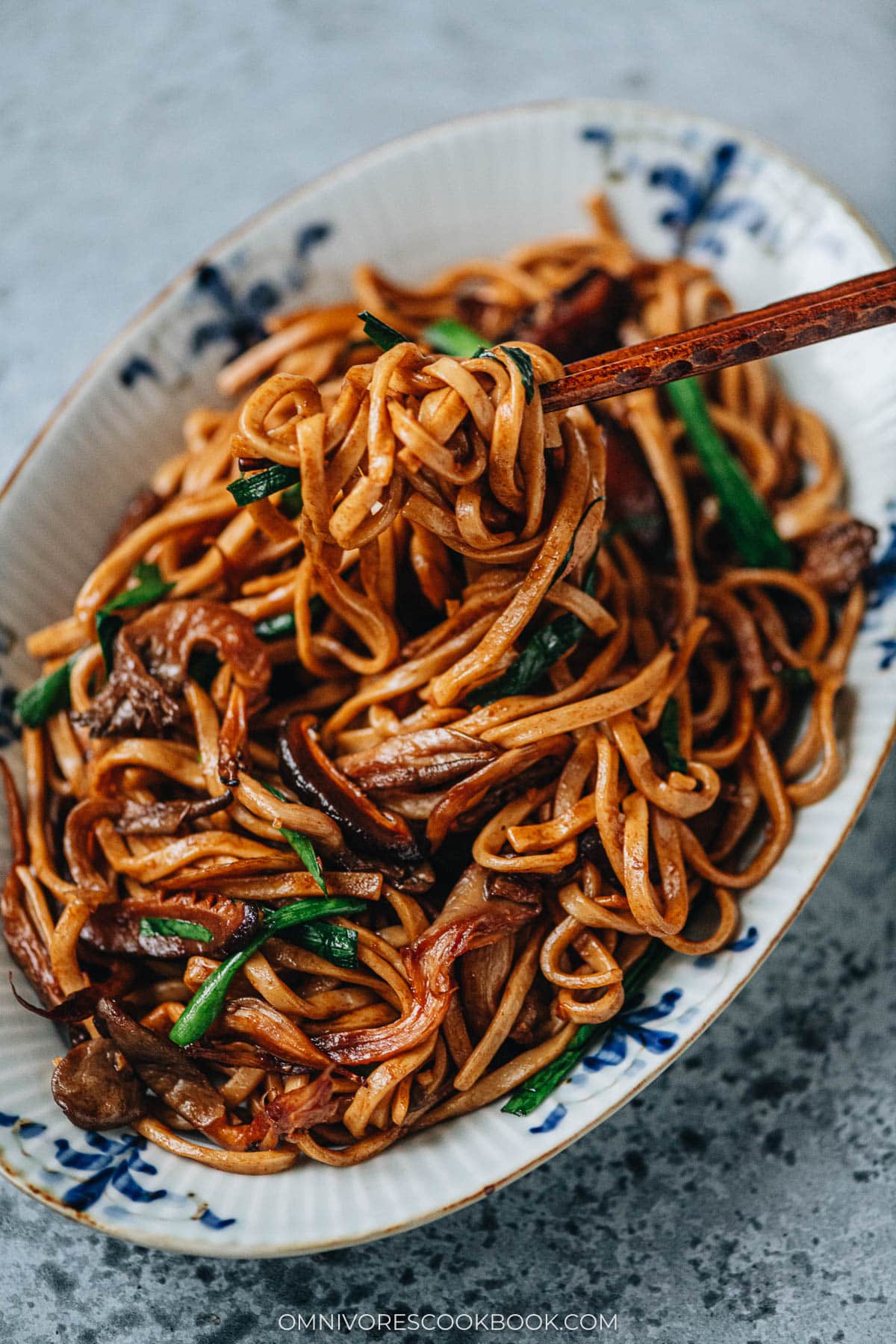
Ingredients
Yi Mein and other alternative
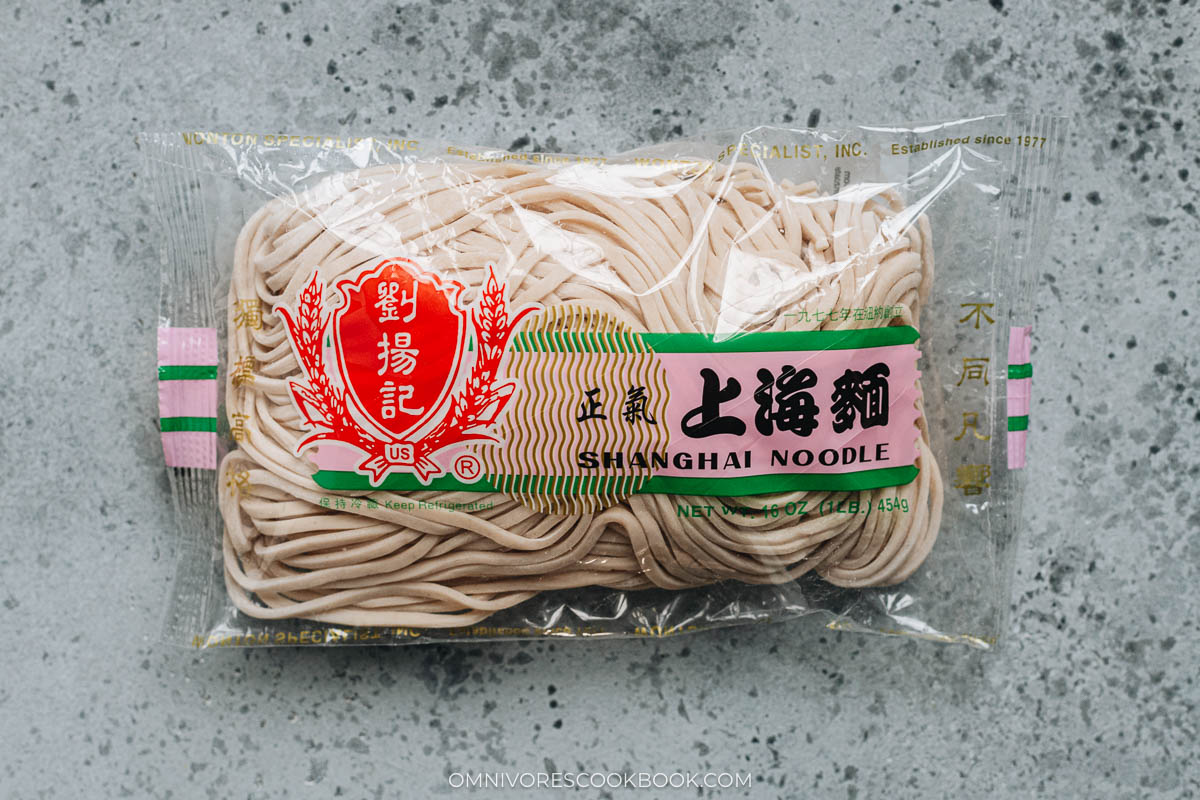
If you live in an area close to Chinatown or a large Chinese market, you might be able to find packaged Yi Mein noodles. But from my experience, it’s a type of noodle that is rather difficult to find. Sometimes, manufacturers label a thin type of noodles Yi Mein as well, which adds to the confusion. The thin type is commonly used in Northern China for noodle soup.
One of my favorite alternatives to Yi Mein noodles is thick fresh Shanghai noodles (see the picture below). They are thick noodles with a chewy texture, which is perfect for making longevity noodles.
Alternatively, you can also use extra thick udon noodles as a replacement. When none of these is available, you can even use spaghetti noodles boiled until al dente. Spaghetti is a great alternative due to its chewy texture and correct shape.
The noodle sauce
Longevity noodles use four simple ingredients for the sauce:
- Shaoxing wine: to deglaze the pan and add a deep umami
- Dark Soy sauce: it adds the beautiful dark brown color and a mild caramel taste
- Oyster sauce: it’s another key ingredient to create the delicious savory sauce
- Sugar: a small amount of sugar balances the saltiness and brings out the flavor of the ingredients.
Mushrooms and other noodle topping options
There are many different ways to make longevity noodles. When celebrating Chinese New Year in a restaurant, it’s not uncommon to order lobster with longevity noodles for its festive look. But when making these noodles at home, most home cooks keep them simple because they need to prepare many other dishes for a multi-course celebratory dinner.
You can make the most simple longevity noodles using shiitake mushrooms to add their umami flavor. My recipe uses shiitake mushrooms and oyster mushrooms for added texture. You can also use other types of mushrooms, such as white mushrooms, as a replacement.
Make your own
You can also customize your noodles by adding a protein such as shrimp, chicken, or tofu for a more fulfilling meal. To add protein, refer to the method and quantity in my chicken chow mein recipe. Make sure you always marinate the protein before cooking. And cook the protein separately and add it back during the stir fry.
Mise en place
When I am ready to cook, I make sure my table has:
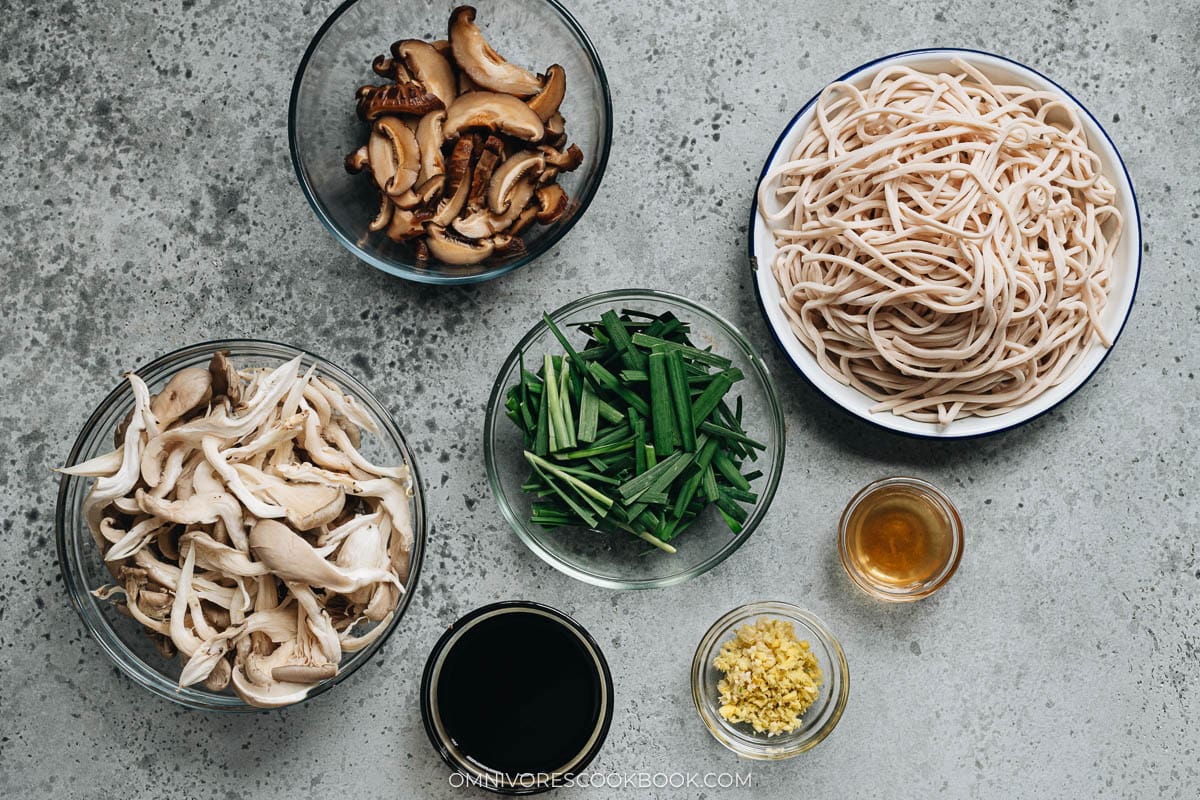
- Noodles: I use Yi Mein because they absorb sauce well and stay firm during cooking.
- Mushrooms: I combine rehydrated and sliced shiitake and torn to bite-size pieces oyster mushrooms.
- Aromatics: I prepare ginger, garlic, and garlic chives to build the base flavor of the dish.
- Sauce and deglazing liquids: I keep the mixed sauce, Shaoxing wine, and reserved soaking water ready so everything comes together quickly.
How to make
1. Boil the noodles: Cook the noodles according to the package instructions, stopping about one minute early so they stay al dente and keep their chewy texture after stir frying.
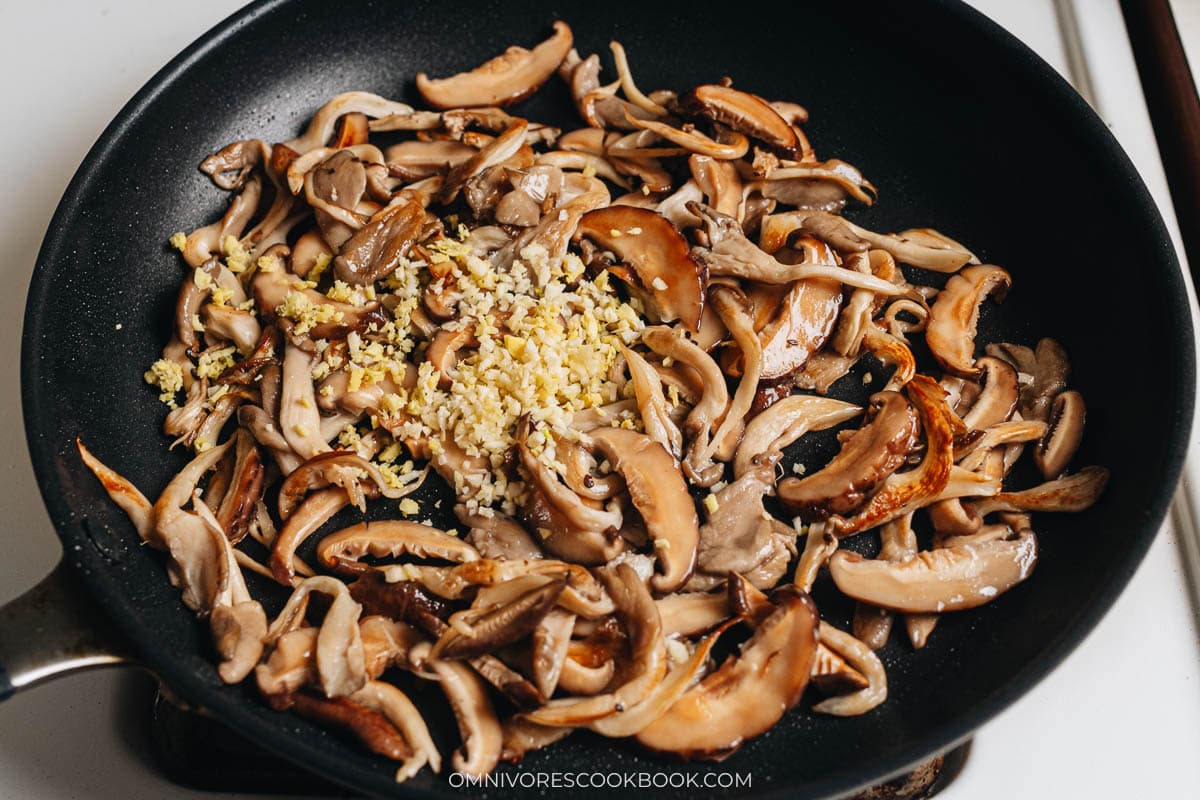
2. Pan fry the mushrooms: Cook the shiitake and oyster mushrooms in a hot pan until browned. Add the aromatics and stir to combine, then deglaze the pan with Shaoxing wine and the reserved mushroom soaking water.
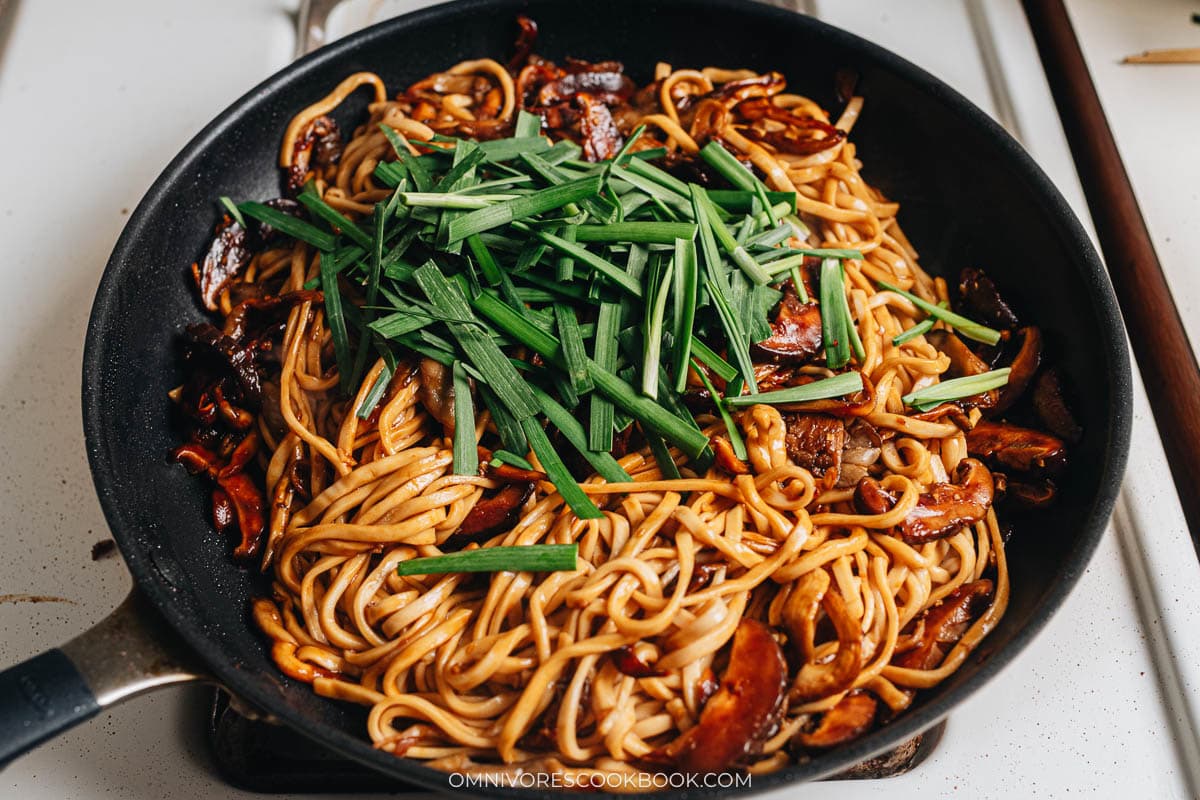
3. Add noodles and sauce: Add the noodles and sauce to the pan and toss to combine. Add the garlic chives and cook until just wilted.
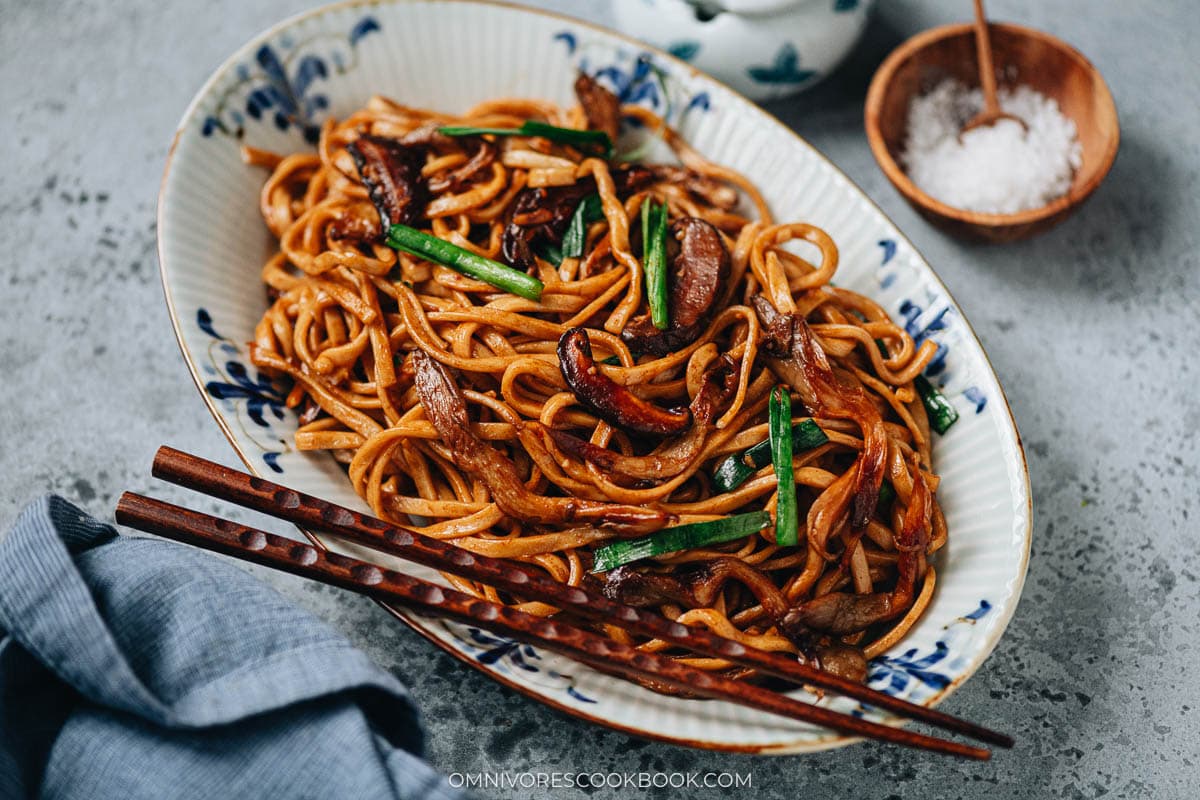
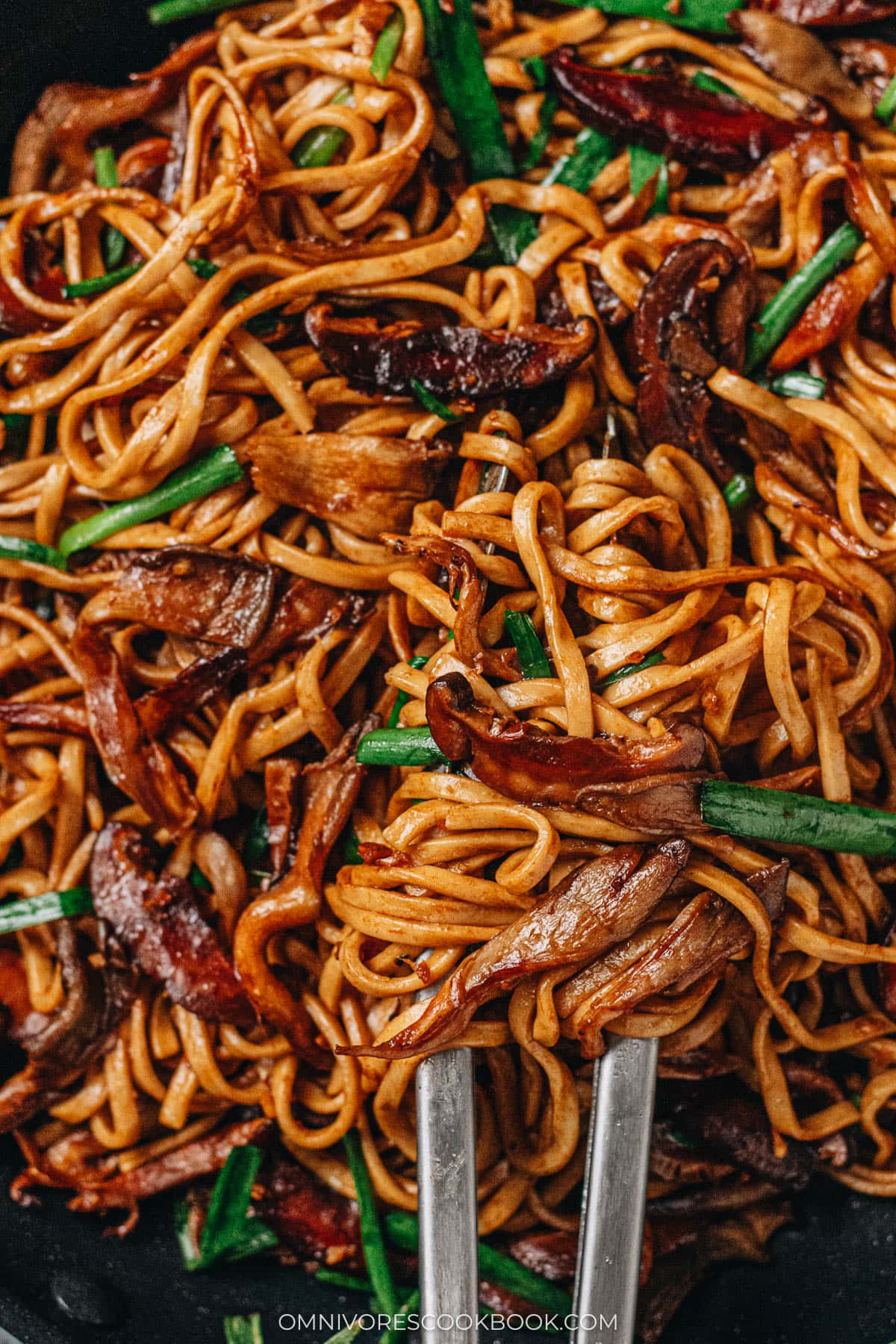
4. Serve: That’s it! Now you have a plate of chewy noodles that are bursting with flavor, with a fun texture added by the mushrooms.
How to serve
When I serve longevity noodles for Chinese New Year, I like pairing them with dishes that carry the same sense of tradition and balance. I place steamed whole fish on the table for symbolism, then add Cantonese roast duck when I want a richer centerpiece to share with family.
For a fuller spread and I have guests coming to my place, I usually include lighter dishes alongside the noodles, such as shrimp toast which is my personal favorite and my delicious Buddha’s Delight for vegetable focused option. These combinations make the meal festive while keeping longevity noodles at the center of the table.
Frequently asked questions
Why do I reserve the mushroom soaking water?
The soaking water carries concentrated mushroom flavor that comes from rehydrating the shiitake mushrooms. I add just a small splash to deglaze the pan, which lifts the browned bits and blends them into the sauce so it tastes richer without needing more seasoning.
Why should Yi Mein not be overcooked?
Yi Mein softens very quickly once it goes into boiling water, so timing matters. I watch it closely and stop cooking as soon as it turns tender, which helps the noodles keep their shape and structure when they are later tossed in the pan with the sauce and mushrooms.
How do I store leftover longevity noodles in the fridge or freezer?
To store leftovers, I let the longevity noodles cool completely before transferring them to an airtight container. In the fridge, they keep well for up to 2 days and reheat best in a pan with a small splash of water. For longer storage, I portion the noodles and freeze them for up to one month, then reheat in a skillet until warmed through.
Want to Save This Recipe?
Enter your email below & we’ll send it to your inbox. Plus get great new recipes from us every week!
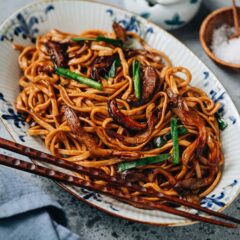
Longevity Noodles (Yi Mein, 伊面)
Ingredients
Sauce
- 2 tablespoons dark soy sauce
- 1 tablespoon oyster sauce *Footnote 1
- 1 teaspoon sugar
Stir fry
- 12 oz thick Shanghai Noodles (or udon noodles) (*Footnote 2)
- 2 tablespoons peanut oil (or vegetable oil)
- 1/2 lb oyster mushrooms (or any other mushroom you prefer), cut to bite-size pieces
- 2 cloves garlic , minced
- 1 teaspoon minced ginger
- 1 tablespoon Shaoxing wine
- 2 tablespoons mushroom soaking water
- 8 stalks garlic chives , or 4 green onions, cut into 1” (5 cm) pieces
Instructions
- Add the shiitake mushrooms into a medium-sized bowl and add enough warm water to cover. Rehydrate for 15 to 20 minutes, until the mushrooms have turned tender throughout. Reserve 2 tablespoons of mushroom soaking water. Drain the mushrooms and thinly slice them.
- Mix the sauce ingredients in a bowl by stirring together the dark soy sauce, oyster sauce, and sugar.
- Boil the noodles according to instructions. Then drain, rinse the noodles with cold running tap water to stop cooking and rinse off excess starch. Drain thoroughly and set aside.
- Heat the oil in a large pan or wok over high heat. Add the oyster mushrooms. Let sear, stirring occasionally, until golden, about 3 minutes.
- Add the sliced shiitakes. Stir and cook until the shiitakes gain some color, about 1 minute.
- Add the ginger and garlic into the pan, and toss for 30 seconds. Pour in the Shaoxing wine and the 2 tablespoons mushroom soaking water. Stir to deglaze the pan.
- Add the boiled noodles and toss a few times. Then drizzle the sauce over the noodles. Stir and cook until the noodles are evenly coated.
- Add the garlic chives. Stir and cook for an additional 2 minutes, or until the chives are wilted and the sauce is fully absorbed by the yi mein. Transfer the noodles to a serving platter.
Notes
- Vegan / Vegetarian Adaption: Use vegetarian oyster sauce to make this dish vegetarian.
- The fresh thick Shanghai noodles yield the best result due to their chewy texture. If you can get high quality fresh or dried udon noodles, they make a great alternative. When fresh noodles are not available, regular dried wheat noodles or spaghetti will work as well.
Nutrition

Did you make this recipe?
I’d love to hear how it turned out for you! Please take a moment to leave a 5-star rating ⭐️ and share your thoughts in the comments further down the page. It really helps others discover the recipe too.
Eric Nelson
Both sugar and soy sauce are listed in the ingredients, but neither is called out in the recipe. Where would they fit in?
Maggie Zhu
Sorry for the confusion. I missed the step of mixing the sauce and I just added to the recipe now, in step 2.
Novellia
I saw shredded chicken in the picture setup. Do you use chin or no?
Maggie Zhu
Hi Novellia, in the picture it is shredded oyster mushrooms. I didn’t use chicken in this dish, but you certainly can. There are many ways to put longevity noodles together, and it’s very common to have some protein, such as chicken or shrimp in it.