
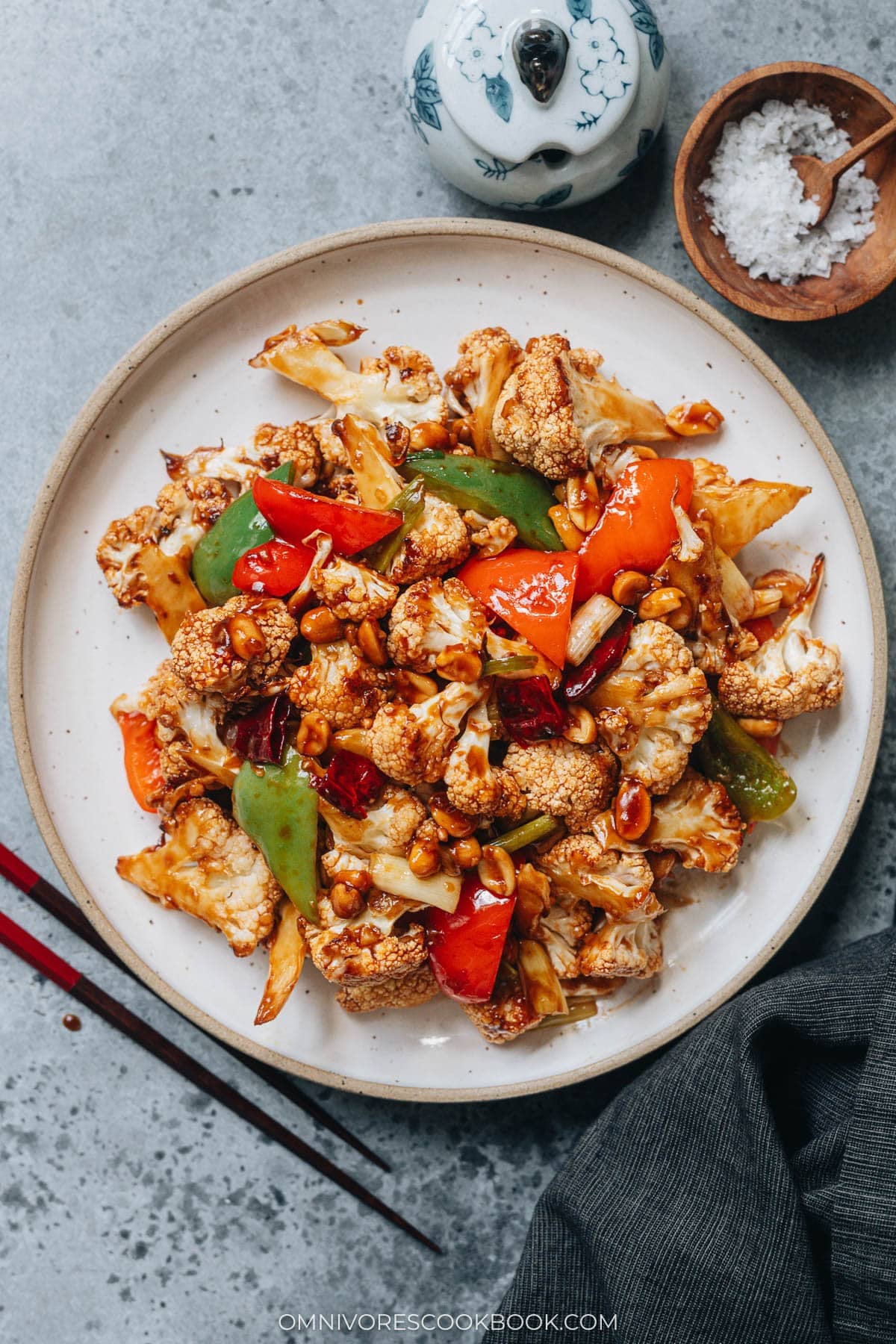
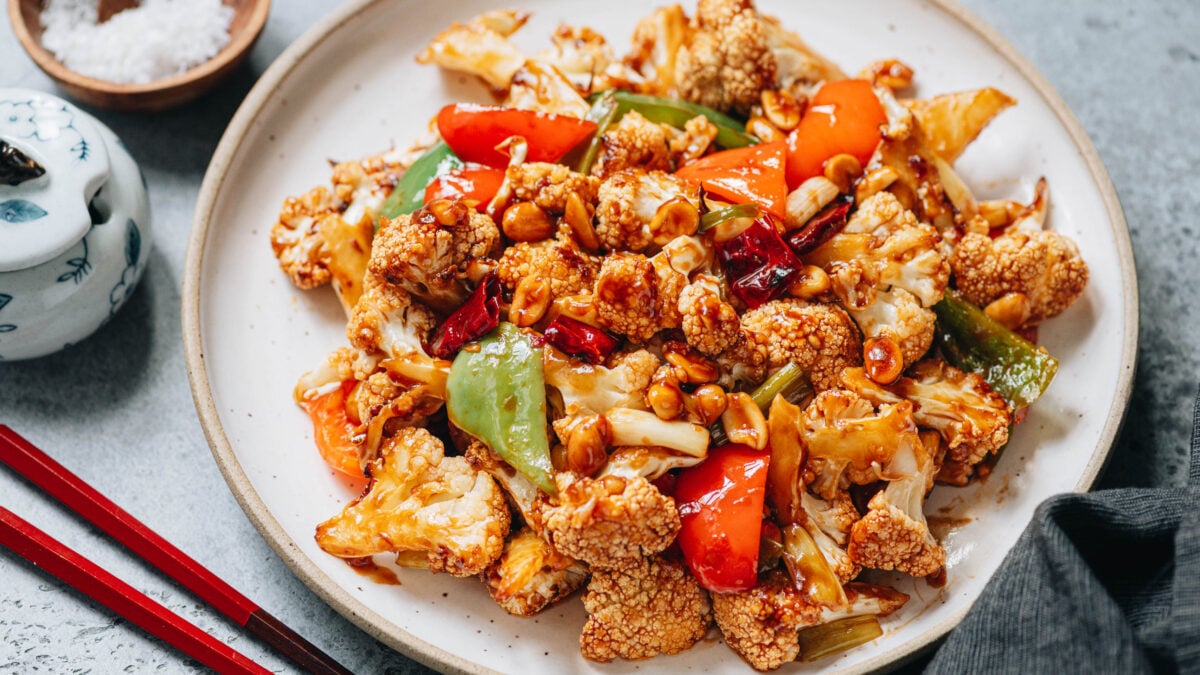
Kung pao is a Sichuan dish traditionally made with kung pao chicken as the protein, and the cauliflower version is my swap for the meatless table. The dish tastes the same on the tongue, savory, sour, sweet, and lightly numbing, but the cauliflower is the body of the dish instead of the carrier, which is why I roast the florets first instead of stir frying them raw.
I remade this recipe from an older batter and bake version after readers told me the batter did not stay crispy once the sauce went on, and after I ran into the same problem in my own kitchen. My new version skips the batter entirely. The cauliflower roasts in oil at high heat until the edges char, and the roasted peanuts in the sauce do the work of adding crunchy contrast that the batter used to do. The sauce is also lighter now, with less sugar than the original version, and finishing the dish in a wok over the burner gives it the fragrant note that an all oven cook could not.
I work the recipe in 3 short stages, prep, roast, and stir fry. I cut the cauliflower into small bite size florets, roast them in oil until charred but still firm, mix the sauce while the oven is busy, and finish the dish in a wok with the aromatics, the bell pepper and green onion, the sauce, the roasted cauliflower, and the peanuts. The whole dish takes 1 hour from cutting board to plate, mostly because of the knife work and the roast. I highly recommend you to make it for your own table on a weekend and you will see why I think my new version was worth the work.
Ingredients
I know the ingredient list looks long, but don’t let that scare you off. Once you’re done prepping, you can group your ingredients into a few bowls.
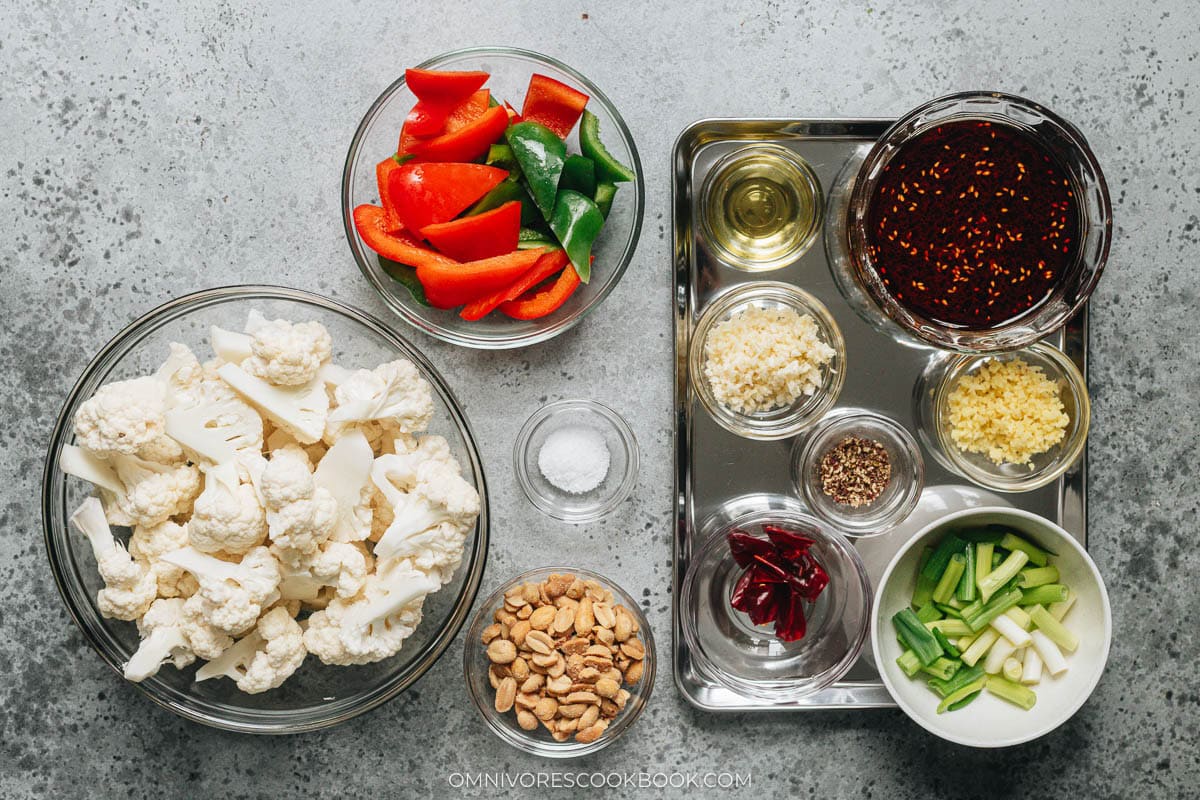
Cauliflower: One head of cauliflower, cored and cut into 1.5 inch (4 cm) bite size florets, with vegetable oil and kosher salt.
Sauce: Chicken broth, distilled vinegar, Shaoxing wine, light soy sauce, Chinese chili oil, dark soy sauce, sugar, and cornstarch. The combination makes a balanced and layered sauce that is savory, sweet, sour and spicy, full of umami.
Wok aromatics: I use vegetable oil to cook ground Sichuan peppercorns, dried Chinese chili peppers halved with seeds removed, minced ginger, minced garlic, and green onion to create a fragrant base. I also tossed in bell pepper and roasted peanuts for crispy and crunchy texture.
The pantry: My essential Chinese ingredients guide covers Sichuan peppercorns, dark soy, and Chinese chili oil if any of them are new to the cupboard.
How to Make
1. Preheat and prep: Preheat the oven to 450 degrees and line a baking sheet with parchment paper.
2. Coat the cauliflower: Add the cut cauliflower to a large bowl with 2 tablespoons of vegetable oil and the kosher salt. Toss to coat well.
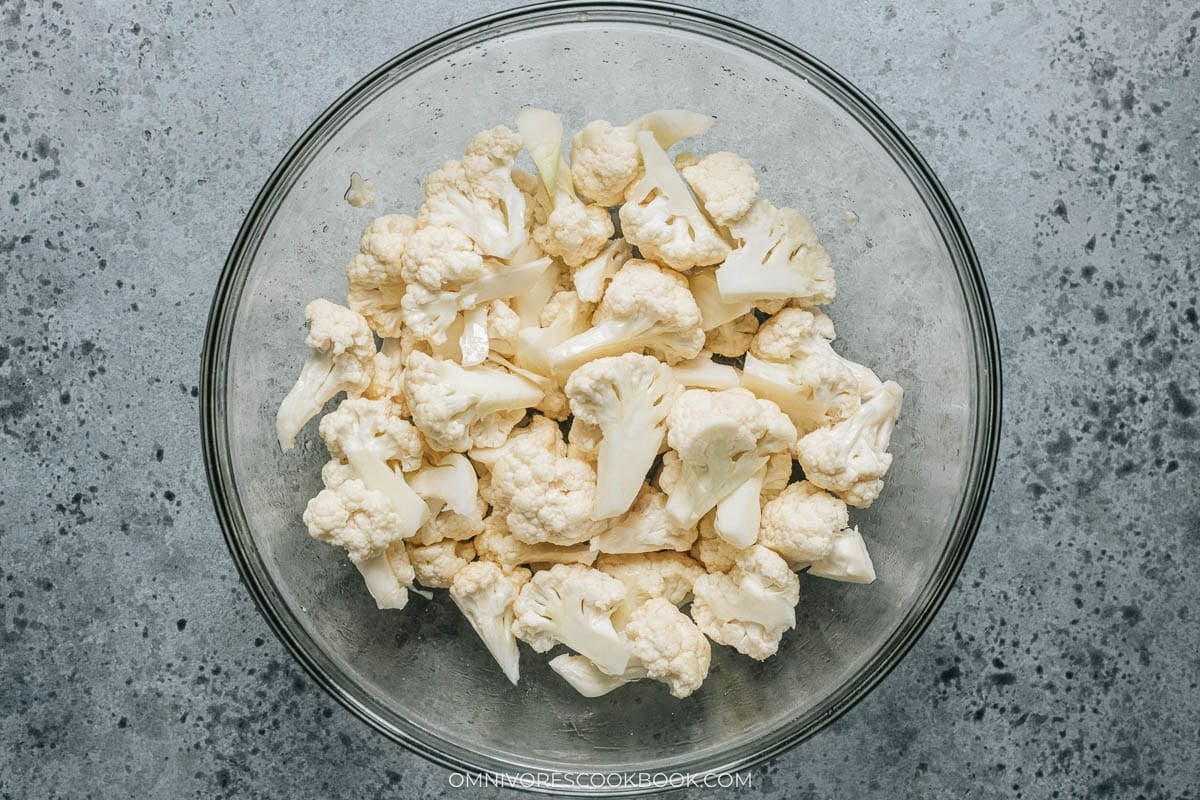
3. Roast cut side down: Transfer the cauliflower to the lined baking sheet, arranging the florets cut side down with space between each piece. Roast for 20 minutes.
4. Flip and finish roasting: Flip the cauliflower and roast for another 10 to 12 minutes until the surface is browned and the cauliflower is cooked through but still firm. If the florets look dry, spray a little extra oil on the surface during the second roast.
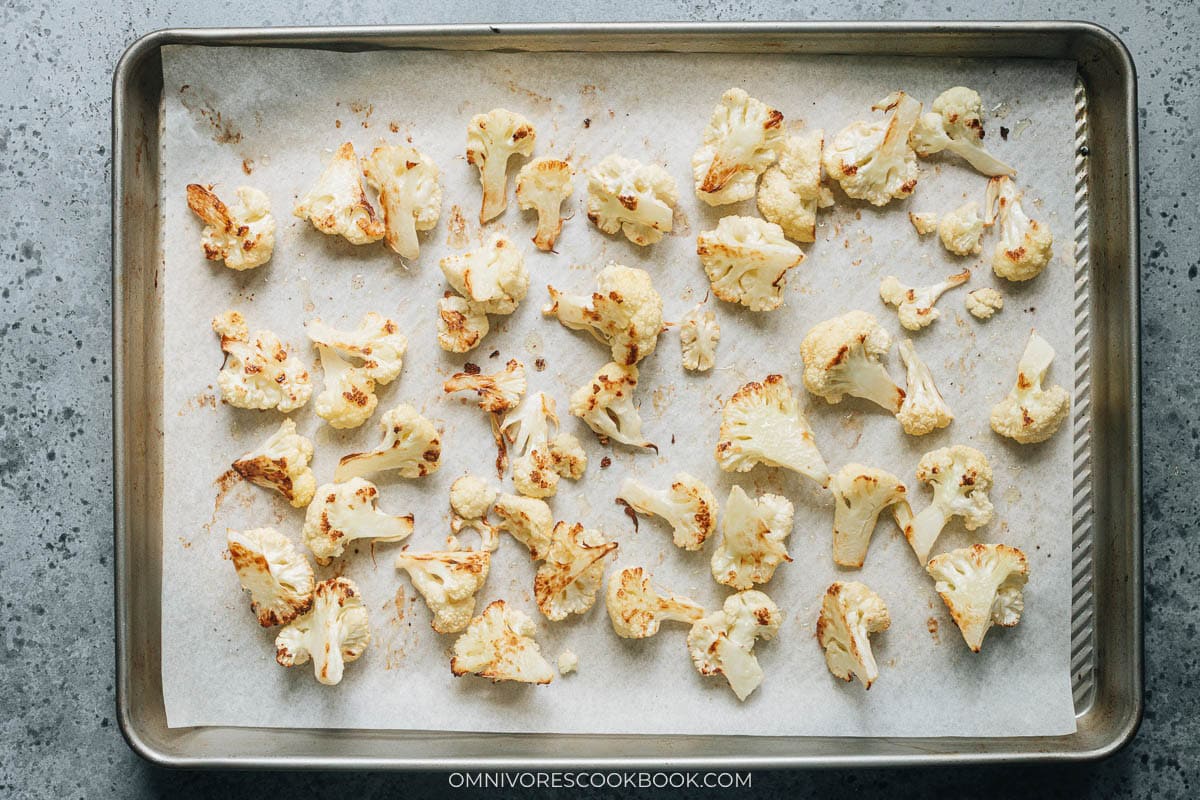
5. Mix the sauce: While the cauliflower roasts, combine the broth, distilled vinegar, Shaoxing wine, light soy sauce, chili oil, dark soy sauce, sugar, and cornstarch in a medium bowl. Stir until the sugar and cornstarch dissolve.
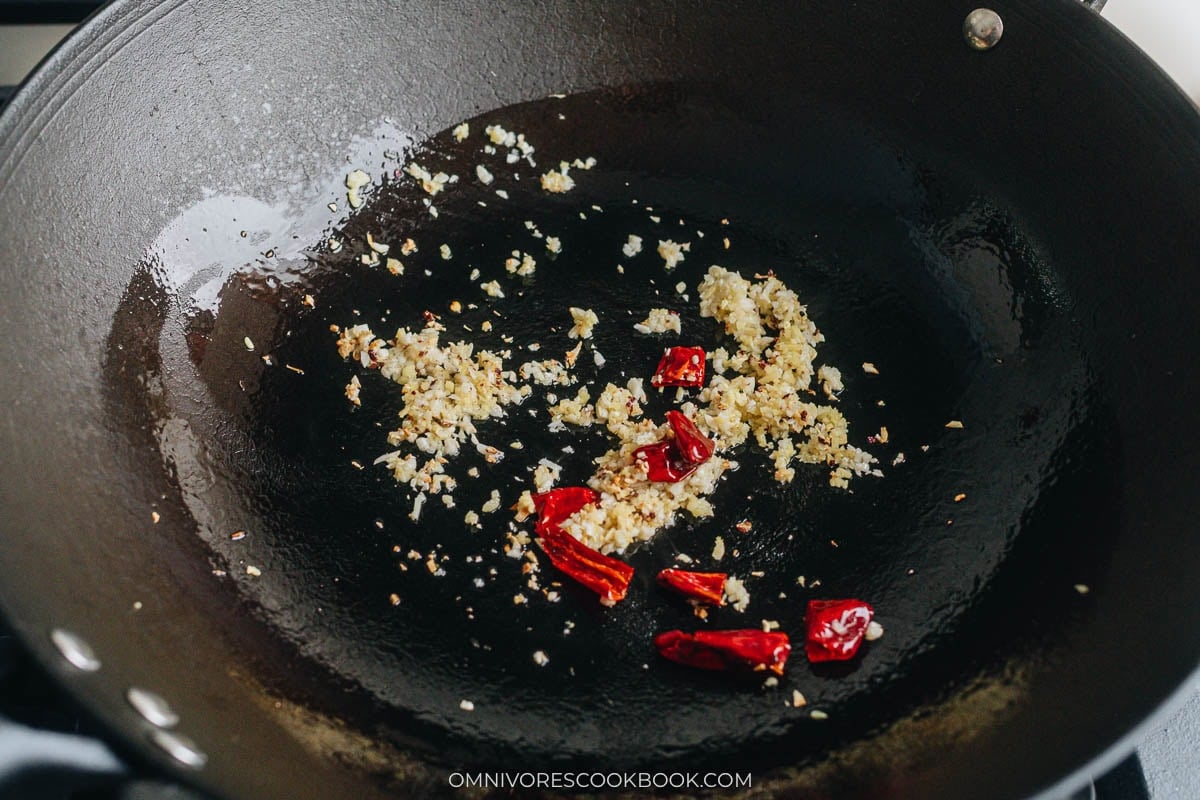
6. Bloom the spices: Heat 1 tablespoon of vegetable oil in a wok over medium heat until shimmering. Add the ground Sichuan peppercorns, dried chili peppers, ginger, and garlic. Cook until very fragrant, 30 seconds to 1 minute, watching that the spices do not burn.
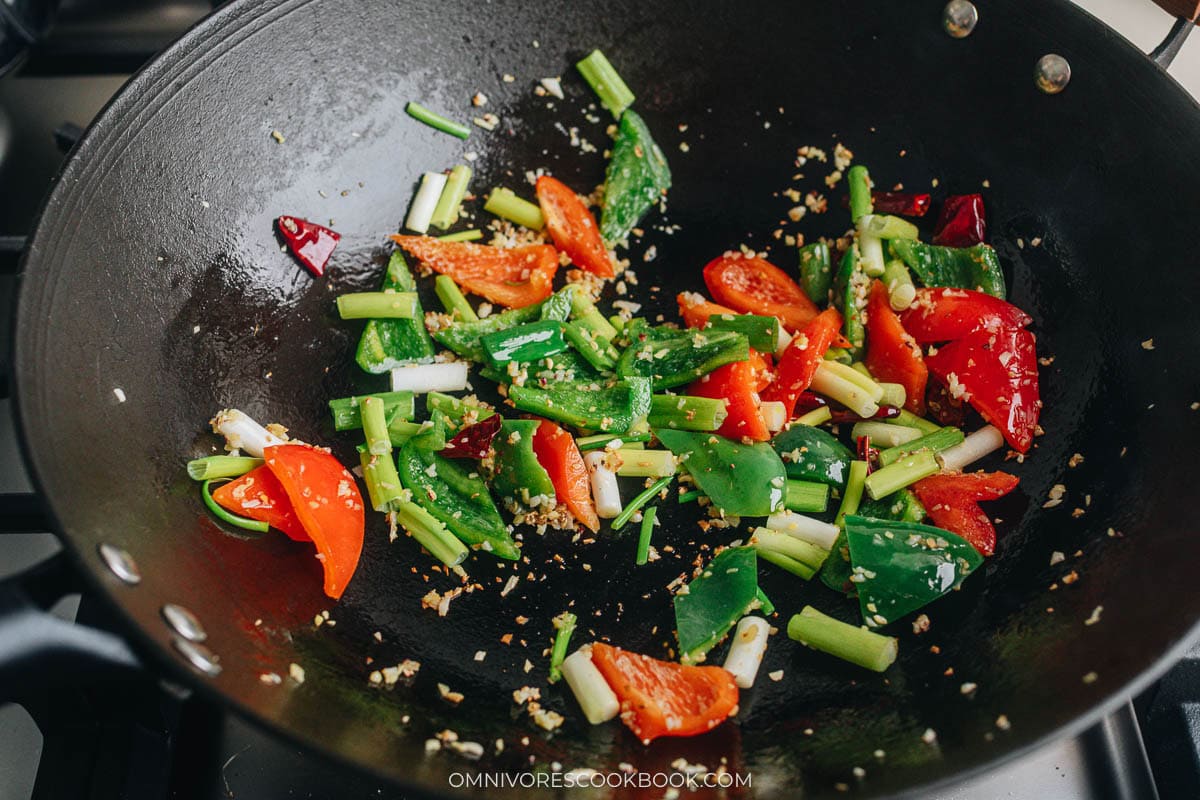
7. Cook the pepper and onion: Add the bell pepper and green onion. Stir and cook for 1 to 2 minutes until the pepper is just tender.
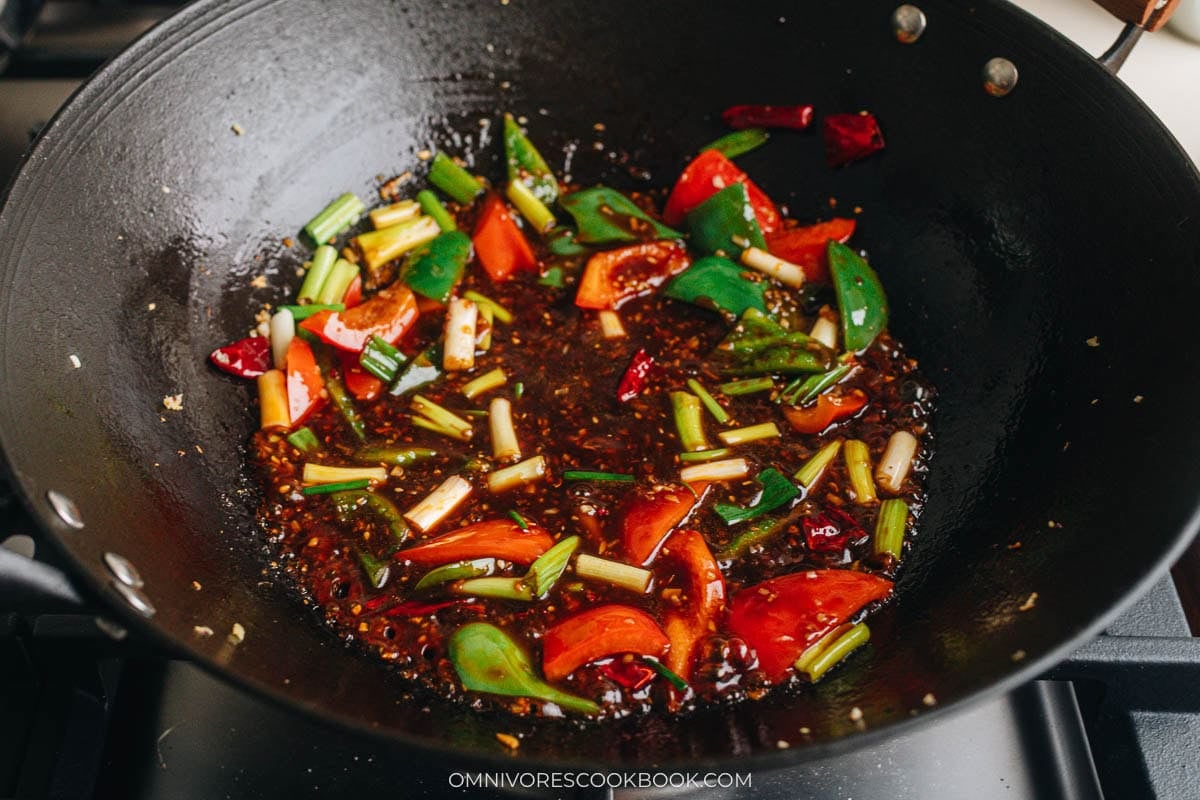
8. Thicken the sauce: Stir the sauce again to redistribute the cornstarch and pour it into the wok. Cook and stir until the sauce thickens enough to coat the back of a spoon. This will happen very quickly, usually within 10 seconds or so, if your wok is hot.
9. Toss and finish: Add the roasted cauliflower and the roasted peanuts to the wok. Toss everything together until the sauce coats every floret.
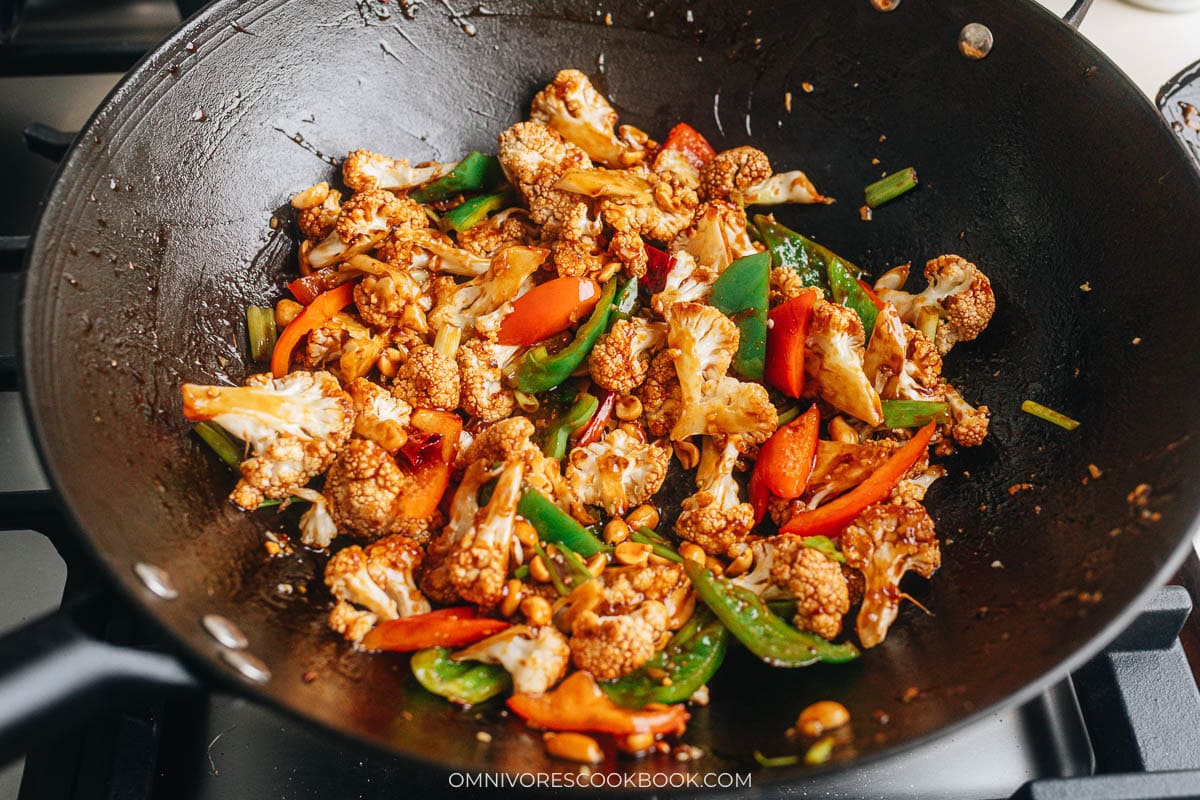
10. Serve: Transfer to a large serving plate and serve hot as a main dish. Check my how to serve section below for more details.
My Cooking Tips
Cut the florets small: 1.5 inch bite size florets with cut side surfaces that are slightly uneven catch the most char and hold the most sauce. I split each floret along the stem with a tilted knife and then with my hands on the head, which avoids the cloud of crumbs that a clean knife cut produces.
Prep every ingredient before the wok meets the heat: The wok step moves in 60 second intervals once the oil is hot. I line up the ground Sichuan peppercorns, the dried chilies, the ginger and garlic, the bell pepper and green onion, the sauce, and the roasted cauliflower in small bowls before I turn the burner on. Stopping mid stir fry to mince garlic burns the spices.
Halve the dried chilies and shake out the seeds: Whole dried chilies sit on top of the dish and only release a mild background heat. Halved chilies with the seeds shaken out distribute the heat through the oil and let the chili flavor coat the cauliflower without going aggressively spicy.
Watch the spices, not the clock, in the bloom step: The Sichuan peppercorns and dried chilies bloom in 30 to 60 seconds at medium heat, and they turn from fragrant to acrid in another 15 seconds. I drop the ginger and garlic in the moment the spices smell warm and toasty, which stops the spice cook and starts the aromatic cook.
Grind the Sichuan peppercorns coarse: A coarse grind delivers the numbing note in small pleasant bursts as I eat, while a fine grind coats every bite and it might be too much. I ground my Sichuan peppercorns coarsely in a spice grinder. You can also use a mortar and pestle to ground it.
Cool the cauliflower briefly before tossing if not serving right away: If the dish is going to sit for more than a few minutes before serving, I let the roasted cauliflower cool slightly before it meets the sauce. Steaming hot cauliflower softens faster once it sits in the sauce.
How to Serve
After making this Kung Pao cauliflower recipe many times, my favorite way to serve it is as a main dish with a bowl of steamed jasmine rice and a side of baby bok choy stir-fry for something green. For a vegetarian dinner, I usually leave it at that, or I serve it as one of two mains alongside a plate of eggplant with tomato (西红柿炒茄子).
For a bigger Sichuan table when friends come over, I open with authentic hot and sour soup, place my easy Chinese cucumber salad for a cold crunch, and serve the kung pao cauliflower with a bowl of egg fried rice for the carb. The numbing chili in the cauliflower plays against the sour in the soup and the cool acid in the cucumber, which keeps the meal balanced instead of overly spicy.
Frequently Asked Questions
Why does my cauliflower not char in the oven?
The 2 most common causes are not enough oil on the cauliflower and crowding on the baking sheet. The cauliflower needs to be coated, not damp, and each floret needs room around it for steam to escape. I usually use a smaller head of cauliflower so the florets do not pile up in the sheet pan. If using a bigger cauliflower, consider roasting them in two sheet pans.
How do I make this dish vegetarian or vegan?
I swap the chicken broth for vegetable broth in the sauce, which is the only switch the recipe needs to read fully vegetarian. For a vegan version, I also check the chili oil label since some brands include non-vegan ingredients in the seasonings.
How to store leftovers?
Kung pao cauliflower keeps in an airtight container in the fridge for 3 days, and I reheat it in a hot dry skillet for 2 to 3 minutes to recover some of the char on the cauliflower. The microwave softens the texture, so the skillet reheat is what brings yesterday’s dish closest to fresh. I do not freeze cooked kung pao cauliflower because the cauliflower turns watery and the sauce loses its body once thawed.
Want to Save This Recipe?
Enter your email below & we’ll send it to your inbox. Plus get great new recipes from us every week!
Watch video
Kung Pao Cauliflower (宫保菜花)
Ingredients
Roasting
- 1 head cauliflower , cored and cut into 1.5" (4-cm) florets
- 2 tablespoons vegetable oil , and extra oil spray, if needed
- 1/2 teaspoon kosher salt
Sauce
- 1/4 cup chicken broth
- 3 tablespoons distilled vinegar
- 2 tablespoons Shaoxing wine
- 2 tablespoons light soy sauce
- 1 tablespoon Chinese chili oil
- 1 teaspoon dark soy sauce
- 2 tablespoons sugar
- 2 teaspoons cornstarch
Stovetop cooking
- 1 tablespoon vegetable oil
- 1/2 teaspoon ground Sichuan peppercorns
- 4 dried Chinese chili peppers , halved crosswise and seeds removed
- 1 tablespoon minced ginger
- 4 cloves garlic , minced
- 1 bell pepper , cut into 1” (2.5 cm) pieces
- 4 green onions , cut into 1/2” (1-cm) long pieces
- 1/2 cup roasted peanuts
Instructions
- Preheat the oven to 450ºF (230ºC). Line a baking sheet with parchment paper.
- Add the cauliflower into a big bowl. Add the 2 tablespoons of oil and salt. Toss to coat well. Transfer to the lined baking sheet, arrange the cauliflower to face the cut side down. Roast for 20 minutes. Flip the cauliflower. Keep roasting for another 10 to 12 minutes until the cauliflower is fully cooked through and the surface has browned. If the cauliflower looks dry during roasting, you can add extra oil spray to keep the cauliflower roasting well.
- Mix all the sauce ingredients in a medium bowl.
- When the cauliflower is roasted, remove the baking sheet from the oven. Transfer the cauliflowers into a big plate.
- Heat the 1 tablespoon oil in a wok over medium heat until shimmering. Add the ground Sichuan peppercorns, dried chili peppers, ginger, and garlic. Cook until very fragrant, 30 seconds to 1 minute.
- Add the pepper and green onion. Stir and cook for 1 minute, or up to 2 minutes if you prefer the pepper to taste more tender.
- Stir the sauce again until the cornstarch is dissolved completely, pour into the skillet. Cook and stir until the sauce thickens.
- Add back the cauliflower and peanuts. Toss everything together until mixed well. Transfer to a large serving plate and serve hot.
Notes
- It’s important to cut the cauliflower to the right size to ensure even roasting and browning. See the blog post above to see how to cut the cauliflower.
- It’s very important to leave some space between the cauliflower florets, so the cauliflower will release steam and turn crispy once baked. If your baking tray does not have enough space, bake the rest in a separate tray. You can bake both trays at the same time by place the smaller tray on a different rack.
- If you’re not serving the dish immediately, let the cauliflower cool off for a bit before tossing in the sauce. The cauliflower will stay crispy better this way.
Nutrition

Did you make this recipe?
I’d love to hear how it turned out for you! Please take a moment to leave a 5-star rating ⭐️ and share your thoughts in the comments further down the page. It really helps others discover the recipe too.
STUART
I wanted to try this new recipe. She wanted Kung Pao Shrimp. Sooo we added shrimp to this recipe and it was great over rice. Sauce was excellent just as written. Thank you Chef Maggie for all your work.
Maggie Zhu
So happy to hear you liked this one! Adding shrimp sounds great to me 🙂
Marsha J Keeler
I definitely love the old, battered version better. Yes, sometimes it did get mushy, but nothing compared to the mushiness of the cauliflower in this version. Sauces were similar, so that was a toss up. Still a nice meal, but not as good as the older recipe.
Raúl
Great recipe, I never get tired of it
Dane Henas
My wife and I loved this recipe! I made the Kung Pao Sauces a week ago and having that ready-made mad the dish so easy! I kept looking for a mention of a wok or saucepan and to my surprise it was all done in the oven! My only suggestions is that you have a conversion of your recipes to the metric system. I’m in the U.S., but find that measuring ingredients by weight is much more accurate. In this recipe a “small or medium cauliflower” is open to interpretation. I had a large cauliflower so I guessed and used half of it. It turned out fine, but now days some things like Serrano or Jalapeno chilies are so huge that it’s almost impossible to know what the recipe’s intention is. Anyway, we loved it and will add it to the “keeper” file!
Barbara
Very good! Just made it and I will make it again! Thank you 😊
Louise Samson
Great texture and excellent taste. Thank you, Maggie!
Steven
First time trying this recipe which was very easy to make however I found it too sweet snd my cauliflower was soggy and it’s was not spicy so added additional Szechuan peppers and Thai chilies.
Next time I will just drizzle the sauce and reduce the sugar by half.
Stella
This was super tasty, and my family loved it too. Thank you!
Pam
Hello – this sounds delicious! Are all of your recipes vegetarian? I would like to add some meat protein. Also you cookbook sounds wonderful. Is it entirely vegetarian? I love vegetables but my hubs wants some meat added. How would you suggest I do that if the recipes are only plant based? Thank you so much in advance if you take the time to answer my question. Have a wonderday evening/day.
Maggie Zhu
Hi Pam, I do post a lot of meat recipes. The majority of my recipes are not vegetarian, but I do have a plant-based cookbook: Chinese Homestyle.
My other cookbook (it is E book only) is about Chinese sauces and it is not vegetarian: https://omnivorescookbook.com/The-Chinese-Stir-Fry-Sauce-Cookbook