
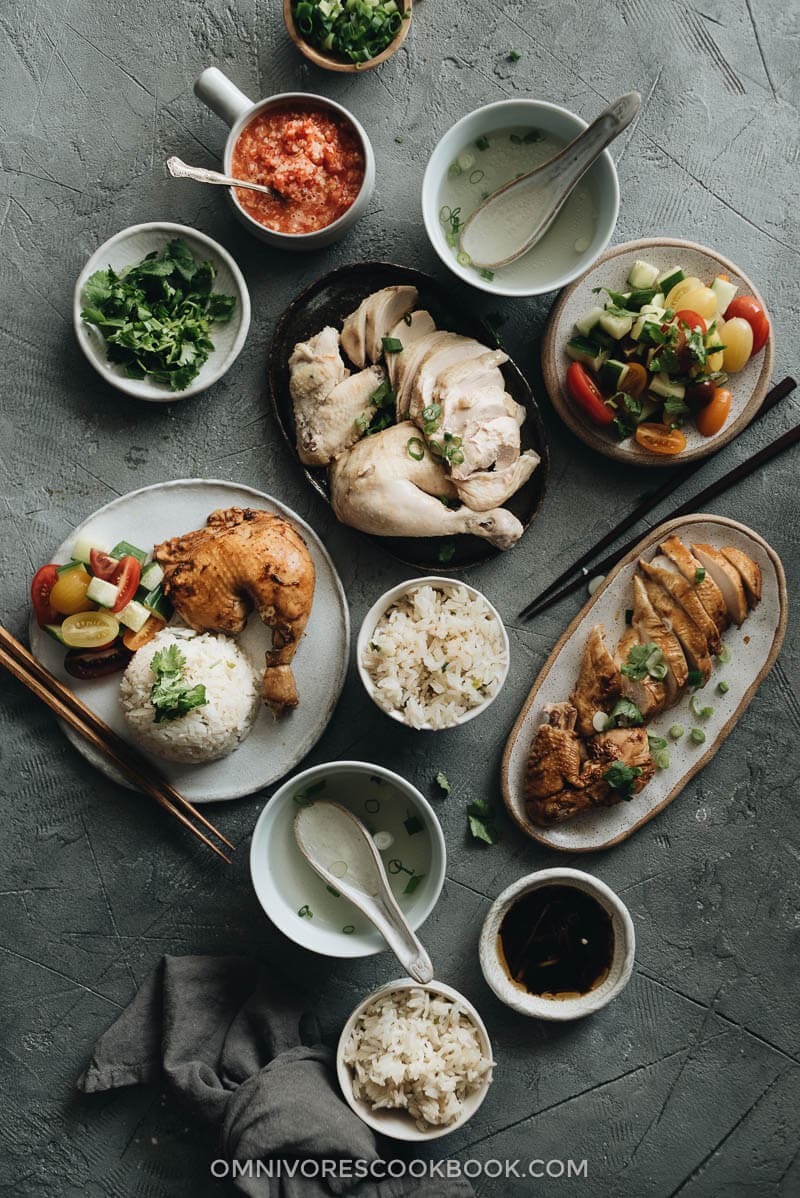
According to Wikipedia, Hainanese chicken rice originated in Hainan, but then grew so popular in Singapore that it became one of their national dishes. Growing up in northern China, I’d never heard of or tried this dish until I moved to Japan in college. It was interesting to learn a bit more about my own culture when living in a foreign country. Although I never tried the dish after seeing the picture of it – boiled chicken on white rice? Huh, it seemed kinda lame…
The first time I tried Hainanese chicken rice was when I was on a business trip to Singapore. It BLEW MY MIND. A local colleague took me to a hawker center and we ordered the dish. It was totally the opposite of my first impression of the dish. The chicken was juicy and tender, and was so refreshing and delicious paired with the dipping sauce. The rice was definitely the best part. It was cooked in chicken fat and chicken broth, with plenty of ginger and garlic. It was so rich and bursting with flavor. I almost licked my plate clean after eating a big serving, craving for more afterwards.
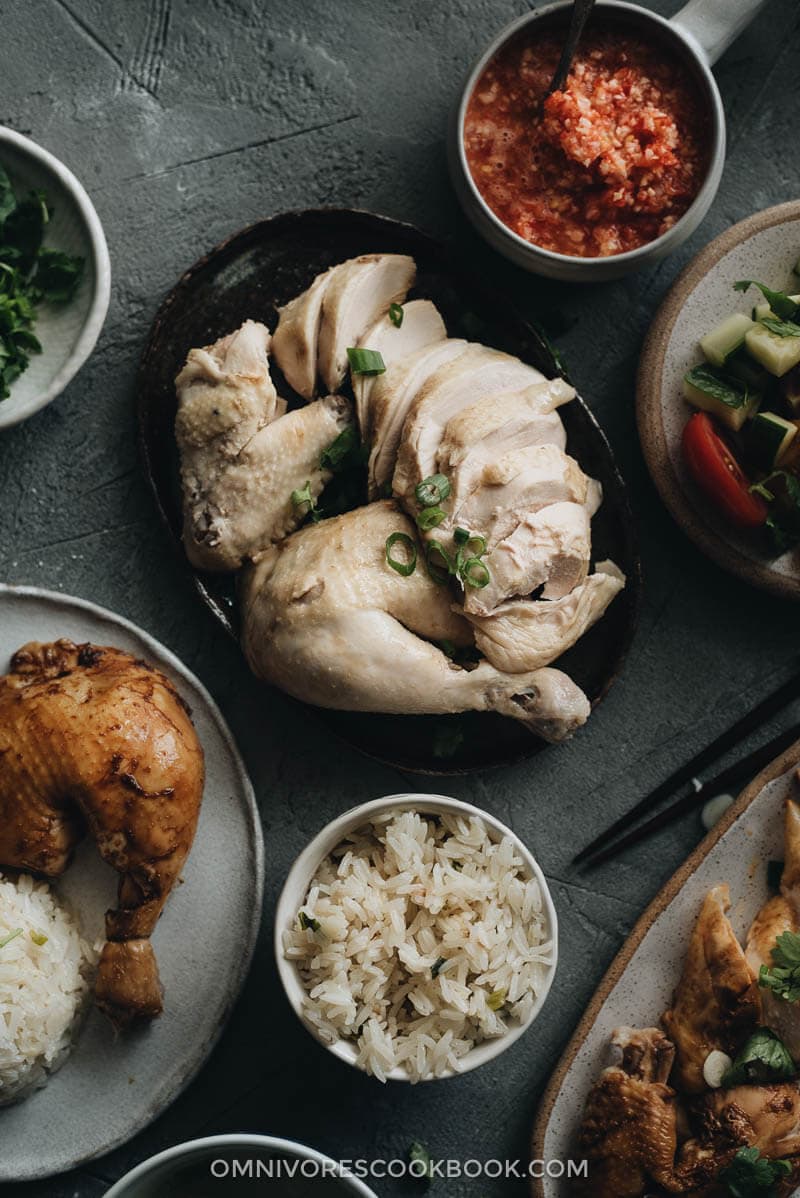
Now that I’m living in the US, it’s quite hard to find a properly done Hainanese chicken rice in a restaurant. So I have to head to my own kitchen when I need a fix. This dish definitely doesn’t belong in the “Weeknight Dinner” genre. It’s more of a weekend project dish. The recipe might look very long, but believe me, it’s really straightforward and not as complicated as it seems.
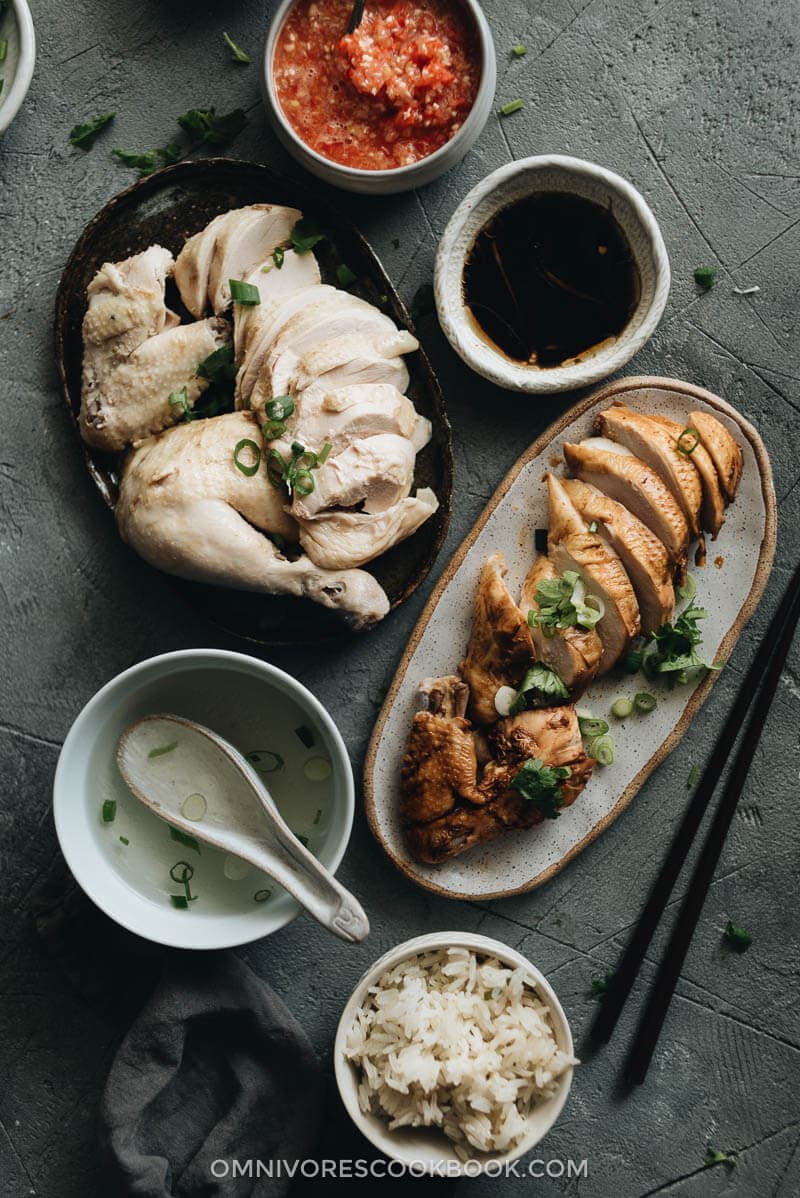
One dish, two versions
When I had my first Hainanese chicken rice in Singapore, my colleague ordered two types of chicken for me to try. He told me that even although the mainstream one is the white chicken, the soy sauce version is actually more popular and tastier. He was not lying!
Making the soy sauce version is extremely easy. You simply need to brush a few layers of sweet soy sauce on the chicken once you’re done boiling it and letting it air dry. Then you’ll have a chicken that’s more flavorful without covering up the original taste.
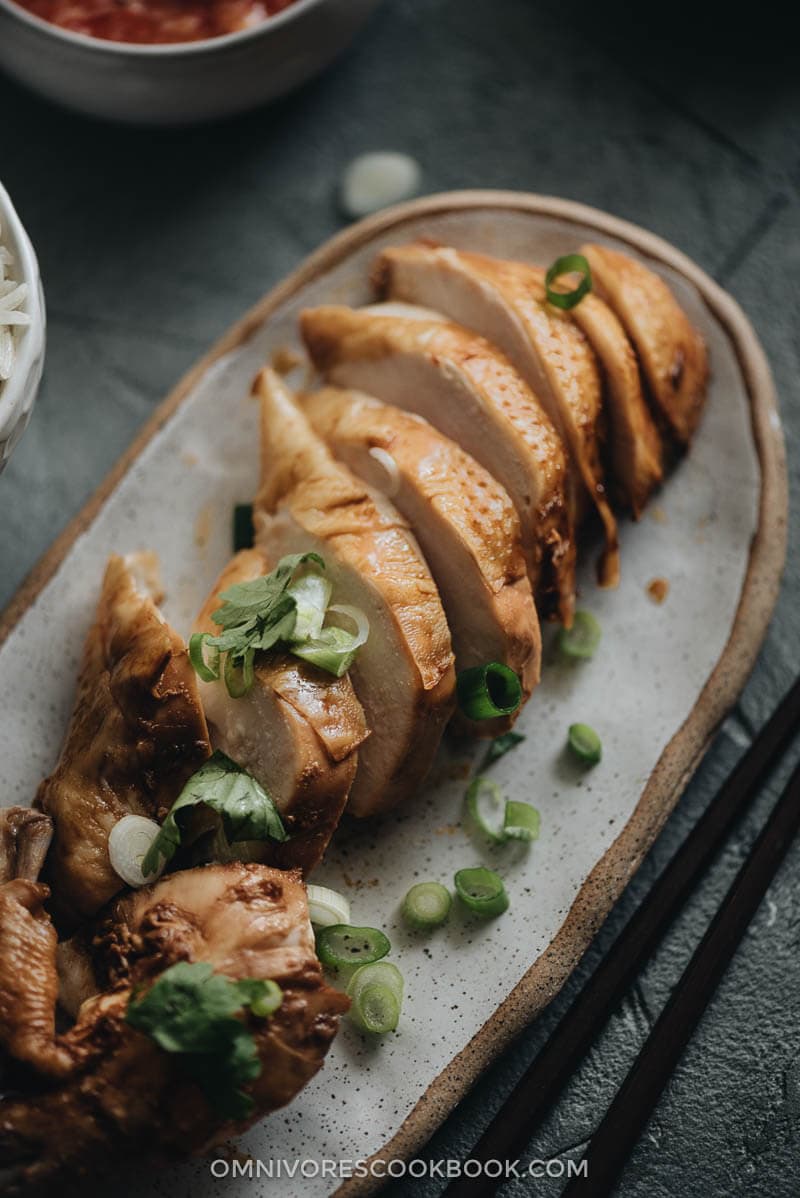
I used my homemade sweet soy sauce because I always keep a jar of it in my fridge. I made it with braising ingredients, so it has a more complex taste than the store-bought version. Of course, you can use a bottled sweet soy sauce as well.
You can also make the original version by brushing some sesame oil on the chicken and skipping the soy sauce.
For those who do not like boiled chicken skin, here is a quick way to make the dish taste even better:
Sprinkle a bit of salt onto the chicken skin and grill the chicken skin-side-down on a lightly oiled frying pan. Now you have a perfectly cooked juicy chicken with crispy skin. Isn’t that wonderful?
Cooking notes
1. What type of chicken to use
The rule of thumb is, the smaller the chicken, the better. I used a 2.6-lb chicken in my recipe.
In fact, an authentic Chinese recipe would ask you to find an organic free-range heritage chicken. The recipe uses very minimal seasoning to bring out the natural essence of the chicken, which requires a bird with a smaller body to absorb the seasoning and taste great by itself. But I found that a small-ish chicken that I purchased from Central Market came out really great.
If you can not find a smaller chicken, a normal-sized one will work just as well. But you will need to increase the cooking time depending on the size of the chicken. A four-pound chicken will take about 45 minutes to simmer, and a five-pound one about an hour.
2. Not overcooking is the key
You want to cook until the chicken just cooked through, so you’ll have super tender and juicy meat that has a nice aroma. Overcooking will end up with dry, tough chicken meat that’s not delicious at all. You can use a thermometer to test the chicken and monitor it closely. But I found that the easiest way is to insert a small paring knife into the joint between the thigh and body. Lightly slice the skin and push the thigh away from the body. If the juice is clear and the meat white, the chicken is fully cooked.
Once you cook the chicken, immediately immerse it in an ice bath so the chicken won’t continue to be cooked by the residual heat.
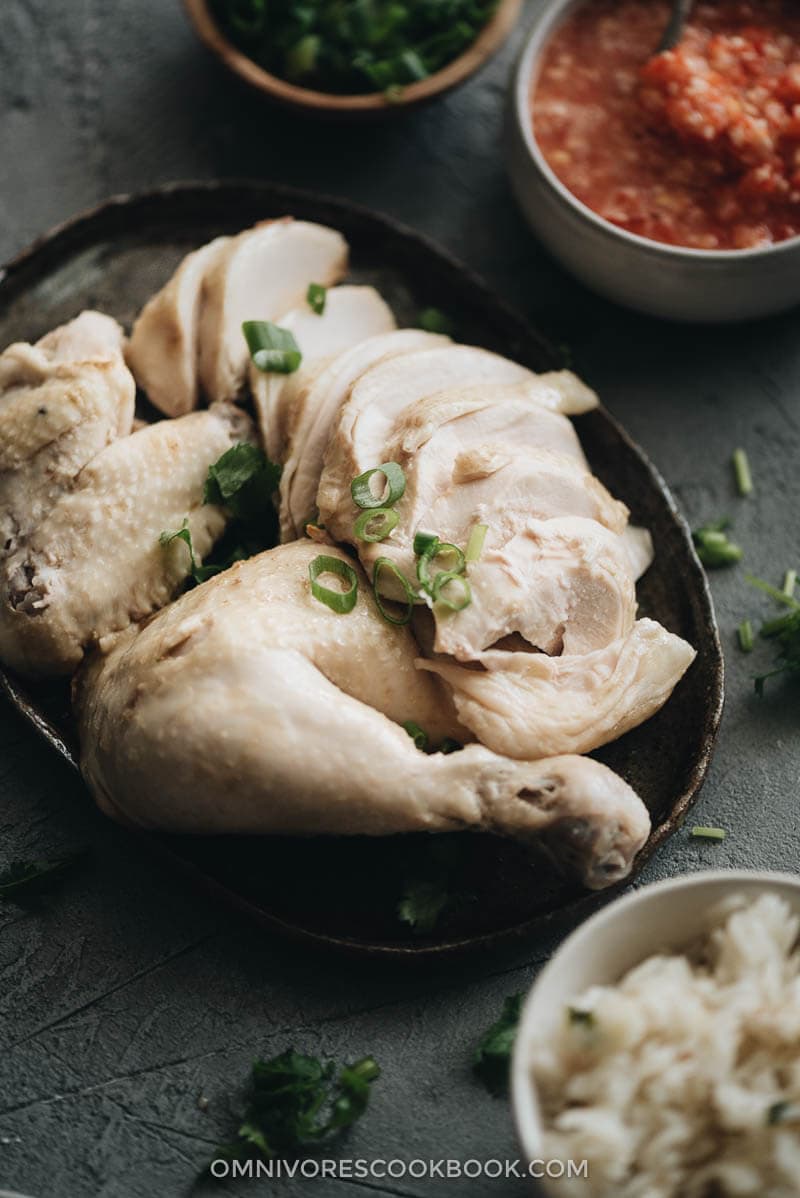
3. How to use chicken parts instead of a whole chicken
I always highly recommend using a whole chicken to cook this dish, because you will end up with juicier, more flavorful meat.
However, it’s possible to use chicken parts such as breasts and legs, as well.
The cooking time is largely based on the size of the chicken and the quantity of pieces, but here are some general guidelines:
- Boneless skinless breast – 15 to 20 minutes
- Bone-in skin-on breast – 20 to 30 minutes
- Boneless skinless thigh – 15 to 20 minutes
- Bone-in skin-on thigh – 20 to 30 minutes
When you use chicken parts, cook them in a smaller pot and add just enough water to cover. Cook uncovered, bringing the water to a simmer (not a boil), and let it simmer until just cooked through. The chicken will turn out just as tender.
Note, when using chicken parts, you might not get enough chicken broth to serve as chicken soup on the side.
4. Dipping sauce
The most authentic sauce is the chili dipping sauce, but I’ve included a ginger soy sauce, as well. The ginger soy sauce is a family recipe and we use it with almost everything. If you don’t feel like making a sauce, you can serve the chicken with Sriracha, as well.
5. How to make extra fragrant rice
The rice is my favorite part of this recipe because it is so so fragrant. To make the best rice, make sure you use plenty of fresh ginger, garlic, and green onion. Authentic Hainanese chicken rice uses rendered chicken fat in the rice. If you’re not comfortable with that, or if your chicken is too lean, you can use butter instead. When you saute the rice with the aromatics, your house will smell heavenly 🙂
A final thought
I would highly recommend you make the Hainanese chicken rice in advance. Especially if you’re making the sweet soy sauce version. If you apply the sauce 2 to 3 times and let it dry, the sauce will infuse into the chicken and make it so much more flavorful. The chicken tastes great cold or hot. If you make everything ahead of time, you can simply heat up the rice, soup, and chicken. Serve it with a simple cucumber salad, and you’ll have a delicious and healthy meal that tastes even better than the restaurant version!
More real-deal Chinese recipes
- How to Make Shumai
- Chicken Wonton Soup
- Steamed Ribs in Black Bean Sauce (豉汁蒸排骨)
- Real-Deal Sichuan Chicken in Red Oil Sauce (口水鸡, Saliva Chicken)
- Mom’s Best Pork Dumplings with Cabbage
If you give this recipe a try, let us know! Leave a comment, rate it (once you’ve tried it), and take a picture and tag it @omnivorescookbook on Instagram! I’d love to see what you come up with.
Want to Save This Recipe?
Enter your email below & we’ll send it to your inbox. Plus get great new recipes from us every week!
Hainanese Chicken Rice (海南鸡饭)
Ingredients
Chicken
- 1 3 to 4 lb (1.3 to 1.8 kg) whole chicken
- 1 - 1 1/2 tablespoons kosher salt (*Footnote 1)
- 4 scallions cut into 3” (7.5 cm) pieces
- 8 slices ginger
- 1 tablespoon sesame oil
Rice
- 2 (300g) rice cooker cups jasmine rice
- 2 tablespoons rendered chicken fat (*Footnote 2)
- 1 tablespoon minced ginger
- 3 cloves garlic , minced
- 1 3/4 cups chicken broth
- 1/2 teaspoon kosher salt
Chili sauce (Footnote 8)
- 2 red bird's-eye chilies roughly chopped (remove the seeds for a milder sauce)
- 1 tablespoon finely minced ginger
- 2 cloves garlic minced
- 1 tablespoon lime juice
- 1 teaspoon sugar
- 1/2 teaspoon kosher salt
- 2-3 tablespoons chicken poaching broth
Ginger scallion sauce
- 2 tablespoons ginger finely minced or grated
- 2 scallions very finely chopped
- 3/4 teaspoon kosher salt
- 2 tablespoons chicken poaching broth
- 1 teaspoon sesame oil
To serve
- 2 Persian cucumbers (or 1 English cucumber), sliced
- Sweet soy sauce or regular soy sauce (*Footnote 3)
- Cilantro, for garnish (Optional)
Instructions
Prepare the chicken
- Remove any excess fat from around the chicken cavity and reserve it for the rice. Pat the chicken dry. Rub the salt all over the chicken, including inside the cavity. Let rest for 20 minutes or refrigerate overnight. (*Footnote 4) Tuck the wing tips under the wings.
- Prepare a medium-sized pot that's just large enough to hold the chicken. (*Footnote 5) Add 10 cups of water and bring to a boil.
- Holding the chicken by the cavity, carefully lower it into the boiling water. Lift the chicken back out to drain any water trapped inside the cavity, then lower it into the pot again. Make sure the chicken is mostly or completely submerged, adding more hot water if needed. Add the scallions and ginger.
- Once the water returns to a very gentle simmer, reduce the heat to low. Skim off and discard any foam that rises to the surface. Cook at a bare simmer until the chicken is cooked through, about 25 to 30 minutes for a 3 lb chicken, or 35 to 40 minutes for a 3 1/2 to 4 lb chicken. An instant-read thermometer inserted into the thickest part of the thigh, without touching the bone, should register 165°F (74°C).
- While the chicken cooks, prepare a large bowl of ice water.
- Carefully transfer the cooked chicken to the ice bath. Let sit for 10 minutes, then transfer to a wire rack or large plate to drain thoroughly. Reserve the poaching broth.
- Once the chicken has drained, rub the skin lightly with sesame oil. Set aside until ready to carve and serve.
Continue cooking the chicken soup (optional, *Footnote 6)
- Once the chicken has cooled enough to handle, remove the breasts, legs, and thighs, and set them aside for serving. Return the chicken back and wing tips to the pot of poaching broth.
- Continue simmering for about 1 hour, until the broth has reduced considerably and developed a richer flavor. Season with salt to taste and garnish with sliced scallions before serving.
Make the chicken rice
- Place the jasmine rice in a bowl and add enough cold tap water to cover. Swirl the rice with your hands to rinse, then drain. Repeat twice more, then drain thoroughly using a colander.
- If using the reserved chicken fat, finely chop it and add it to a small skillet. Heat over medium heat, then reduce to medium-low once the pan is hot. Cook until the fat has rendered. Measure out 2 tablespoons of the rendered fat, adding neutral oil if needed to make up the difference. Transfer to a medium skillet.
- Heat the chicken fat over medium heat. Add the garlic and ginger. Stir and cook until fragrant and lightly golden, about 30 seconds.
- Add the drained rice. Cook, stirring frequently, for about 2 minutes, until the rice is evenly coated with fat and smells fragrant.
- Transfer the rice to a rice cooker. Add the chicken broth and salt (*Footnote 7). Stir to combine. Cook using the regular white rice setting.
- Once the rice is done, let it rest in the rice cooker for 10 minutes before opening the lid. Fluff gently with a rice paddle.
Make the chili sauce
- Combine the bird's-eye chilies, garlic, ginger, lime juice, sugar, salt, and chicken poaching broth in a small bowl. Stir well to combine.
- Taste and adjust with additional lime juice, sugar, or salt as needed. The sauce should taste bright, spicy, savory, and slightly sweet.
Make the ginger scallion sauce
- Combine the ginger, scallions, and salt in a small bowl. Add the warm chicken poaching broth and sesame oil. Stir to combine. Let sit for 5 to 10 minutes before serving to allow the flavors to meld.
Serving
- Cut the reserved chicken into bite-size pieces and arrange on a plate. Serve with the chicken rice, sliced cucumber, chili sauce, ginger scallion sauce, and sweet soy sauce on the side. Garnish with cilantro if desired.
Notes
- Kosher salt: I use 1 tablespoon of kosher salt for a smaller chicken, around 3 lb, and increase the amount to 1 1/2 tablespoons for a larger chicken.
- Chicken fat: If your chicken doesn't have enough excess fat to yield 2 tablespoons, supplement it with a neutral cooking oil. Chicken fat gives the rice its characteristic richness and fragrance, so I recommend using as much as you can.
- Sweet soy sauce: Restaurants often drizzle a little sweet soy sauce over the chicken rice. I find that regular soy sauce works very well too, so feel free to use whichever you prefer.
- Salting the chicken: I highly recommend salting the chicken and letting it marinate uncovered in the refrigerator overnight. This gives the salt time to penetrate the meat, resulting in juicier, more tender chicken that's seasoned throughout. If you're short on time, a 20-minute rest will still work.
- Choosing the pot: Since the poaching liquid will also be served as soup, using less water helps create a more flavorful broth. Choose a pot that's just large enough to hold the chicken without crowding it. I use a tall 4-quart pot for a 3 lb chicken.
- Making a richer chicken soup: This step is my personal preference rather than a standard practice. Because the chicken is poached in a relatively large amount of water for a short time, the resulting broth is quite mild. I like to return the chicken bones to the pot and continue simmering while preparing the rest of the meal. This gives the broth a richer chicken flavor and makes it much more satisfying to serve as soup.
- Chicken broth for the rice: Traditionally, the rice is cooked using the chicken poaching liquid. I prefer to get the rice started while the chicken is still cooking, so I use store-bought chicken broth instead. This saves time and gives the rice plenty of flavor.
- Preparing the sauces: You can use a small food processor to finely chop the aromatics for both the chili sauce and ginger scallion sauce. I prefer chopping them by hand because it gives me better control over the texture, although it does take more time.
Nutrition

Did you make this recipe?
I’d love to hear how it turned out for you! Please take a moment to leave a 5-star rating ⭐️ and share your thoughts in the comments further down the page. It really helps others discover the recipe too.
The recipe was published on Jan 21, 2014 and updated by Jun 22, 2018.
Hannah
Thanks for the recipe! I am curious about grilling the skin to crisp it instead of boiling it. I thought about this as well since I prefer crispy chicken skin but then realized it wouldn’t produce broth for cooking the rice. If grilling the chicken, would you just cook your rice with water or store bought broth?
Maggie Zhu
I would cook the rice with store bought broth. It also helps a lot to add some chicken fat into the rice: trim off a bit chicken fat, slowly cook the fat in a pan to render some oil, and put the rendered oil into the rice. The chicken fat adds a ton of flavor.
If you did end up poaching the chicken, you can also dust the cooked chicken with some cornstarch and pan fry it. It’s one of my favorite ways to get crispy chicken (usually the leftover pieces when I used to make chicken broth).
Suzette
This is now a family davorite
Joanne C
I tried this last night with bone-in, skin-on thighs and other than my chicken taking a little longer to completely cook through, it was AMAZING. I didn’t need to add butter, I just used the skin and fat from 2 of the thighs to render out enough oil, which still left plenty of pieces with skin for my husband (personally, I don’t like boiled chicken skin). My husband almost ate the whole pan of rice. I especially loved the chili sauce and how it really complements the mild chicken and the richness of the rice. Thank you!
Elizabeth
I made this last night which I have not made before. I was blown away by how amazing and fast this recipe came together. The directions were spot on and once again, the narrative before the recipe provided smart and thoughtful feedback that helped break down so much of the rationale behind choices. The chicken was among the juiciest I’ve ever eaten. We served this dish with the second dipping sauce, which my husband loved and said tasted a lot like a dumpling dipping sauce. We had the remainder of the broth that the chicken was cooked in today for lunch as a soup—it was more flavorful than the boxed broths that I sometimes make soups with. Thanks for another great recipe on this one.
Jacqueline
this is a truly amazing dish. i needed 10 minutes extra for the chicken but that’s a size issue. i also cooled and strained the chicken stock and added garlic chives to the chicken soup before serving. i love your recipes, they are totally to the point! thanks!!!
Stephanino B.
Hainanese Chicken Rice is one the family favorites. Because of the amount of time it takes to make the chicken, I either buy the steamed chicken from a Chinese deli, or better yet, I get a rotisserie chicken from Costco. Both work very good in this recipe. I also save the bones and prepare a broth for next time. Hainanese Chicken Rice has been a winner in my household for many years.
.
Maggie, My wife (born and raised in China) and I love your recipes because they are easy to make and are very delicious. Thanks for all the recipes.
Andrew Koizumi
I tried your recipe for the chicken rice (as well as others too) and my chicken comes out dry, tough, and bland, Absolutely no taste!
What am I doing wrong? Can you give me advice so my chicken cooks soft, juicy, and tender? I am very frustrated.
P.S. I am using chicken breasts and legs.
Maggie
Hi Andrew, if you’re following the cooking time in this post, your chicken will be overcooked. I was using a whole chicken. If using the smaller cuts, it takes much less time. Also, cooking chicken breast will take less time than the thigh, so you want to remove the cooked parts from water separately once they’re just cooked through. I would highly recommend to use a whole chicken, because the skin will protect the meat and keep them from drying out. The bones will flavor the broth and make it a nice soup. If you don’t want to use a whole chicken, you should use skin-on bone-in legs and thighs, cook in a pot that is just big enough to hold them, and add just enough water to cover. Cook without cover, bring the water to a simmer (not boil), and let simmer until just cooked through. The chicken will be much tender and juicy this way.
Sheryl
Any advice for cooking the chicken in a pressure cooker? I love your recipes especially when it uses a pressure cooker to reduce cooking time.
Maggie
Hi Sheryl, I don’t have a pressure cooker chicken recipe now, but I’d love to develop it. I tried to use pressure cooker to cook braised chicken once, but I found the chicken is cooked through too quickly without seasoned in the broth (my fault to use a boneless cut). You need to keep cooking it quite a bit after pressure cook it, to reduce the broth, but it kind of defeats the purpose of using a pressure cooker.
I’m wondering whether it’s possible to cook the rice and a whole chicken at the same time, to make this dish. It’ll be a fun experiment to do. I’ll keep you posted once I tried it in the kitchen 🙂
ali
good blog
Jack Maggard
I’m so hungry.!!! Sesame seeds was greatly topped on the rice and sauce is so tasty, hmmm…!!!
Yuck Fooh
What are the seeds you garnish your rice with? It looks good for something so simple. I use turmeric and/or saffron for the yellow grains and sometimes throw in some red ones using dilute beet juice if the dish looks too plain.
Maggie
I used black sesame in this picture. I think sliced pickles on white rice will look good too and they’re edible. I once tried to use saffron in rice but never with turmeric or beet juice. That’s a great idea and I’d like to try out next time. Thanks for sharing the tips 🙂