
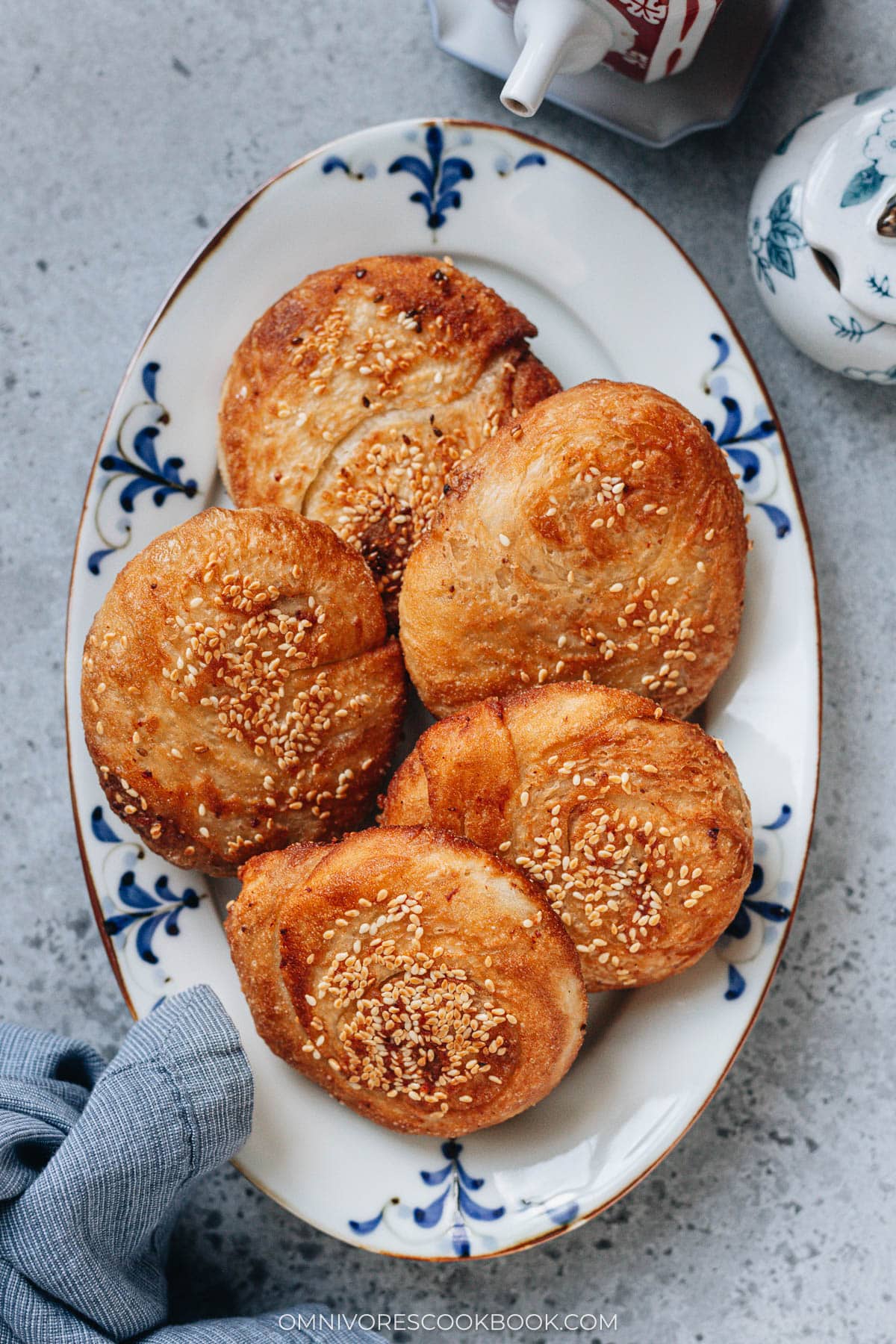
Wandering the streets of Chengdu, the aroma of freshly fried guo kui is one of my favorite things and it always lures me to street food vendors any time of day. Thick, sesame-crusted, and crackly on the outside, yet layered and juicy inside, Juntun Guo Kui (军屯锅盔) is one of Chengdu’s most iconic everyday snacks that I can’t get enough of.
There are several types of Guo Kui out there and they are all very different. But today I want to focus on Juntun Guo Kui, which is a dish I immediately wanted to learn after my trip to Chengdu.
Juntun Guo Kui is a little similar to Xian Bing (馅饼) in northern China, which is like a large pan fried dumpling made with layered dough. Chengdu Guo Kui is pan-fried first, then baked, creating a deeply crispy crust while keeping the interior tender. What really sets this style apart, is its distinctive folding and rolling technique (check out the video I took in Chengdu and see the street vendor’s slick moves!). It builds laminated layers of dough around a savory pork filling, creating a savory flaky pastry that’s quite close to a scallion pancake, but using meat instead of scallion in the dough.
I modeled this recipe after the classic Sichuan street food style, using Sichuan peppercorn with a fragrant pork filling, wrapped in spiraled layers, and finished with a sesame seed crust that crackles when you bite into it.
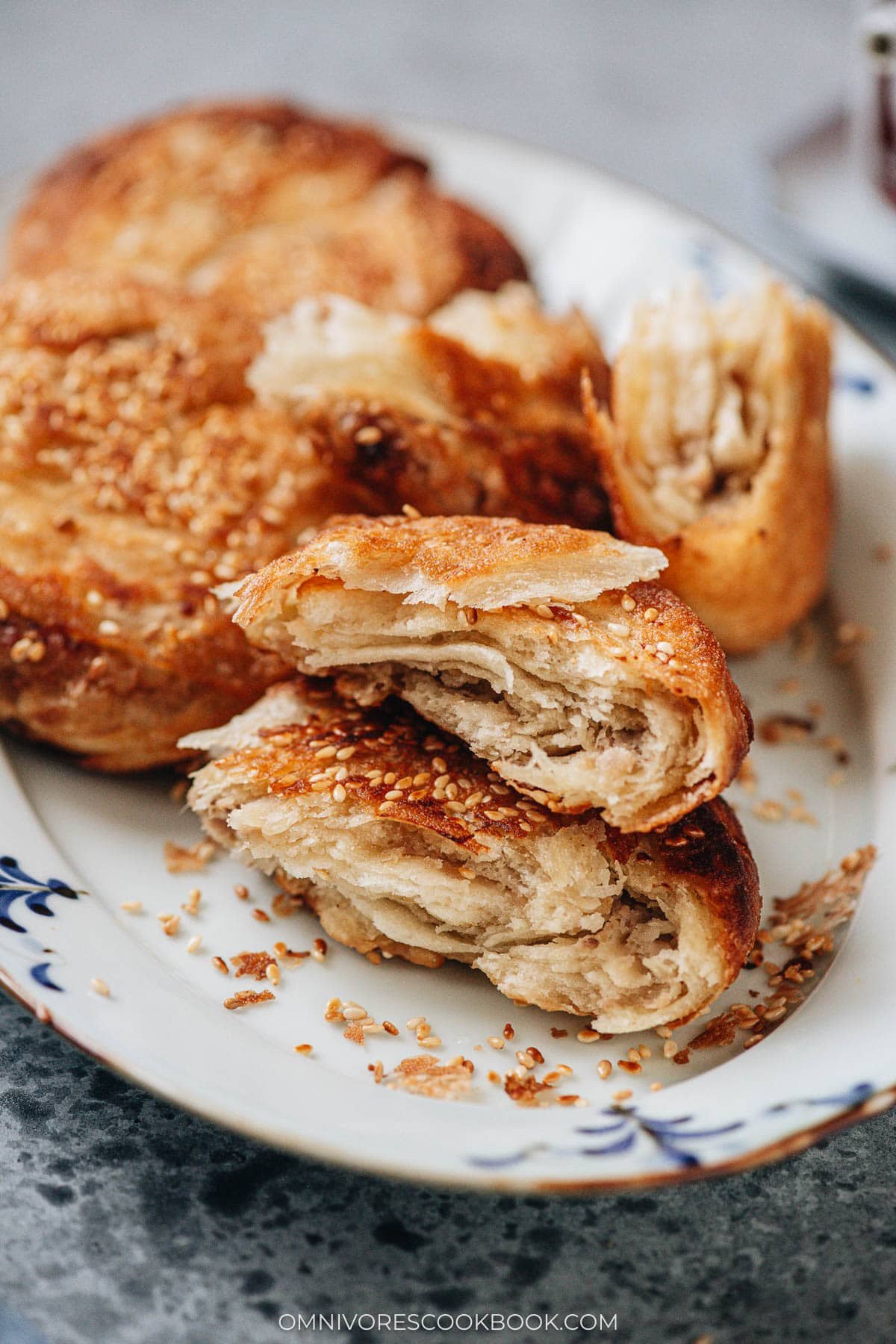
Ingredients
Juntun Guo Kui uses a few simple ingredients to build a fragrant bread full of umami. You probably already have most of the ingredients in your pantry.
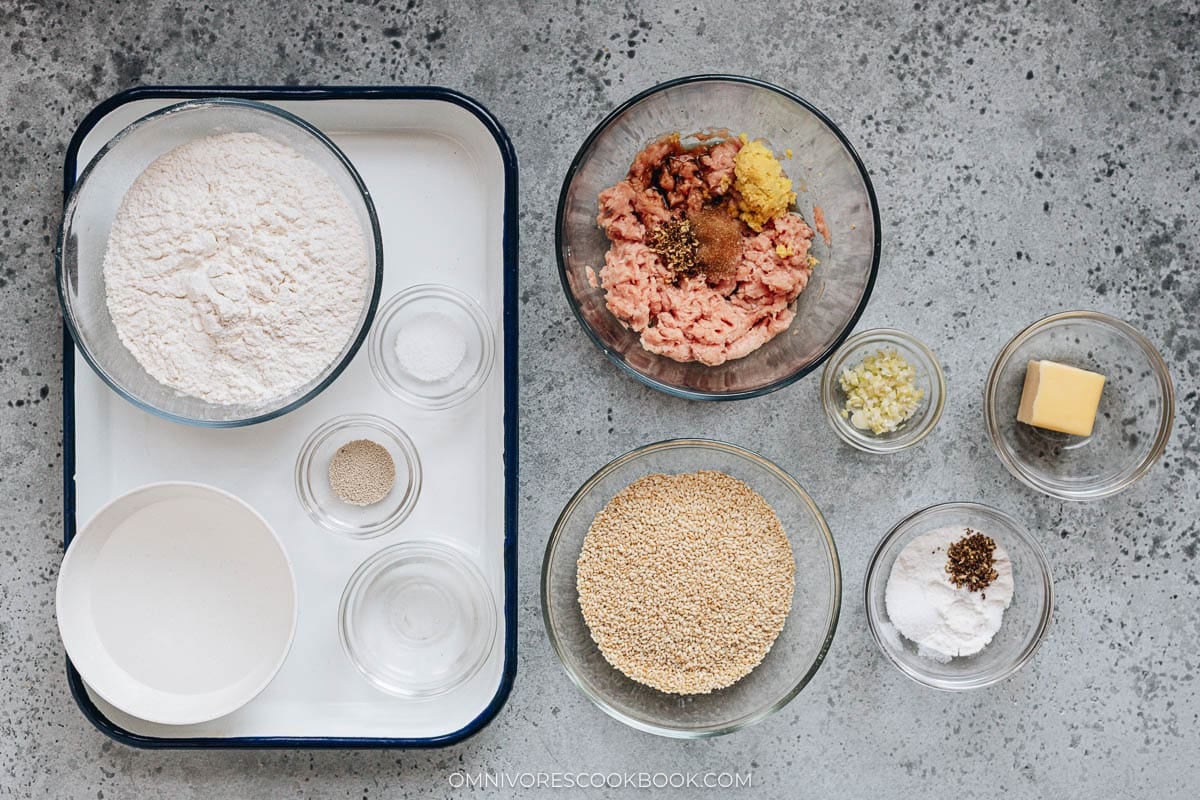
The dough
My recipe uses a hot water dough to create a bread that’s crispy and flaky on the outside and tender inside. Although it uses yeast, the amount is quite small and the goal is to lighten up the texture of the bread. Sugar is used to activate the yeast, and salt to season the bread.
The dough is coated with sesame seeds before frying, forming a deeply nutty, aromatic crust that defines Chengdu guo kui.
A Two-Filling System for Flavor and Layers
This style of guo kui uses two separate fillings:
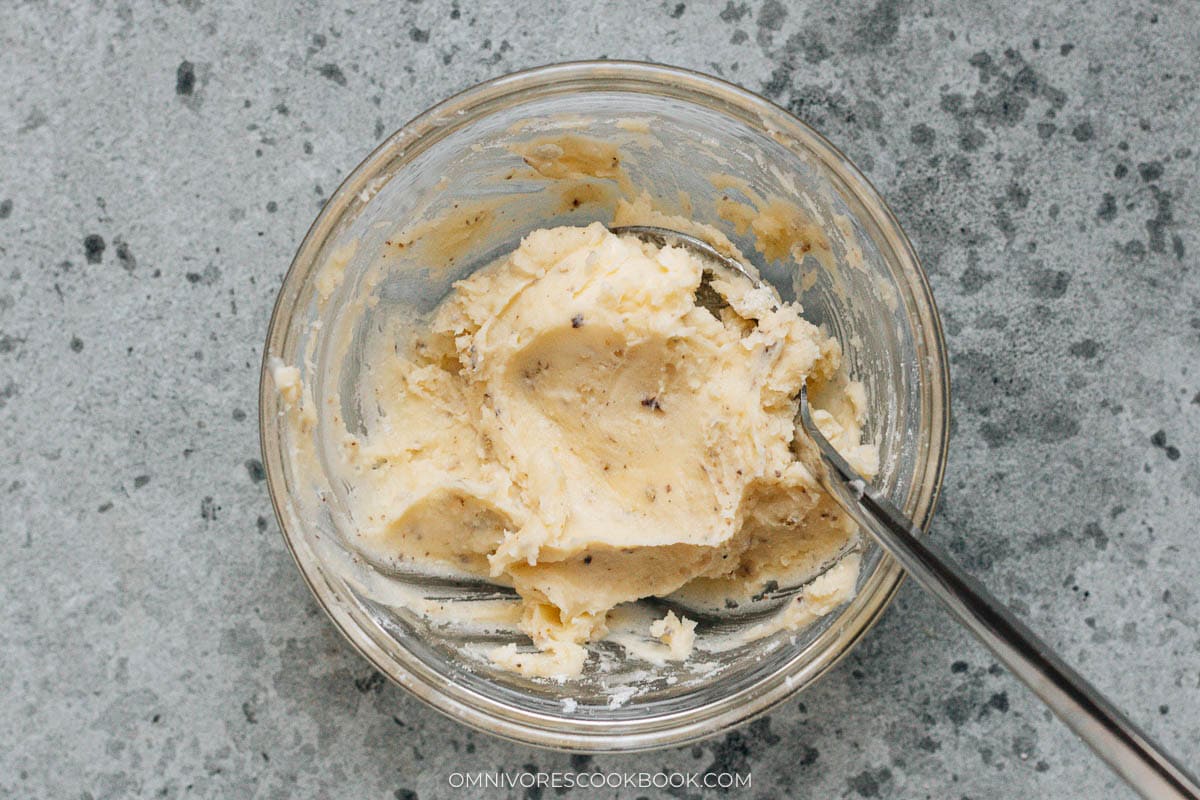
Filling 1 is a butter flour paste that uses Sichuan peppercorn and salt to add flavor. It acts like a laminating fat (traditional Chinese recipes use lard). As the dough is rolled and stretched, this paste creates delicate layers that puff and separate during cooking.
Filling 2 is a ground pork mixture. It brings juiciness and savory depth, seasoned simply with soy sauce, ginger, sesame oil, Sichuan peppercorn and scallion.
How to make Guo Kui
Making Juntun Guo Kui does require some patience and technique, just as with other laminated pastries. But rest assured, the dough is very easy to work with and the process is super fun. Even if your layered dough doesn’t turn out perfect, the bread will still be super tasty.
Prepare the two fillings
1. Make the butter flour paste first by mixing softened butter, flour, salt and peppercorn.
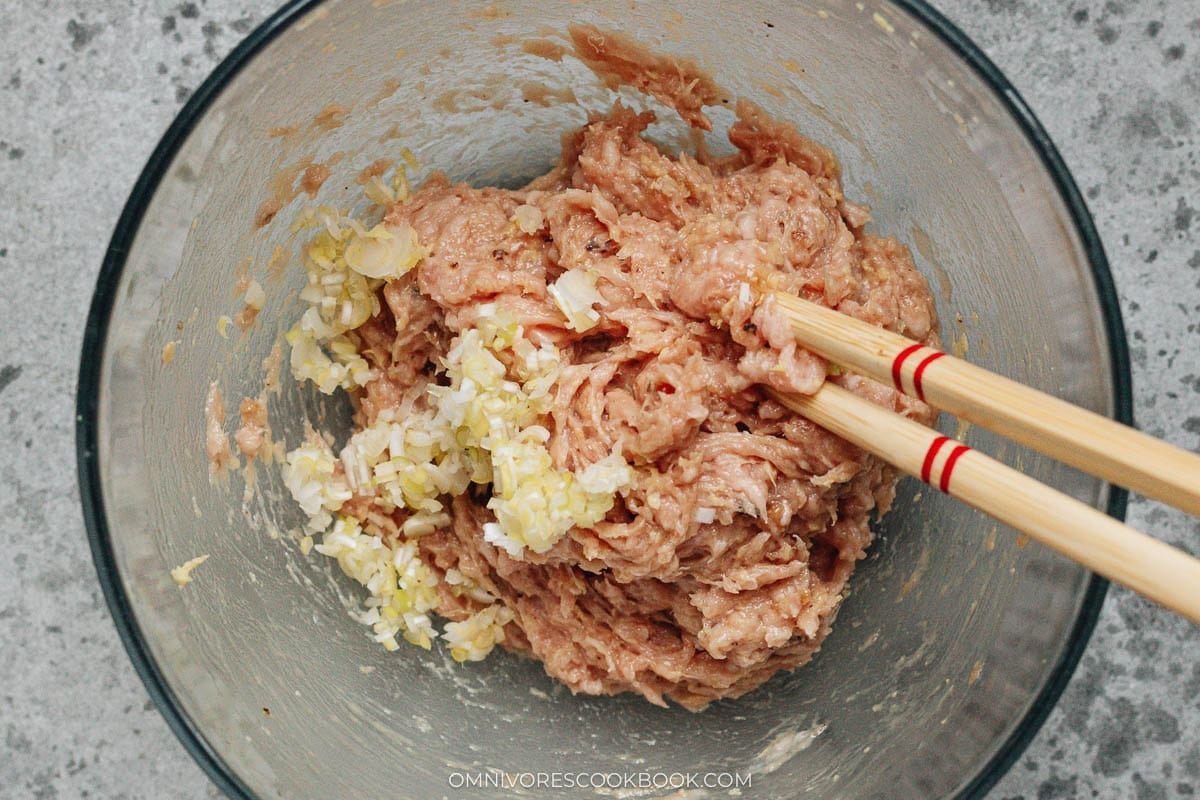
2. Make the pork filling by beating the ground pork with all the seasonings. Make sure to beat it until sticky so the filling holds together. Then mix in the scallion whites.
Prepare the dough
1. Activate the yeast in warm water with a pinch of sugar.
2. Mix the dough by slowly adding boiling water into the flour. The hot water will partially cook the dough to limit gluten formation. The dough will be softer and more pliable, and easy to roll out before it springs back. It also results in flakier bites once cooked. I prefer to boil 1 cup water, more than the recipe calls for, and keep the water at a low boil until I’m ready to use it. This way you can make sure the water is hot enough. Once you mix in the hot water, add the yeast along with the warm water and mix until soft dough flakes form.
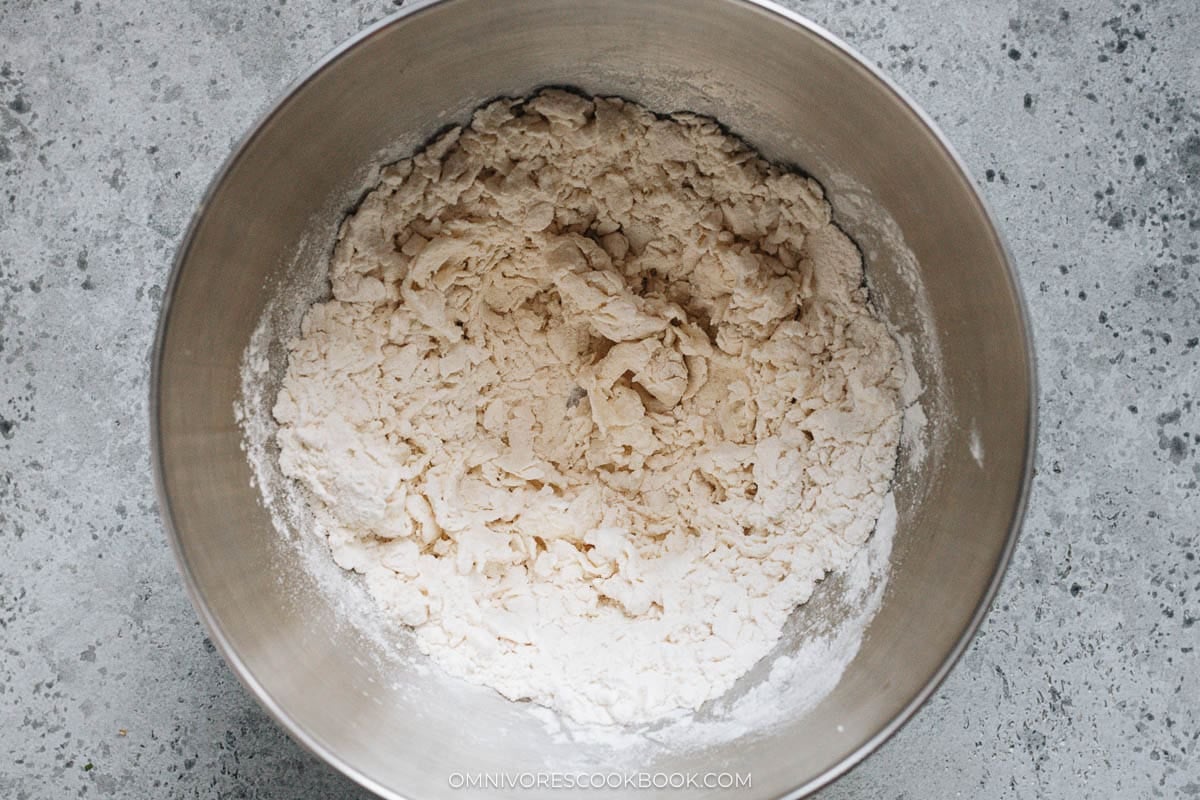
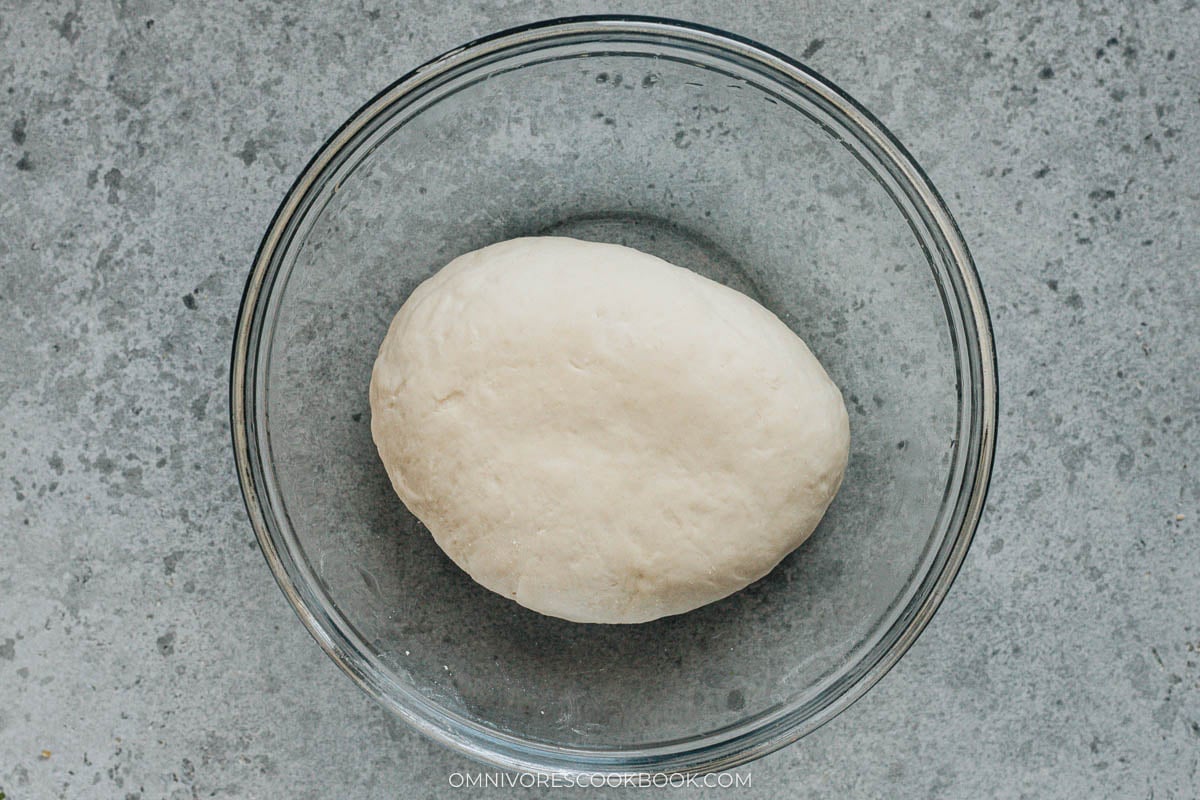
3. Knead the dough for a few minutes so it forms a dough. You can do this step with your hands or a stand mixer. Let the dough rest for 15 minutes.
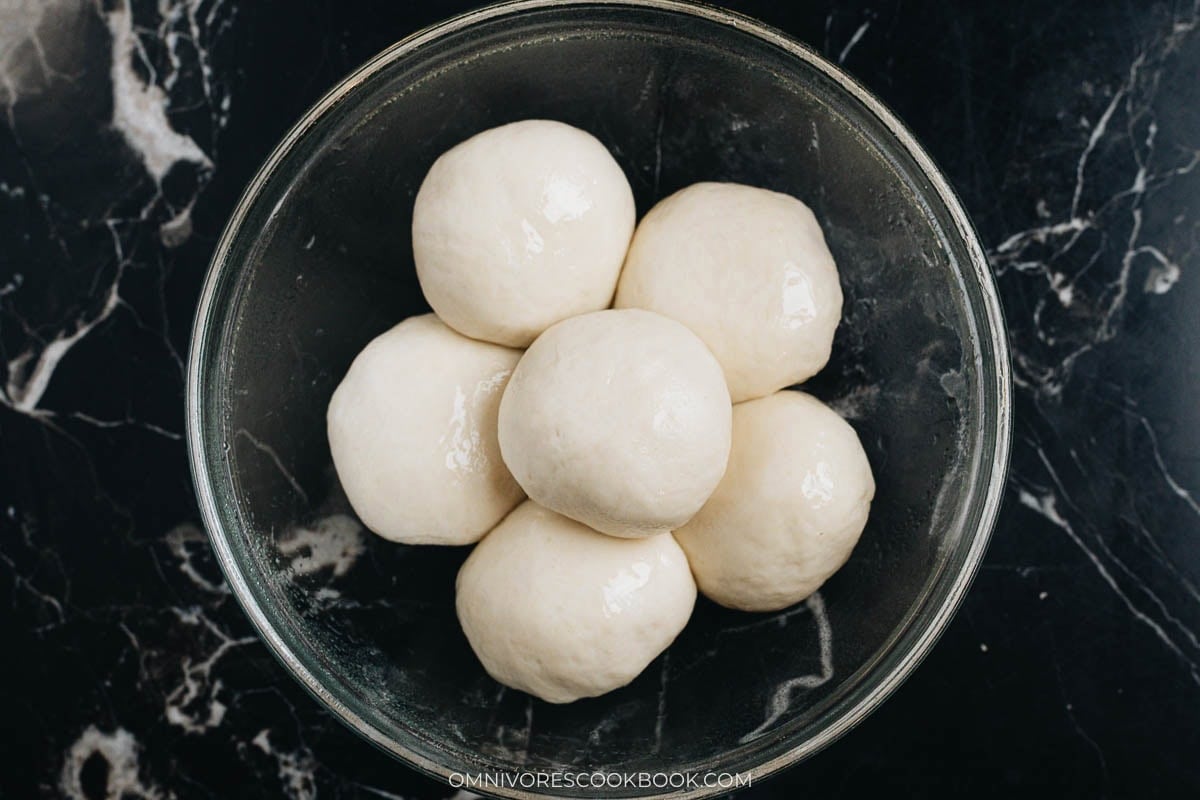
4. Knead the dough a few times again, divide into six ball-shaped pieces, and rest for another 5 minutes.
Assemble the bread
Now comes the fun part! I highly recommend watching the video below. It is a short recording I took when I was visiting Chengdu. The street vendor was putting on a great show of how he makes Guo Kui, in a very professional way! Of course I don’t do the dance in my recipe. But you will get a much better idea of how the bread is formed by watching the video.
1. Roll the dough into a long oval piece.

2. Spread out the butter flour mixture, leaving the edges blank.
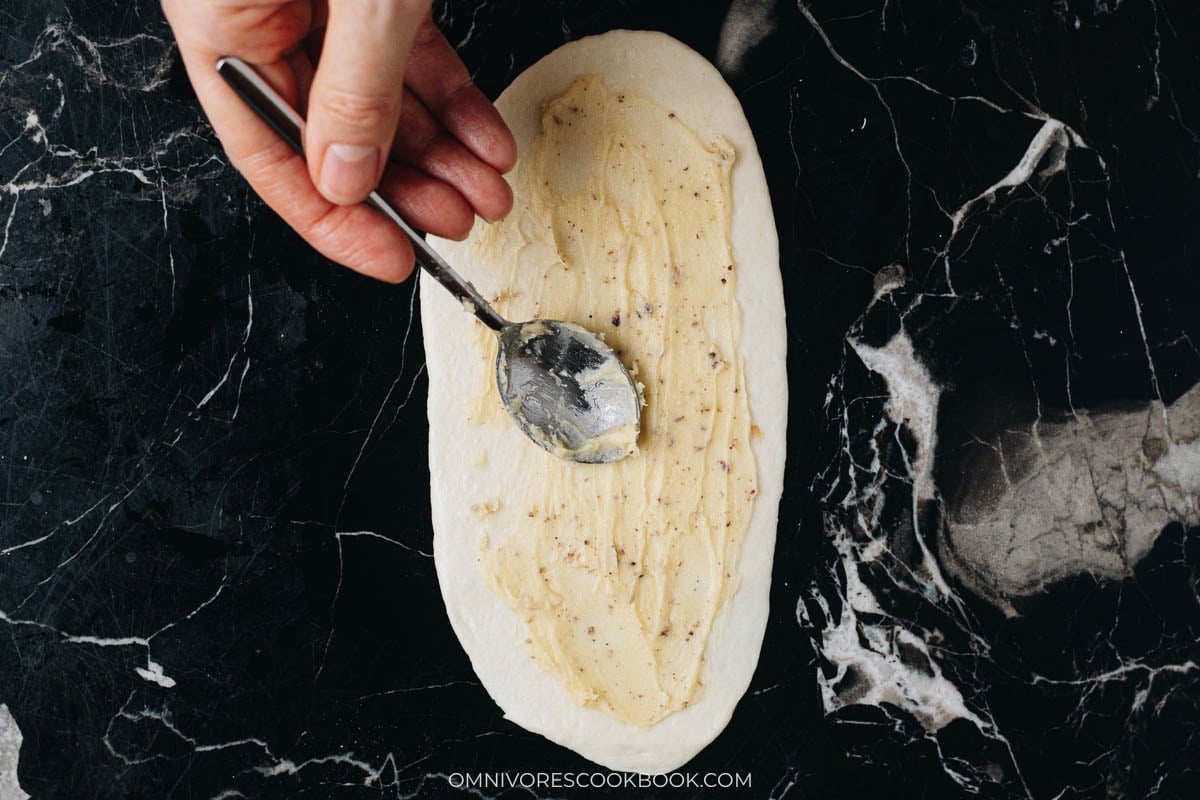
3. Roll the dough and pinch to seal both ends, forming a small cylinder.
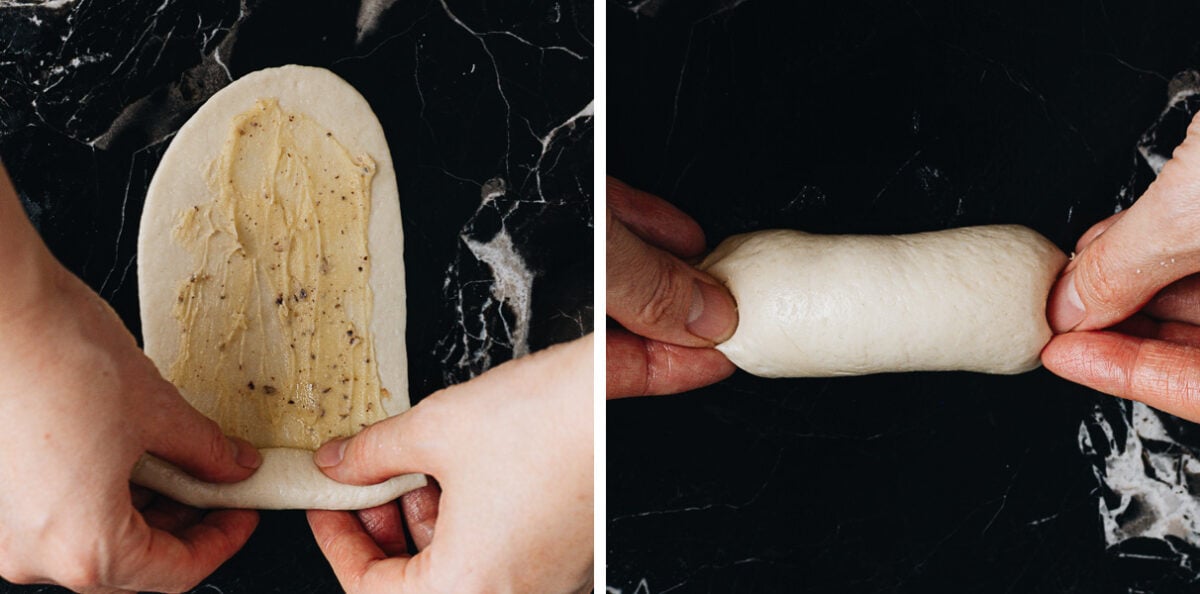
4. With the cylinder parallel to the table, roll it again into a long oval piece again. This time spread out the pork mixture on top, leaving the edges blank.
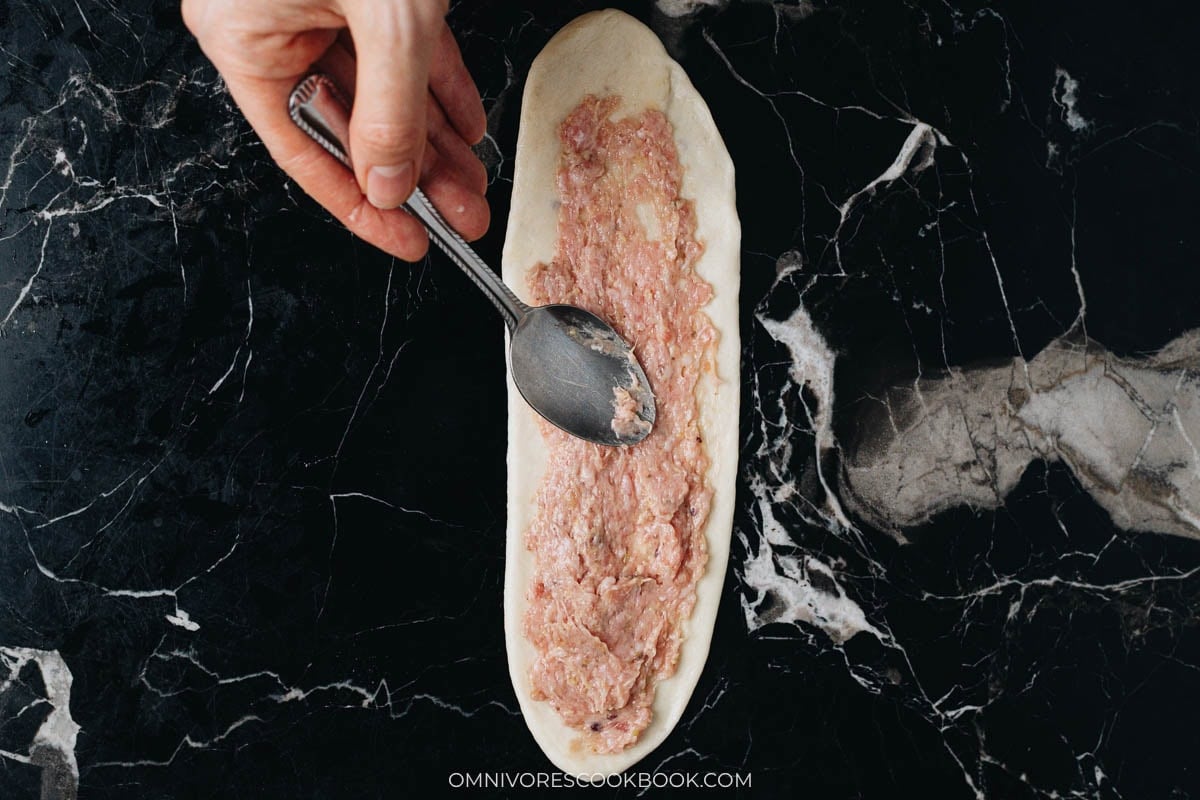
5. Roll up the dough, making sure to stretch and tuck the dough so the layers will be thin. Once rolled up, tuck the edge of the dough onto one end and seal both ends as tightly as you can.

6. Place the dough on the table, sealed side down, and gently press it to form a round bread. Then place the dough in the bowl filled with sesame seeds. Press it to coat both sides with sesame seeds. Right before cooking, use a rolling pin to roll out the dough into a flatter bread. The bread will be much easier to roll out after resting and relaxing the gluten.
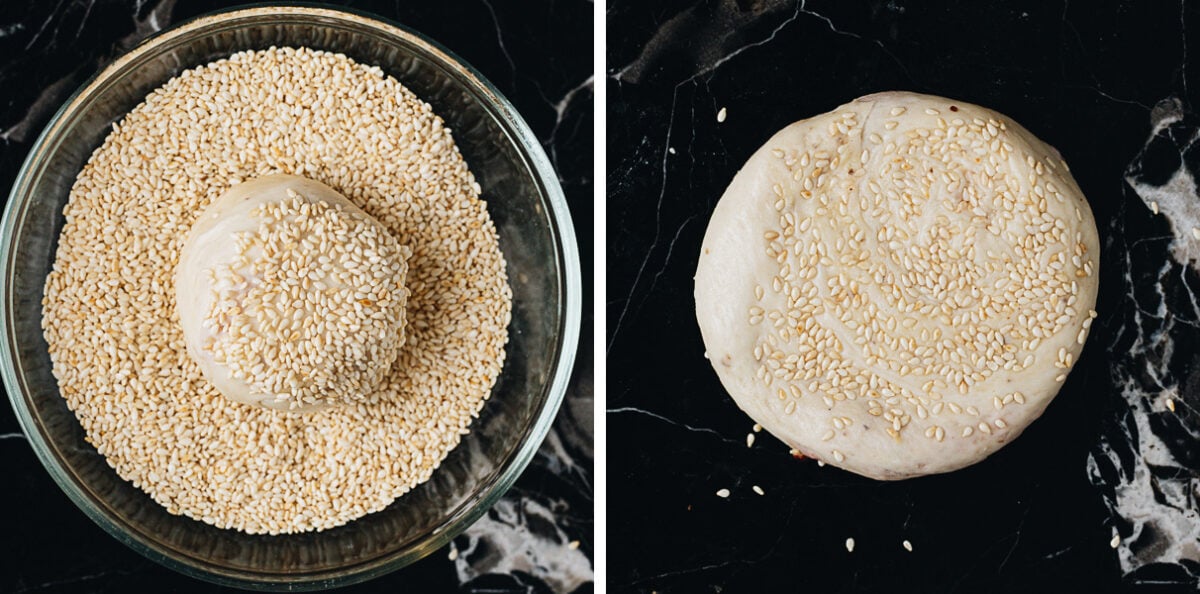
Tip for storage
If you do not plan to serve the guo kui immediately, you can refrigerate or freeze the uncooked bread. When you’re ready to cook, let it thaw in the fridge before cooking.
Cook the guo kui
1. Cook the guo kui by frying it in the pan first. Fry until both sides are golden crispy. Then transfer it to a baking sheet.

2. Bake at 325°F (160ºC) for 15 to 20 minutes, until cooked through.
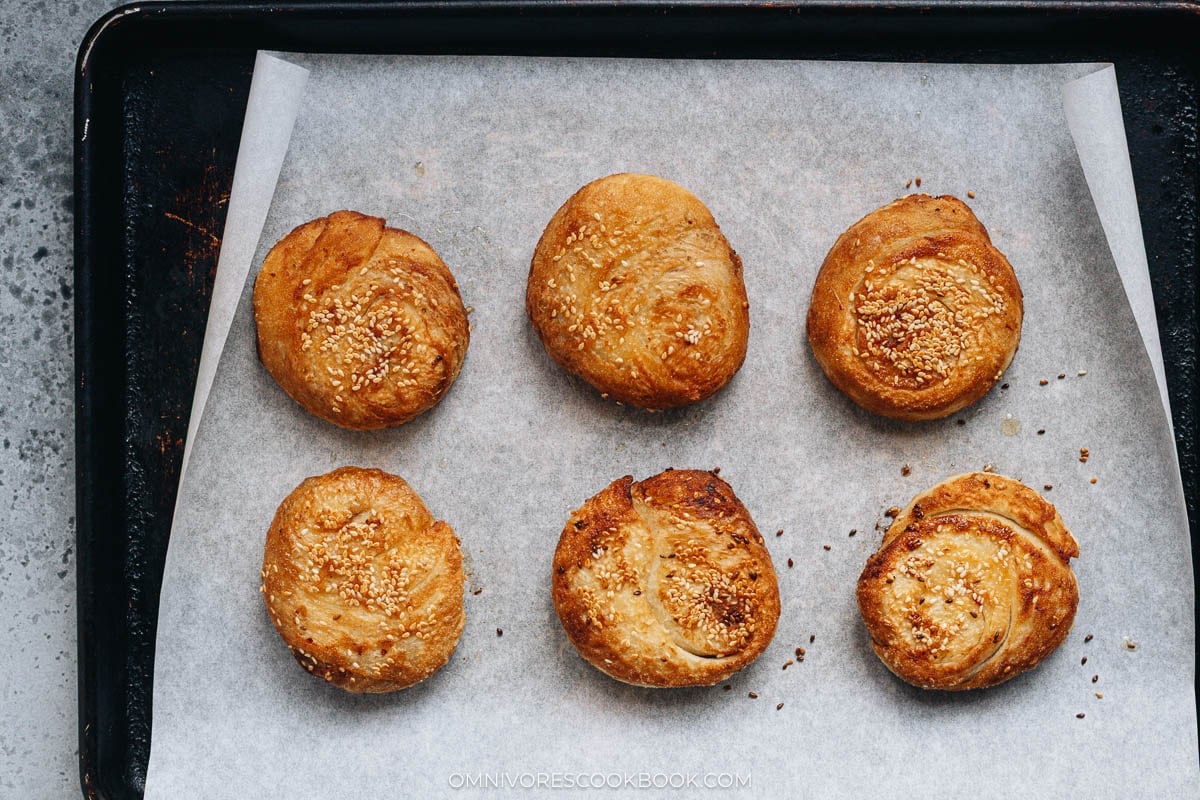
The guo kui will be super flaky and crispy on the outside, tender inside, and have a nice aroma from the pork. Enjoy it while it is still hot! If you have leftovers, you can reheat them in the oven or air fryer. For an even crispier result, you can also fry them in a pan again with some oil.
How to Serve Guo Kui
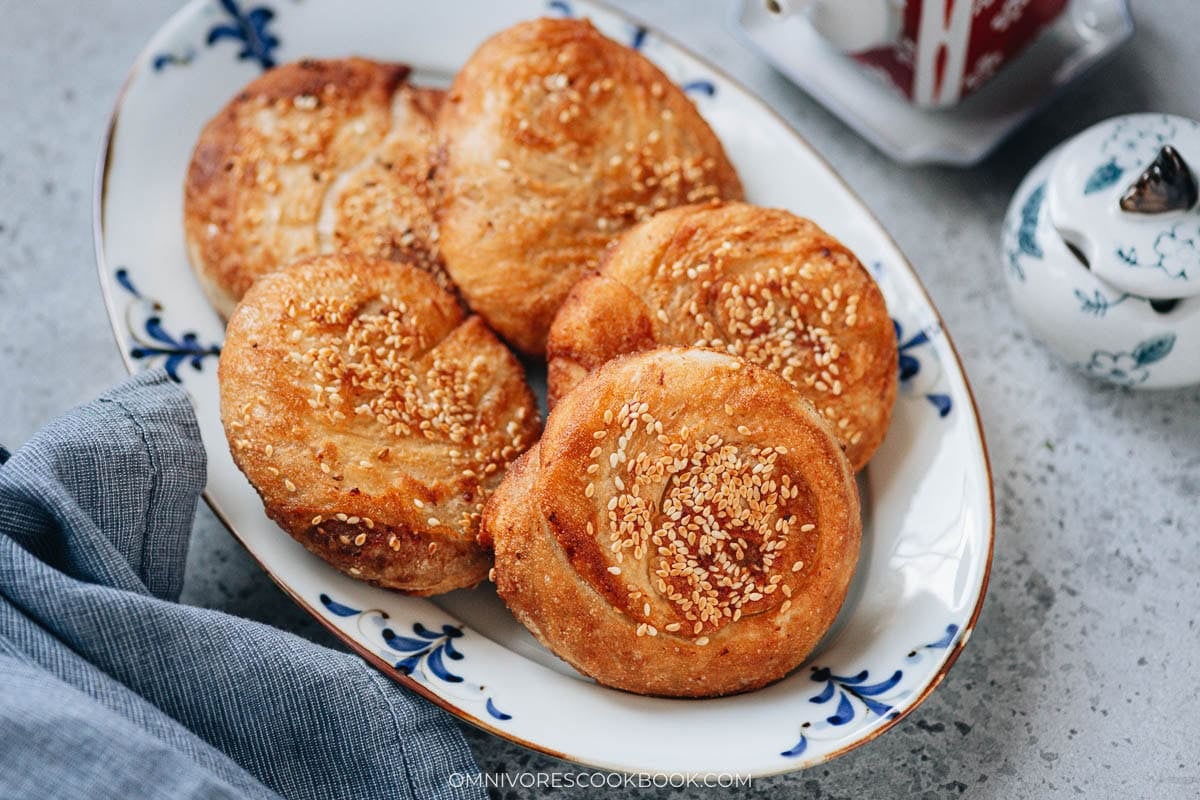
In Chengdu, guo kui is often eaten plain and hot, straight from the stall. At home, it pairs beautifully:
- With hot soy milk for a hearty breakfast.
- With a light vegetable soup such as spinach egg drop soup or spicy cucumber salad for a quick lunch.
- As an appetizer or side dish for a full dinner spread, paired with other main dishes such as Kung Pao Chicken, Mapo Tofu, or Sichuan shrimp stir fry.
It’s filling enough to be a meal, but portable enough to be a snack.
Frequently asked questions
Can I substitute oil for butter?
Yes. Traditional versions often use shortening or lard, which produces very distinct layers. Butter adds aroma but creates slightly less separation. Neutral oil works in a pinch, but the layers will be even less defined.
Why can’t I put a lot of pork filling into the bun?
Spreading the pork thinly allows it to cook evenly and integrate into the layers. It is the signature element of Chengdu street-style guo kui. The pork acts more like a seasoning here than a dumpling filling. If you prefer a layered pastry with more filling, check out my Northern Chinese beef meat pie recipe.
My dough keeps springing back when I roll it. What should I do?
That means the gluten needs to relax. Simply cover the dough and let it rest for 5 to 10 minutes. When you’re working on the dough, you will also find the dough pieces you work on later are much easier to roll out.
Is it okay if the filling breaks through the dough?
Yes. Once the dough is relaxed, it can be stretched very thin, and a little filling showing through is normal. Just try to keep most of it enclosed so the bread stays juicy and doesn’t leak excessively during frying. But even if the meat leaks, it will brown and get crispy during frying, so the result will be just as tasty.
Chinese Cooking Made Easy
Are you new to this website? This free email series is a great place to start. I’ll walk you through a few of my most popular recipes and show you how and why they work. You’ll quickly start to cook better Chinese food in your own kitchen.
Watch video

Guo Kui (Crispy Stuffed Flatbread, 军屯锅盔)
Ingredients
Filling 1:
- 2 tablespoons softened butter (or shortening)
- 1 tablespoon all-purpose flour
- 1/4 teaspoon salt
- 1/4 teaspoon freshly ground Sichuan peppercorn
Filling 2:
- 4 oz pork , finely ground
- 1 teaspoon light soy sauce
- 1 teaspoon toasted sesame oil
- 1 teaspoon grated ginger
- 1/2 teaspoon salt
- 1/4 teaspoon Sichuan peppercorn , freshly ground
- 1 green onion , white part only, finely chopped
Dough:
- 2 tablespoons warm water (110°F)
- 1/4 teaspoon active dry yeast
- Pinch sugar
- 200 g (1 1/3 cups) all-purpose flour
- 1/2 teaspoon salt
- 1/2 cup boiling water
Cooking:
- 1/4 cup vegetable oil (plus extra for shaping)
- 3 tablespoons white sesame seeds (in a shallow bowl for dipping)
Instructions
- Filling 1: Mix the butter (or shortening), flour, salt, and pepper together until smooth. Set aside.
- Filling 2: Combine ground pork, light soy sauce, sesame oil, ginger, salt and ground Sichuan peppercorn. Beat until the ingredients are well incorporated and the pork is streaky. Add the chopped green onion whites. Mix to evenly distribute and set aside.
- Dough: Combine the yeast and a pinch of sugar in a small bowl and add 2 tablespoons warm water. Stir briefly and let the yeast activate for 5 to 10 minutes.
- Knead the dough using a mixer: While the yeast activates, combine the flour and salt in the bowl of a stand mixer. Slowly drizzle in the 1/2 cup of boiling water while stirring to evenly distribute. Once the water is incorporated, add the dough hook to the mixer and begin kneading on setting 2. Add the yeast to the dough and continue kneading, scraping any dry flour from the bowl. Turn the setting to 4 once the water is fully incorporated and knead until the dough is sticking to itself and somewhat smooth, about 2 to 3 minutes.
- Knead the dough using your hands: Combine the flour and salt in a medium bowl. Slowly drizzle in the 1/2 cup of boiling water while stirring to evenly distribute. Once the water is incorporated, slowly drizzle the yeast mixture into the dry flour, mixing until the water is fully incorporated and soft dough flakes form. Start to gather the dough using your hands until a ball forms and there’s little dry flour left. Transfer the dough to a clear working surface. Knead until the dough is somewhat smooth, about 5 minutes.
- The dough should be a little soft but keep its shape and not be sticky at all. If your dough is too soft, sprinkle more flour onto it and knead again.
- First rest: Oil a bowl, add the dough, and cover. Let the dough rest for 15 minutes.
- Second knead and rest: Knead the dough briefly, 30 seconds to 1 minute, to smooth out the dough, then divide it into 6 even pieces. Round each piece into a ball, oil each piece, place them back into the bowl and cover, and let rest for another 5 minutes.
- Create layered dough: One at a time take a piece of dough and roll it out into a 3×10” (7x25cm) oval. Gently spread 1 teaspoon of “Filling 1 – butter flour paste” across it, leaving a little space along the edges and bottom. Roll the top of the oval towards yourself, occasionally lifting and tugging the dough as you go. Once fully rolled up, pinch both ends to seal well. Set aside and repeat with the remaining pieces of dough. Cover the dough with plastic wrap to prevent it from drying out.
- Form with meat filling: Beginning with the first piece that was rolled up, flatten it with your palm. With the roll up dough parallel to the table, roll the dough out to 3×12” (7x30cm). Take 1 1/2 tablespoons of “Filling 2 – ground pork mixture” and spread it onto the dough, concentrating it slightly more at the top than at the bottom and again leaving a small edge free along the sides. Roll it up with the same motion from step 6, taking extra care to pull and stretch as you roll to create more layers. Tuck the end of the dough into one of the swirled sides, then pinch both ends to seal. Turn the rolled dough on its side (swirls facing up and down) and press it down to make a fat disc. The dough will likely be taut at this point so don’t worry if it springs back a bit. The gluten will rest while you roll the remaining pieces. Cover the formed bread with plastic wrap. Repeat with the remaining dough.
- Coat with sesame seeds: Again beginning with the first piece you rolled, take the disc and dip the swirled sides into the sesame seeds. Then flatten the dough again with your palm and roll gently into a 5” (12cm) disc, trying to keep the filling sealed in without tearing the dough (*Footnote 1). Set aside, covered, and repeat with the remaining dough. Always keep the assembled bread and unused dough covered with plastic wrap to prevent it from drying out.
- Cooking: Preheat the oven to 325°F (160ºC). Preheat a large skillet over medium heat and add 1/4 cup of oil. Prepare a baking tray lined with parchment.
- Once the oil is heated, add as many guokui as will fit, first placing them where the oil has concentrated in the pan then sliding them to a less oily section. Let fry for about 30 seconds then begin flipping regularly. Once both sides are crispy and evenly browned, remove from the skillet and place on the lined baking tray. Continue until all the guokui are fried, adding more oil as necessary.
- Bake the guokui for 15 to 20 minutes, until very crispy and evenly browned. Serve while still warm.
Notes
- Once the dough is fully relaxed, it’s easy to roll out and can be stretched very thin. It’s OK if the filling starts to break the dough a little or is exposed, but try to keep it inside of the dough as much as you can. If you have trouble rolling the dough into a very flat bread, that’s OK too. The layers will come out a little thicker but it won’t affect the cooking.
Nutrition

Did you make this recipe?
I’d love to hear how it turned out for you! Please take a moment to leave a 5-star rating ⭐️ and share your thoughts in the comments further down the page. It really helps others discover the recipe too.
Lilja Walter was a part of the Omnivore’s Cookbook team and worked closely with Maggie to develop and test this recipe.
Barbara
I am drooling right now!!