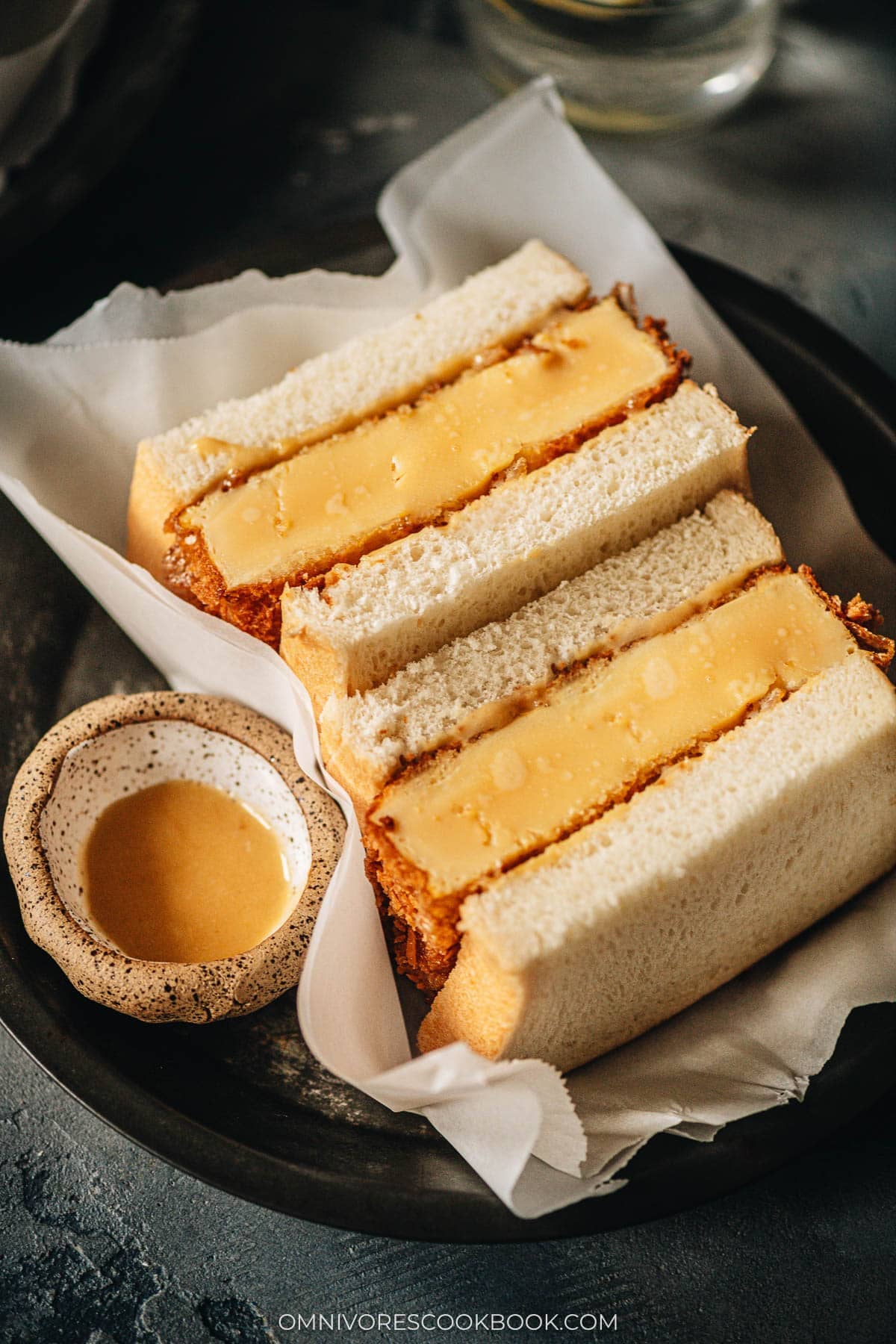
The egg katsu sando is a Japanese style sandwich made around a slab of cold steamed egg, breaded in panko and shallow fried into a golden cutlet. The technique sits inside the larger Japanese sando family, which also includes my tamago sando where the egg shows up salad-style instead of as a single fried patty. The Shake Shack version added a miso honey mayo to tie the steamed inside to the crisp outside, and I love that because it works.
I started chasing this sandwich after the New York Shake Shack pulled it from the menu and the craving did not go anywhere. The cold steamed egg slab is the unfamiliar part for most Western home cooks, so my first few rounds at home went into the chilling time, the right container size for a nice square, and the panko coat that fries quickly. My husband is my brunch partner for this one because the make-ahead schedule fits perfectly into our Saturday morning at home.
I work this recipe across 2 parts instead of one: the first is the steamed egg, which I blend, strain, steam, and chill in the fridge until firm, and the second is the quick finish the next morning, where I mix the miso honey mayo, bread the chilled egg, shallow fry it to deep golden, and close the sandwich on milk bread. You have to make this the next time you have a brunch planned, my recipe below walks you through the overnight chill and the quick finish. Enjoy it!
Ingredients
In the order I reach for them at the counter, the list splits into the steamed egg base, the miso honey mayo, the breading and frying setup, and the bread.
Steamed egg base
Large eggs, soy sauce, Shaoxing wine, salt, and sugar go into the blended mixture. The eggs are the star of the dish, so use the best ones your market sells. Thicker shells and golden yolks usually point to better flavor and a richer steamed egg patty. Dry sherry works in place of Shaoxing wine if that is what you have.
Miso honey mayo
Kewpie mayo, white miso paste, and honey make the sauce that goes on the bread. Kewpie is richer and slightly more savory than American style mayo because it uses egg yolks only and a touch of vinegar. Regular mayo works if Kewpie is hard to find.
White miso is the milder of the misos and brings a soft fermented sweetness rather than a heavy salty edge. Honey balances the miso and keeps the sauce loose enough to brush across the bread.
Breading and frying setup
Flour, a beaten egg, and panko breadcrumbs sit on 3 plates, and a neutral vegetable oil heats in a small skillet. Panko gives the cutlet its open craggy crust and is hard to substitute. Standard breadcrumbs come out tighter and less crisp.
The oil only needs to come halfway up the steamed egg patty because this is a shallow fry, not a deep fry.
For the sando
Two slices of milk bread close the sandwich. Milk bread is soft, faintly sweet, and tender enough to press against the crisp cutlet. My milk bread rolls recipe is the bread base I use when I bake my own, and any soft white sandwich bread works as well.
How to Make
Part 1: The steamed egg
Blend the egg mixture. In a large deep bowl, combine 8 large eggs, 1/2 teaspoon salt, 1/4 teaspoon sugar, 1/2 teaspoon soy sauce, and 1/2 teaspoon Shaoxing wine. Blend with a hand mixer until the mixture is smooth and uniform. A whisk or fork works but it takes longer and will not be as smooth. A traditional blender introduces too much air, so if you go that route, let the mixture rest for about 30 minutes before straining.
Prep the steaming container. Lightly moisten the inside of a heatproof glass container, about 5 inches by 5 inches, with water. Line the inside with plastic wrap, pressing the wrap against the damp walls so it sticks smoothly.
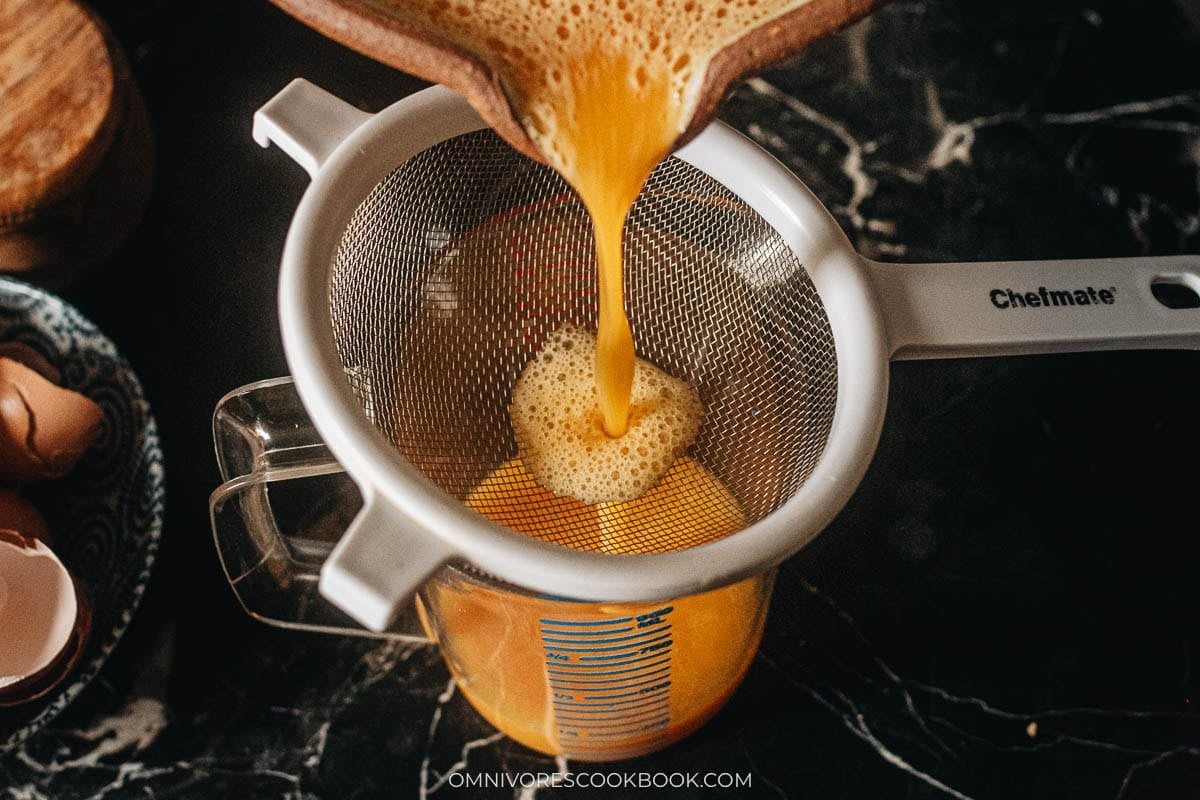
Strain the eggs into the container. Pour the egg mixture through a fine strainer into the lined glass dish. Try to keep foam from joining the mixture, and skim off any foam that does land on the surface.
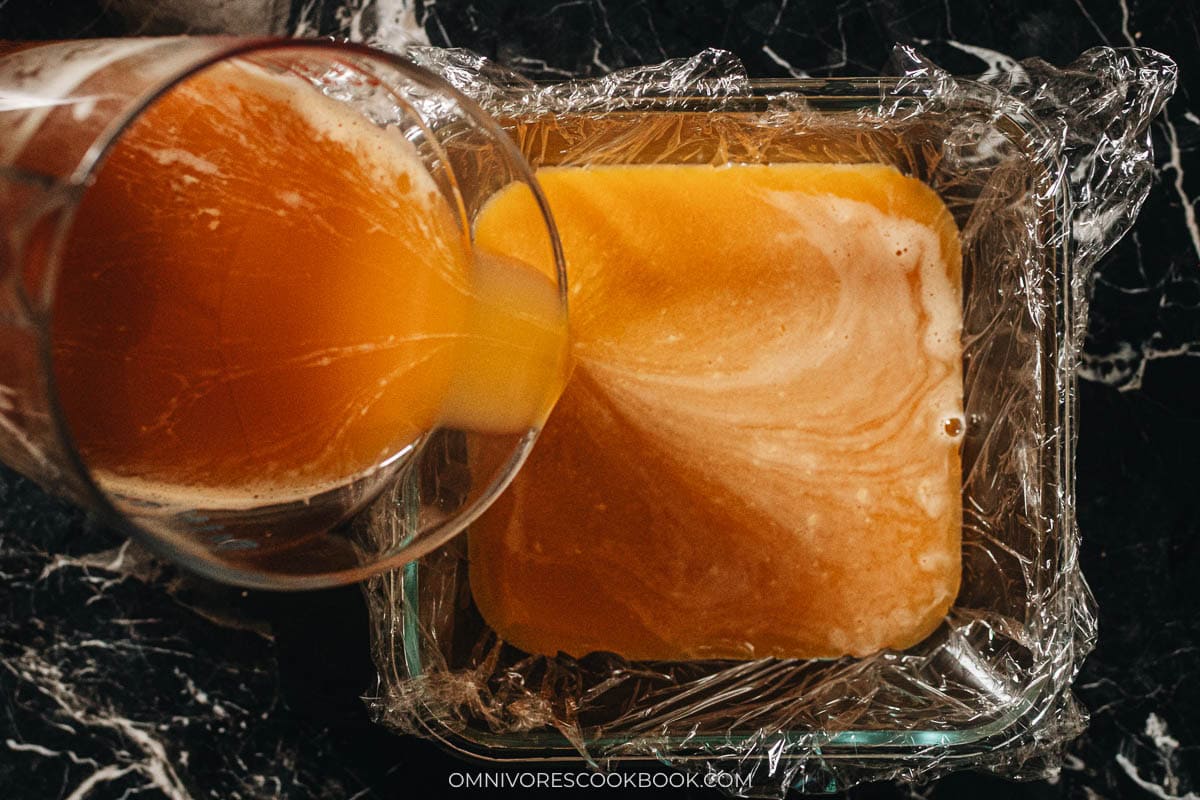
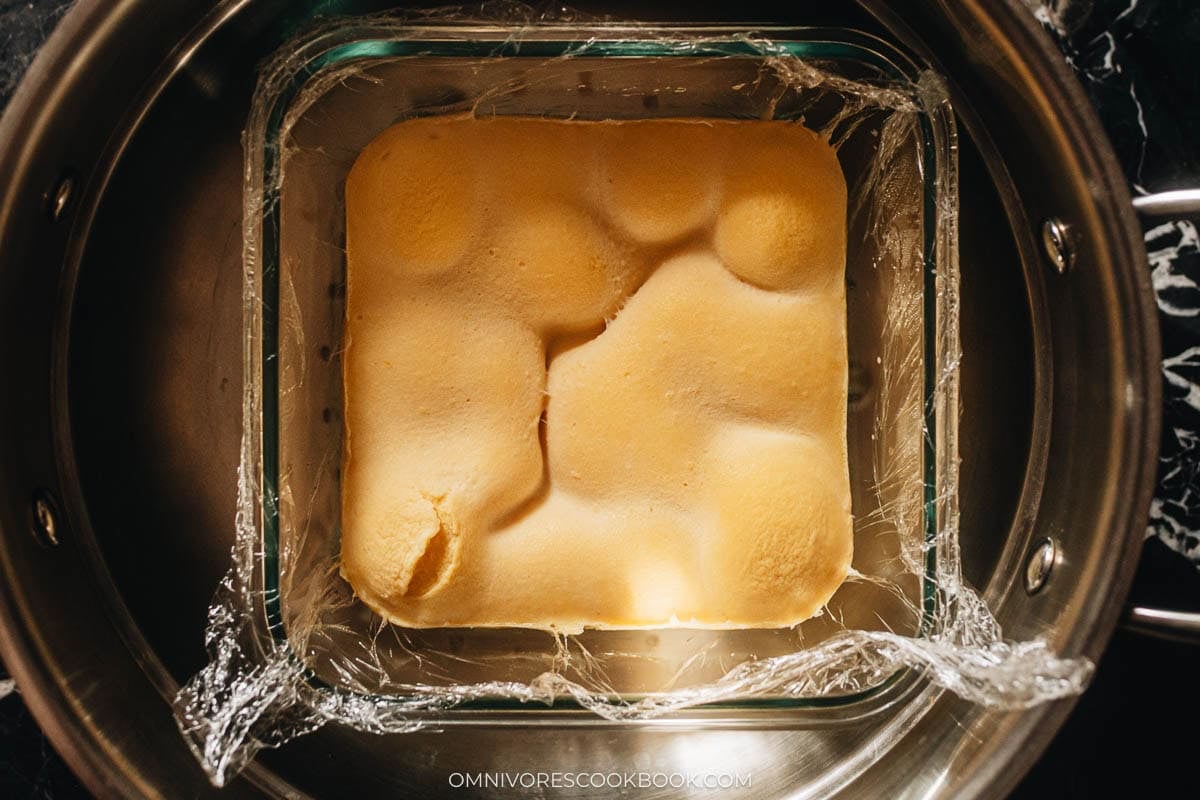
Steam and chill. Set up a steamer over simmering water. Steam the egg mixture for 9 minutes, then carefully lift the container out. Refrigerate the steamed egg in the container for 5 to 6 hours, or overnight, until completely cold and firm enough to handle without cracking.
Part 2: The sando
Mix the miso honey mayo. In a small bowl, stir 1 tablespoon Kewpie mayo, 2 teaspoons white miso, and 1 teaspoon honey together until smooth. Set aside.
Heat the oil. Add 1 cup vegetable oil to a small skillet so the oil reaches halfway up the steamed egg patty. Heat over medium until the oil reaches 375°F (190°C).
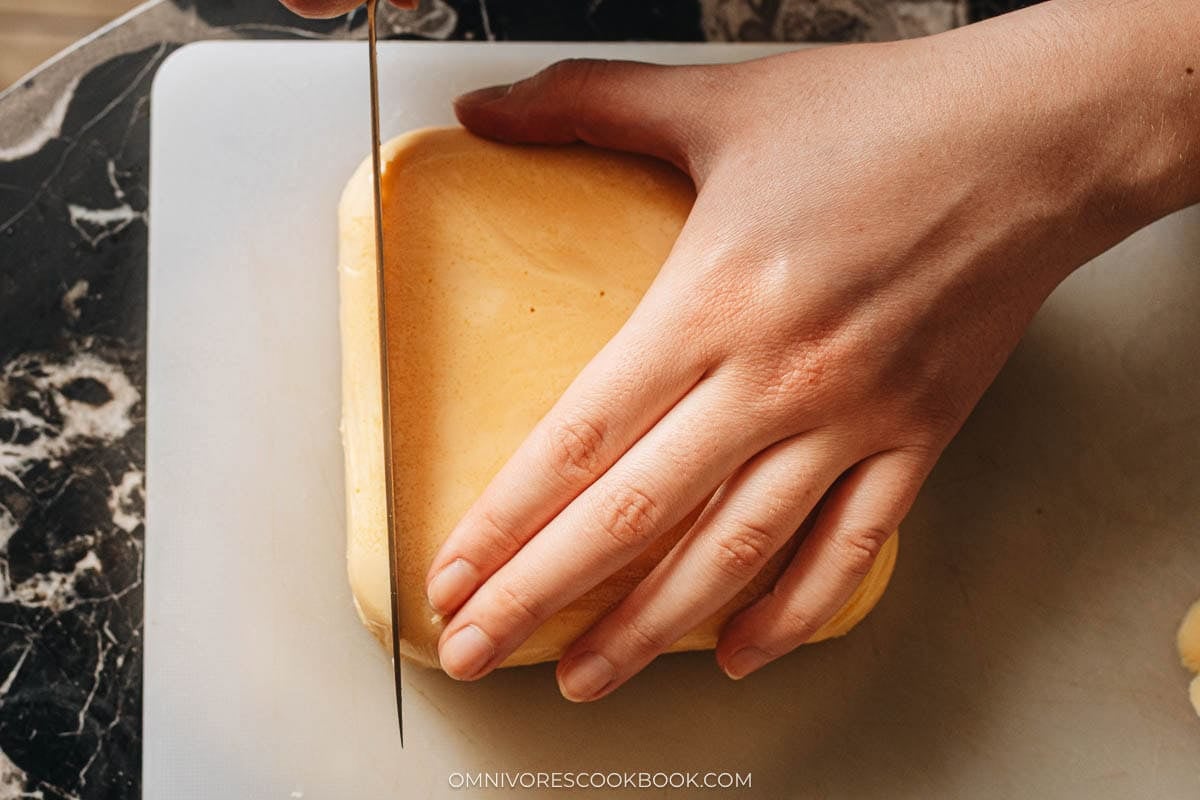
Trim the egg patty. Lift the chilled egg patty out of the container by the plastic wrap, peel it away, and set the patty on a cutting board. Trim the edges with a sharp knife so the patty matches the size of your bread slices.
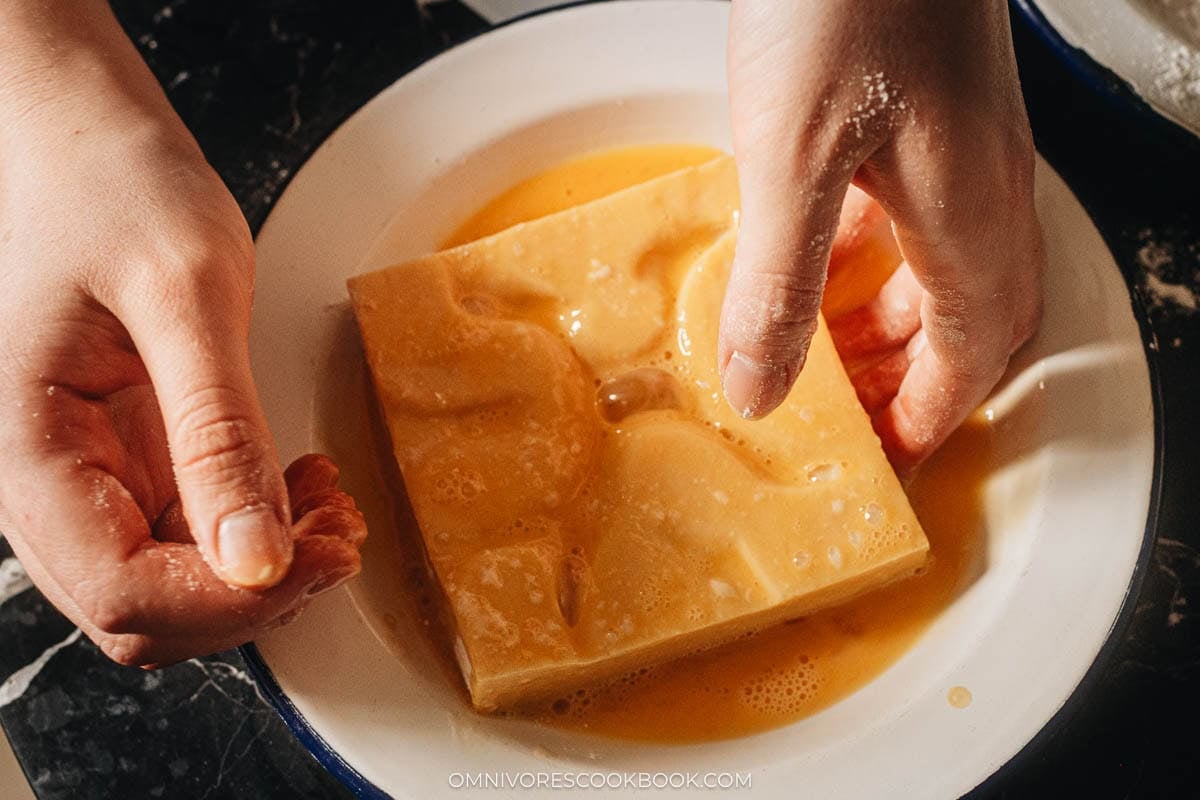
Set up the breading station. Place 1 tablespoon flour on the first plate, 1 beaten egg on the second, and 1/2 cup panko breadcrumbs on the third. Dredge the egg patty in flour, dip it in the beaten egg in a thin even layer, then press it firmly into the panko on both sides so the breadcrumbs stick all over.
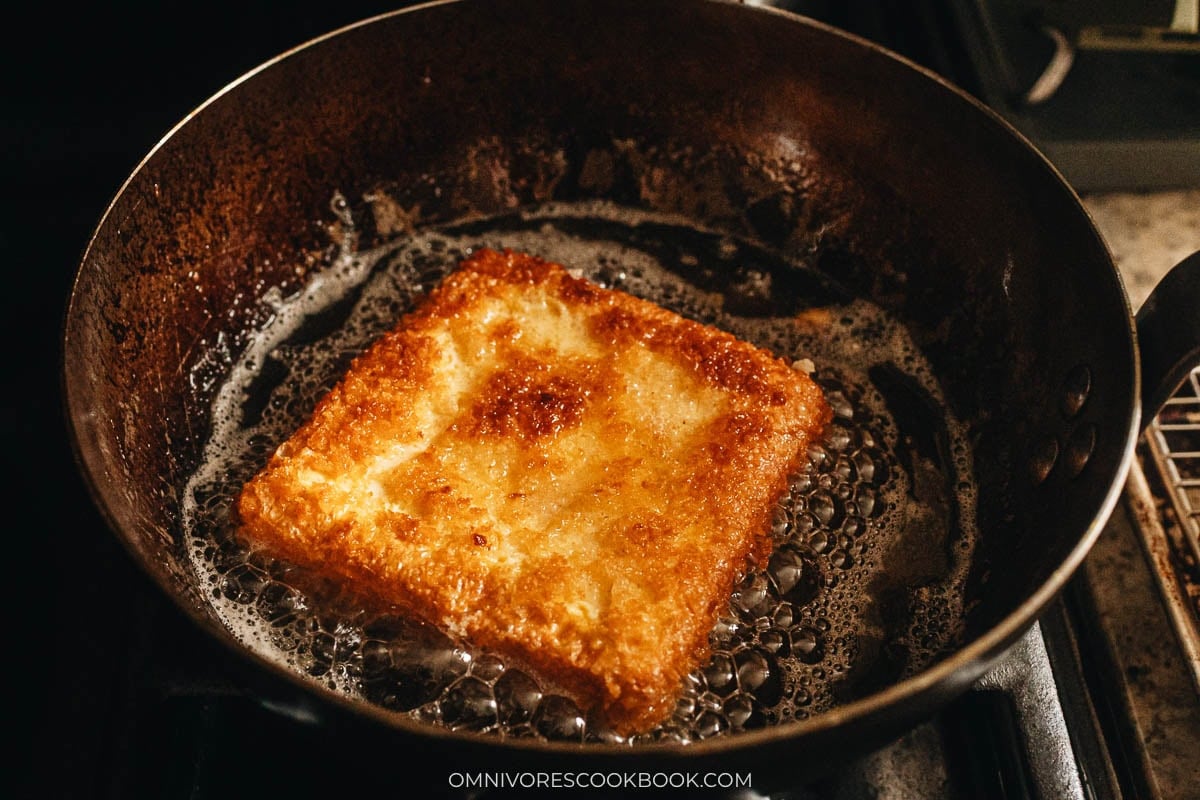
Shallow fry the patty. Lower the breaded patty into the hot oil and fry for about 1 minute per side, until both sides turn deep golden. Use a spider or slotted spatula to flip carefully, since the inside is soft. Transfer the patty to a wire rack to drain. Season with a pinch of salt and pepper if you like.
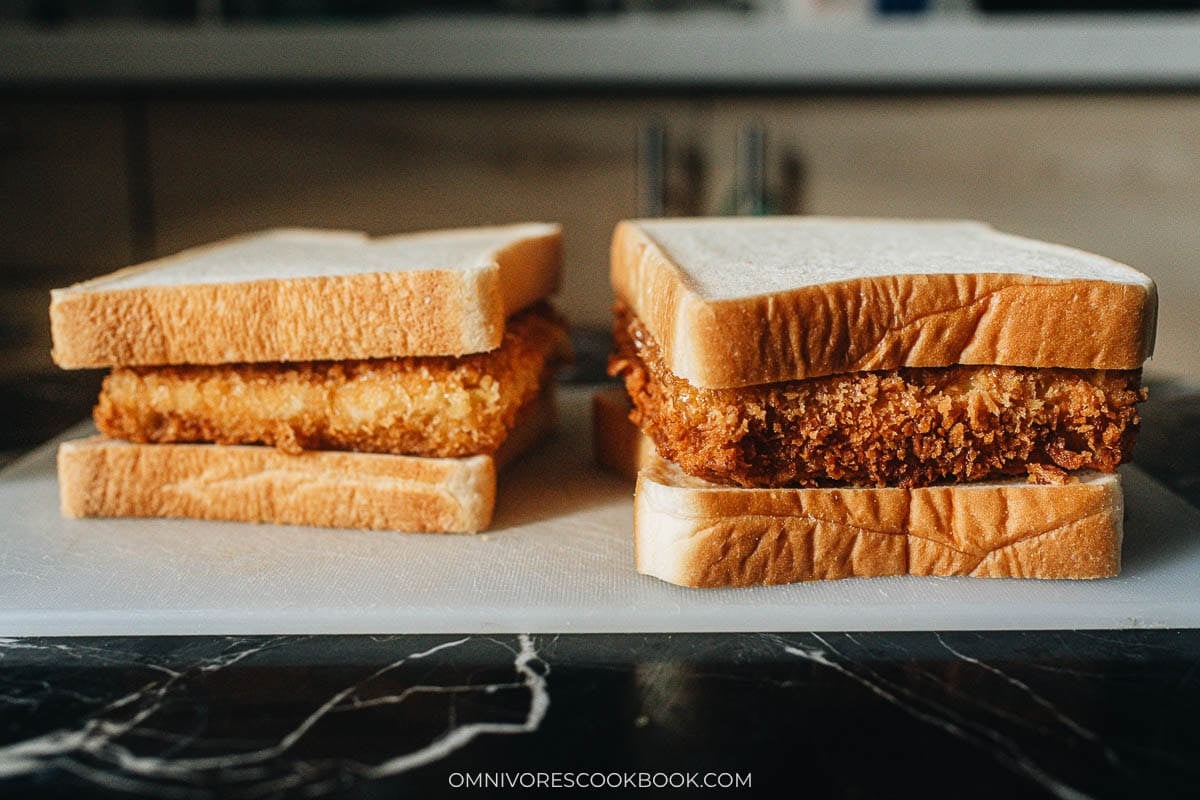
Build the sando. Brush a thin layer of the miso honey mayo onto both slices of milk bread. Place the fried egg patty between them. Slice the sandwich in half or in quarters, depending on how you want to serve it.
My Cooking Tips
Slice with a serrated knife. The crisp panko and soft milk bread cut cleaner with a serrated knife than with a chef’s knife. Saw, do not press.
Strain twice for a glass-smooth top. Once through the strainer is enough most of the time, but if you want a perfectly even surface on the steamed egg slab, strain a second time directly into the steaming container.
Watch your steam intensity. Steam at a steady soft simmer rather than a hard rolling boil. A harder steam can give the eggs a pocked surface or rubbery edges. The patty should set firm but still wobble slightly when you tap the container.
Cold patty, hot oil, fast fry. The contrast between the cold steamed egg and the hot oil is what gives the sando its silky inside and crisp outside. Make sure the oil is fully at 375°F before the patty goes in, and pull it out the moment both sides turn golden, about 1 minute per side.
How I Love to Serve
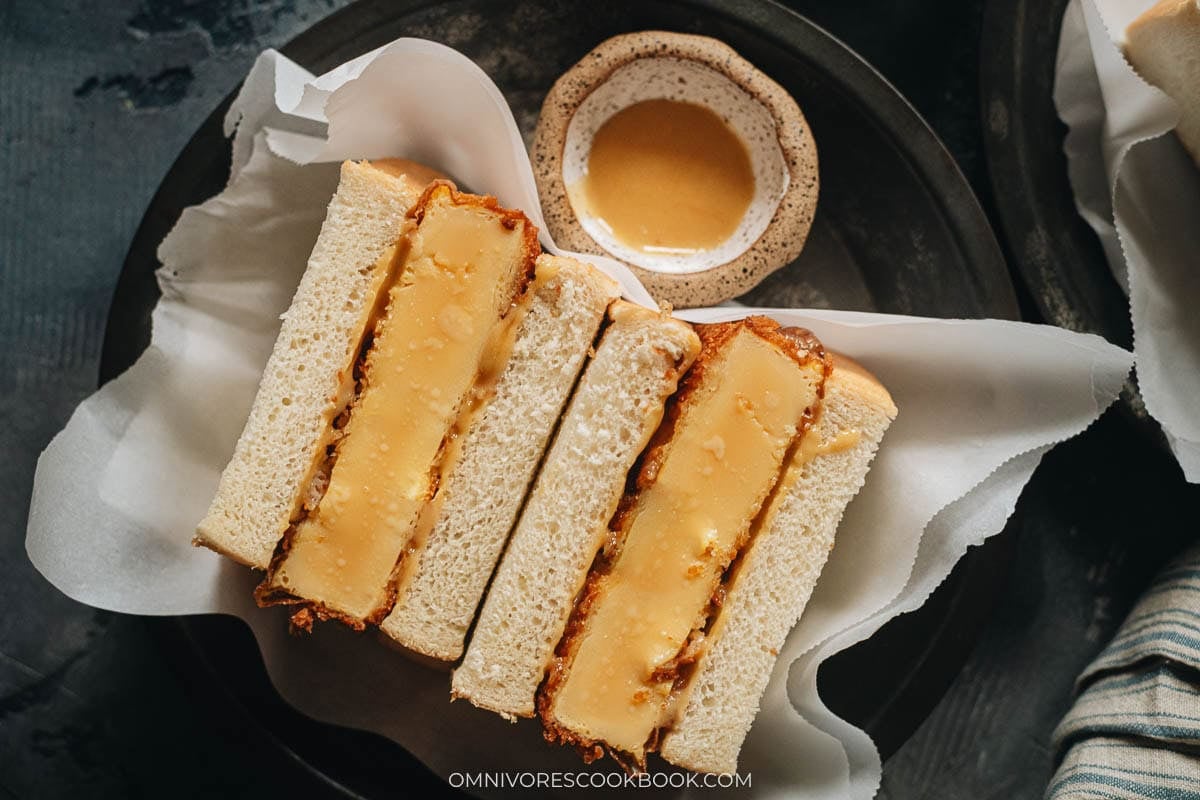
I serve this as a slow weekend brunch sando, plated whole on a board and cut into halves or quarters right at the table. The cross section is the point of the dish, so the slicing happens in front of whoever is eating it. I usually pair it with a small green salad and a glass of cold barley tea or iced coffee.
When friends drop by for a Japanese style brunch, I build a small board around the sando. I quarter the sandwich so everyone can take a piece, and I round out the table with a slice of my Japanese cheesecake for something soft and sweet, a bowl of gyudon for guests who want something savory and warm, and a small plate of lettuce salad just like how Japanese cafe serves their set menu.
Frequently Ask Questions
Can I skip the steaming and use a hard boiled or sous vide egg instead?
The sando works because of the silky uniform texture of the steamed egg slab, which is closer to chawanmushi than to a hard boiled egg. A hard boiled egg slab would come out drier, more crumbly, and harder to slice cleanly. A sous vide egg loaf is closer in spirit but takes its own equipment, and the steamed version is the most home kitchen friendly path to the right texture.
My steamed egg has a cracked or pitted surface, what went wrong?
Two common causes in my experience. The first is too much foam in the mixture, which sets into bubbles on the surface, so blend carefully, strain well, and skim any foam before steaming. The second is steam that is too hard, which jostles the surface as it sets, so drop the heat to a steady soft simmer and the surface comes out smooth.
How long does the steamed egg keep before I fry it?
The steamed egg patty keeps in the fridge, sealed in its container, for up to 2 days before frying, and after that the texture starts to dry out at the edges. I do not freeze the steamed egg, since freezing breaks the silky structure and the patty turns rubbery once thawed. Once the sando is made, eat it right away because the panko softens within the hour and the bread picks up moisture from the patty.
Want to Save This Recipe?
Enter your email below & we’ll send it to your inbox. Plus get great new recipes from us every week!
Egg Katsu Sando
Ingredients
- 8 large eggs
- 1/2 teaspoon salt
- 1/4 teaspoon sugar
- 1/2 teaspoon soy sauce
- 1/2 teaspoon Shaoxing wine (or dry sherry)
Miso Honey Mayo
- 1 tablespoon kewpie mayo (or regular mayo)
- 2 teaspoons white miso
- 1 teaspoon honey
Fry
- 1 cup vegetable oil
- 1 tablespoon flour
- 1 egg , beaten
- 1/2 cup panko breadcrumbs
Sando
- 2 slices milk bread (or bread of your choice)
Instructions
Make the steamed egg
- Combine the eggs, salt, sugar, soy sauce, and Shaoxing wine in a large deep bowl. Blend with a hand mixer until smooth. This can be done with a whisk or fork, but it will take longer and won’t be as smooth. You can do this in a traditional blender, but it will introduce a lot of air so you’ll have to let the eggs settle for 30 minutes or so.
- Moisten the inside of a heatproof glass container (mine was about 5” x 5”) with some water. Carefully line the inside with plastic wrap – the moisture inside should help the plastic wrap stick nicely. You want as smooth a surface as possible.
- Pour the egg mixture through a strainer into the glass dish, avoiding adding foam as much as possible. Skim the foam from the surface of the egg mixture.
- Set up a steamer and steam the egg mixture for 9 minutes. Remove the glass container and let the steamed eggs cool completely in the fridge, 5 to 6 hours.
Assemble
- Combine the miso honey mayo ingredients in a small bowl and stir until smooth.
- Add the frying oil into a small skillet until it just reaches half the height of the steamed egg. Heat over medium heat until it reaches 375°F (190°C).
- Remove the steamed egg patty from the glass container and plastic wrap, being careful not to crack it. Trim off the edges so that it fits the size of your bread.
- Set up the flour, beaten egg, and panko on 3 separate plates. Coat the steamed egg in flour, then in a thin layer of egg, then press it into the panko on both sides.
- Add the coated egg patty into the hot oil and fry it until golden-brown on both sides, 1 minute per side. Place the fried egg patty on a wire rack or paper towel to drain. Season with salt and pepper if desired.
- Spread a layer of mayo onto both pieces of bread. Place the fried egg patty between them. Enjoy!
Nutrition

Did you make this recipe?
I’d love to hear how it turned out for you! Please take a moment to leave a 5-star rating ⭐️ and share your thoughts in the comments further down the page. It really helps others discover the recipe too.
Mimi Y Wan
OMG, this egg katsu has blown my mind! Brilliant and I can’t wait to try it along with Miso Honey, who knew? It is ironic that it took someone in Danny Meyer’s org to riff on all things Japanese and come up with these flavors and combos. Thank you for making a post of it!