
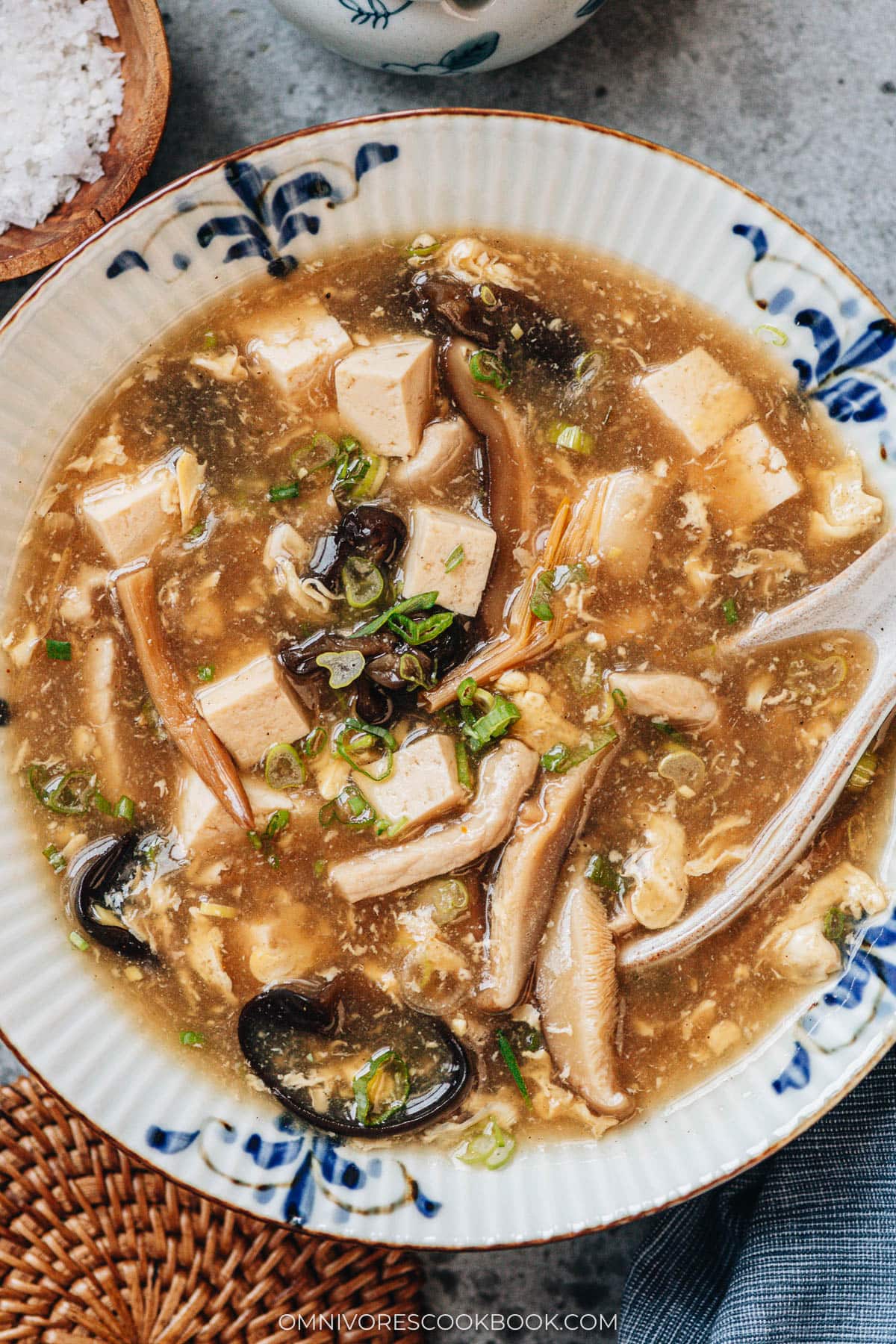
Hot and sour soup is an authentic Chinese soup with a long history, built around a spicy and sour broth filled with mushrooms, tofu, and silky eggs that is warming, satisfying, and savory. I can assure you my recipe is not Western Chinese takeout or a watered down version, but a home style soup, like my egg drop soup that brings restaurant flavor into my own kitchen.
I love how this recipe comes together nicely because every ingredient I use has a clear role, from the mushrooms adding earthiness to the tofu bringing softness and the eggs creating a silky texture I love. If you have been following me for a while, you know I grew up eating bowls of soup like this with my family, so adding this restaurant style soup to my collection of authentic Chinese soup recipes was really important to me.
After years of cooking Chinese food for my family and guiding home cooks, this hot and sour soup has become one of my favorites because it is ready in just 30 minutes, if you soak your dried ingredients in advance. In this post, I walk you through each step and share simple ingredient swaps so it stays easy, flexible, and perfect for busy days at home.
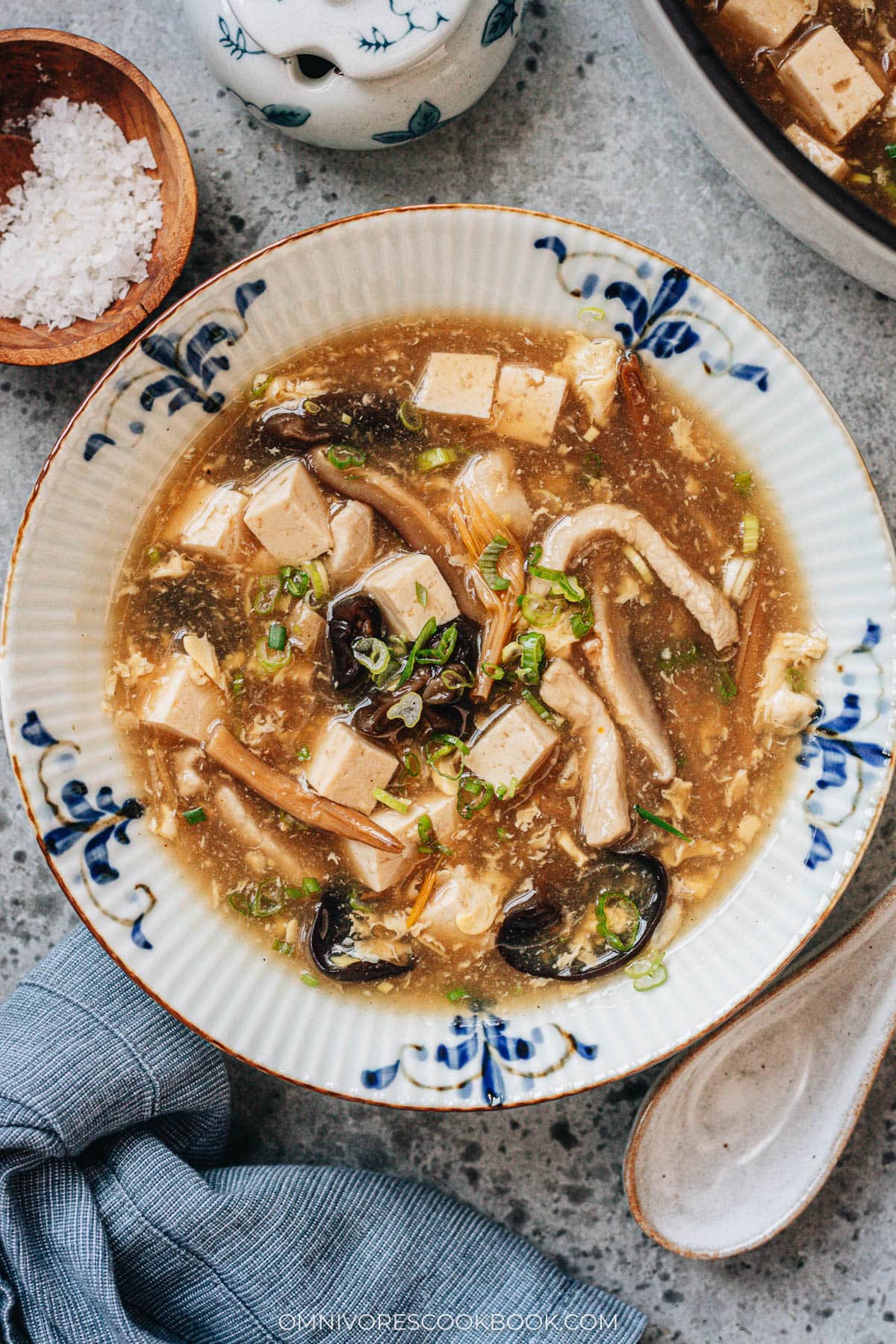
Ingredients
Since my goal was to create a proper restaurant style hot and sour soup recipe, I use all the ingredients listed below, but the good news is that you can easily substitute them with my recommendations and still enjoy a comforting bowl of soup at home.
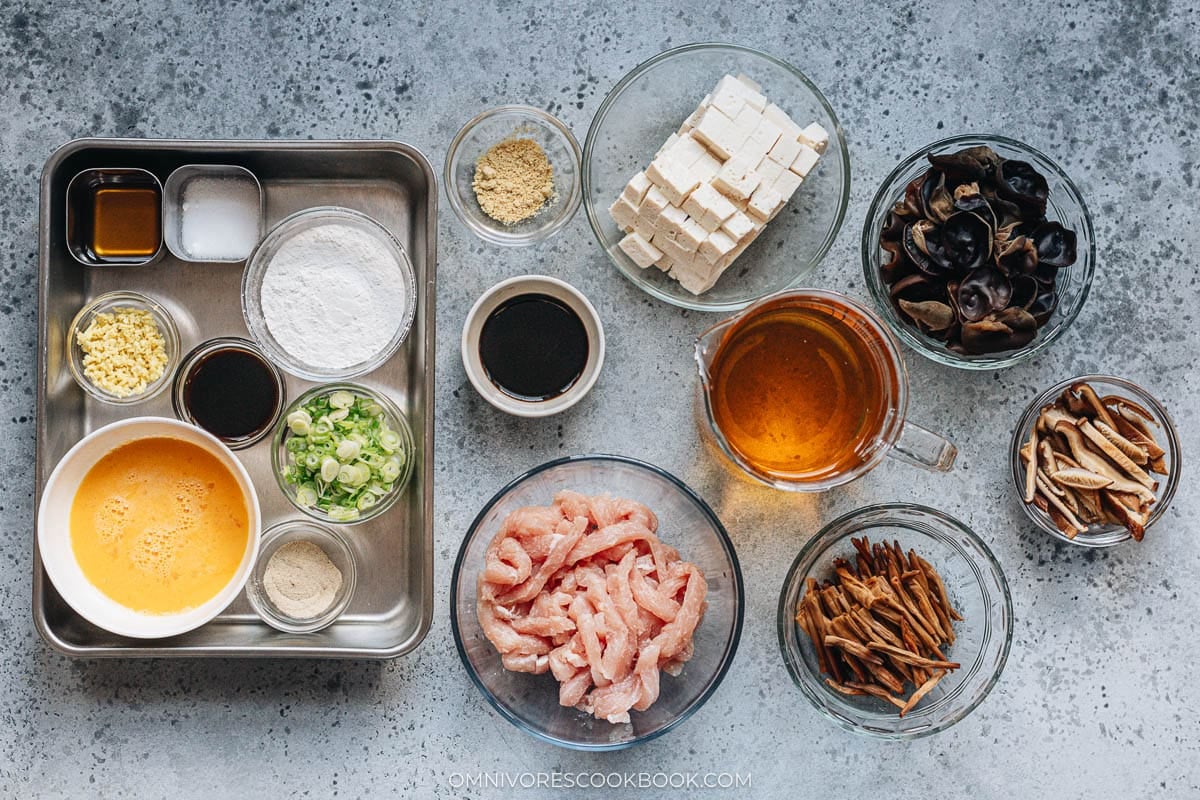
The soup base
Top key ingredients: vinegar and pepper
I use Chinkiang vinegar and white pepper to create the classic hot and sour balance that comes from a Northern Chinese style soup I ate growing up. These two ingredients define the character of the soup.
- Protein: I use pork tenderloin most often, but chicken breast works just as well.
- Aromatics: I cook ginger and green onions first to build a savory base.
- Seasonings: I rely on salt and cornstarch to season and lightly thicken the broth.
- Broth and soaking liquid: I use chicken stock along with lily flower soaking liquid.
- Tofu: I use firm tofu so it stays firm while cooking, but you can also use soft or medium tofu for its nice silky texture.
- Soy sauce and wine: I add light soy sauce and Shaoxing wine for savory flavor.
- Eggs: I pour in beaten eggs at the end to create silky ribbons. This gives the soup its signature texture.
- Finishing oils: I finish with toasted sesame oil, but I also recommend chili oil. Either one adds a final layer of flavor to the bowl.
Dried ingredients
My recipe uses a few dried ingredients listed below that may require a trip to an Asian market or an online order, and they are important for creating authentic flavor. I strongly recommend using them for the best result, but if you prefer to skip them, you still can, just keep in mind the soup will not have the same traditional taste.
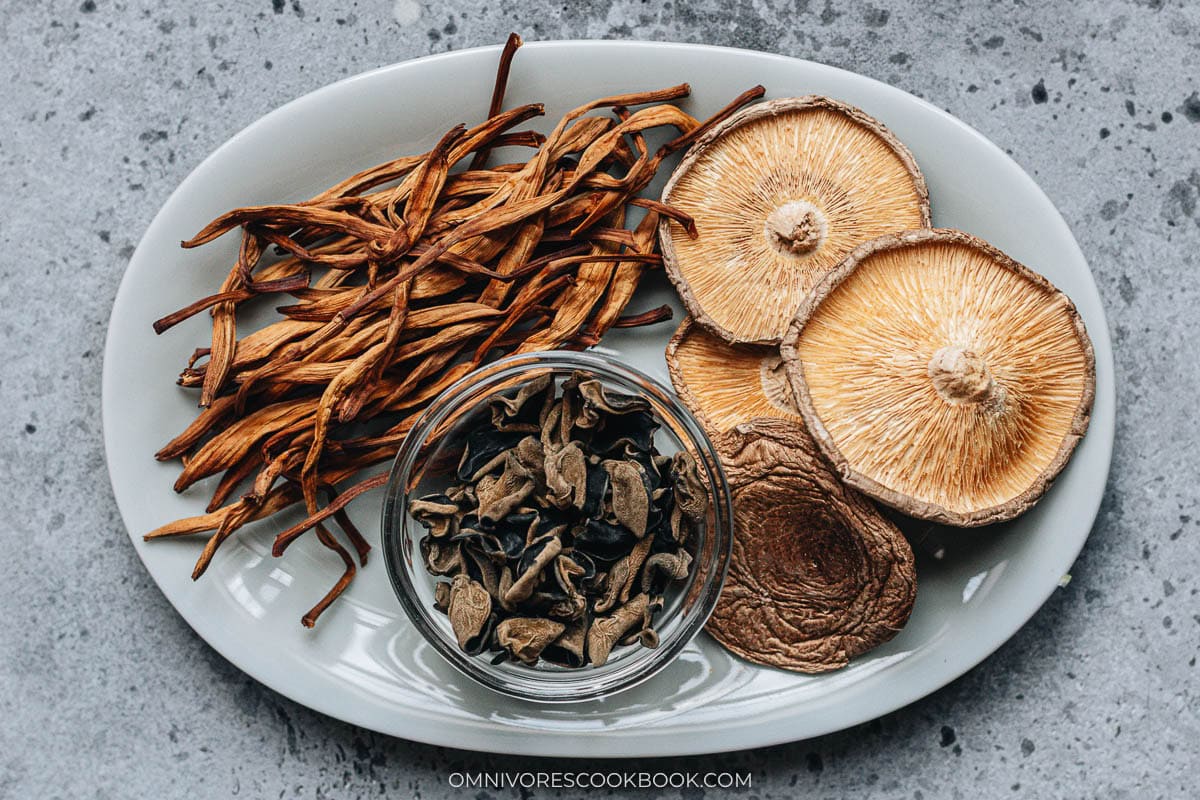
Dried lily flowers: I use dried lily flowers because they add deep savory flavor with earthy and woody notes. I always save the soaking liquid and use it in the soup base.
Dried shiitake mushrooms: I rely on dried shiitake mushrooms for their smoky, concentrated flavor. The soaking liquid is full of umami and works as a natural vegan stock.
Wood ear mushrooms: I add wood ear mushrooms for their mild taste and crunchy texture.
How to make
1. Rehydrate the dried ingredients: Rinse the dried shiitake mushrooms, dried wood ear mushrooms, and dried lily flowers under running water. Place each ingredient in a separate bowl, cover with warm water, and soak for 30 minutes to 1 hour until tender.
The best way to rehydrate dried ingredients
When I plan to make my soup, I usually soak the dried ingredients in cold tap water a few hours ahead when I can. It takes longer to soak if using cold water, but the ingredients rehydrate without losing their fragrance. When I’m short on time, I use lukewarm water that is about skin temperature or a little hotter if I want to speed up things. But remember, do not use boiling water or very hot water for soaking, since it slightly cooks the ingredients and cause them to lose a lot of flavor.
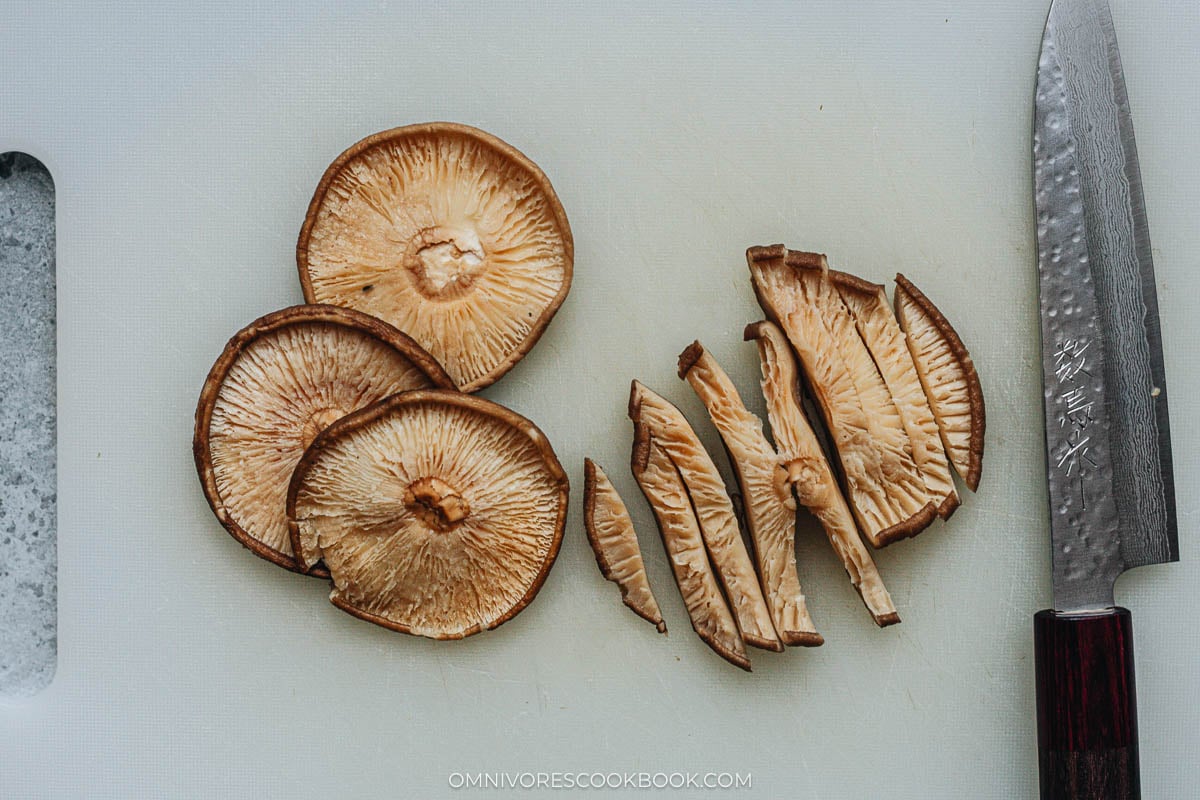
2. Prepare the mushrooms: Slice the rehydrated shiitake mushrooms into thin strips. If your mushroom comes with the stem, remove and discard the stem because it’s very chewy.
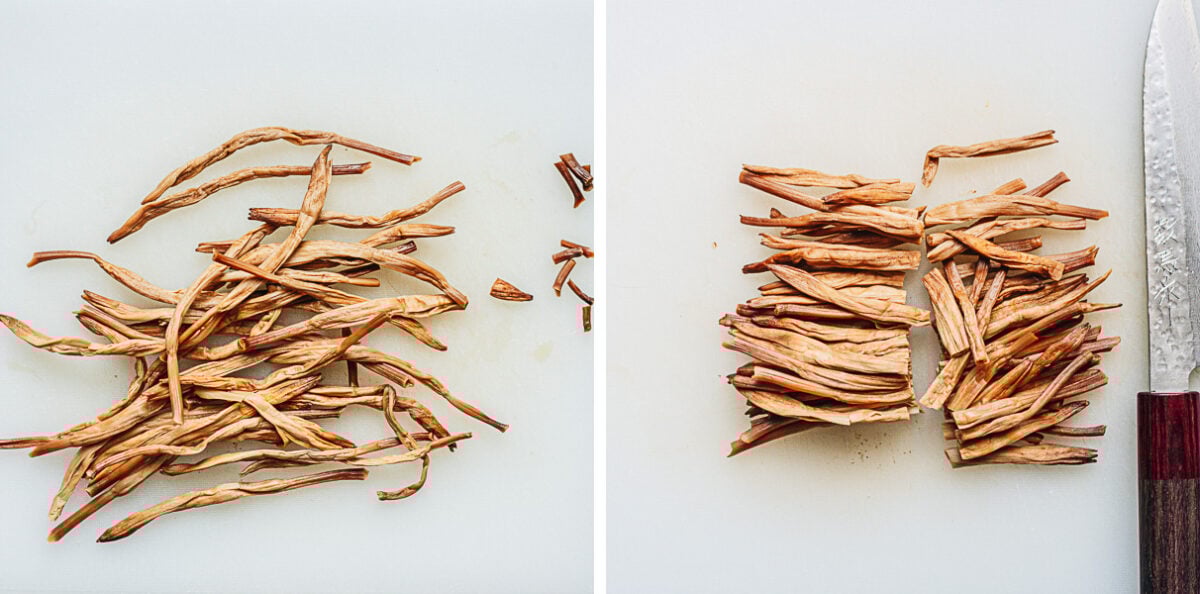
3. Handle the lily flowers: Trim and discard the tough ends of the lily flowers, then cut them in half lengthwise. Reserve 2 cups of the soaking water for the soup.
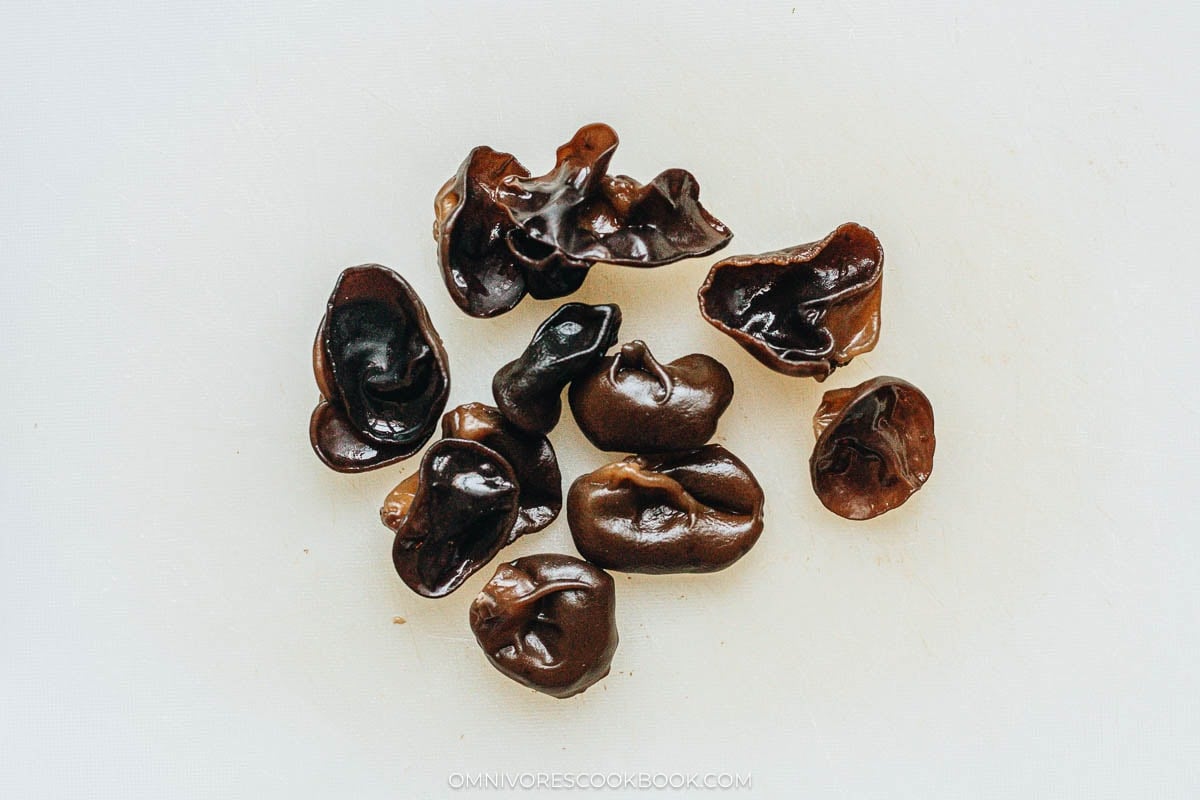
4. Cut the wood ear mushrooms: Remove any tough ends from the wood ear mushrooms, then chop them into bite sized pieces.
5. Marinate the pork: Combine the pork, Shaoxing wine, salt, and cornstarch in a bowl. Mix well by hand and marinate for 10 to 15 minutes.
6. Mix the vinegar base: In a small bowl, combine the Chinkiang vinegar and white pepper. Stir until the pepper is fully dissolved, then set aside.
7. Build the soup base: Add the chicken stock, reserved lily flower soaking water, ginger, and the white parts of the green onion to a pot and heat over medium high heat. Add the rehydrated wood ear mushrooms, shiitake mushrooms, lily flowers, and tofu, cook until the soup reaches a simmer, then add the soy sauce and reduce the heat to medium low.
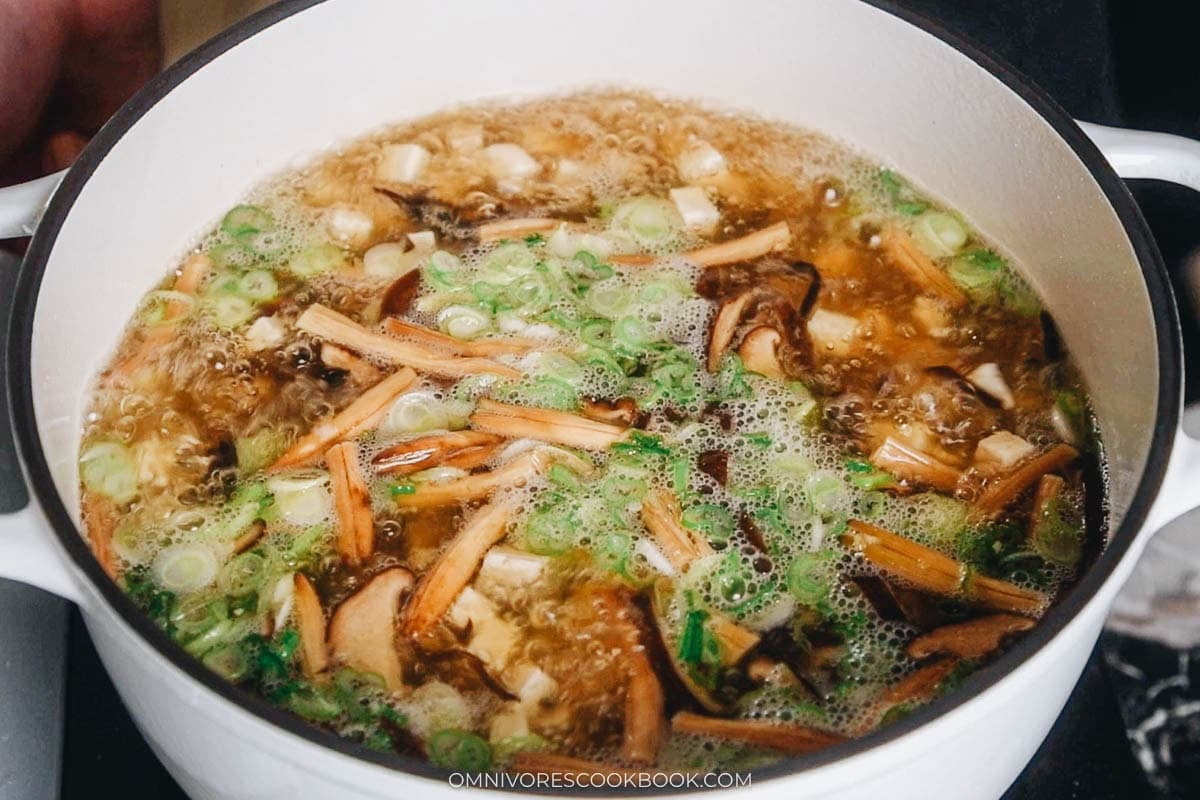
8. Thicken the soup: In a small bowl, mix the cornstarch with 1 quarter cup of water until fully dissolved. Slowly swirl the slurry into the soup while stirring, then continue stirring until the soup thickens.
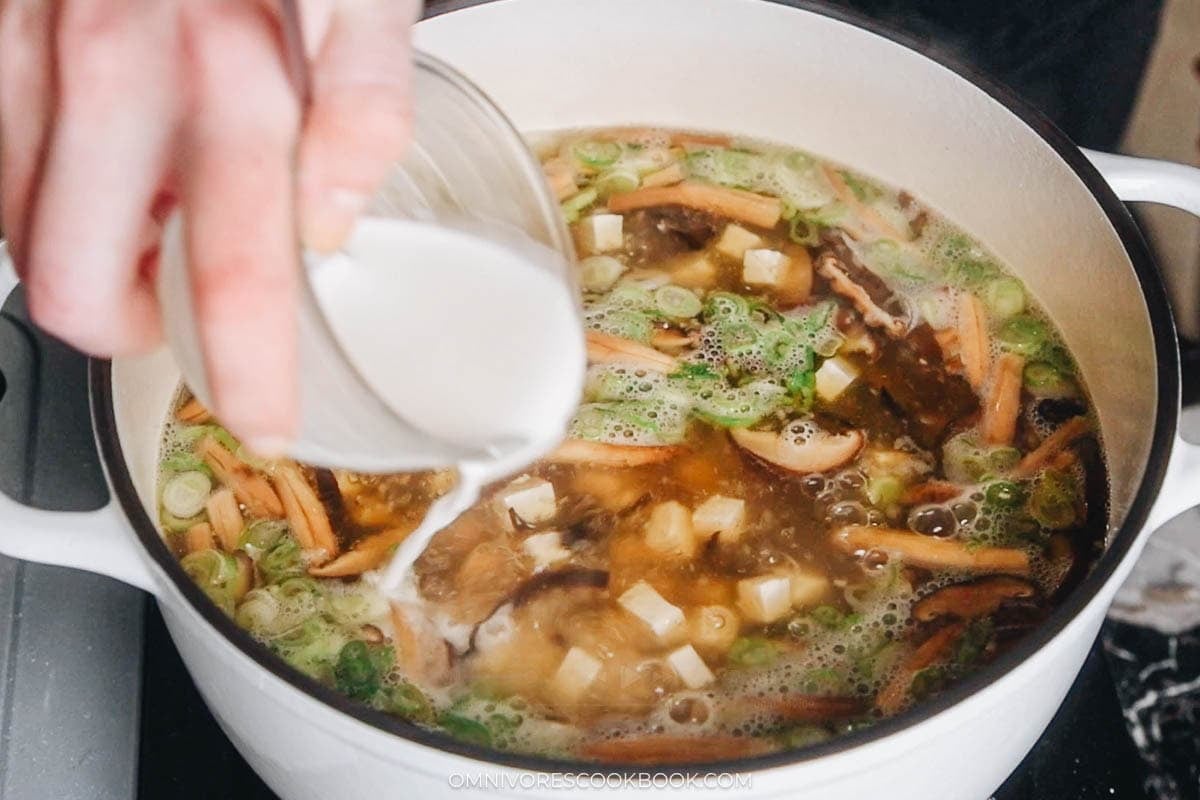
9. Cook the pork: Add the marinated pork to the soup, stirring several times to separate the strips and keep them from sticking together.
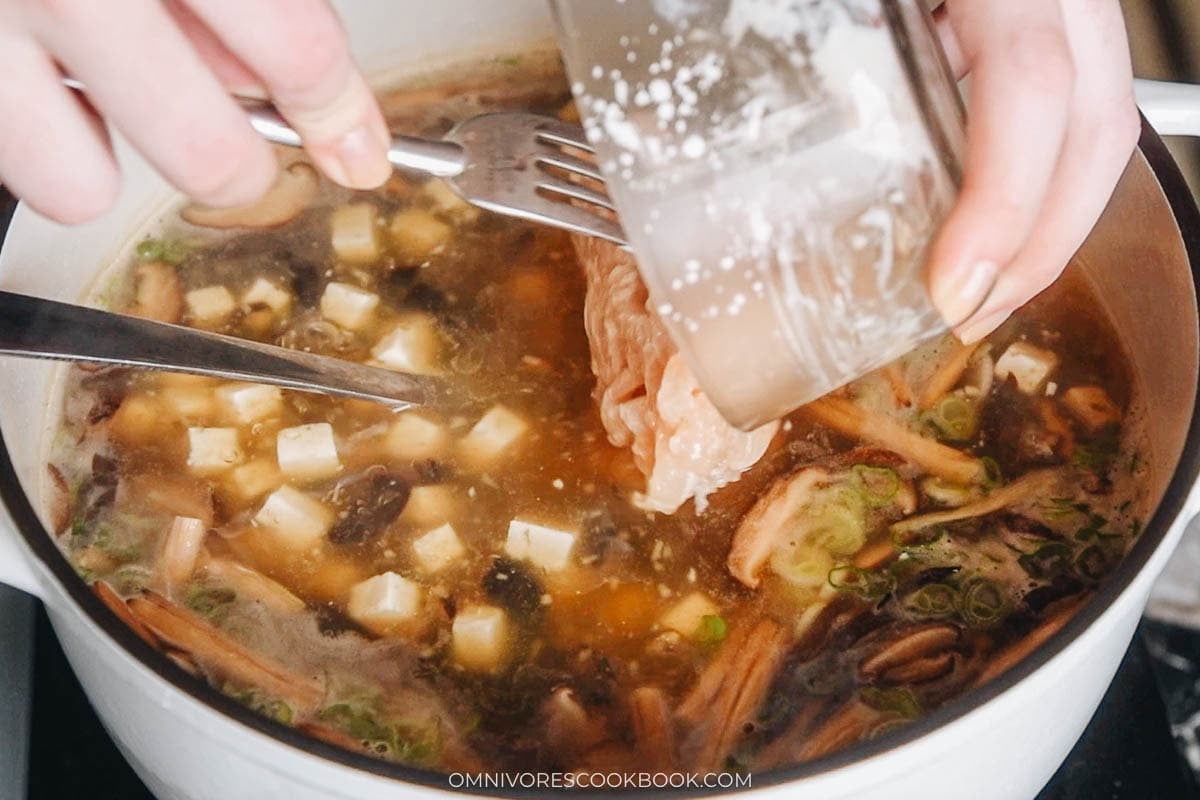
10. Add the eggs: Slowly drizzle in the beaten egg while stirring the soup in a circular motion using chopsticks or a fork. Let the egg sit for about 20 seconds to set, then stir lightly to separate the egg ribbons.
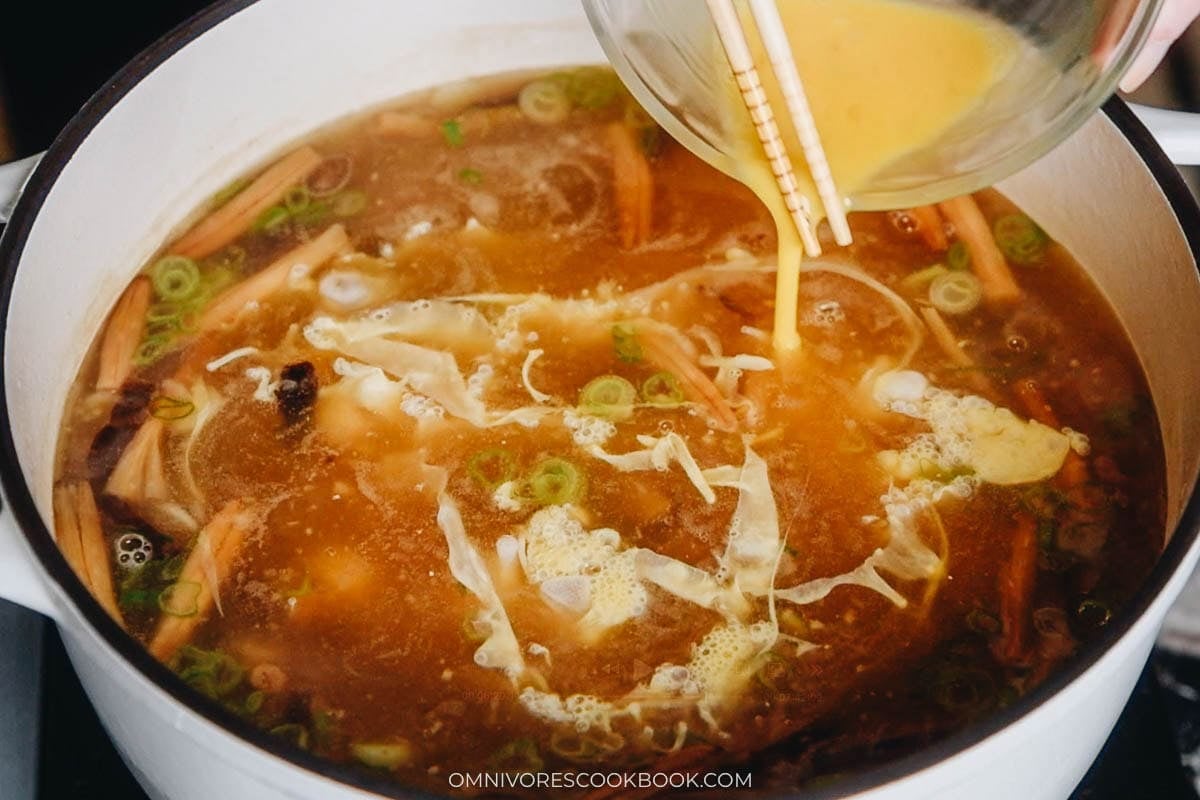
11. Finish the soup: Turn off the heat and add the vinegar and pepper mixture, then stir to combine. Season with salt to taste, garnish with the green parts of the green onion, drizzle with sesame oil, give the soup a final stir, and serve hot.
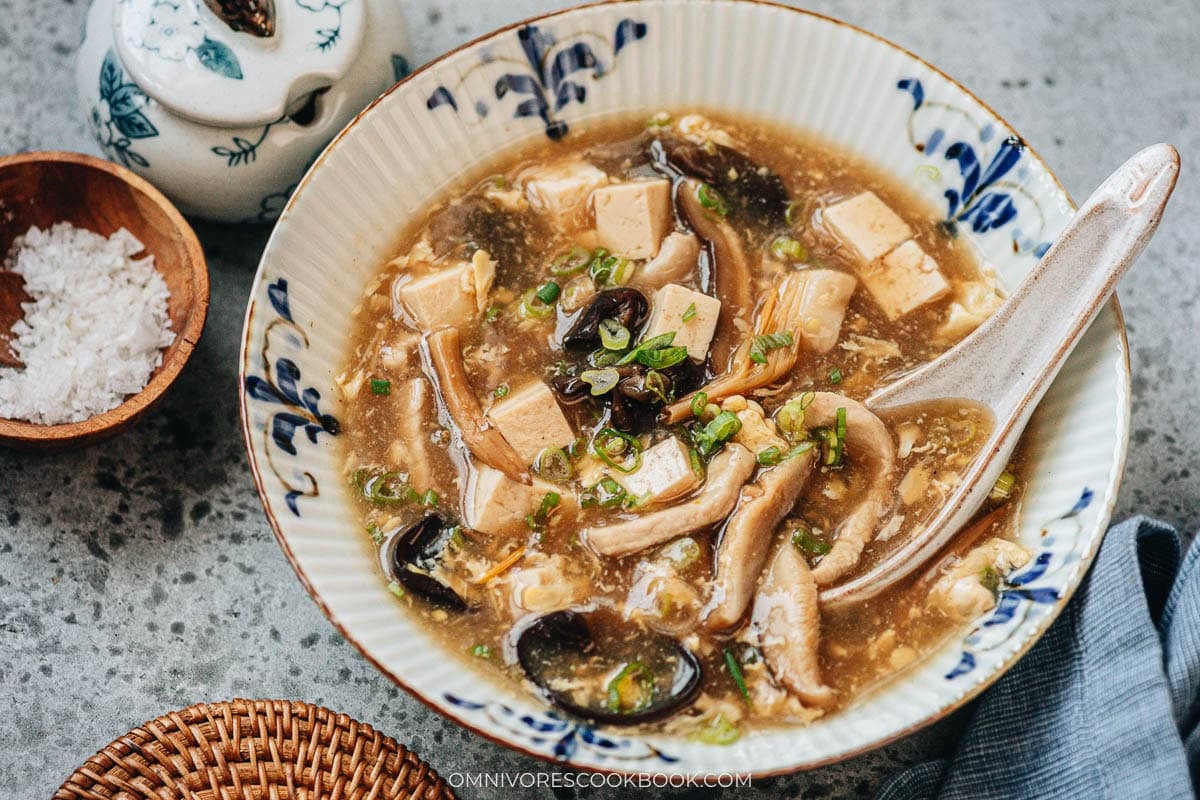
My cooking notes
When making this hot and sour soup, it is important to add the Chinkiang vinegar and white pepper at the very end of cooking. If they are added too early, the vinegar loses its clean sourness as it evaporates, and the white pepper can turn bitter from prolonged heat, which throws off the balance of the soup. Trust me, you don’t want that!
Other tips to consider:
- Use dried ingredients when possible: Dried lily flowers, dried shiitake mushrooms, and wood ear mushrooms add depth that fresh ingredients can not match.
- Slice everything same size: Cutting the mushrooms, tofu, and pork into similar sizes helps them cook at the same rate.
- Thicken the soup slowly: I swirl the cornstarch slurry in gradually while stirring. This prevents lumps and gives the soup a smooth glossy texture.
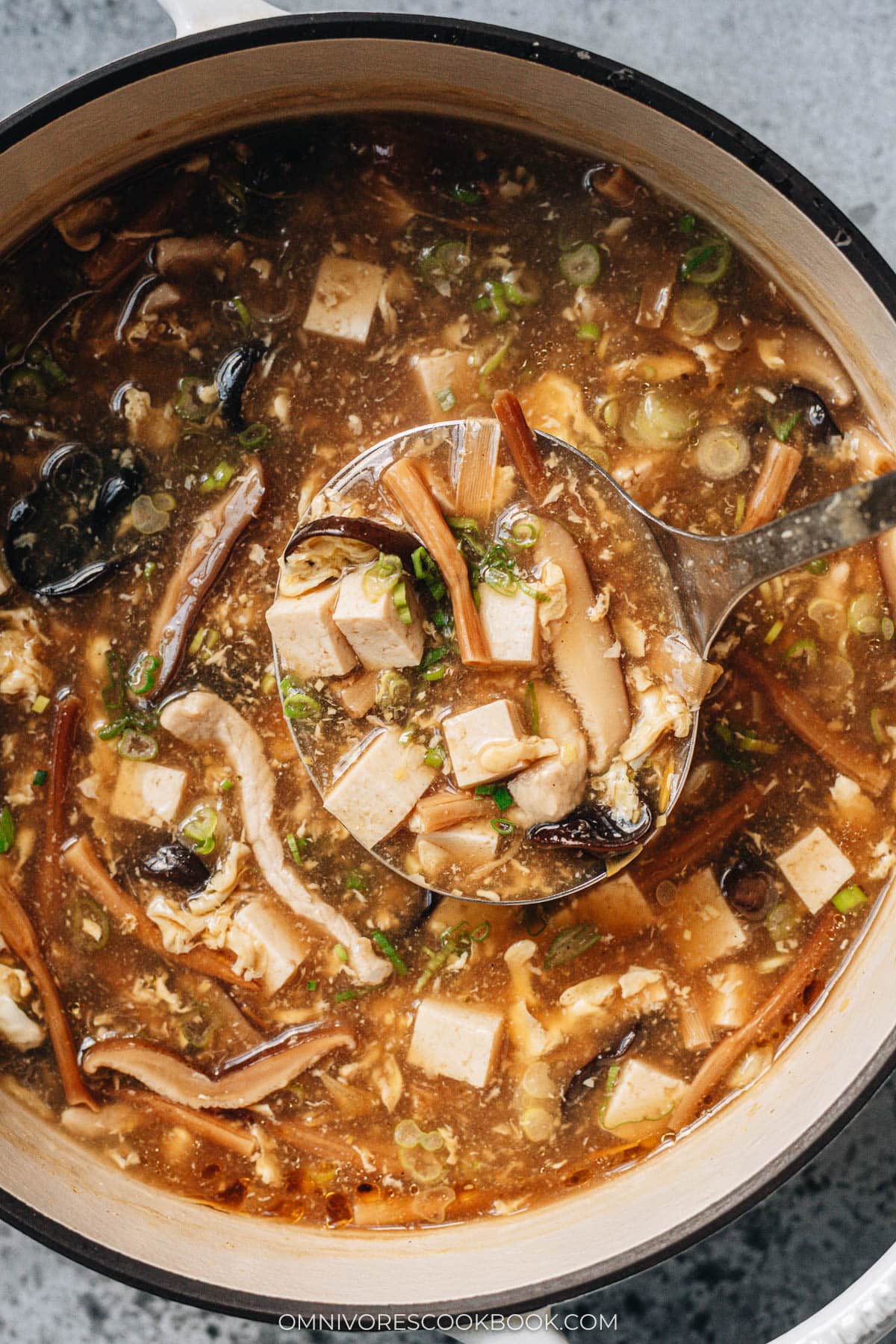
How to serve
At home, I serve this hot and sour soup the authentic way, straight from the pot and shared at the table alongside any Chinese rice recipes. When my family wants a fuller spread, I pair it with other main dishes such as Lion’s Head Meatballs or Braised Chicken with Mushroom, which keeps the meal comforting and very close to how we enjoy it in Chinese homes.
You can also customize this soup to suit your own palate by adjusting the sourness or heat and swapping proteins like chicken for pork or shrimp. If you enjoy mixing cuisines, it pairs nicely with Western style dishes like roasted vegetables or even a simple Chinese noodle recipe from my collection, making it easy to fit into your everyday meals while keeping the soup as the star.
Frequently asked questions
Why do you add pork after thickening?
Adding the pork after the soup thickens gives each strip a chance to cook at the same pace in the hot broth without overcooking. This step also keeps the meat suspended in the soup, so it stays tender, separate, and well distributed instead of sinking to the bottom or clumping together.
How do I keep the soup from turning cloudy?
When I add the eggs, I drizzle them slowly and make sure let them set before stirring in one direction, then stop once the ribbons form. This keeps the broth clear and gives the soup that classic restaurant look. If stirring too early when the eggs are still too runny, it will cloud the soup.
How thick should hot and sour soup be?
I like the broth thick enough to coat a spoon but still light and drinkable. Swirling in the cornstarch slurry a little at a time helps control the texture without over thickening.
Chinese Cooking Made Easy
Are you new to this website? This free email series is a great place to start. I’ll walk you through a few of my most popular recipes and show you how and why they work. You’ll quickly start to cook better Chinese food in your own kitchen.
Watch video

Authentic Hot and Sour Soup (酸辣汤)
Ingredients
Rehydrate (*Footnote 1)
- 4 dried shiitake mushrooms
- 1/4 cup dried woodear mushrooms
- 1 handful dried lily flowers
Pork (*Footnote 2)
- 1/2 lb pork loin (or chicken breast) , cut into thin strips
- 1/2 tablespoon Shaoxing wine
- 1/4 teaspoon salt
- 1/2 tablespoon cornstarch
Soup
- 2 teaspoons minced ginger
- 2 green onions , sliced, white and green parts divided
- 2 tablespoons Chinkiang vinegar
- 1 teaspoon white pepper powder (or 1/2 teaspoon white pepper powder for a less spicy dish)
- 4 cups chicken stock (*Footnote 3)
- 2 cups lily flower soaking liquid
- 1/2 block firm tofu (8 oz / 227 g) , diced
- 1 tablespoon light soy sauce (or soy sauce)
- 3 tablespoons cornstarch
- 2 eggs , beaten
- 1 teaspoon salt , or to taste
- 1 teaspoon toasted sesame oil (or chili oil) (*Footnote 4)
Instructions
- Rehydrate dried ingredients: Gently rinse dried shiitake mushrooms, dried wood ear mushrooms, and lily flowers with tap water. Soak each of them with 2 cups warm water (*Footnote 5) in three big bowls. Rehydrate for 30 minutes to 1 hour, until tender. Slice mushrooms into strips. Snip off the tough ends of lily flowers and discard. Halve the lily flowers lengthwise. Remove tough ends of wood ear mushrooms, then chop into bite-sized pieces. Reserve 2 cups of the marinating water from lily flower.
- Marinate pork: Combine pork, Shaoxing wine, salt and cornstarch in a bowl. Mix well by hand. Marinate for 10 to 15 minutes.
- Mix sauce: Add Chinkiang vinegar and white pepper into a small bowl. Mix well until the white pepper is completely dissolved.
- Make soup: Add chicken stock, lily flower soaking water, ginger, and green onion white part into a pot and heat over medium-high heat. Add rehydrated wood ear mushrooms, shiitake mushrooms, lily flowers, and tofu to the pot. Cook until bringing to a simmer. Add soy sauce and turn to medium-low heat.
- Thicken the soup: Mix the cornstarch with 1/4 cup of water in a bowl until cornstarch is fully dissolved. Slowly swirl the cornstarch slurry into the soup. Stir to thicken the soup.
- Cook the pork: Add the pork from step one into the soup, stirring several times to prevent the pork strips from sticking together.
- Make egg ribbons: Slowly swirl in the beaten egg, using a pair of chopsticks or a fork against the bowl so the egg slowly drizzle into the soup to form ribbons. The egg should be scattered and not clotted. Let the eggs sit for 20 seconds to set, then gently stir to break up the eggs.
- Season the soup: Turn off the heat. Add the vinegar and pepper mixture and stir to mix well. Add salt and taste the soup to adjust flavor. Garnish with green onion green part and drizzle with sesame oil. Give it a final stir. Serve hot.
Notes
- If you do not have these dry ingredients, you can use half a pound of fresh mushrooms instead. If not using dry ingredients, use 6 cups chicken stock instead of 4 cups stock + 2 cups soaking liquid.
- For a vegetarian hot and sour soup, check out this recipe.
- Alternatively, you can also use 4 cups water plus 1 teaspoon chicken bouillon to replace the chicken stock. In this case, reduce the salt since chicken bouillon is quite salty.
- If you use less white pepper, you can use some chili oil instead of sesame oil. There are different ways to add spiciness to hot and sour soup, and some restaurants use chili oil for another layer of flavor.
- Do not use boiling water, since it slightly “cook” the dried ingredients which cause them to lose flavor. Ideally, you should use cold water to hydrate the ingredients for 1 to 2 hours if time allows. But warm water speed up this process without causing the ingredients to lose too much flavor.
Nutrition

Did you make this recipe?
I’d love to hear how it turned out for you! Please take a moment to leave a 5-star rating ⭐️ and share your thoughts in the comments further down the page. It really helps others discover the recipe too.
David Daniel
I pretty much keep some of this around all the time now. I make it in 1/2 gallon batches. It’s a great meal, and a few spoonfuls right out of the refrigerated container makes a great snack. I’ve changed the amount of vinegar and pepper to suit my taste (I like it spicier than usual) and I soak the mushrooms much longer than the recipe calls for to ensure that they are fully dehydrated before adding to the chicken broth. Also, when I serve it I often garnish it with ginger scallion sauce, even though the base soups includes ginger and green onions.
Robe
Nice. I’ve made a similar dish for years. Love your style.
Darcy
I have been making different recipes for authentic hot and sour soup with a lot of disappointment until I made this recipe. It has a nice balance of heat from the white pepper and tangy sourness from the black vinegar. This is the recipe I now use every time I make hot and sour soup.
Maggie Zhu
I’m so happy to hear you like the recipe! Thank you for leaving a positive review 🙂
Patrick Freuler
I made this today. It was very good and my wife and I both enjoyed it. As much as I like the hot and sour soup at my favorite local Chinese restaurant, I realized they skimp a little on ingredients. This recipe has much more meat, tofu and mushrooms in it.
Patrick Freuler
To add to my previous comments, I gave some of this soup to our neighbor who is from Liaoyang, China. She gave it an enthusiastic thumbs up.
Carolyn Brodersen
Maggie, you’re just so GREAT! Another brilliant recipe that makes me look like I know what I’m doing. Big trick to use Chiankiang vinegar, which I dutifully bought, and white pepper (which I keep on hand at all times). Also, found a lovely company in the US that sells high-quality dried mushrooms–including tree ears–and reasonable prices (which you cannot get at the mega-company that starts with an A!) at ForestMushrooms.com. I daresay that knowing this and a couple other of your recipes (mabo dofu among them) may well keep plenty of us from ordering takeout Chinese because we’ll now have the confidence to make it ourselves. Your food blog has brought me joy over the years and I thank you.
Maggie Zhu
Thanks so much for leaving such a thorough review and I’m so glad to hear you enjoy this dish! Wood ear mushroom can be hard to find, it’s great you managed to source some. I hope you’ll enjoy other dishes as well using the new ingredients you got 🙂
Gretchen
Finally made this with all the correct and authentic ingredients. It turned out SO delicious. Thanks so much so the great recipe resource.
Erin
I’ve made this several times without using the dried ingredients. It was always very good. However, this time I used the dried ingredients and their soaking water. WOW! Even more delicious and tastes just like what you get in a restaurant. Thanks for such an amazing recipe.
david l wilson
we love hot and sour soup. your recipe is easy to follow and watching the video was the best part of the presentation.
Kara
My family just LOVES this recipe. I usually just use fresh mushrooms and the chicken stock method. Always comes out amazing! It really isn’t confusing – just if you don’t use the mushroom broth from rehydrating mushrooms, use stock – 6 cups.
ZBear
Maggie, Your recipe is great as written, and provides an outstanding starting point to make “my” hot & sour soup recipe from!
I’ve made your recipe a number of times, and I substitute fresh baby Bella mushrooms for the dried ones, I always use chicken stock (3/4) & water (1/4). I’ve always used seasoned rice vinegar (never had the
Chinkiang Vinegar), and I’ve adjusted the seasonings and ingredient volumes to my taste…. so it’s still a “living recipe”.
My family of 4 DESTROYS the 16 Serving version inside of 3 days, or I try to stash some away in the freezer.
The funny thing is, my Hot & Sour Soup journey started up trying to match the recipe of Fu Hing’s, a restaurant in the Sacramento Valley town of Willows. Theirs is truly wonderful, I always attributed their flavor to the fresh homemade stock.
Thanks again for your outstanding take on this restaurant staple.
Maggie Zhu
Thanks so much for leaving a positive review and sharing your experience with this recipe! I’m glad to hear that the seasoned rice vinegar worked out, and your family enjoys this dish 🙂 This is one of my favorite thing to cook as well, especially in winter.
AliceK
I always use hot and sour soup as my gauge whenever we try a new Chinese restaurant. I would be very happy to receive this soup in a restaurant! We used already cooked leftover pork, and added bean sprouts, which added a nice crunch. I didn’t add the golden needles but had everything else. Really good, and very easy! (I added more vinegar, but that’s just me).
Chris
I love this recipe and I have done it several times. Wondering if I could substitute the tofu for Tempeh?
Maggie Zhu
I think you totally can. You will have a different texture (tofu is commonly used for the soft texture) but I don’t see it being an issue if you like tempeh.
Erica Smith
This recipe isn’t a walk in the park if you truly want to follow it to the letter in terms of using authentic ingredients, but with a trip to a local Asian market and one or two items ordered online, it all came together. I adjust some ingredient quantities to my taste, but the authentic flavor of this soup is perfect. I love good restaurant hot and sour soup but I actually like this even more since it’s never gloppy and tastes so clean and fresh. I’ve made this recipe at least 4 or 5 times now over the past couple years, and it’s fantastic.
David
It’s great but a bit complicated. Could you give us a stripped down version with the quickest and simplest way to get the essence of hot and sour?
Maggie Zhu
The key to make the hot and sour taste is the Chinkiang vinegar plus white pepper. The soup base is always good with ginger, and soy sauce and sesame oil to add flavor.
The rest of the soup ingredients can be very flexible if you have these seasonings.
The dried ingredients add texture and flavor to the broth. But you can skip some or all if you’re using chicken broth already as the base.
The tofu, eggs and meat add tender texture, and I highly recommend keeping at least one of them if not all (eggs are essential in my opinion).
And you can always add other veggies you have, such as napa cabbage, bok choy etc.
David
Great! Thanks.
Gee Gee
It should be obvious from the content of my review, but I forgot to rate this recipe the 5 stars it deserves! Sorry!!
GeeGee
I did love this recipe even though I had to make many changes based on what I had on hand. I really wanted hot and sour soup and decided I’d make it work starting with what looked like a great recipe. I didn’t have either of the mushrooms or the lily flowers – I only had button mushrooms. I hadn’t used my Chinese vinegar in so long, I decided it wasn’t any good, so I had to use rice vinegar. I didn’t use any meat, but I added bean sprouts and slices of baby corn. I didn’t know what to expect from the heat of chopped dried red peppers, so I cut back on those. Despite all that, it came out great! It was actually the best hot and sour soup I have made and I’ve made it several times using other recipes. I added some chile oil/paste to the leftovers because I wanted more heat and it was perfect! Goes to show what a great recipe can do, even with someone making it who didn’t have half of the correct ingredients!! LOL THANKS!
Cherry
So yummy esp on cold days…I didn’t have the optional ingredients, but I threw some lily bulb in as a substitute and it was still good. I made the vegetarian option and it still tasted great. Nice and quick, I was surprised at how quickly it was done. Will definitely make again thank you!
Niki
I’d like to make this, but I’m confused — it doesn’t make sense to add raw marinated pork to the recipe in step 7 (“Add the pork from step one 1”) and then remove the pot from heat in Step 8. And the pork was marinated in Step 2. When/how should the pork be cooked? Thank you!
Maggie Zhu
The pork is added towards the very end of the cooking, because they are very thin and can be cooked fast, like 2 minutes or so.
Once you add the pork (step 7), you will be adding the eggs, let the cook for 1 or 2 minutes, so the eggs properly set. Once you remove the pot from the stove, the soup will be still very hot and keep cooking the pork using residual heat.
That being said, if you are not sure (especially if you cut the pork into larger pieces), you can add the pork, let it cook for 1 to 2 minutes, then add the eggs. This way you can make sure they cook through completely.
Once you marinate the pork, the cornstarch will keep the meat tender as long as you don’t cook them for too long.
Gale
哈喽 Maggie,
Thanks for this recipe! I’m currently trying to do it right now but I encountered a question. I’m not comfortable at all in the use of imperial units (fellow European here), so my question is: how many dried mushrooms do you use? Is it about like in your pictures? I put about the same as the pictures above but I wanted to make it sure it was right for later
Thanks again for this recipe!
Maggie Zhu
It’s so hard to measure wood ear mushrooms because they come in different sizes and rehydrate in different rate. They are also light weight so it’s hard to measure on a scale.
I believe I used a scant 1/4 (60 ml) dried mushrooms, which gives you about 1 cup of loosely packed mushroom once dehydrated. The picture that shows the wood ear mushrooms in water is the amount I used in this recipe.
Janis
Not sure how your soup turned out so dark! Mine looked milky, not dark and rich. I added far more soy sauce than the recipe called for.
Maggie Zhu
Hi Janis, if you only use soy sauce, the soup won’t turn out very dark. The color is from dark soy sauce. Also depending on the brand of the dark soy sauce, the color might vary slightly (not by a huge difference).