
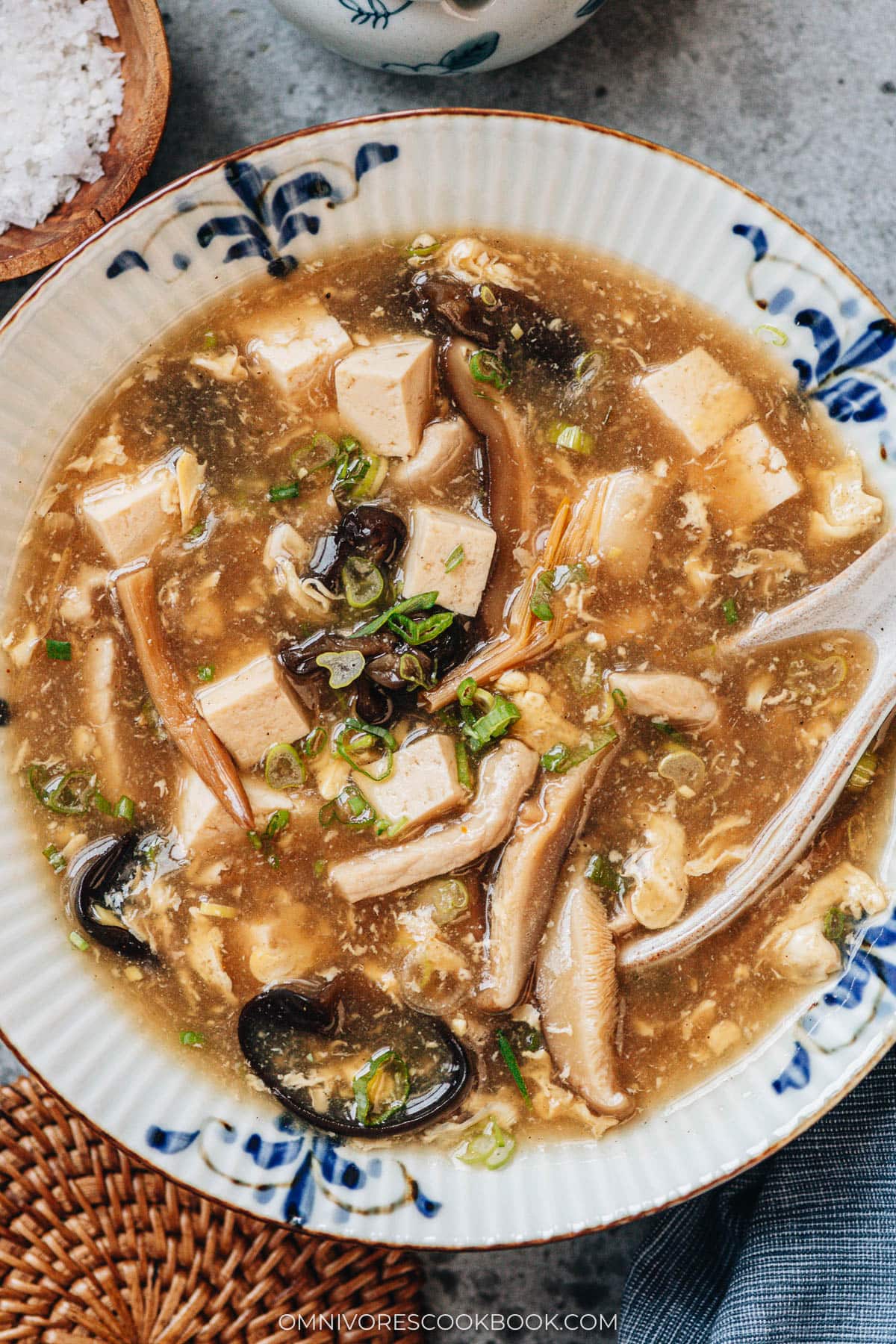
Hot and sour soup is an authentic Chinese soup with a long history, built around a spicy and sour broth filled with mushrooms, tofu, and silky eggs that is warming, satisfying, and savory. I can assure you my recipe is not Western Chinese takeout or a watered down version, but a home style soup, like my egg drop soup that brings restaurant flavor into my own kitchen.
I love how this recipe comes together nicely because every ingredient I use has a clear role, from the mushrooms adding earthiness to the tofu bringing softness and the eggs creating a silky texture I love. If you have been following me for a while, you know I grew up eating bowls of soup like this with my family, so adding this restaurant style soup to my collection of authentic Chinese soup recipes was really important to me.
After years of cooking Chinese food for my family and guiding home cooks, this hot and sour soup has become one of my favorites because it is ready in just 30 minutes, if you soak your dried ingredients in advance. In this post, I walk you through each step and share simple ingredient swaps so it stays easy, flexible, and perfect for busy days at home.
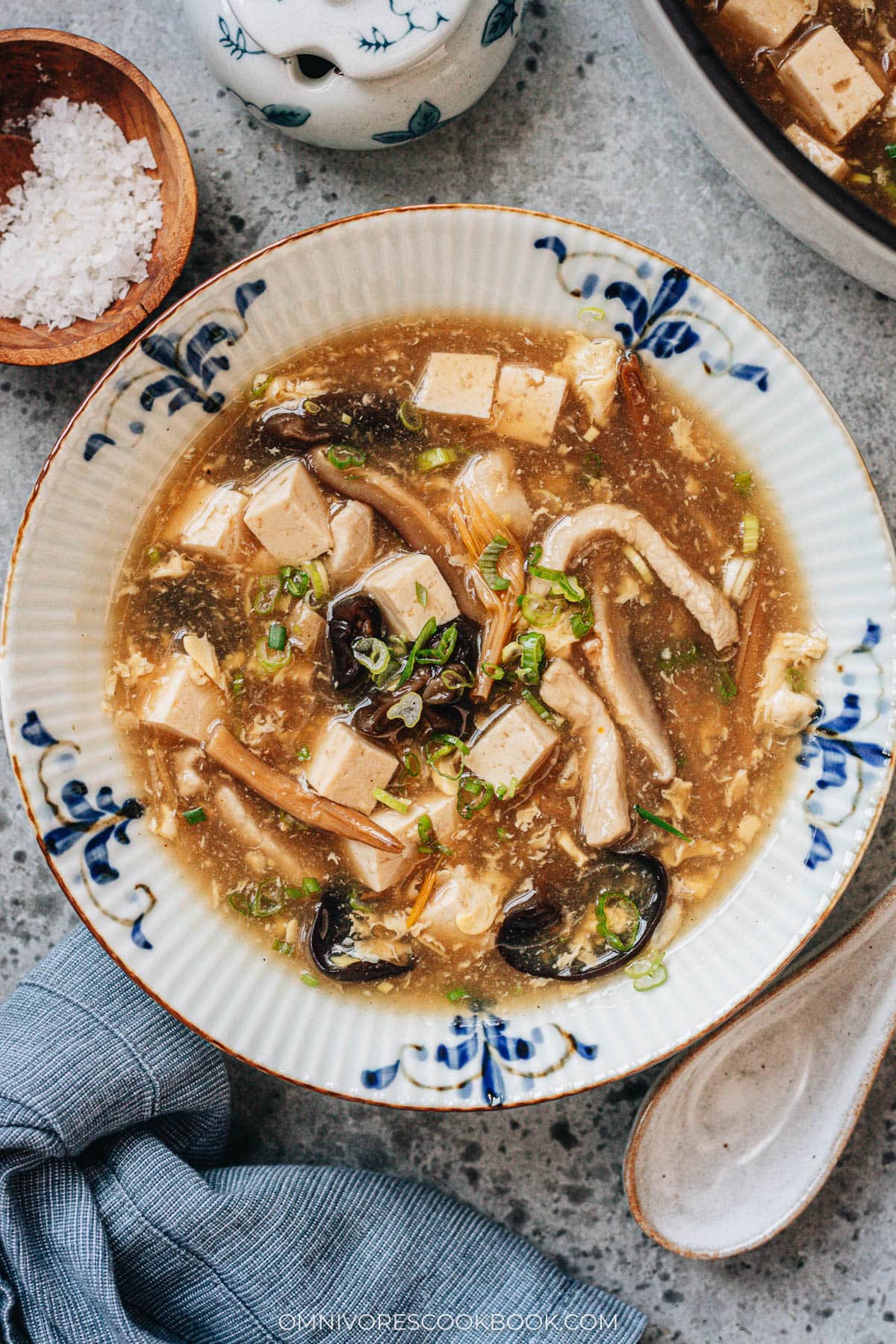
Ingredients
Since my goal was to create a proper restaurant style hot and sour soup recipe, I use all the ingredients listed below, but the good news is that you can easily substitute them with my recommendations and still enjoy a comforting bowl of soup at home.
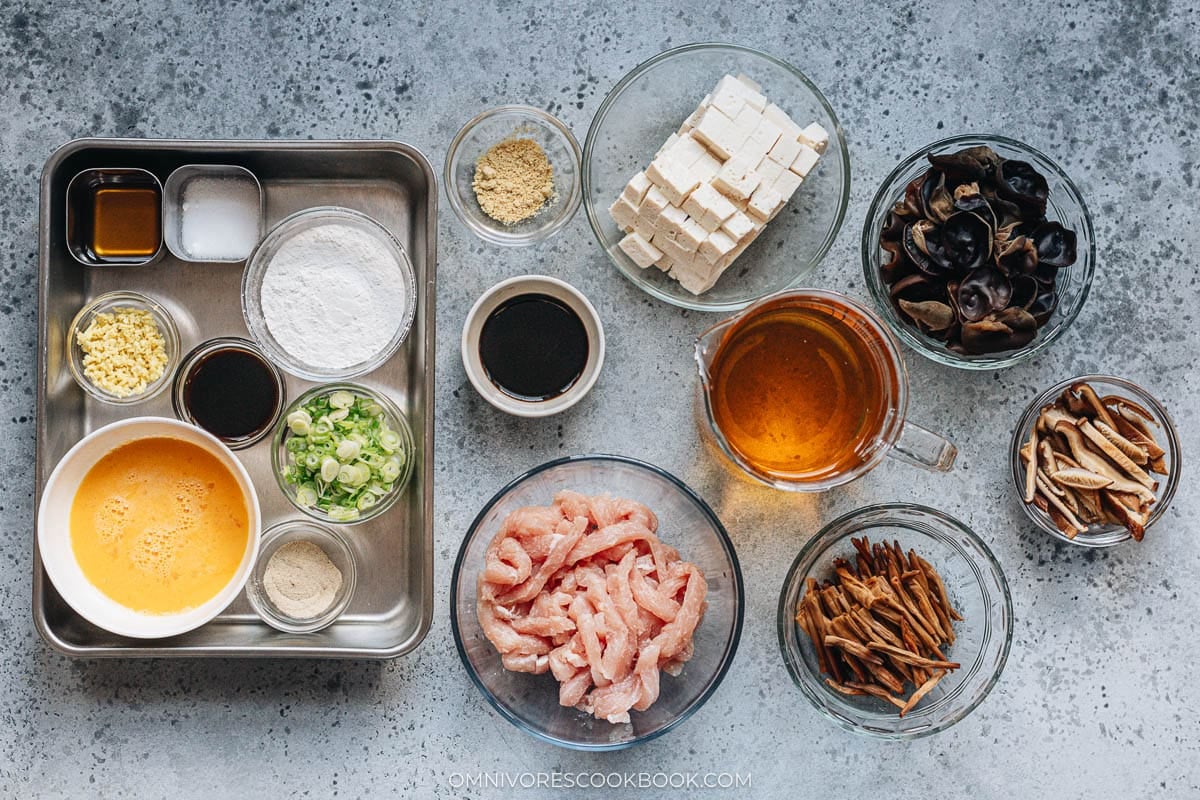
The soup base
Top key ingredients: vinegar and pepper
I use Chinkiang vinegar and white pepper to create the classic hot and sour balance that comes from a Northern Chinese style soup I ate growing up. These two ingredients define the character of the soup.
- Protein: I use pork tenderloin most often, but chicken breast works just as well.
- Aromatics: I cook ginger and green onions first to build a savory base.
- Seasonings: I rely on salt and cornstarch to season and lightly thicken the broth.
- Broth and soaking liquid: I use chicken stock along with lily flower soaking liquid.
- Tofu: I use firm tofu so it stays firm while cooking, but you can also use soft or medium tofu for its nice silky texture.
- Soy sauce and wine: I add light soy sauce and Shaoxing wine for savory flavor.
- Eggs: I pour in beaten eggs at the end to create silky ribbons. This gives the soup its signature texture.
- Finishing oils: I finish with toasted sesame oil, but I also recommend chili oil. Either one adds a final layer of flavor to the bowl.
Dried ingredients
My recipe uses a few dried ingredients listed below that may require a trip to an Asian market or an online order, and they are important for creating authentic flavor. I strongly recommend using them for the best result, but if you prefer to skip them, you still can, just keep in mind the soup will not have the same traditional taste.
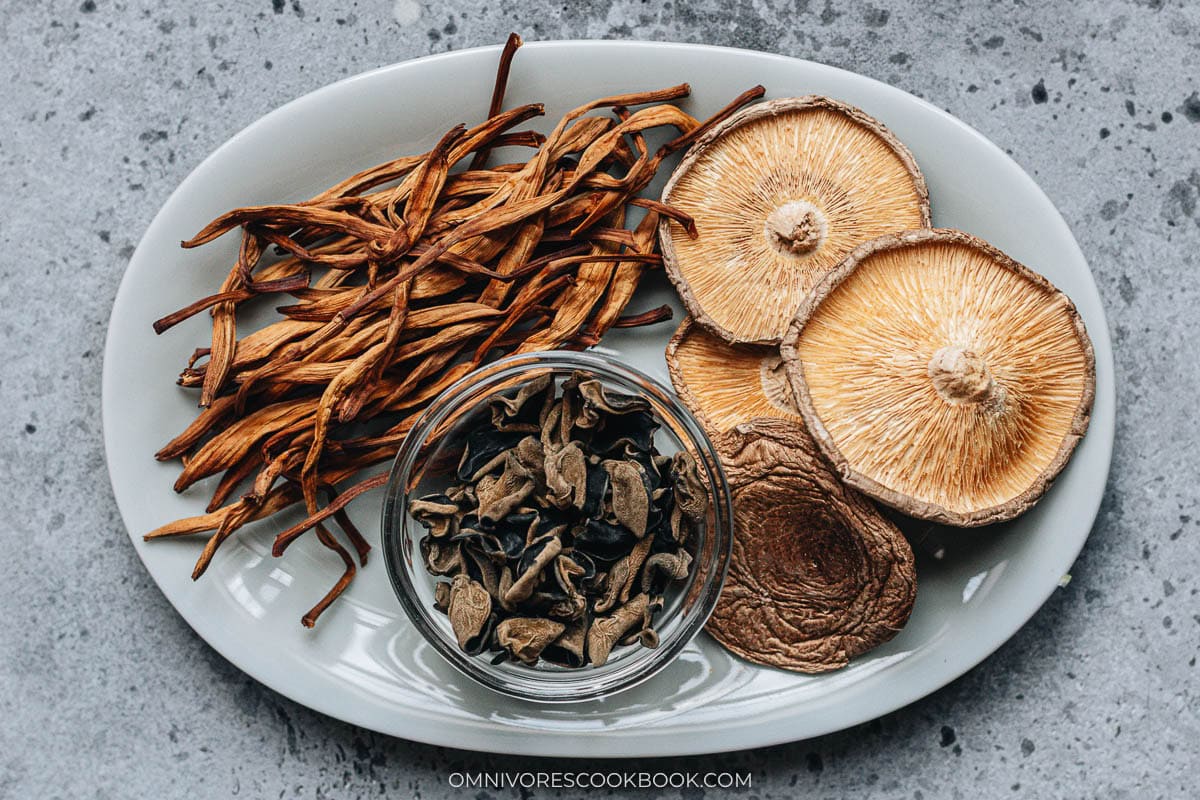
Dried lily flowers: I use dried lily flowers because they add deep savory flavor with earthy and woody notes. I always save the soaking liquid and use it in the soup base.
Dried shiitake mushrooms: I rely on dried shiitake mushrooms for their smoky, concentrated flavor. The soaking liquid is full of umami and works as a natural vegan stock.
Wood ear mushrooms: I add wood ear mushrooms for their mild taste and crunchy texture.
How to make
1. Rehydrate the dried ingredients: Rinse the dried shiitake mushrooms, dried wood ear mushrooms, and dried lily flowers under running water. Place each ingredient in a separate bowl, cover with warm water, and soak for 30 minutes to 1 hour until tender.
The best way to rehydrate dried ingredients
When I plan to make my soup, I usually soak the dried ingredients in cold tap water a few hours ahead when I can. It takes longer to soak if using cold water, but the ingredients rehydrate without losing their fragrance. When I’m short on time, I use lukewarm water that is about skin temperature or a little hotter if I want to speed up things. But remember, do not use boiling water or very hot water for soaking, since it slightly cooks the ingredients and cause them to lose a lot of flavor.
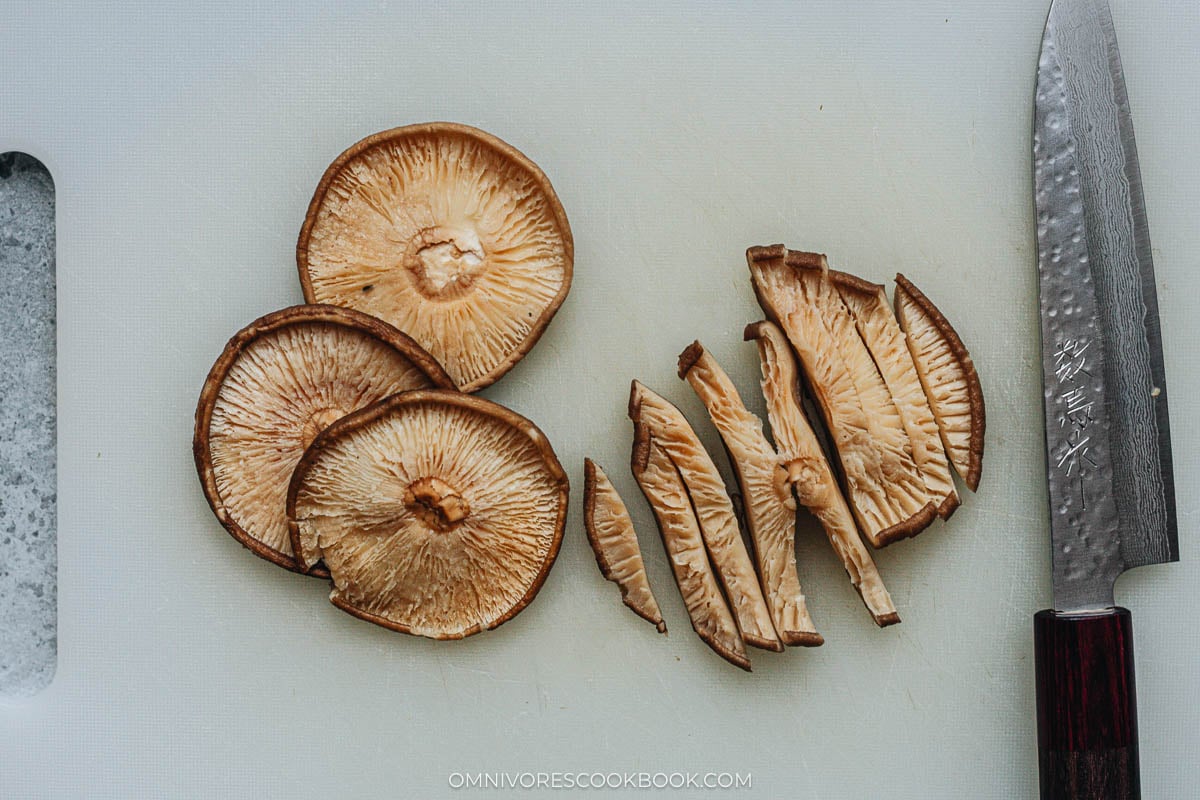
2. Prepare the mushrooms: Slice the rehydrated shiitake mushrooms into thin strips. If your mushroom comes with the stem, remove and discard the stem because it’s very chewy.
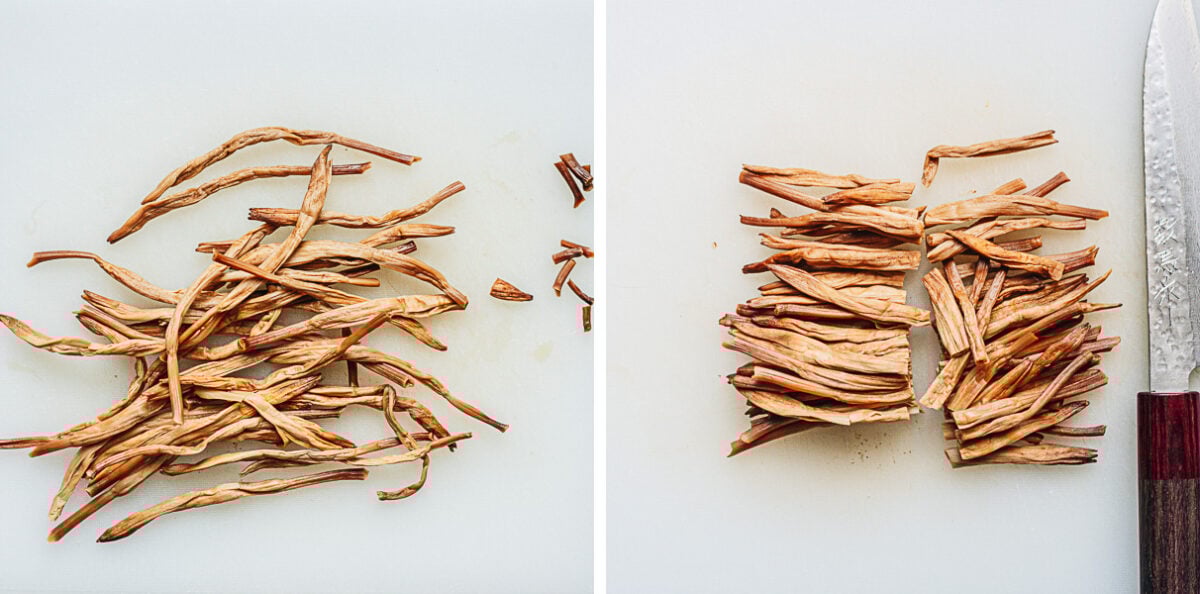
3. Handle the lily flowers: Trim and discard the tough ends of the lily flowers, then cut them in half lengthwise. Reserve 2 cups of the soaking water for the soup.
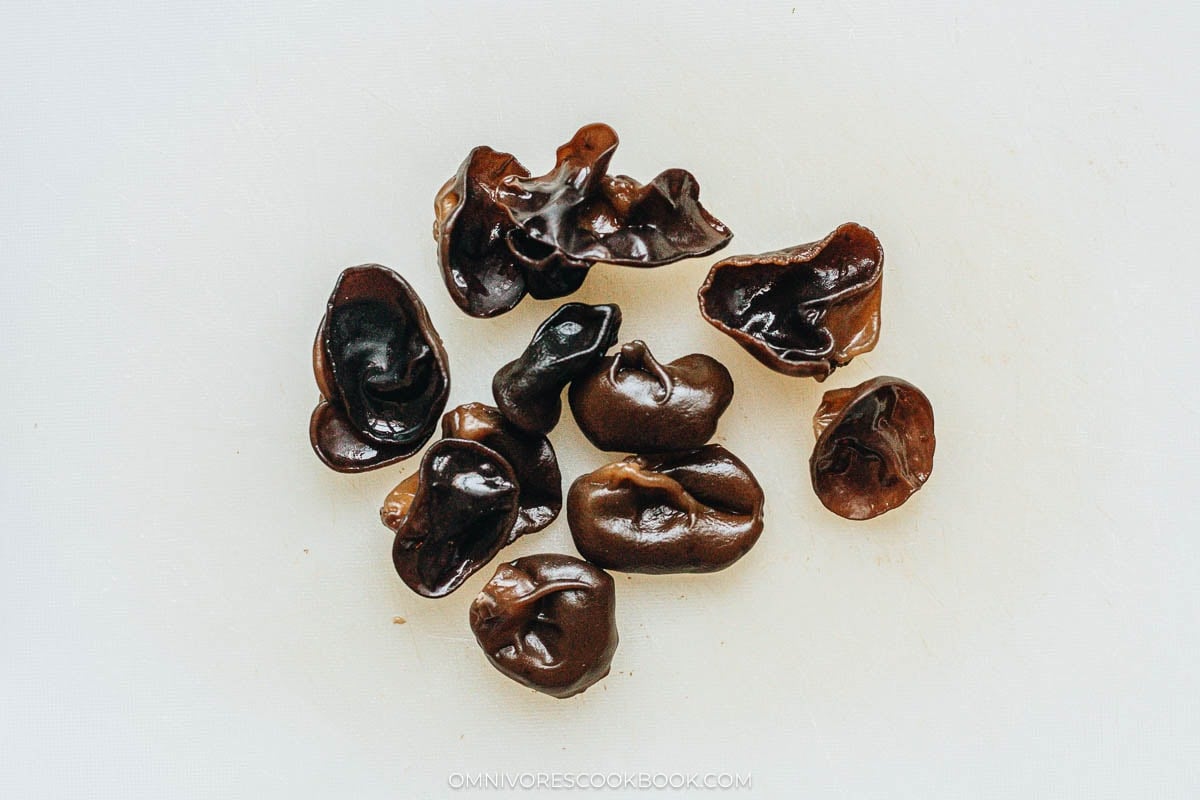
4. Cut the wood ear mushrooms: Remove any tough ends from the wood ear mushrooms, then chop them into bite sized pieces.
5. Marinate the pork: Combine the pork, Shaoxing wine, salt, and cornstarch in a bowl. Mix well by hand and marinate for 10 to 15 minutes.
6. Mix the vinegar base: In a small bowl, combine the Chinkiang vinegar and white pepper. Stir until the pepper is fully dissolved, then set aside.
7. Build the soup base: Add the chicken stock, reserved lily flower soaking water, ginger, and the white parts of the green onion to a pot and heat over medium high heat. Add the rehydrated wood ear mushrooms, shiitake mushrooms, lily flowers, and tofu, cook until the soup reaches a simmer, then add the soy sauce and reduce the heat to medium low.
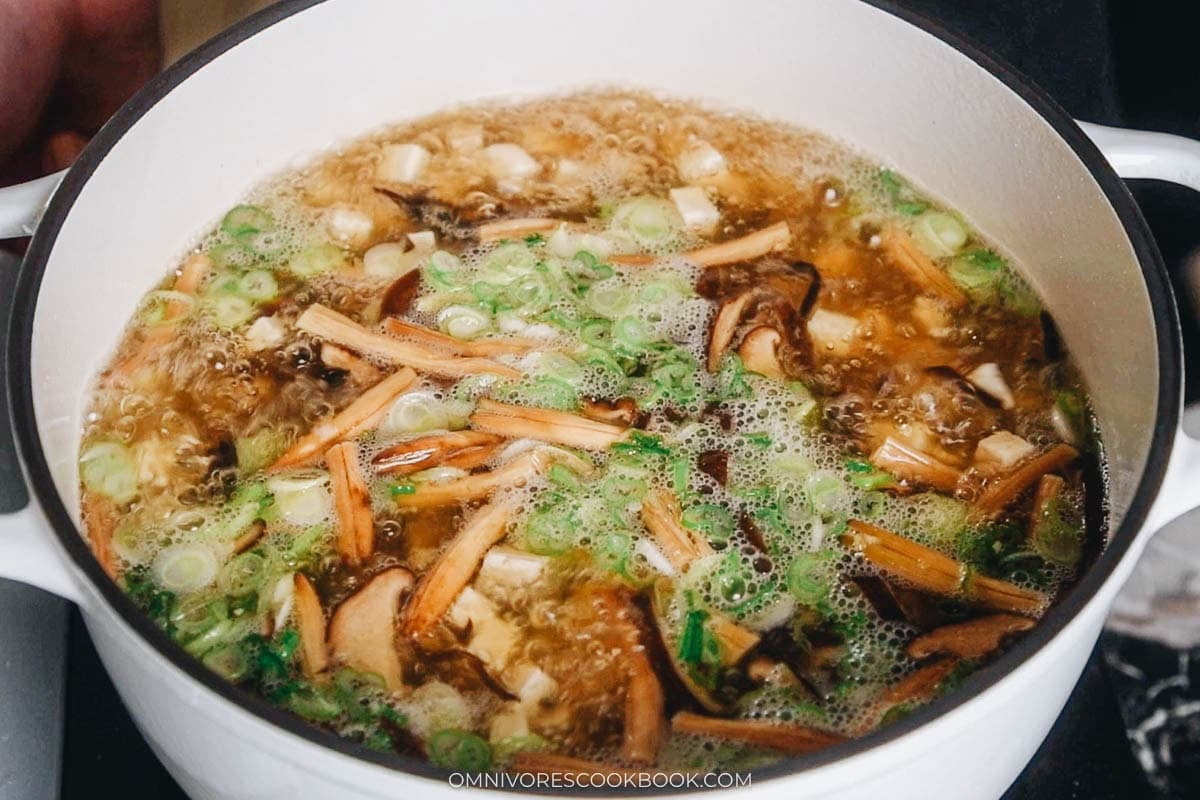
8. Thicken the soup: In a small bowl, mix the cornstarch with 1 quarter cup of water until fully dissolved. Slowly swirl the slurry into the soup while stirring, then continue stirring until the soup thickens.
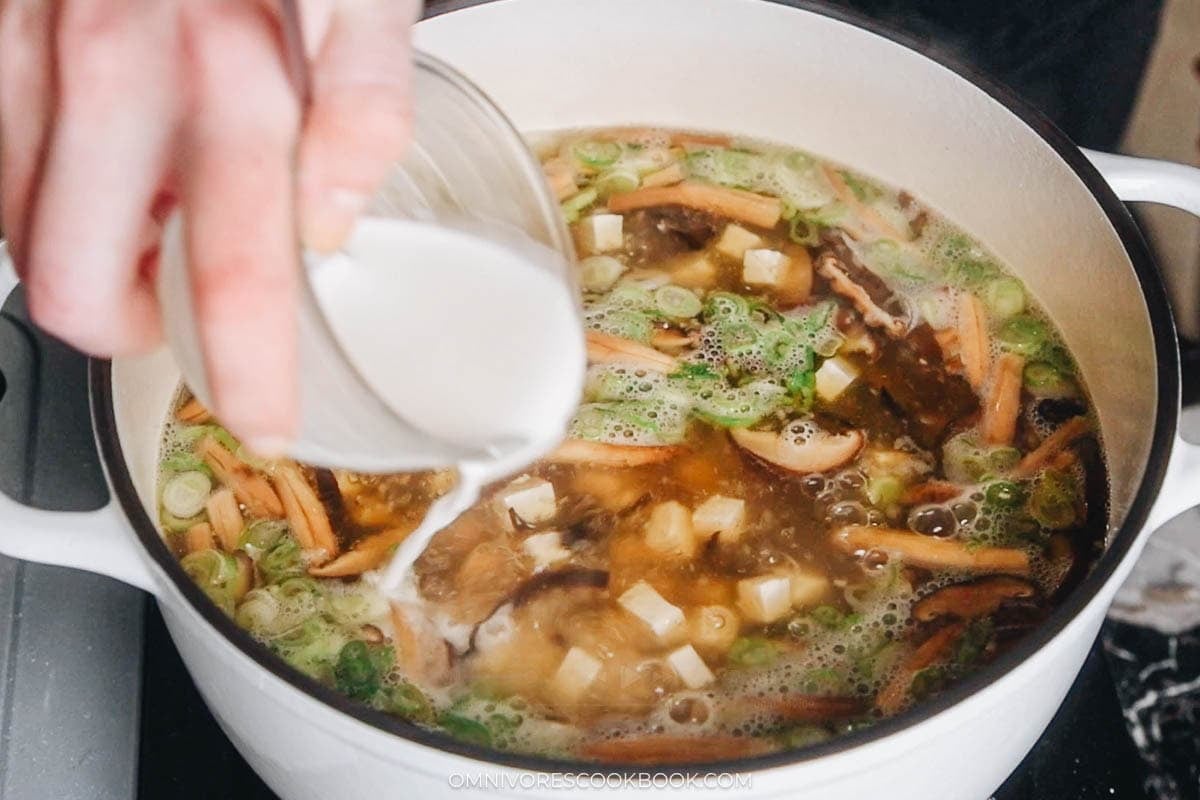
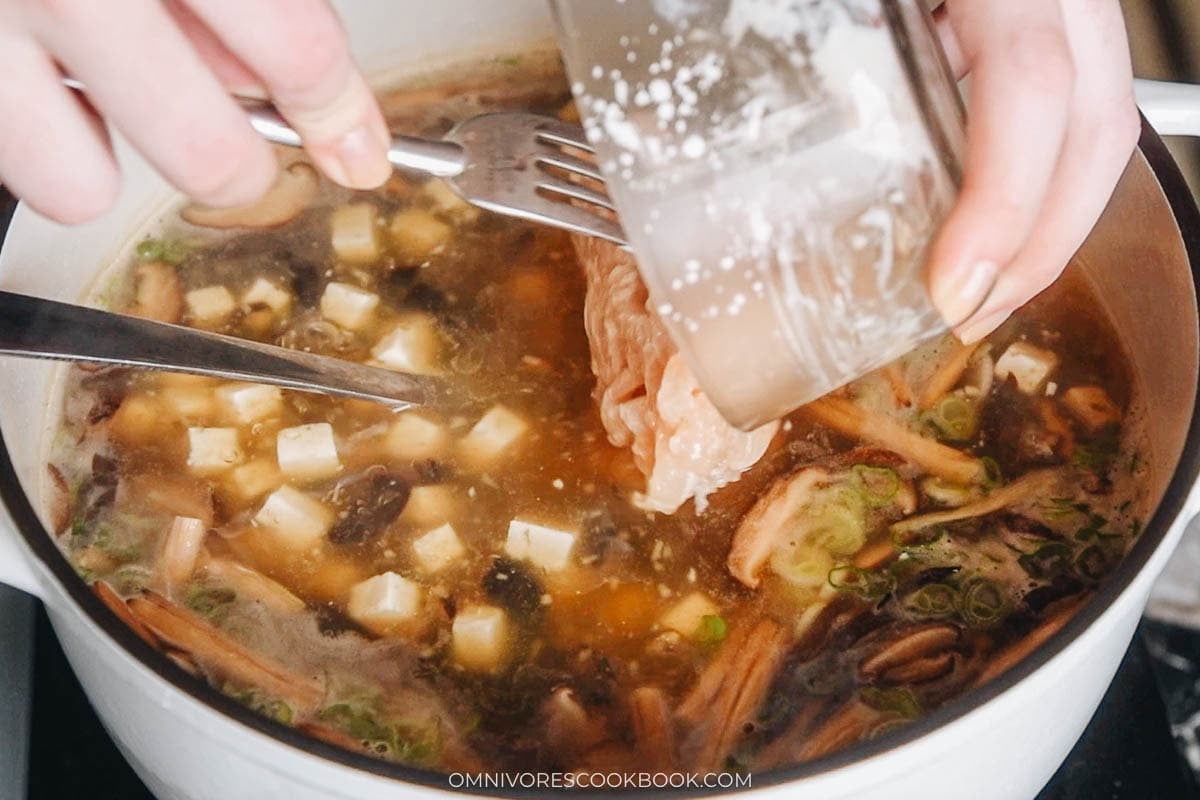
9. Cook the pork: Add the marinated pork to the soup, stirring several times to separate the strips and keep them from sticking together.
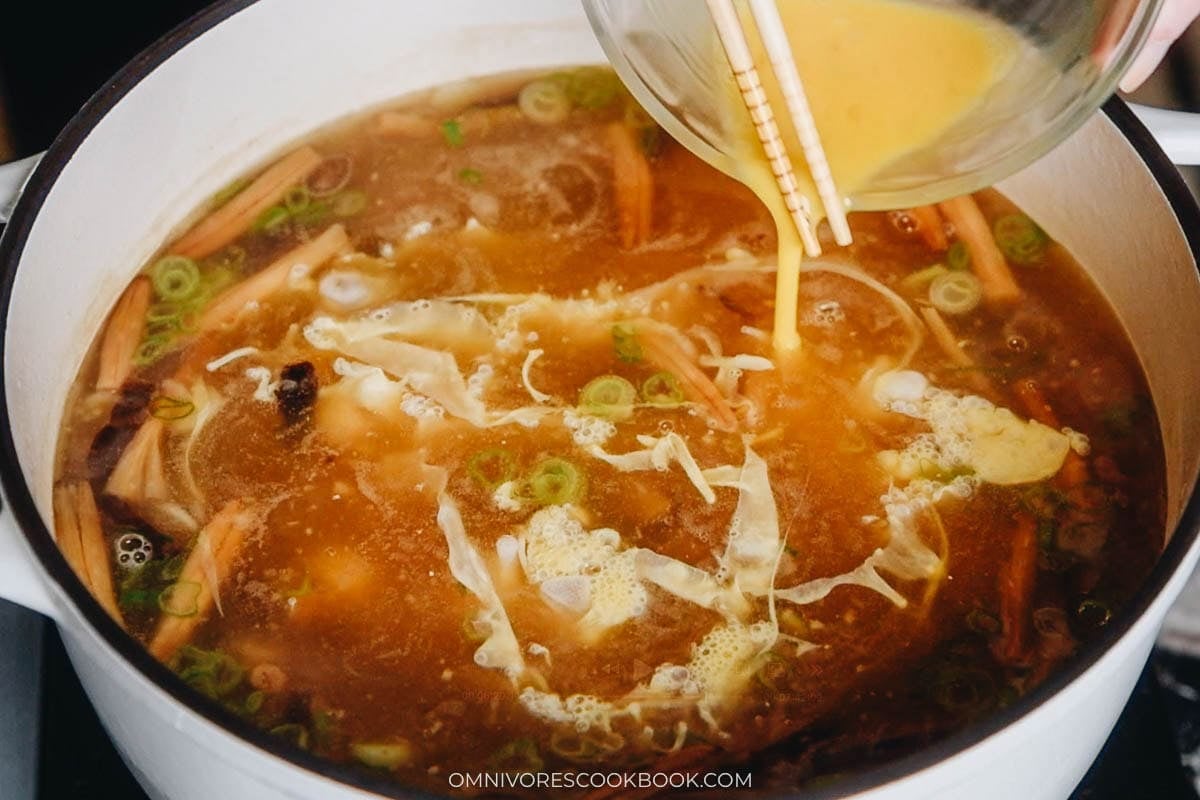
10. Add the eggs: Slowly drizzle in the beaten egg while stirring the soup in a circular motion using chopsticks or a fork. Let the egg sit for about 20 seconds to set, then stir lightly to separate the egg ribbons.
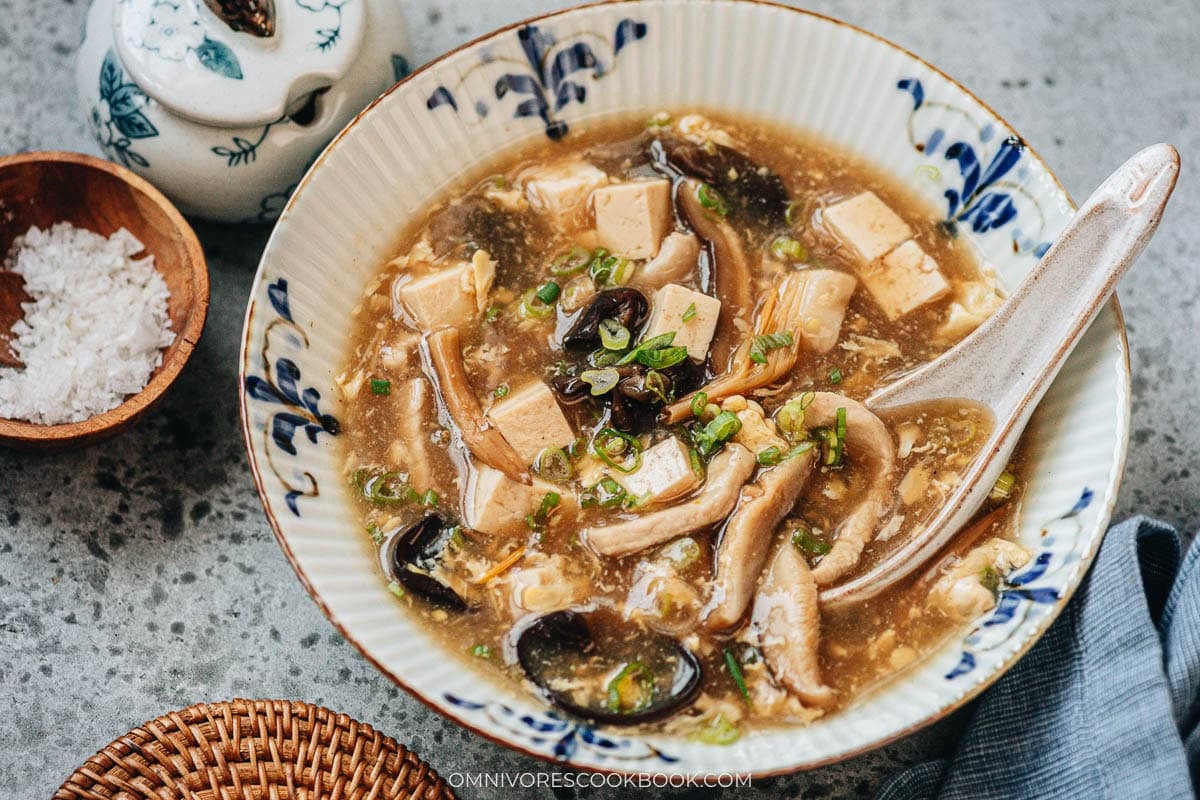
11. Finish the soup: Turn off the heat and add the vinegar and pepper mixture, then stir to combine. Season with salt to taste, garnish with the green parts of the green onion, drizzle with sesame oil, give the soup a final stir, and serve hot.
My cooking notes
When making this hot and sour soup, it is important to add the Chinkiang vinegar and white pepper at the very end of cooking. If they are added too early, the vinegar loses its clean sourness as it evaporates, and the white pepper can turn bitter from prolonged heat, which throws off the balance of the soup. Trust me, you don’t want that!
Other tips to consider:
- Use dried ingredients when possible: Dried lily flowers, dried shiitake mushrooms, and wood ear mushrooms add depth that fresh ingredients can not match.
- Slice everything same size: Cutting the mushrooms, tofu, and pork into similar sizes helps them cook at the same rate.
- Thicken the soup slowly: I swirl the cornstarch slurry in gradually while stirring. This prevents lumps and gives the soup a smooth glossy texture.
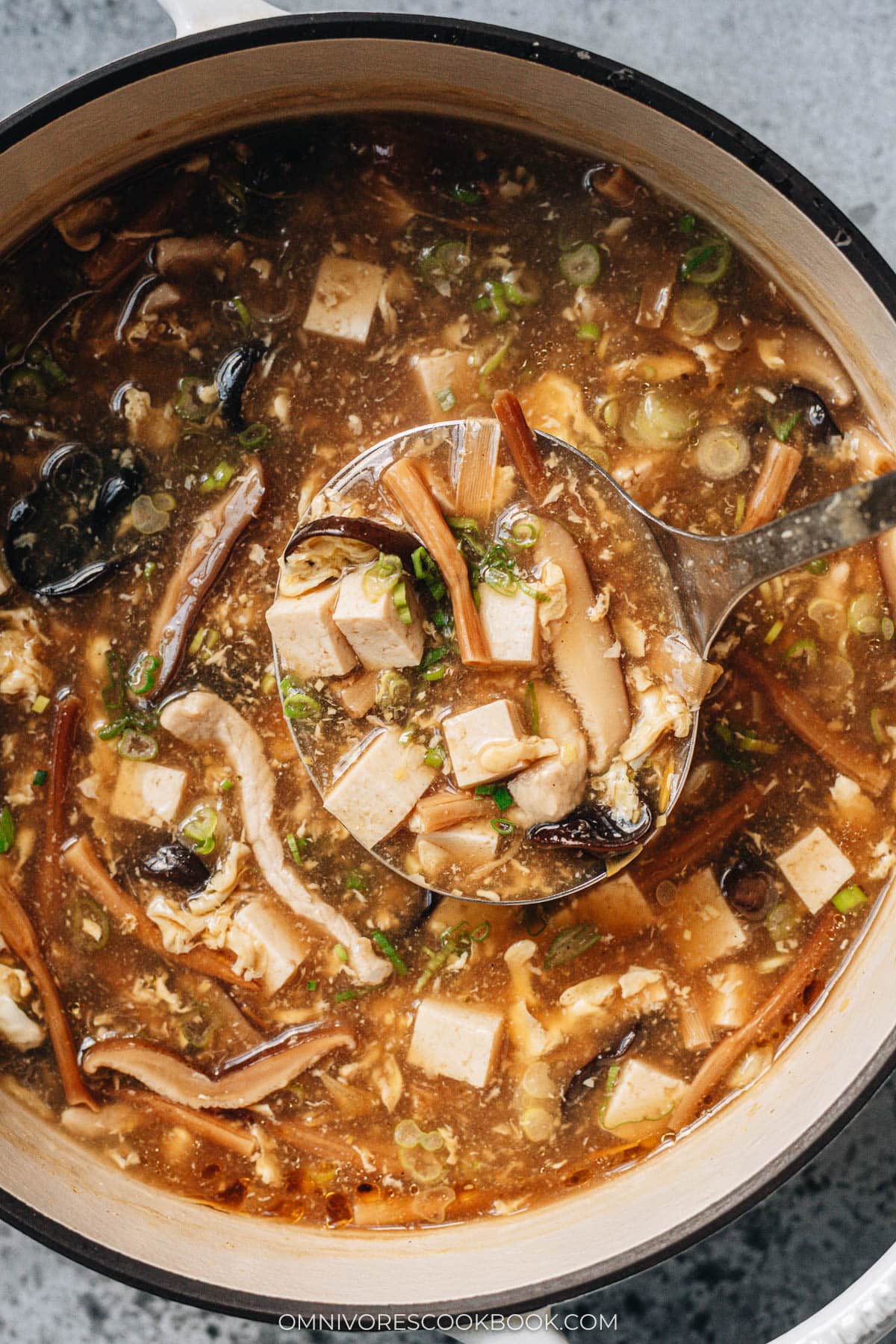
How to serve
At home, I serve this hot and sour soup the authentic way, straight from the pot and shared at the table alongside any Chinese rice recipes. When my family wants a fuller spread, I pair it with other main dishes such as Lion’s Head Meatballs or Braised Chicken with Mushroom, which keeps the meal comforting and very close to how we enjoy it in Chinese homes.
You can also customize this soup to suit your own palate by adjusting the sourness or heat and swapping proteins like chicken for pork or shrimp. If you enjoy mixing cuisines, it pairs nicely with Western style dishes like roasted vegetables or even a simple Chinese noodle recipe from my collection, making it easy to fit into your everyday meals while keeping the soup as the star.
Frequently asked questions
Why do you add pork after thickening?
Adding the pork after the soup thickens gives each strip a chance to cook at the same pace in the hot broth without overcooking. This step also keeps the meat suspended in the soup, so it stays tender, separate, and well distributed instead of sinking to the bottom or clumping together.
How do I keep the soup from turning cloudy?
When I add the eggs, I drizzle them slowly and make sure let them set before stirring in one direction, then stop once the ribbons form. This keeps the broth clear and gives the soup that classic restaurant look. If stirring too early when the eggs are still too runny, it will cloud the soup.
How thick should hot and sour soup be?
I like the broth thick enough to coat a spoon but still light and drinkable. Swirling in the cornstarch slurry a little at a time helps control the texture without over thickening.
Chinese Cooking Made Easy
Are you new to this website? This free email series is a great place to start. I’ll walk you through a few of my most popular recipes and show you how and why they work. You’ll quickly start to cook better Chinese food in your own kitchen.
Watch video

Authentic Hot and Sour Soup (酸辣汤)
Ingredients
Rehydrate (*Footnote 1)
- 4 dried shiitake mushrooms
- 1/4 cup dried woodear mushrooms
- 1 handful dried lily flowers
Pork (*Footnote 2)
- 1/2 lb pork loin (or chicken breast) , cut into thin strips
- 1/2 tablespoon Shaoxing wine
- 1/4 teaspoon salt
- 1/2 tablespoon cornstarch
Soup
- 2 teaspoons minced ginger
- 2 green onions , sliced, white and green parts divided
- 2 tablespoons Chinkiang vinegar
- 1 teaspoon white pepper powder (or 1/2 teaspoon white pepper powder for a less spicy dish)
- 4 cups chicken stock (*Footnote 3)
- 2 cups lily flower soaking liquid
- 1/2 block firm tofu (8 oz / 227 g) , diced
- 1 tablespoon light soy sauce (or soy sauce)
- 3 tablespoons cornstarch
- 2 eggs , beaten
- 1 teaspoon salt , or to taste
- 1 teaspoon toasted sesame oil (or chili oil) (*Footnote 4)
Instructions
- Rehydrate dried ingredients: Gently rinse dried shiitake mushrooms, dried wood ear mushrooms, and lily flowers with tap water. Soak each of them with 2 cups warm water (*Footnote 5) in three big bowls. Rehydrate for 30 minutes to 1 hour, until tender. Slice mushrooms into strips. Snip off the tough ends of lily flowers and discard. Halve the lily flowers lengthwise. Remove tough ends of wood ear mushrooms, then chop into bite-sized pieces. Reserve 2 cups of the marinating water from lily flower.
- Marinate pork: Combine pork, Shaoxing wine, salt and cornstarch in a bowl. Mix well by hand. Marinate for 10 to 15 minutes.
- Mix sauce: Add Chinkiang vinegar and white pepper into a small bowl. Mix well until the white pepper is completely dissolved.
- Make soup: Add chicken stock, lily flower soaking water, ginger, and green onion white part into a pot and heat over medium-high heat. Add rehydrated wood ear mushrooms, shiitake mushrooms, lily flowers, and tofu to the pot. Cook until bringing to a simmer. Add soy sauce and turn to medium-low heat.
- Thicken the soup: Mix the cornstarch with 1/4 cup of water in a bowl until cornstarch is fully dissolved. Slowly swirl the cornstarch slurry into the soup. Stir to thicken the soup.
- Cook the pork: Add the pork from step one into the soup, stirring several times to prevent the pork strips from sticking together.
- Make egg ribbons: Slowly swirl in the beaten egg, using a pair of chopsticks or a fork against the bowl so the egg slowly drizzle into the soup to form ribbons. The egg should be scattered and not clotted. Let the eggs sit for 20 seconds to set, then gently stir to break up the eggs.
- Season the soup: Turn off the heat. Add the vinegar and pepper mixture and stir to mix well. Add salt and taste the soup to adjust flavor. Garnish with green onion green part and drizzle with sesame oil. Give it a final stir. Serve hot.
Notes
- If you do not have these dry ingredients, you can use half a pound of fresh mushrooms instead. If not using dry ingredients, use 6 cups chicken stock instead of 4 cups stock + 2 cups soaking liquid.
- For a vegetarian hot and sour soup, check out this recipe.
- Alternatively, you can also use 4 cups water plus 1 teaspoon chicken bouillon to replace the chicken stock. In this case, reduce the salt since chicken bouillon is quite salty.
- If you use less white pepper, you can use some chili oil instead of sesame oil. There are different ways to add spiciness to hot and sour soup, and some restaurants use chili oil for another layer of flavor.
- Do not use boiling water, since it slightly “cook” the dried ingredients which cause them to lose flavor. Ideally, you should use cold water to hydrate the ingredients for 1 to 2 hours if time allows. But warm water speed up this process without causing the ingredients to lose too much flavor.
Nutrition

Did you make this recipe?
I’d love to hear how it turned out for you! Please take a moment to leave a 5-star rating ⭐️ and share your thoughts in the comments further down the page. It really helps others discover the recipe too.
h
hi maggie great recipe. one question – if using the soaking water for the dried shiitakes and lilies, how much water do you add. still 6 cups?
Maggie
Yes, still 6 cups. You probably don’t have enough soaking water, so just add all the soaking water you can then use regular water for the rest.
Happy cooking and hope your soup turns out great!
Fred Rickson
Don’t substitute for the Chinkiang vinegar or white pepper. And, rather than cornstarch, I add a handful of broken, dried noodles. You get the starch thickener, and a bit of complexity.
Clinton
Hi Maggie
Really looking forward to trying this.
Is white pepper powder different from what we just call white pepper?
Cheers
Clinton
Maggie
Hi Clinton, I’m pretty sure it’s the same thing. I mention powder because sometimes people do buy the whole white peppers.
Happy cooking and hope your soup turns out great 🙂
Clinton
The soup tasted fantastic! Thanks. It’s particularly impressive because the recipe is so simple. I’ve shared it with a couple of my vegetarian friends too.
Jess
Hi! This recipe looks great and am looking forward to trying it. I just need to know what rice vinegar did you use. The one I found at my local store was white but I noticed you use black. Would it still work the same?
Maggie
Hi Jess, I used Chinkiang vinegar, which is also called Chinese black vinegar. I highly recommend using this type because the flavor is very different from the light rice vinegar. You can find the vinegar on Amazon or on The Mala Market.
Sandy
Glad I read the other questions before I asked the same question. Love my Black Vinegar, just a little bit adds what had been missing from my Chinese dishes. I have a great Asian Market down the street and have always found any ingredient your recipes called for.
Kristen
IS it possible to make this vegetarian?
Katie
She mentions in her recipe that to make it vegetarian, just omit the meat. And she says elsewhere that the meat is just to add texture (and nutrition, which is debatable), but there are plenty of other elements that add texture, so I think you should definitely go for it!
Maggie
Hi Kristen, I do have a vegetarian hot and sour soup recipe here: https://omnivorescookbook.com/vegetarian-hot-and-sour-soup/
Happy cooking!
Cathryn
I really love your hot and sour soup but am scared to make it
Maggie
Hi Cathryn, I have another vegetarian hout and sour soup recipe that might be slightly easier to make: https://omnivorescookbook.com/vegetarian-hot-and-sour-soup/
I hope you’ll try it out some time because it’s really delicous 🙂
Cathryn
I really love your hot and sour soup
Doris
Thank you! I made this soup today and it was excellent. I’ll definitely make it again!
Maggie
Hi Doris, thanks so much for taking time and leaving a comment! I’m so glad to hear you tried my recipe and enjoyed the dish 🙂
Hope you have a great day!
Stella Luna
Hi very nice recipe but I have a question if I didn’t want to use wine can I substitute it with vinegar?
Thank you
Maggie
Hi Stella, you can replace the wine with water, broth, or oil. Or skip the salt and use 1 teaspoon soy sauce instead.
Shaoxing wine is usually in China to eliminate the gamey flavor from the pork. But I found the meat in the US is less gamey, so it’s OK to skip the wine.
Happy cooking and hope your soup turns out great 🙂
Melora Rouse
This may seem obvious, but I am a novice cook. I am supplying for soup for my son’s teachers and your recipe was the one that I signed up to bring. Is it okay to leave this soup in the crockpot on warm so the teachers will have it warm for their lunch?
Maggie
Hi Melora, yes you can keep the soup in crockpot. The cornstarch slurry will start losing thickening power if you keep the soup heated for too long time. But I think it should be OK as long as you make the soup the same day you serve it.
Happy cooking and I hope the teachers will enjoy the dish!
Eva
My husband and I loved the soup. I saw 1 teaspoon white pepper in the ingredients and I thought that was an awful lot. I put in 1/2 teaspoon and it was right at the edge of being too hot for us. Had I put in the whole teaspoon we would have had to call the fire department LOL.
Maggie
Hi Eva, I’m glad to hear your soup turned out not too spicy. My family loves very spicy food and we might have added too much white spice powder!
Jasmine Rice
Hi Maggie. From the website Pantry section I learned about different types of rice vinegar. For the hot and sour soup, which type of rice vinegar you prefer? I noticed that you used a black vinegar but was it the Chinkiang or the Shanxi Extra Aged vinegar? Thanks Maggie. Your website is such a great resource for my Chinese cooking . Thank you!
ColinR
This was spot on. It was interesting to see how you can make a satisfying stock without much meat or stock cubes.
Maggie
Hi Colin, I’m glad to see you like this recipe! Back in Beijing, my mom served soup almost everyday and most of the time she didn’t use a stock. The hot and sour soup is definitely one of our favorites. The other soup without using stock: soak some dried shrimps and dried scallops for 30 minutes, and use them to make a seafood clean broth. We usually add some napa cabbage (or other greens) with tofu. The soup was quite light, but flavorful.
ColinR
Thanks Maggie; next time I go to the Chinese supermarket, I’ll look out for the dried shrimps and scallops, and I’ll look forwards to trying them. I’ll also need another bag of shiitake; I have chicken stock in the freezer, but it is quite precious stuff and I can’t use it every time.
Maggie
I’m glad to help! The homemade chicken stock is precious in our house too. I’ve been trying a new thing lately, by using a bit pancetta (might able to be replaced with bacon) to make a pork soup. I will share the recipe soon. By the way, have you ever tried miso soup? It’s not Chinese food, but we love it. So simple to make and does not require using a stock.
ColinR
“Miso”, that can go on the list too!
Maggie
Definitely! It’s so easy to use, stay in fridge forever, and go well with any veggies and protein!
Pamela
Hi, I love Hot and Sour Soup and I will try this. You’re clear information on how to make a flavorful broth with those dry ingredients is so true. Those ingredients make a wonderful broth.
I am in Japan and I can add a note to the MISO SOUP question, here in Japan they would use a quickly made broth made from kelp and or bonito flakes. Making Miso Soup with just hot water is unheard of. Also, instant/powdered kelp/bonito is available too, making soup making easier.
Kash
You should try some white hot and sour soup with hot oil. Do you not know that the adding of soy sauce is relatively new to this very old soup. By far the white soup is hands down the best I have ever had!
Jim
Kash
Do you have a recipe for the White Hot and Sour soup to share or is it just omitting the soy sauce that makes it white/light?
Maggie
Thanks for a great recipe. Made it many times and it’s always delicious
Annamaria @ Bakewell Junction
My hubby loves this soup. He will flip when I make it for him. Pinned.
Annamaria
Abby
Hello Maggie! Where do you purchase your woodear mushrooms? Thank you!
Maggie
You can easily find them in Asian market, and also on Amazon: https://amzn.to/33BqL3b
Vivian
They’re also called black fungus.
Michelle @ Healthy Recipe Ecstasy
This soup would be amazing right now because it’s so cold in DC! I love that you included a video – it’s so good!
Michelle @ Vitamin Sunshine
My fiance loves hot and sour soup– I am going to have to try to make this for him! I have to say– your version looks way better than the stuff he orders when we’re out for Chinese 🙂
Thomas
I just cooked a pot of this, and it is delicious! I am impressed that such a rich soup can be made so easily without any pre-made broth. Thanks for sharing the secret.
Maggie
I’m so glad you like the soup and thank you for using my recipe! Yes, it’s a very rich soup without using broth. I cooked this a lot for dinner, since it requires so few ingredients. 🙂
Judit & Corina @Wine Dine
This soup sounds very comforting and delicious Maggie! Every time we visit a Chinese restaurant we order a sweet- sour soup and can’t wait to try it at home soon.Lovely photos and video 🙂
J+C
Maggie
Yep, it’s definitely a comfort food for me, and I made it very often because it’s so easy to cook. Happy cooking! 🙂
Gintare @Gourmantine
I love this soup and I know a few people who’d be smitten if I made it for them!
Maggie
Hi Gintare, thanks for stopping by and commenting! Hope you enjoy this dish. 🙂