
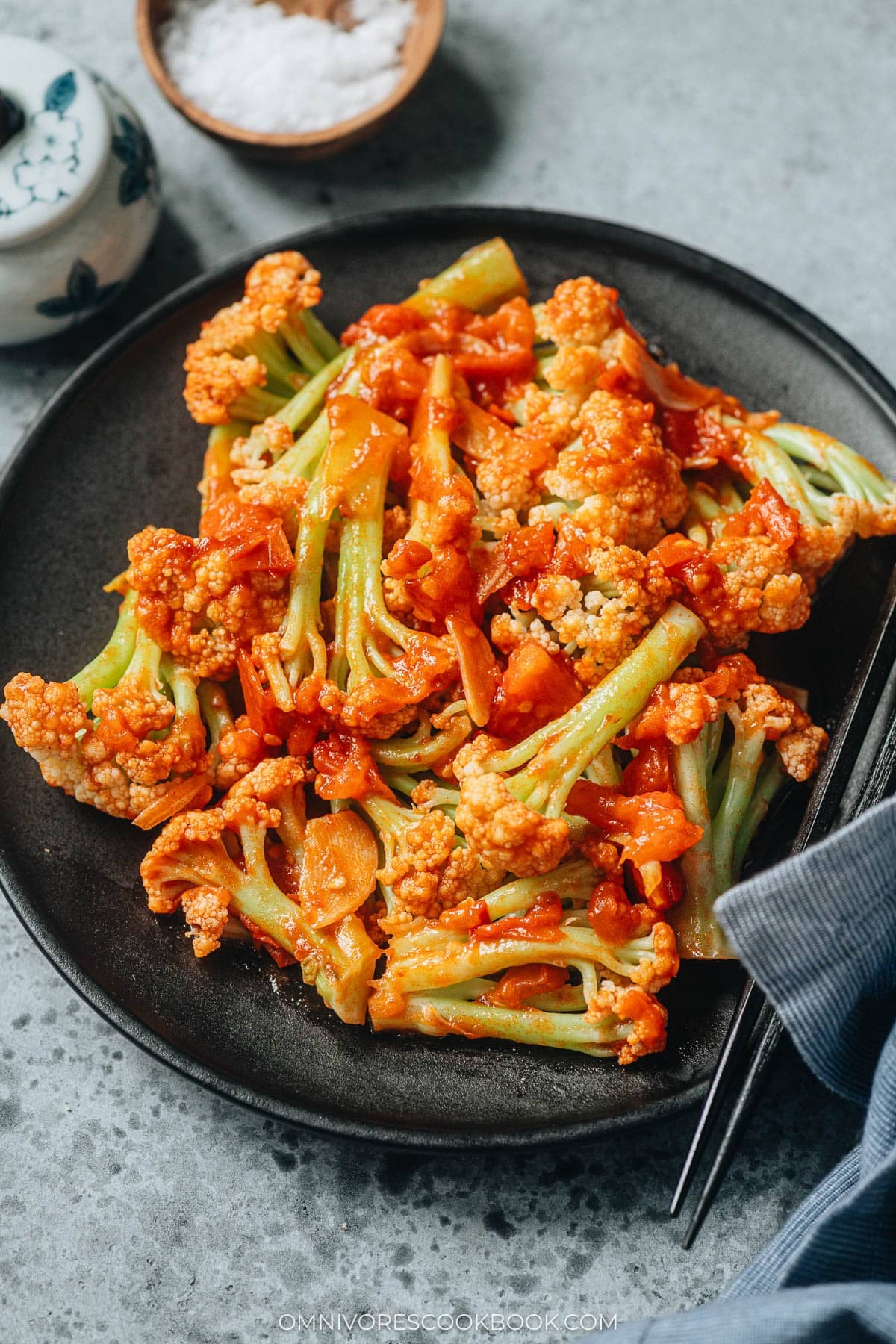
This is a homestyle side dish that lives on the family table next to a protein and a bowl of rice, not a restaurant centerpiece. The cauliflower stays crunchy, the sauce sits sweet and sour against the savory mains, and it shares its tomato pantry with the homestyle classic I grew up with, the tomato and egg stir fry.
The moment I reach for this recipe is when I am halfway through cooking a main and realize the table needs one more vegetable plate. The tomato base does double duty as sauce and another vegetable to add texture, so my dinner will be more nutritious and looks colorful. My son is 2.5 and doesn’t like a dish that tastes very sour, so I added some sugar to the tomato to balance it out so it doesn’t taste too sharp.
In my kitchen the order is short, blanch the florets in boiling water, shock them in cold water, then build a quick tomato pan sauce with garlic, fresh tomato, and tomato paste before folding the cauliflower back in to coat. I can have this meal ready in 20 minutes. Yes, that’s all it takes! Make it once on a weeknight and you will see how a small Chinese side can shift the shape of the whole meal.
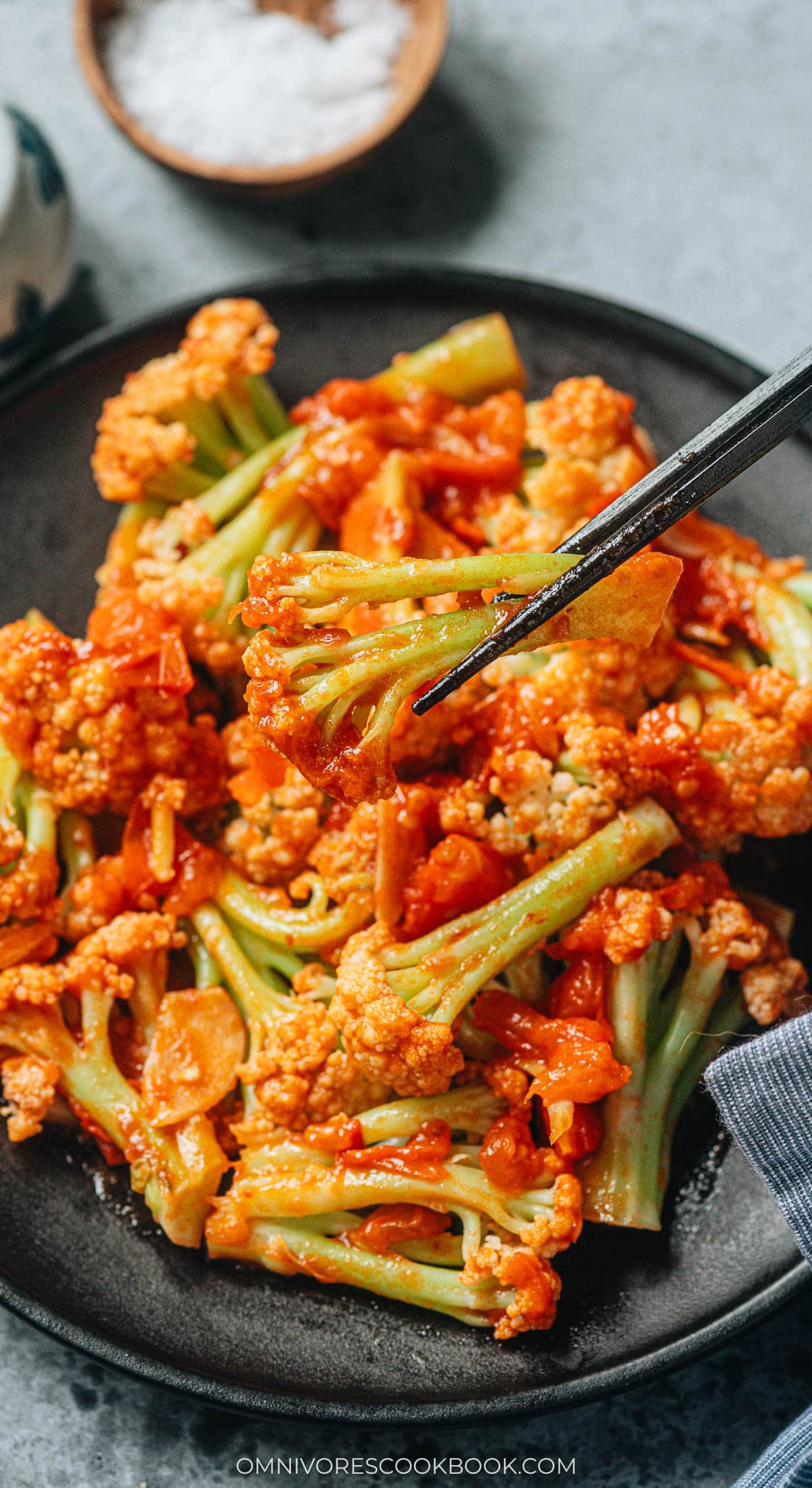
Ingredients
There are only a handful of ingredients here because the work happens in the technique, not the pantry. I group them by what they do in the pan.
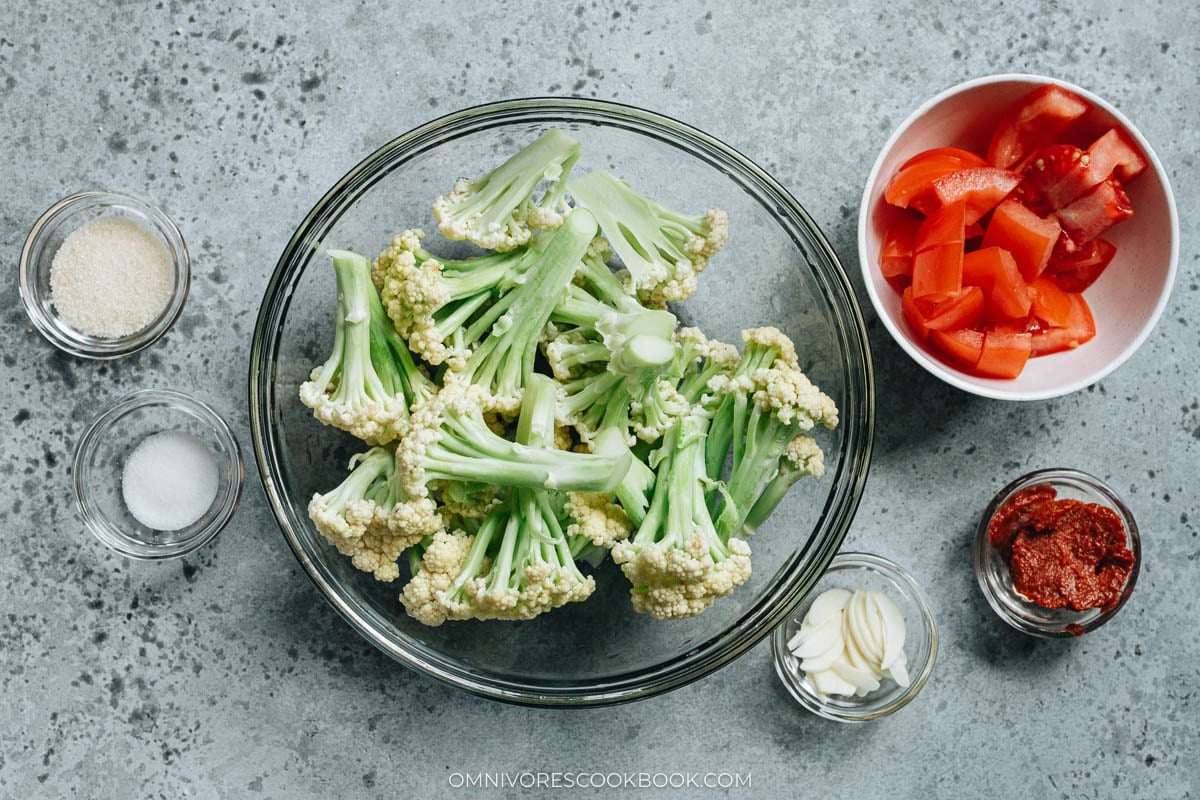
The vegetable: I use Chinese cauliflower, also called sprouting cauliflower or long stem cauliflower, when I can find it at the Asian market. It has longer stems and a chewier texture that holds up against the sauce. Regular Western cauliflower works too, and if I am using it I blanch them until almost cooked through but still taste a little tough, so they won’t fall apart during the stir fry.
Aromatics and fresh tomato: A diced fresh tomato and a couple of cloves of sliced garlic build the savory base. The garlic goes in first to flavor the oil, then the tomato breaks down into the start of the sauce.
Sauce builders: I use tomato paste to add concentrated tomato flavor and depth. Sugar and salt are the finishing touch, balancing the acidity of both tomato forms. When I don’t have tomato paste at home, I simply use some ketchup to replace it. In that case, I usually skip the sugar because ketchup is already sweet.
Oil: Peanut oil is my default for this dish because it carries the garlic well and adds a faint nuttiness. Plain vegetable oil works the same way if peanut oil is not in the pantry.
How to Make
1. Blanch the cauliflower: Bring a large pot of water to a boil. Add the cauliflower florets and cook for 2 minutes, just until the stems are half-tender. The florets should still be firm.
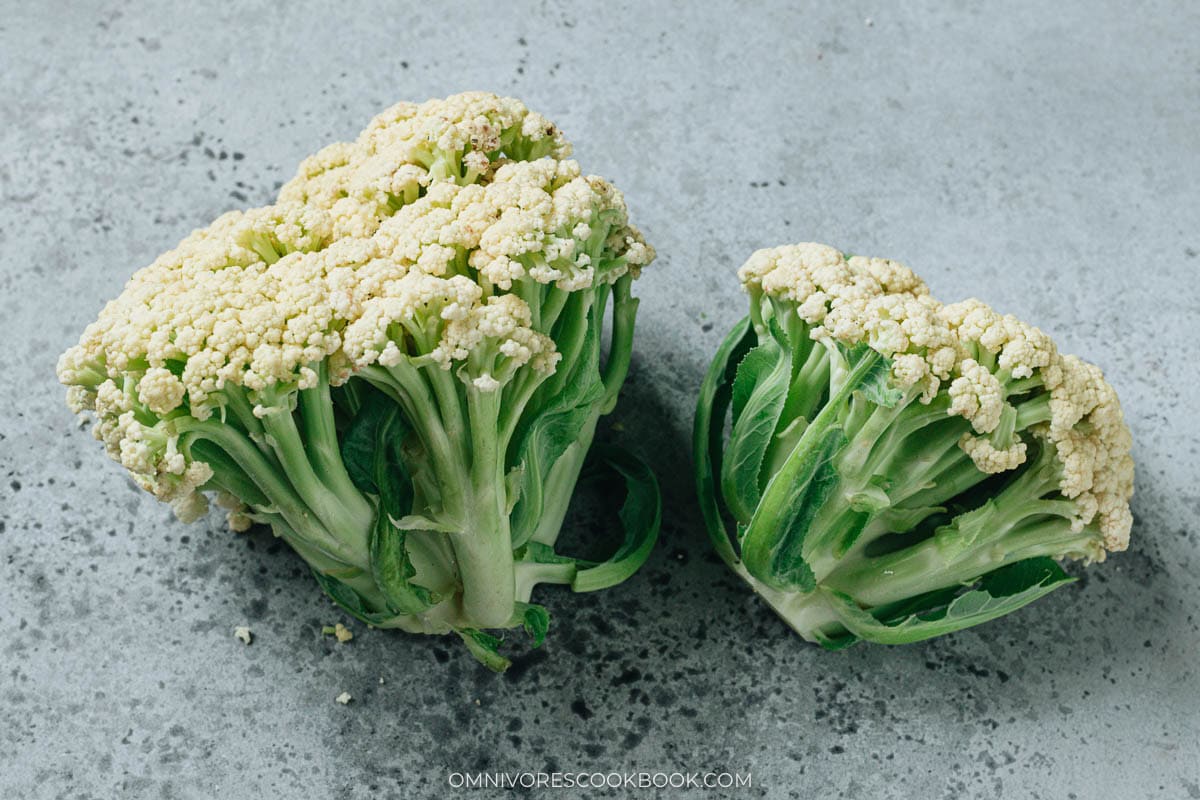
2. Shock the florets: Immediately transfer the cauliflower to a large bowl of cold water. This stops the cooking and keeps the stems crunchy. Drain when ready to stir-fry.
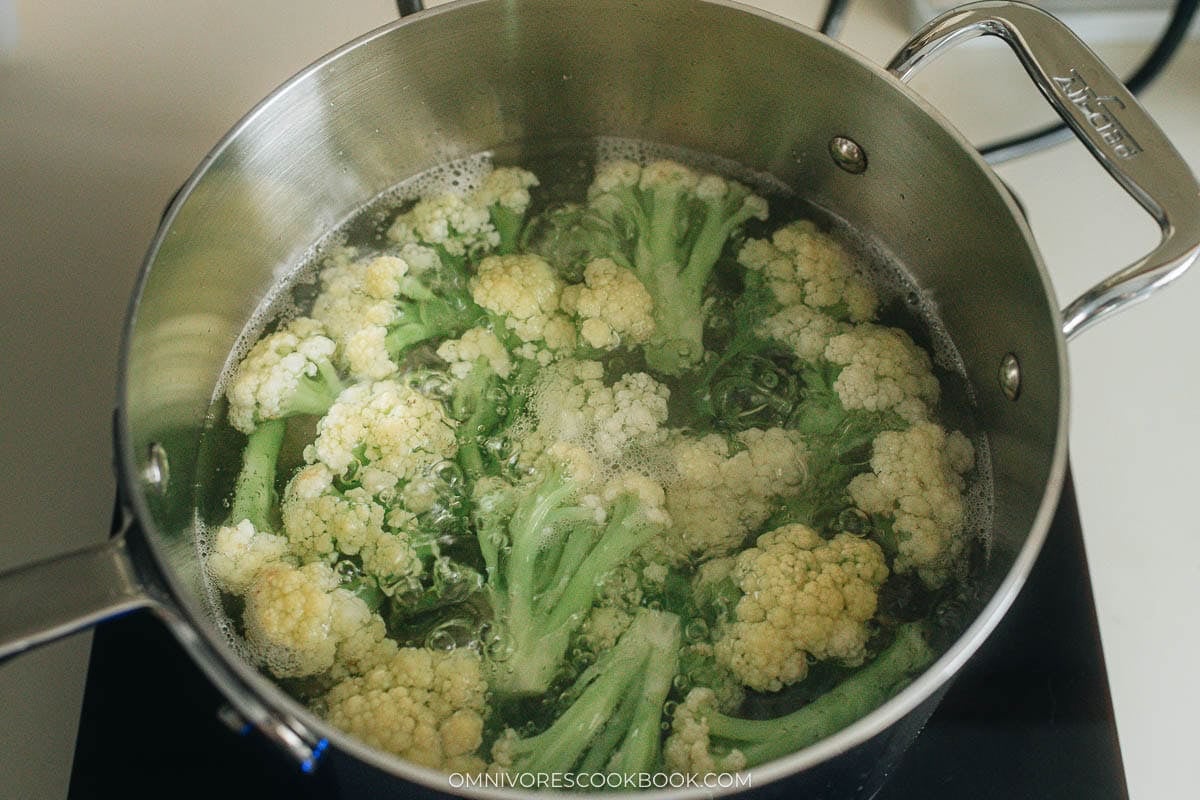
3. Start the aromatics: Heat the oil in a large skillet or wok over medium to high heat until shimmering. Add the sliced garlic and stir for a few seconds, just until fragrant.
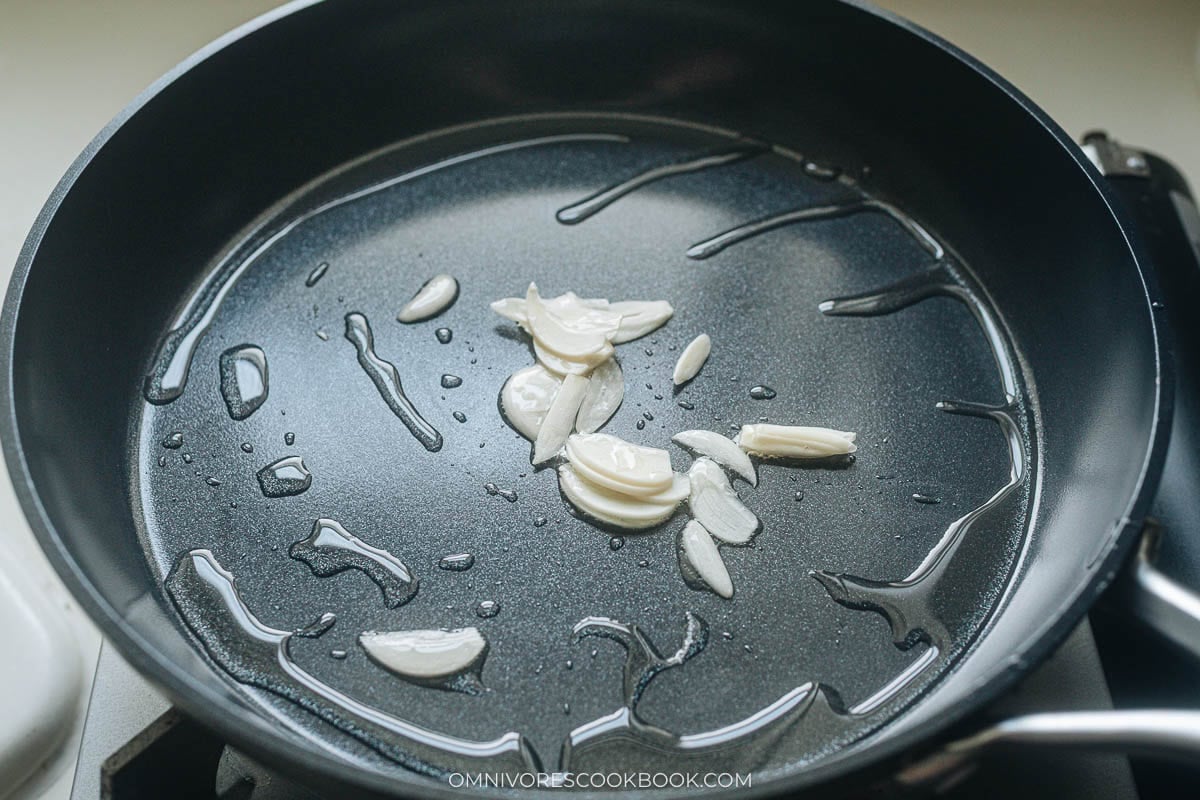
4. Build the tomato base: Add the diced fresh tomato. Stir and cook for 4 to 5 minutes, until the tomato softens and breaks down into a loose pulp.
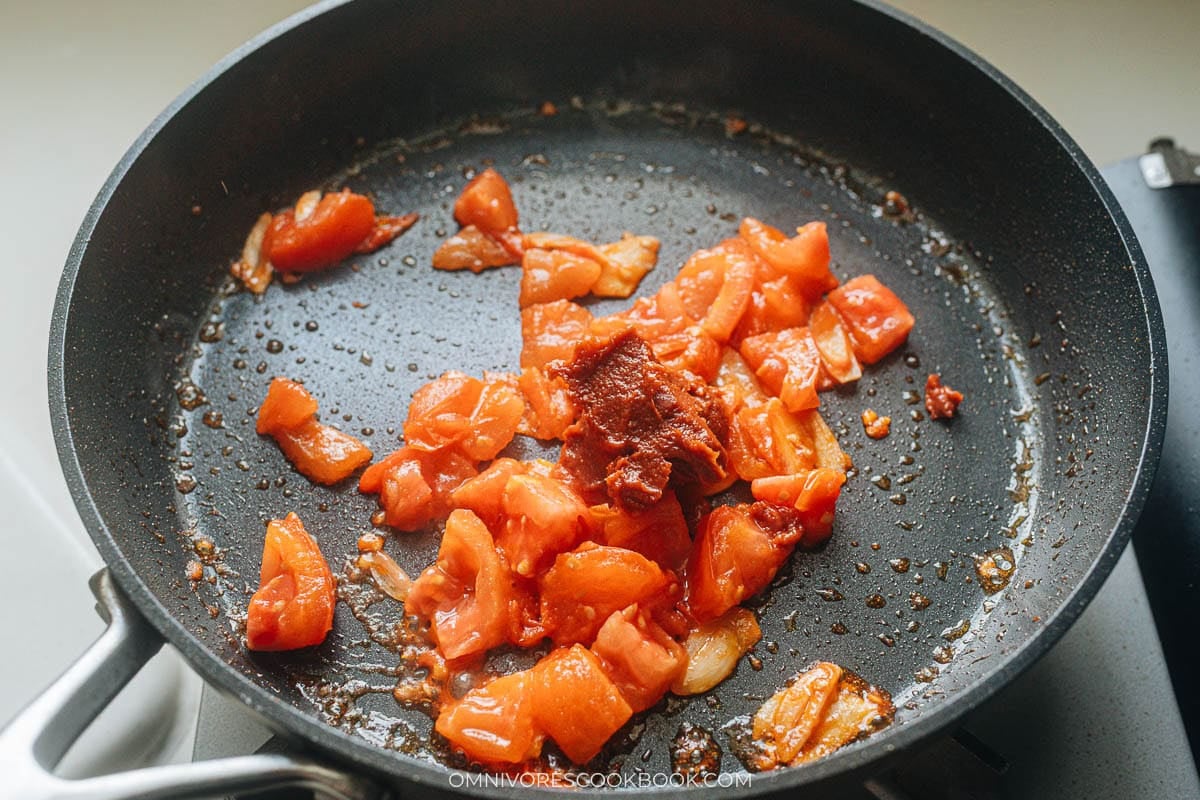
5. Deepen with tomato paste: Stir in the tomato paste and mix until the sauce comes together. Add the sugar and taste. Adjust the sugar by a small amount if your tomato is more or less acidic than usual.
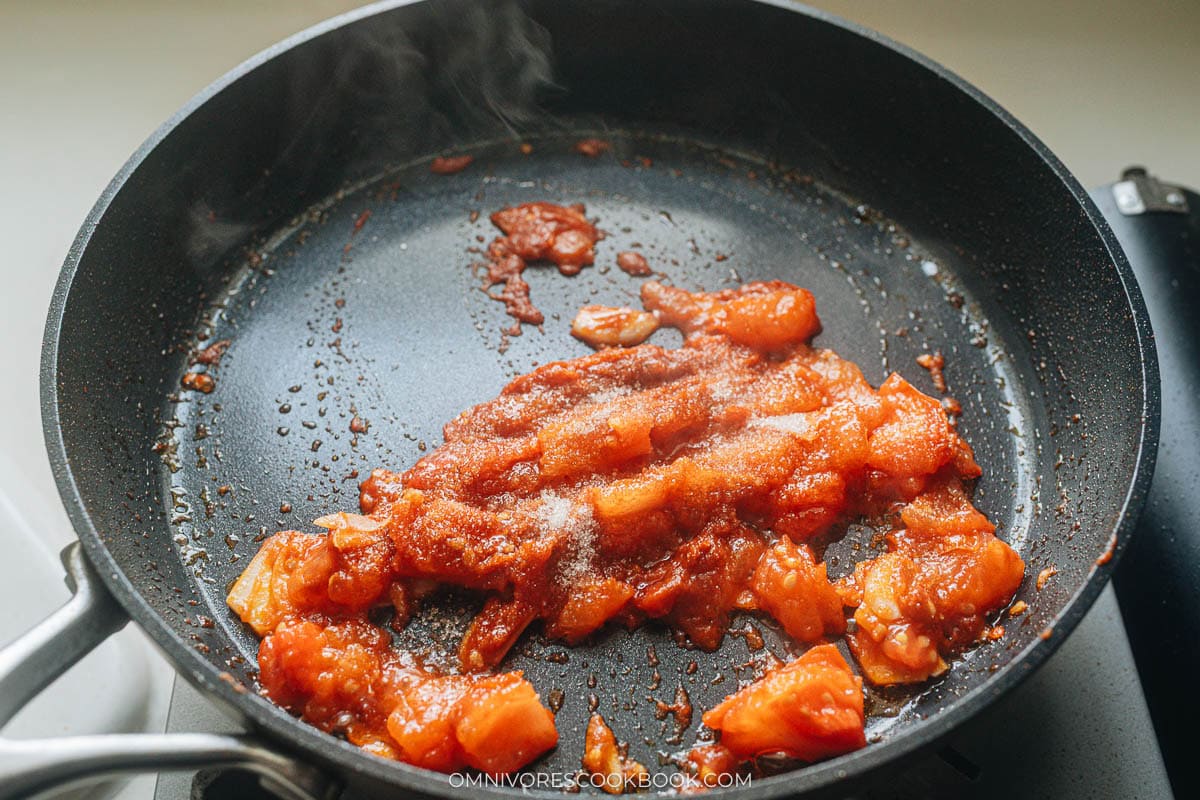
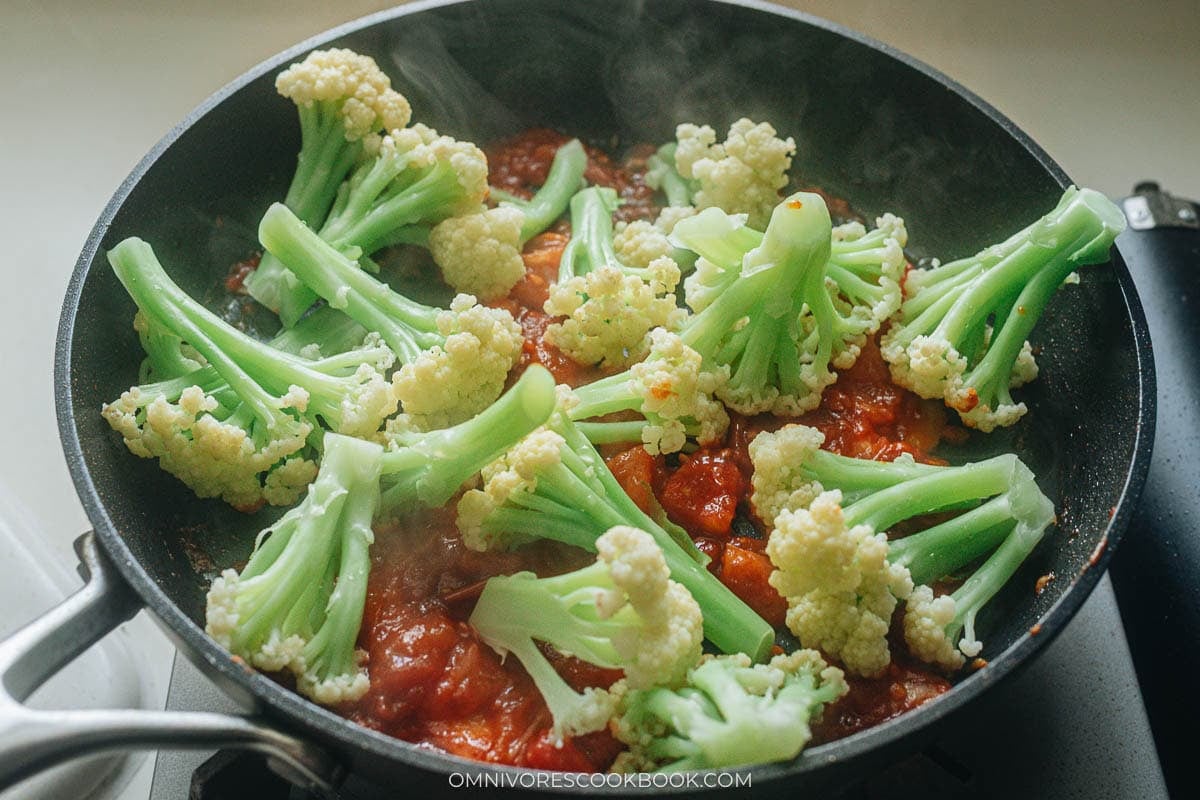
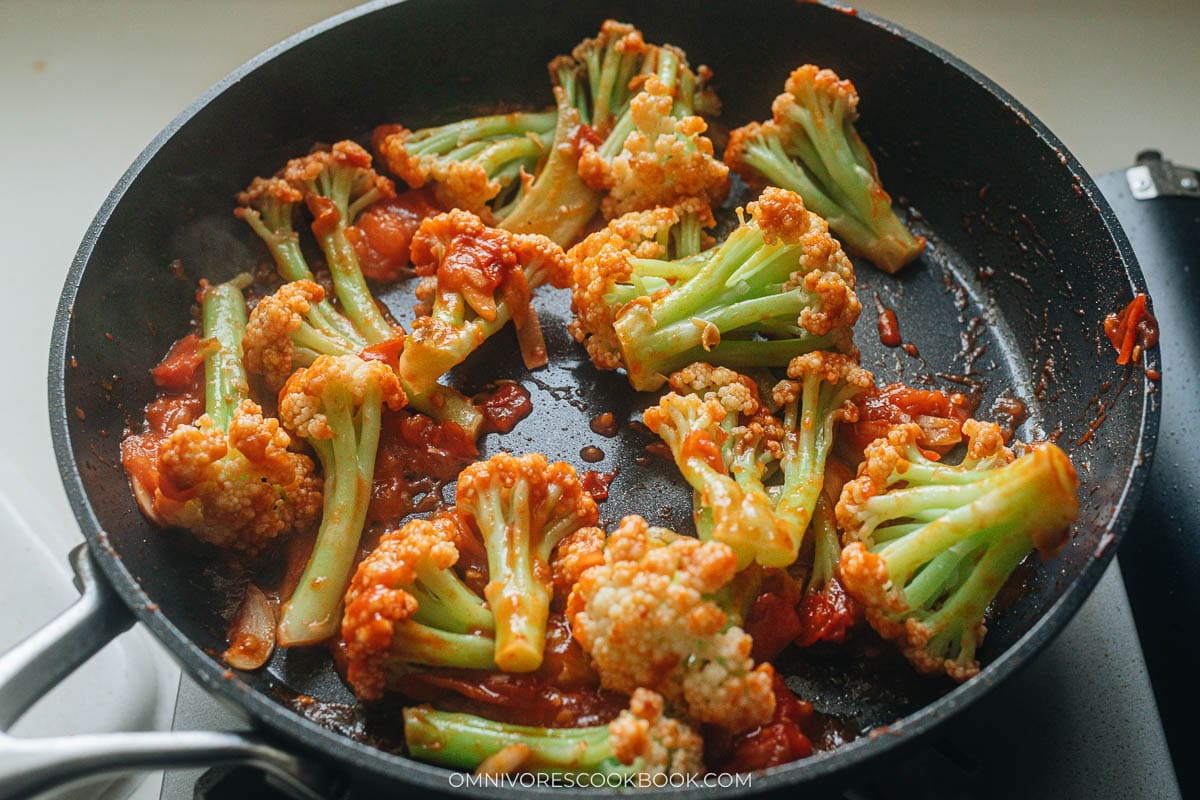
6. Toss in the cauliflower: Add the drained cauliflower back to the pan and sprinkle in the salt. Fold slowly with a spatula until every floret is coated in the sweet and sour sauce.
7. Serve: I like serving this stir-fried cauliflower with tomato sauce hot.
My Cooking Tips
Cut your florets to one size: Even-sized florets blanch consistently. If half the pieces are double the size of the others, the small ones will finish soggy by the time the big ones are tender.
Do not skip the cold water shock: The shock is what gives this dish its signature texture. Two minutes in boiling water and then straight into cold water keeps the stems crunchy when they go back into the pan.
Taste before you finish the sugar: Tomatoes vary in acidity through the year. In summer I sometimes need less sugar, and in winter when the tomatoes taste thinner, I lean a little higher. Adjusting at the end keeps the sweet and sour in balance.
Toss, do not stir-fry hard: Once the cauliflower goes back in, I switch from a quick stir-fry motion to a slow fold. The goal is to coat, not to cook more. Aggressive tossing breaks the florets.
Serve it right away: This dish is best straight from the pan while the cauliflower still has snap. If it sits too long, the sauce keeps softening the florets and the texture shifts.
How I love Serving
On the family table this is a supporting dish, never the star. I serve it next to steamed rice and a richer main on a weeknight, where the sweet and sour tomato sauce cuts through whatever heavier flavor I have going on. It also slides easily next to other quick vegetable plates if I am building a fuller family meal, so I pair it with ginger green beans when I want two vegetables on the table without two long cook times.
For a four dish family style spread, I lean into it as one of the lighter plates around a richer protein like my Kung Pao Chicken (宫保鸡丁), a savory green like Cantonese Lettuce with Oyster Sauce, and a starchy plate like vegetable fried rice. If I want a fully vegetarian table, I swap the chicken for Air Fryer Chinese Eggplant so I get a soft contrasting texture against the crunchy cauliflower.
Frequently Ask Questions
Can I double the recipe for a bigger family meal?
Yes. I would cook it in a big wok or a large and deep skillet (12″or larger). If a big pan is not available, I cook the cauliflower in two batches if I am doubling because a crowded pan steams the florets instead of stir-frying them. I blanch and shock the full amount in one pot, then I cook through twice in the same pan with a quick wipe between rounds. The sauce keeps texture better that way than if I try to push everything through one tight pan.
Why is my sauce watery instead of thick?
Watery sauce usually means the fresh tomato did not cook down long enough before the tomato paste went in. I let the diced tomato cook into a loose pulp first, then stir in the paste so the two work together. If the sauce still looks thin, I let it bubble another minute over medium to high heat to reduce.
How long do leftovers keep?
Leftovers keep in an airtight container in the fridge for 2 to 3 days. The cauliflower softens as it sits in the sauce, so the texture shifts from crunchy to tender. I do not recommend freezing this dish because the blanched cauliflower releases water on thawing and the texture turns mushy.
Want to Save This Recipe?
Enter your email below & we’ll send it to your inbox. Plus get great new recipes from us every week!
Stir-fried Cauliflower with Tomato Sauce
Ingredients
- 10 oz Chinese cauliflower florets or regular cauliflower (about 1/2 head cauliflower) (* see footnote 1)
- 1 tablespoon peanut oil (or vegetable oil)
- 1 tomato , diced
- 2 cloves garlic , sliced
- 2 tablespoons tomato paste
- 2 teaspoons sugar
- 1/2 teaspoon salt (or to taste)
Instructions
- Prepare a large bowl of water and set aside.
- Bring a large pot of water to a boil. Add cauliflower and boil for 2 minutes, until the stem is half cooked, without getting too tender. Turn off heat and immediately transfer cauliflower to the bowl of water to cool down. This will stop the cauliflower from continuing to cook and help it stay crisp. Drain the cauliflower thoroughly.
- Heat oil in a large skillet over medium-high heat until hot. Add the garlic, stir a few times until fragrant.
- Add the tomato. Stir and cook until the tomatoes are very softened, 4 to 5 minutes. Add tomato paste and mix well. Add sugar accordingly to adjust flavor of sauce (* see footnote 2).
- Add cauliflower back into the skillet and sprinkle with the salt. Carefully use a spatula to mix everything together, until the cauliflower is fully covered with the tomato sauce and the cauliflower has reached the desired doneness. Adjust the seasoning by adding more salt or sugar if needed. Transfer everything to a plate and serve hot as a main dish.
Notes
- You can replace the long stem Chinese cauliflower with regular white cauliflower. Regular white cauliflower is softer than long stem. Shorten cooking time by blanching it for 1 minute instead of 2 in step 1. During stir-frying, mix the sauce in a gentle manner, to avoid breaking the florets.
- The amount of sugar you should add depends on the flavor of the tomato and your preference. If you use seasonal local tomatoes, you might only need 1/2 teaspoon sugar. If you don’t like a sweet dish, reduce the amount to 1 teaspoon or less. You can always adjust the flavor by adding more sugar in the end. The dish tastes best when sugar is well balanced with the sour flavor of the tomato, but doesn’t overwhelm it.
Nutrition

Did you make this recipe?
I’d love to hear how it turned out for you! Please take a moment to leave a 5-star rating ⭐️ and share your thoughts in the comments further down the page. It really helps others discover the recipe too.
Leyla
I hope this doesn’t sound like too silly of a question but would you happen to know the chinese name for tomato paste? I can’t seem to find it anywhere in supermarkets and when I asked my teacher she thought I meant 番茄酱.
Maggie
Hi Leyla, the Chinese name of tomato paste is 番茄酱. It’s usually come in a small can, but sometimes I found smaller supermarket doesn’t have them. I used tomato paste in the recipe to add concentrated tomato flavor. If you can’t find them, you could either use one more small tomato, or use tomato ketchup (番茄沙司) instead (add less sugar if you used ketchup, since it contains sugar).
Happy cooking! 🙂
Peter @ Feed Your Soul Too
This looks beautiful. I love cauliflower and this is an easy, tasty and different way to prepare it.
Maggie
Hi Peter, thanks for commenting! Yes, this one is very easy to cook, very good for week day dinner. 🙂